RNA Interference in Gene Regulation

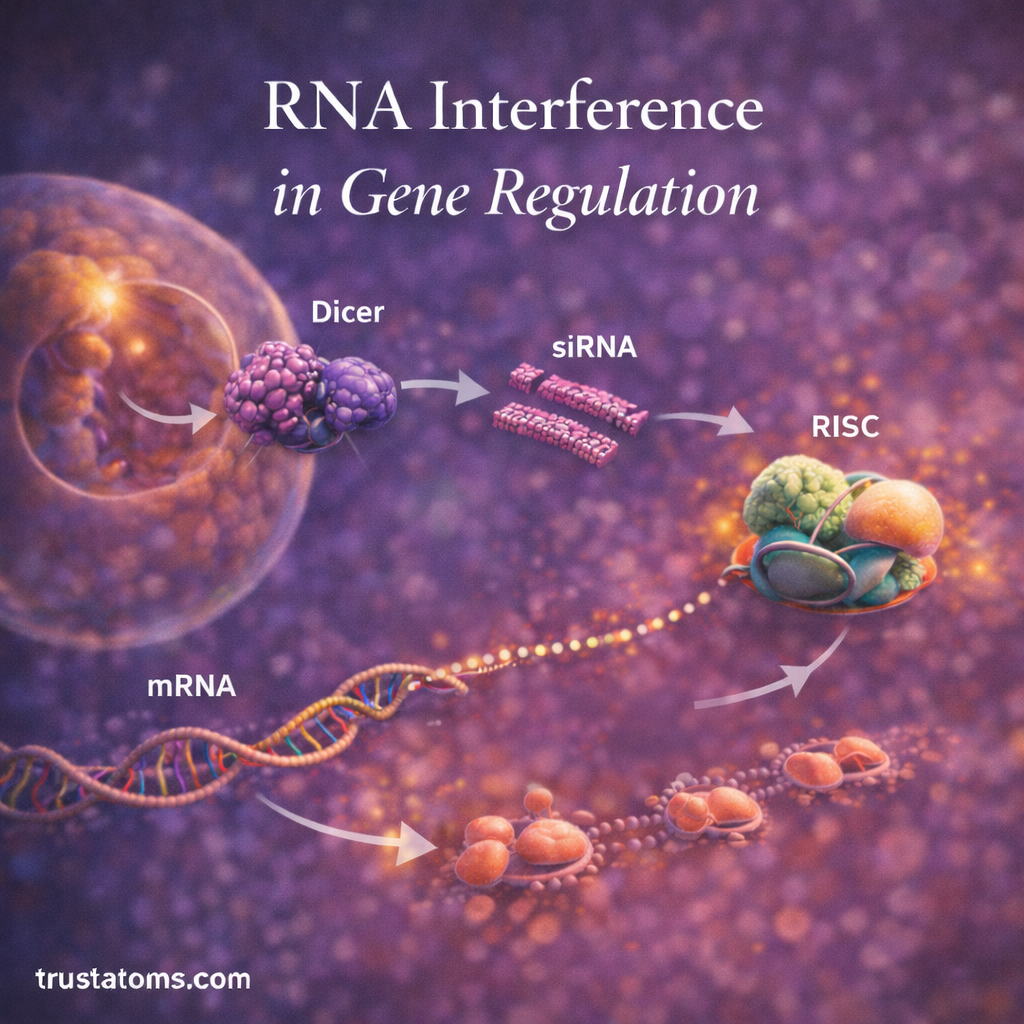
Illustration showing the RNA interference pathway where Dicer processes double-stranded RNA into siRNA and the RISC complex binds messenger RNA to silence gene expression.
Illustration of the RNA interference pathway showing Dicer producing small interfering RNA and the RISC complex targeting messenger RNA to regulate gene expression. trustatoms.com.

RNA interference (RNAi) is a biological process that helps cells regulate gene activity by controlling how much protein a gene produces. Instead of changing the DNA sequence itself, RNA interference works by targeting messenger RNA (mRNA) molecules and preventing them from being translated into proteins.

This mechanism allows cells to silence or reduce the expression of specific genes. RNA interference plays important roles in gene regulation, immune defense, development, and cellular stability.

Since its discovery in the late 20th century, RNA interference has become one of the most important tools for studying gene function and developing new therapeutic strategies.

Continue reading “RNA Interference in Gene Regulation”
Gene Regulatory Networks in Development

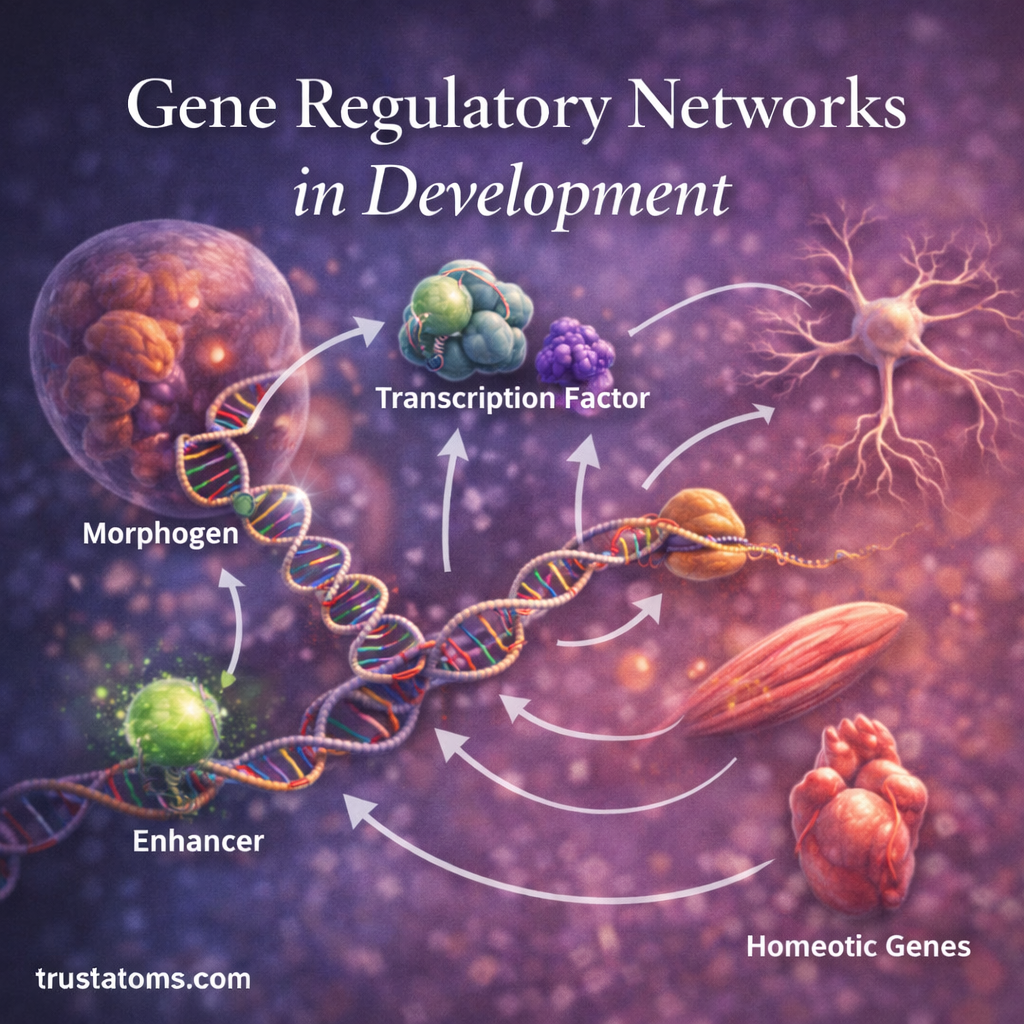
Illustration showing gene regulatory networks guiding embryonic development with DNA, transcription factors, morphogens, and developing cell types such as neurons and muscle cells.
Conceptual illustration showing how gene regulatory networks coordinate morphogens, transcription factors, and regulatory DNA elements during biological development. trustatoms.com.

Gene regulatory networks play a central role in biological development. From the earliest stages of embryonic growth, cells must decide when to divide, differentiate, migrate, or form specialized tissues. These complex decisions are guided by networks of genes that interact with one another through regulatory signals.

Rather than acting independently, genes operate in coordinated systems called gene regulatory networks (GRNs). These networks determine which genes are turned on or off at specific times and locations within a developing organism.

Through carefully timed patterns of gene activation, regulatory networks guide the formation of tissues, organs, and body structures.

Continue reading “Gene Regulatory Networks in Development”

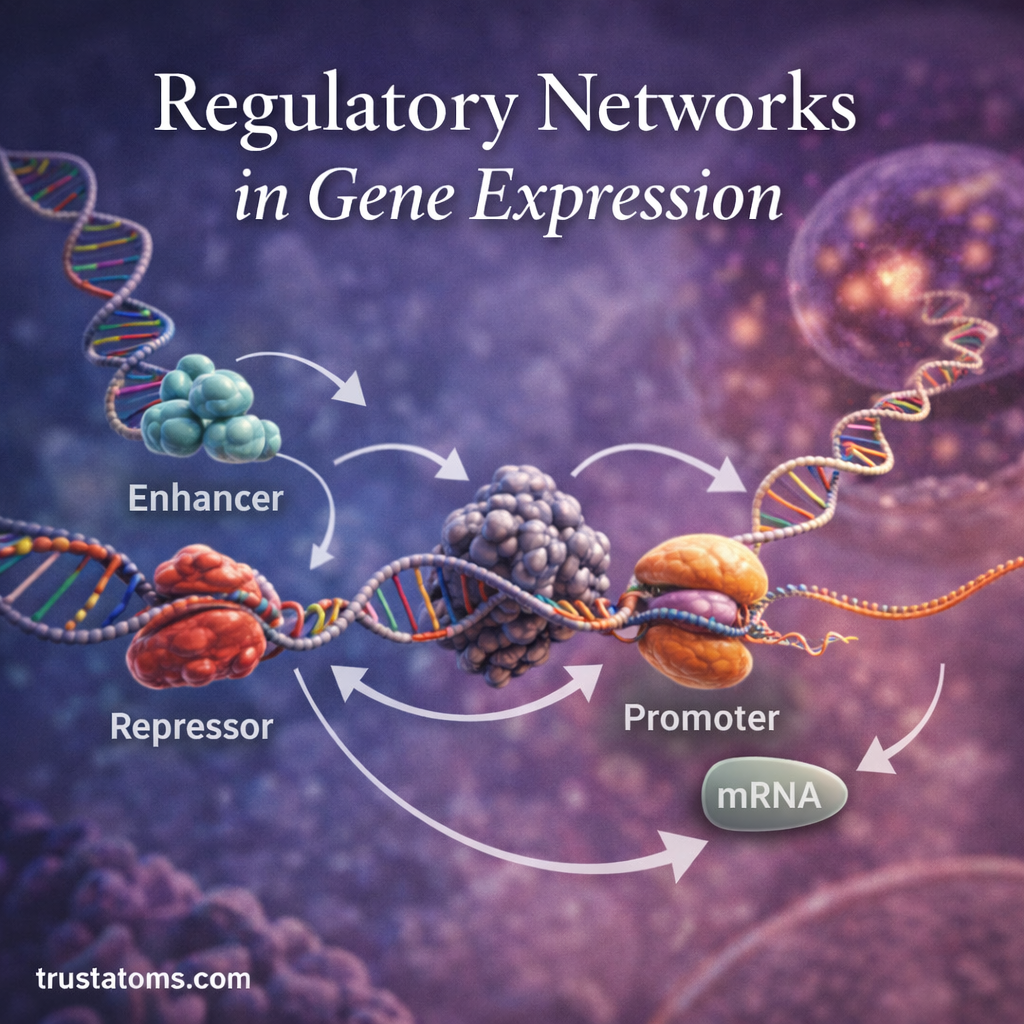
Regulatory Networks in Gene Expression

Illustration of regulatory networks in gene expression showing transcription factors, enhancers, repressors, and RNA polymerase interacting with DNA to produce messenger RNA.
Illustration showing how transcription factors, enhancers, repressors, and promoters interact in regulatory networks to control gene expression. trustatoms.com.

Gene expression is not controlled by a single switch. Instead, it is regulated through complex systems known as regulatory networks. These networks coordinate how genes are activated, suppressed, or modified so that cells can function properly.

Regulatory networks are essential for processes such as development, adaptation to environmental changes, immune responses, and cellular specialization. By controlling when and how genes are expressed, cells maintain balance and respond to internal and external signals.

Understanding gene regulatory networks helps scientists explain how biological systems maintain stability while remaining flexible enough to adapt.

Continue reading “Regulatory Networks in Gene Expression”

Chromatin Remodeling in Epigenetic Systems

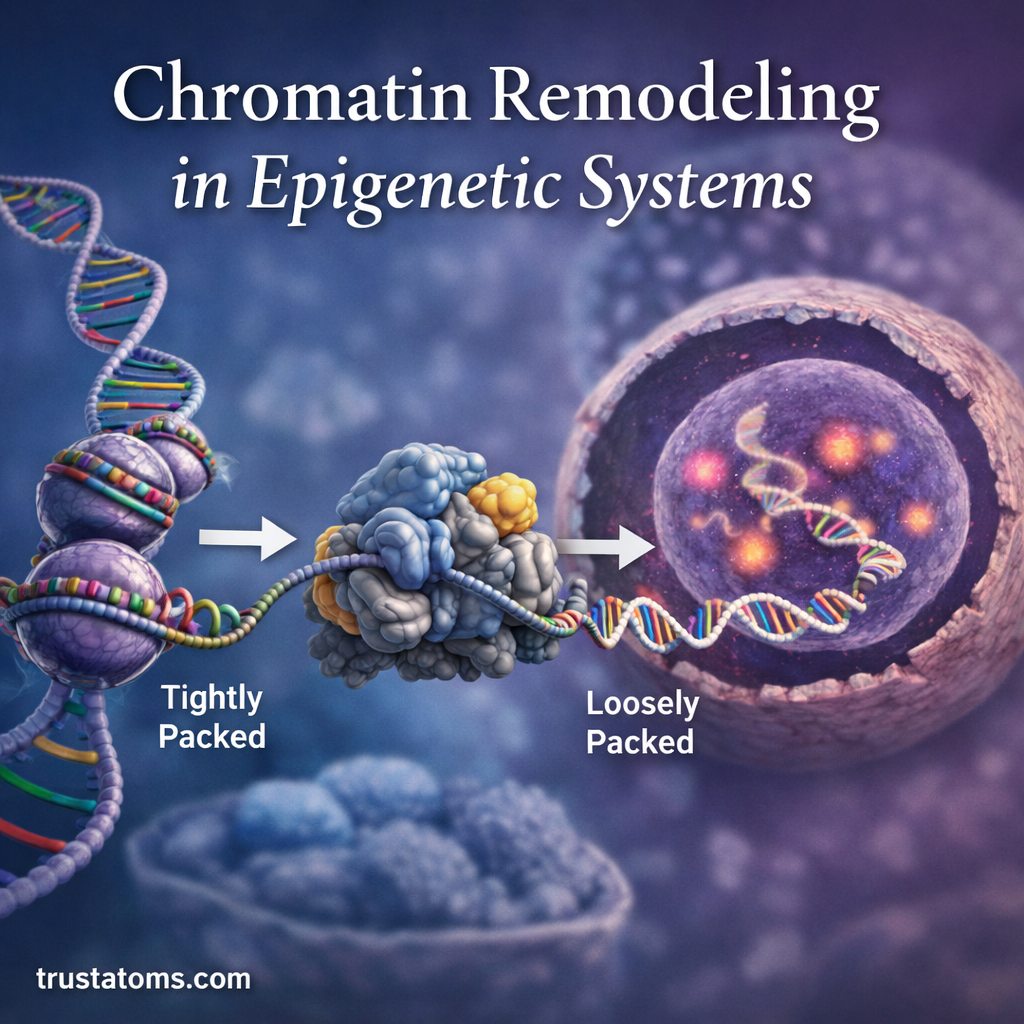
Illustration showing chromatin remodeling where DNA wrapped around histones transitions from tightly packed chromatin to a more open structure inside the cell nucleus.
Illustration of chromatin remodeling showing DNA wrapped around histones shifting from tightly packed to loosely packed chromatin to regulate gene accessibility. trustatoms.com.

Chromatin remodeling is one of the most important processes controlling how genes are turned on or off inside living cells. While DNA contains the instructions for building proteins, not every gene is active at the same time. Cells rely on complex regulatory systems to control access to DNA, and chromatin remodeling is a central part of that regulation.

In epigenetic systems, chromatin remodeling alters the physical structure of DNA and its associated proteins without changing the DNA sequence itself. By shifting how tightly DNA is packaged, cells can determine which genes are accessible for transcription and which remain silent.

Understanding chromatin remodeling helps explain how identical DNA can produce many different cell types, how organisms respond to environmental changes, and how certain diseases develop.

Continue reading “Chromatin Remodeling in Epigenetic Systems”

Epigenetic Regulation in Gene Expression

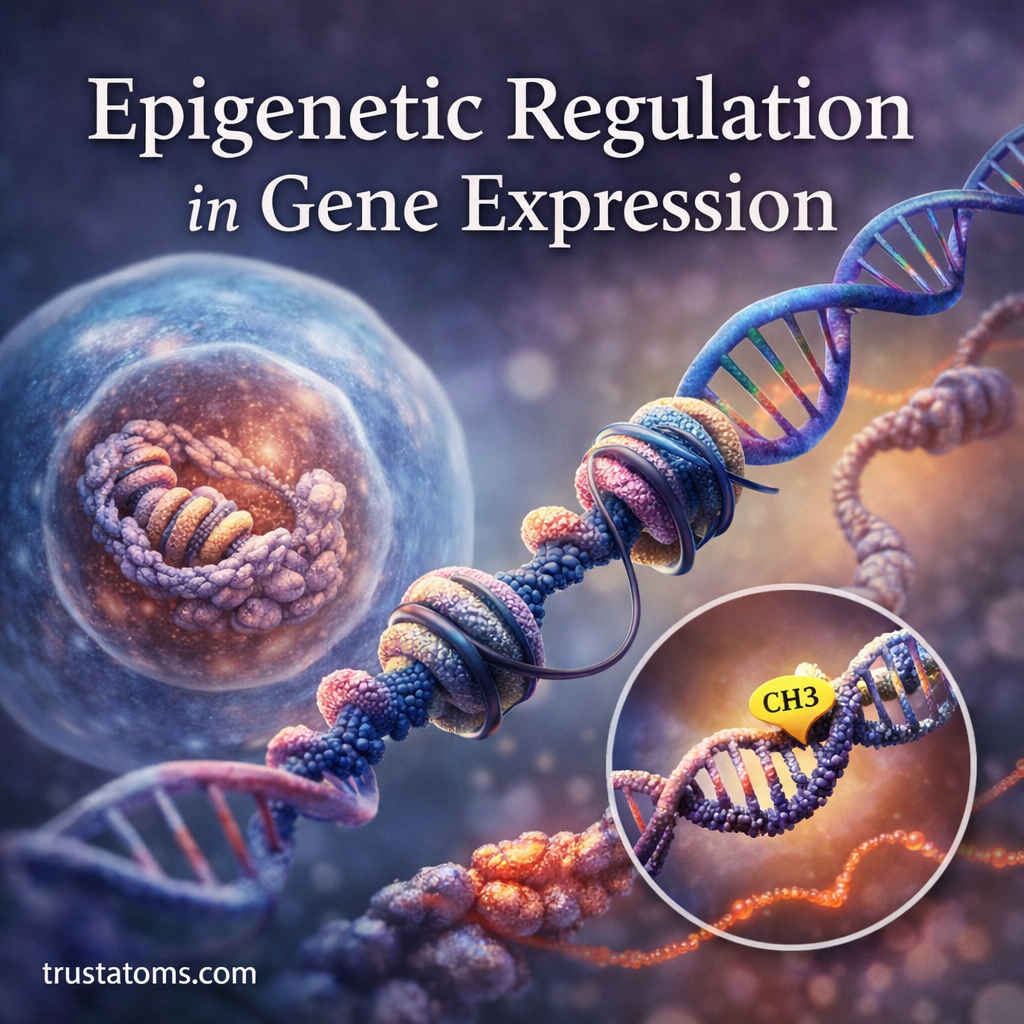
Scientific illustration showing DNA wrapped around histone proteins with a methyl tag representing epigenetic regulation in gene expression.
Illustration of DNA wrapped around histone proteins with a methyl tag showing how epigenetic mechanisms regulate gene expression. trustatoms.com.

Epigenetic regulation refers to changes in gene activity that occur without altering the DNA sequence itself. These changes determine when genes are turned on or off, allowing cells with identical DNA to perform very different functions.

In multicellular organisms, epigenetic mechanisms help control development, cellular specialization, and responses to environmental factors. They act as a layer of regulation that sits “above” the genetic code, influencing how genetic information is used.

Understanding epigenetic regulation is essential in modern biology because it explains processes such as cell differentiation, aging, disease development, and environmental adaptation.

Continue reading “Epigenetic Regulation in Gene Expression”

What Is a Mutation?

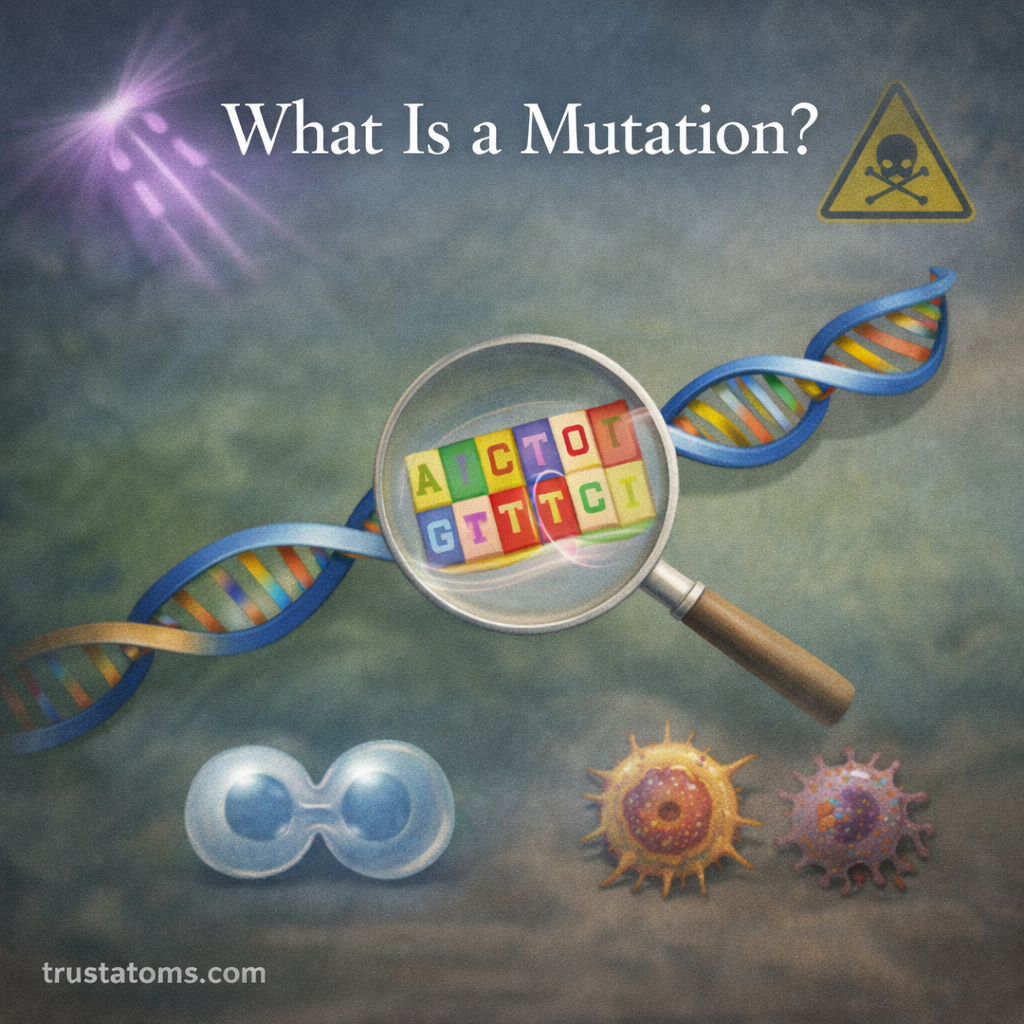
Educational illustration showing a DNA strand with a magnified section where the genetic sequence has changed, representing a mutation in DNA.
Illustration showing a change in a DNA sequence to explain how mutations occur in genetic material. trustatoms.com.

A mutation is a change in the DNA sequence of an organism. DNA contains the genetic instructions that guide how cells grow, function, and reproduce. When a mutation occurs, the sequence of genetic information is altered, which can affect how a gene works.

Mutations can happen naturally during cell division or be triggered by environmental factors such as radiation, chemicals, or viruses. While some mutations can lead to diseases or genetic disorders, many have little or no effect on an organism.

In fact, mutations play an important role in biological diversity and evolution. They introduce new genetic variations that can be passed down through generations.

Continue reading “What Is a Mutation?”

What Is Genetic Inheritance?

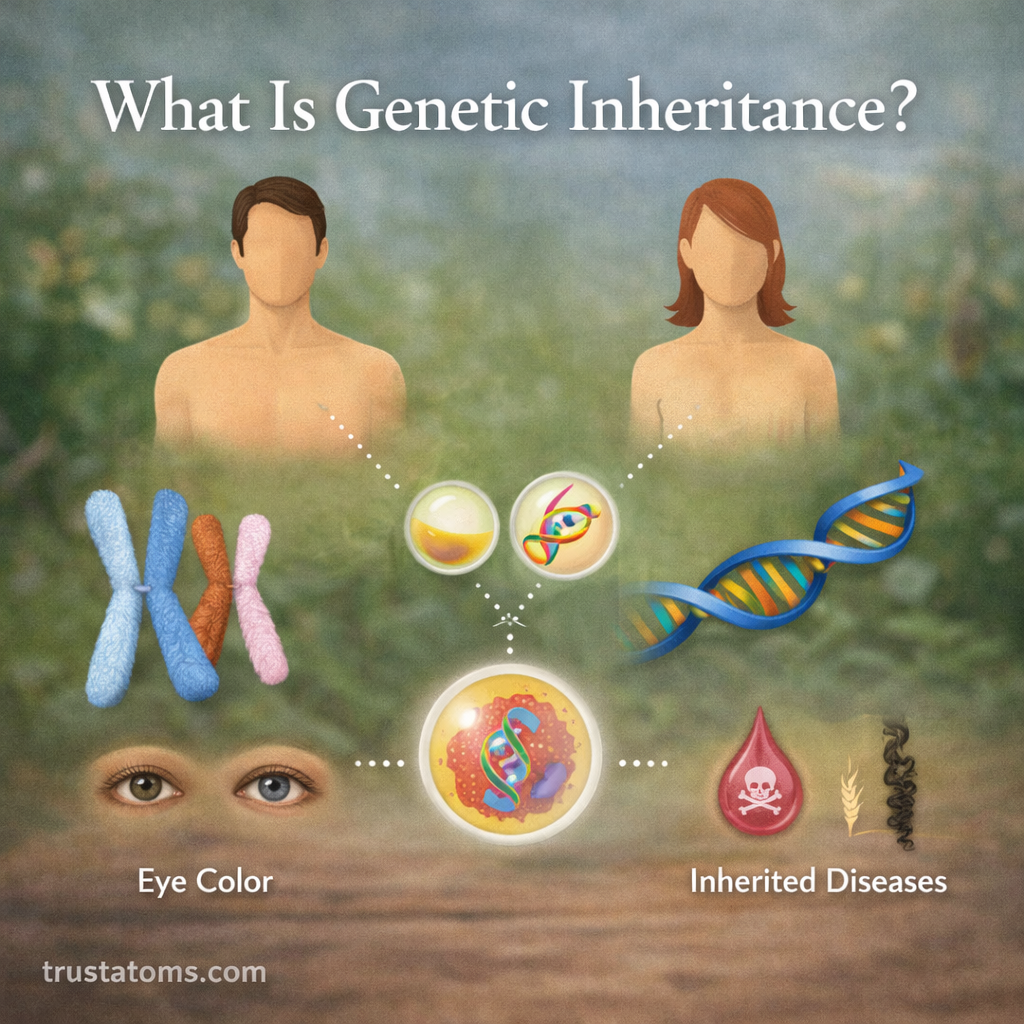
Educational illustration showing parents, DNA strands, chromosomes, and inherited traits like eye color to represent how genetic inheritance passes traits from parents to offspring.
Illustration explaining genetic inheritance with parents passing DNA and chromosomes that influence traits such as eye color and inherited conditions. trustatoms.com.

Genetic inheritance is the biological process through which traits are passed from parents to their offspring through genes. These traits can include physical characteristics such as eye color, hair type, and height, as well as biological factors like blood type or susceptibility to certain diseases.

Every living organism inherits genetic information from its parents. This information is stored in DNA (deoxyribonucleic acid), which carries instructions for how an organism grows, develops, and functions.

Understanding genetic inheritance helps scientists explain how traits appear in families, how species evolve over time, and how genetic diseases are transmitted across generations.

Continue reading “What Is Genetic Inheritance?”

What Is Mendelian Genetics?

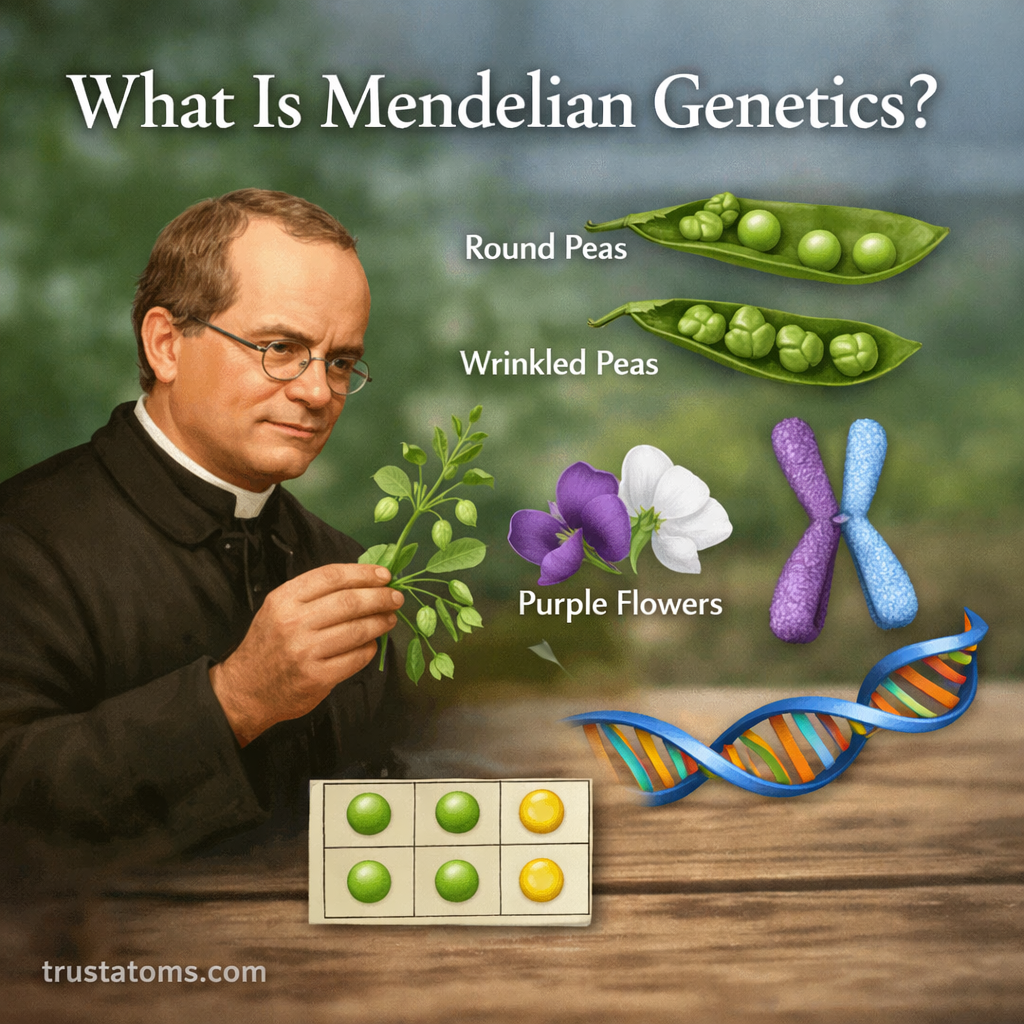
Educational illustration of Mendelian genetics showing Gregor Mendel with pea plants, dominant and recessive pea traits, chromosomes, and DNA representing inheritance patterns.
Illustration explaining Mendelian genetics through Gregor Mendel’s pea plant experiments and the basic concepts of genetic inheritance. trustatoms.com.

Mendelian genetics is the study of how traits are passed from parents to offspring according to principles first discovered by Austrian monk and scientist Gregor Mendel in the 1800s. By carefully breeding pea plants and observing their traits across generations, Mendel uncovered patterns of inheritance that form the foundation of modern genetics.

These patterns explain how characteristics such as eye color, flower color, or seed shape can be inherited through discrete units called genes. Mendel’s work introduced the concepts of dominant and recessive traits and demonstrated that inheritance follows predictable rules.

Today, Mendelian genetics remains one of the most important frameworks for understanding how genes influence biological traits in plants, animals, and humans.

Continue reading “What Is Mendelian Genetics?”

What Is a Punnett Square?

Educational biology illustration showing a simple Punnett square concept with parents and pea plant traits representing genetic inheritance.
Simple genetics illustration showing how Punnett squares help predict inherited traits using parents and pea plant variations. trustatoms.com.

A Punnett square is a simple diagram used in genetics to predict how traits may be inherited from parents to offspring. It helps scientists, students, and researchers understand how different gene combinations can produce certain physical traits or genetic conditions.

The tool was developed in the early 1900s by British geneticist Reginald Punnett, building on earlier work about inheritance patterns discovered through plant breeding studies.

Punnett squares remain one of the easiest ways to visualize how dominant and recessive alleles combine during reproduction.

Continue reading “What Is a Punnett Square?”

What Is Dominant vs Recessive?

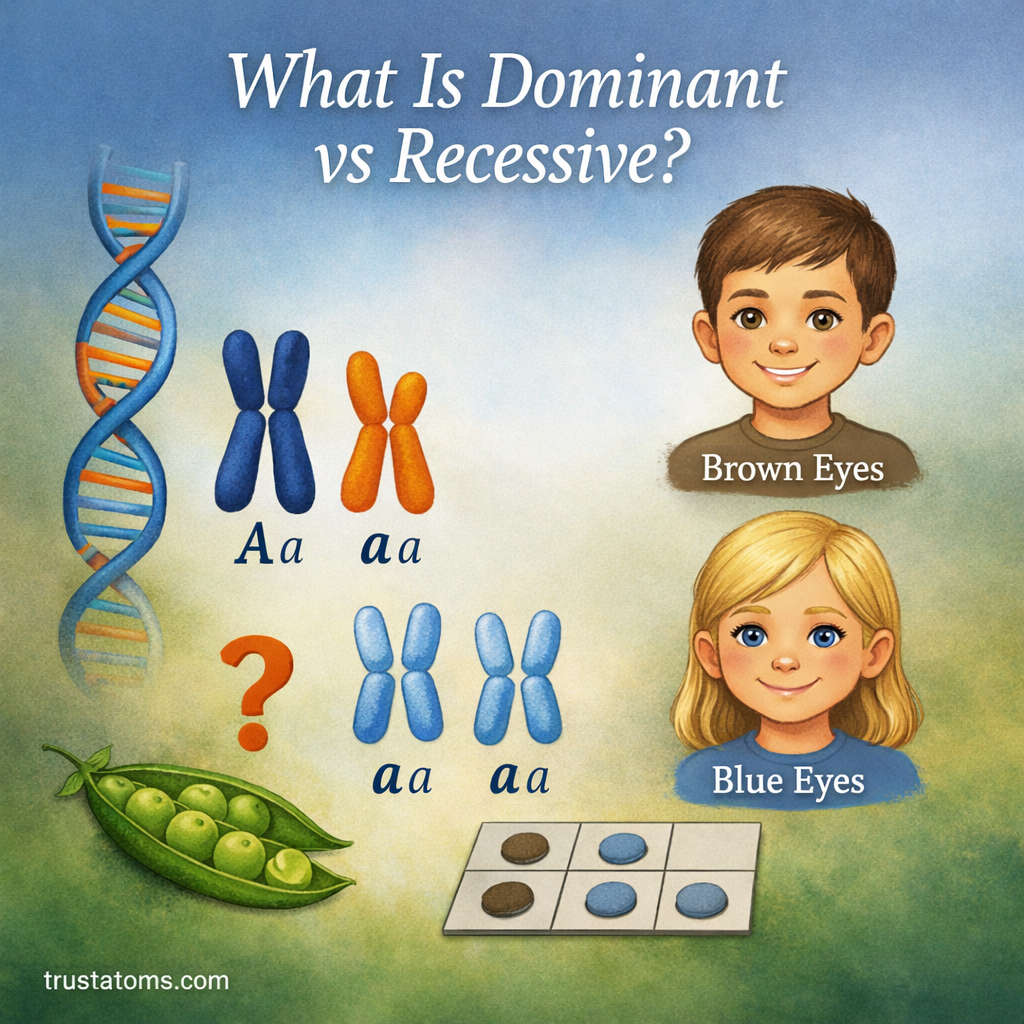
Educational genetics illustration showing dominant and recessive inheritance using DNA, chromosomes, and eye color examples.
Simple genetics illustration explaining dominant vs recessive traits using chromosomes, DNA, and inherited eye color examples. trustatoms.com.

Genetics explains how traits are passed from parents to offspring. One of the most fundamental concepts in genetics is the difference between dominant and recessive alleles.

These terms describe how certain versions of genes influence visible traits, such as eye color, blood type, or inherited conditions. Understanding dominant and recessive inheritance helps explain why some traits appear frequently in families while others may skip generations.

Continue reading “What Is Dominant vs Recessive?”