Integrated Biological Network Systems

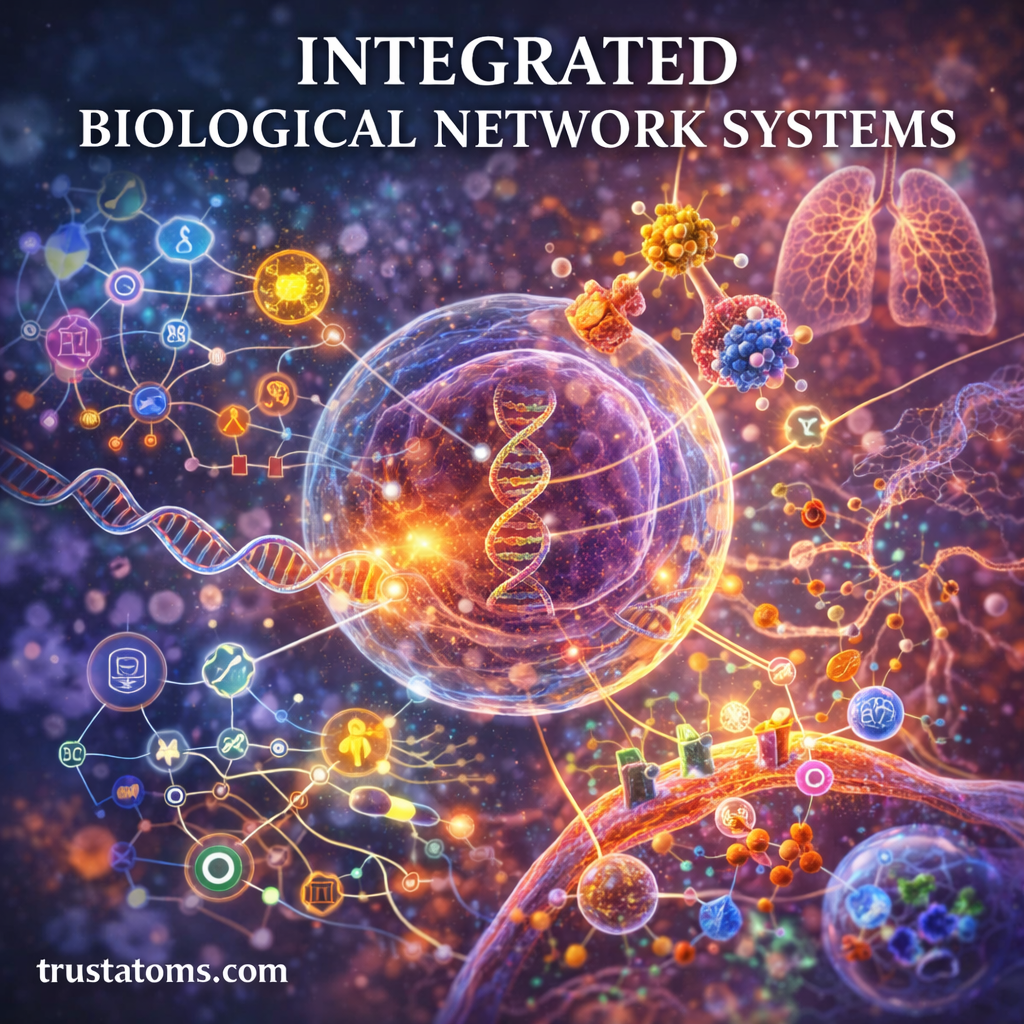
Scientific illustration showing interconnected biological networks including DNA, proteins, signaling pathways, and organs representing integrated biological systems.
Illustration showing how genes, proteins, signaling pathways, and organ systems connect to form integrated biological networks. trustatoms.com.

Living organisms function through vast interconnected systems rather than isolated biological processes. Cells, tissues, organs, and entire organisms rely on integrated biological network systems to coordinate complex activities such as metabolism, growth, communication, and adaptation.

These networks link genes, proteins, signaling molecules, and cellular pathways into dynamic systems that exchange information and regulate biological functions. Instead of operating independently, biological components interact continuously, forming networks that maintain stability and allow organisms to respond to internal and external changes.

Understanding integrated biological networks has become a central focus of modern biology, especially in fields like systems biology, bioinformatics, and biomedical research.

Continue reading “Integrated Biological Network Systems”
Cellular Information Processing

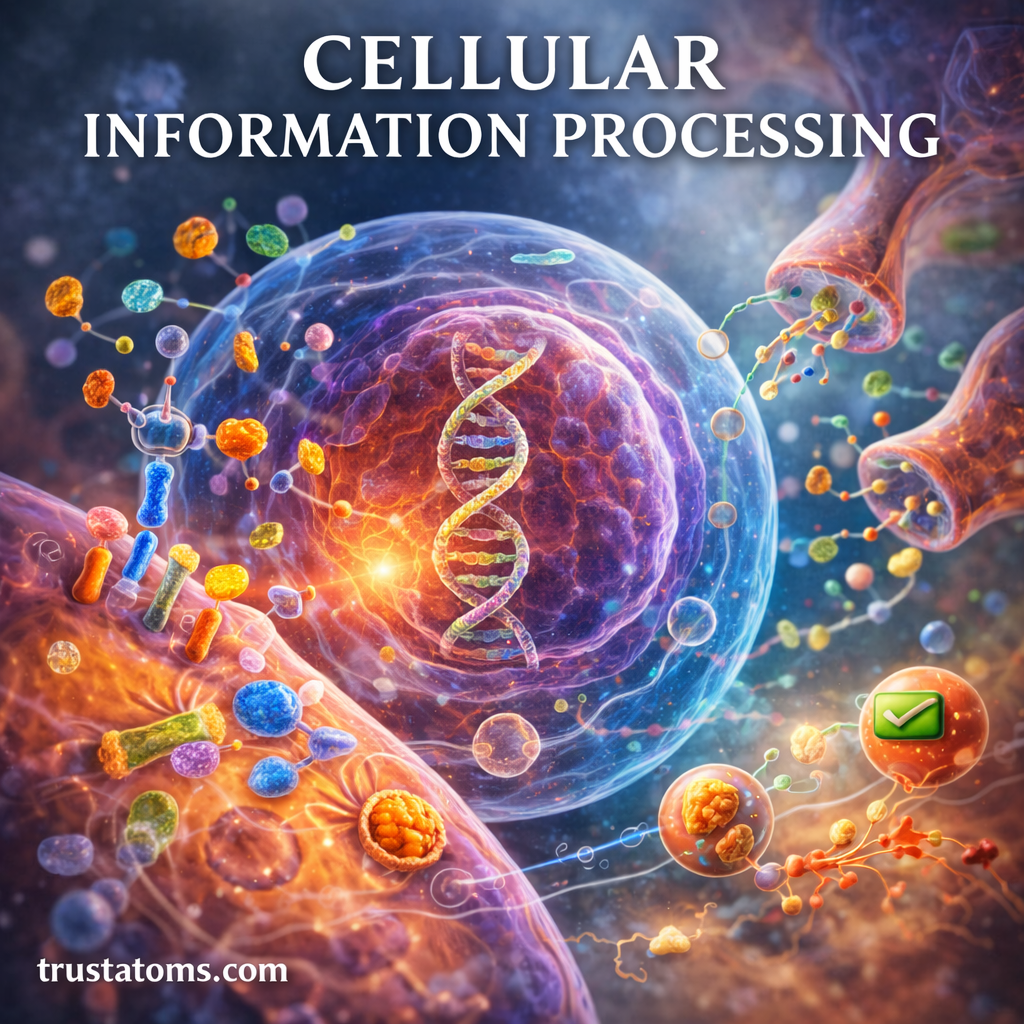
Scientific illustration of a cell receiving molecular signals and processing information through cellular signaling pathways and DNA activity.
Illustration of cellular signaling and information processing inside a cell, showing molecules communicating with the nucleus and activating biological responses. trustatoms.com.

Living cells constantly receive, interpret, and respond to information from their environment. This ability—known as cellular information processing—allows cells to detect signals, make decisions, and coordinate biological functions necessary for survival.

From bacteria sensing nutrients to human immune cells responding to infection, cells rely on complex molecular systems that convert signals into actions. These systems operate through networks of receptors, signaling molecules, gene regulation mechanisms, and feedback loops.

Understanding cellular information processing helps scientists explain how organisms grow, adapt to environmental changes, and maintain internal balance.

Continue reading “Cellular Information Processing”

Molecular Adaptation to Environmental Stress

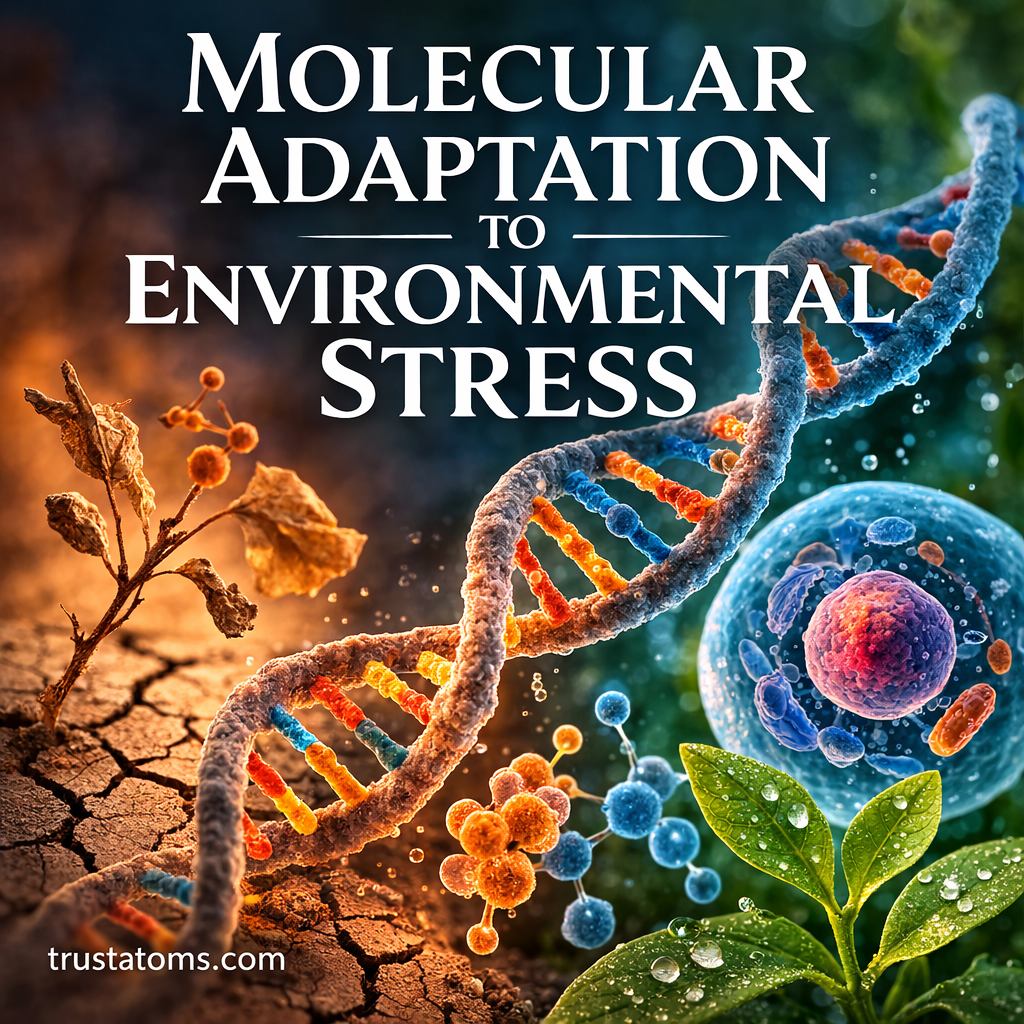
Illustration showing DNA, cells, and plants adapting to extreme environmental conditions such as drought and water stress.
Scientific illustration showing DNA and cellular processes responding to environmental challenges like drought and temperature change. trustatoms.com.

Environmental conditions on Earth are rarely constant. Temperature changes, limited nutrients, toxins, radiation, and dehydration all place pressure on living organisms. To survive these challenges, cells rely on molecular adaptation mechanisms—biochemical and genetic adjustments that allow organisms to maintain stability and function despite stress.

From bacteria living in boiling hot springs to plants surviving drought, molecular adaptation plays a central role in evolution and day-to-day survival. These responses occur at the level of genes, proteins, membranes, and metabolic pathways, allowing organisms to respond rapidly and efficiently to changing environments.

Continue reading “Molecular Adaptation to Environmental Stress”

Cellular Resource Allocation Mechanisms

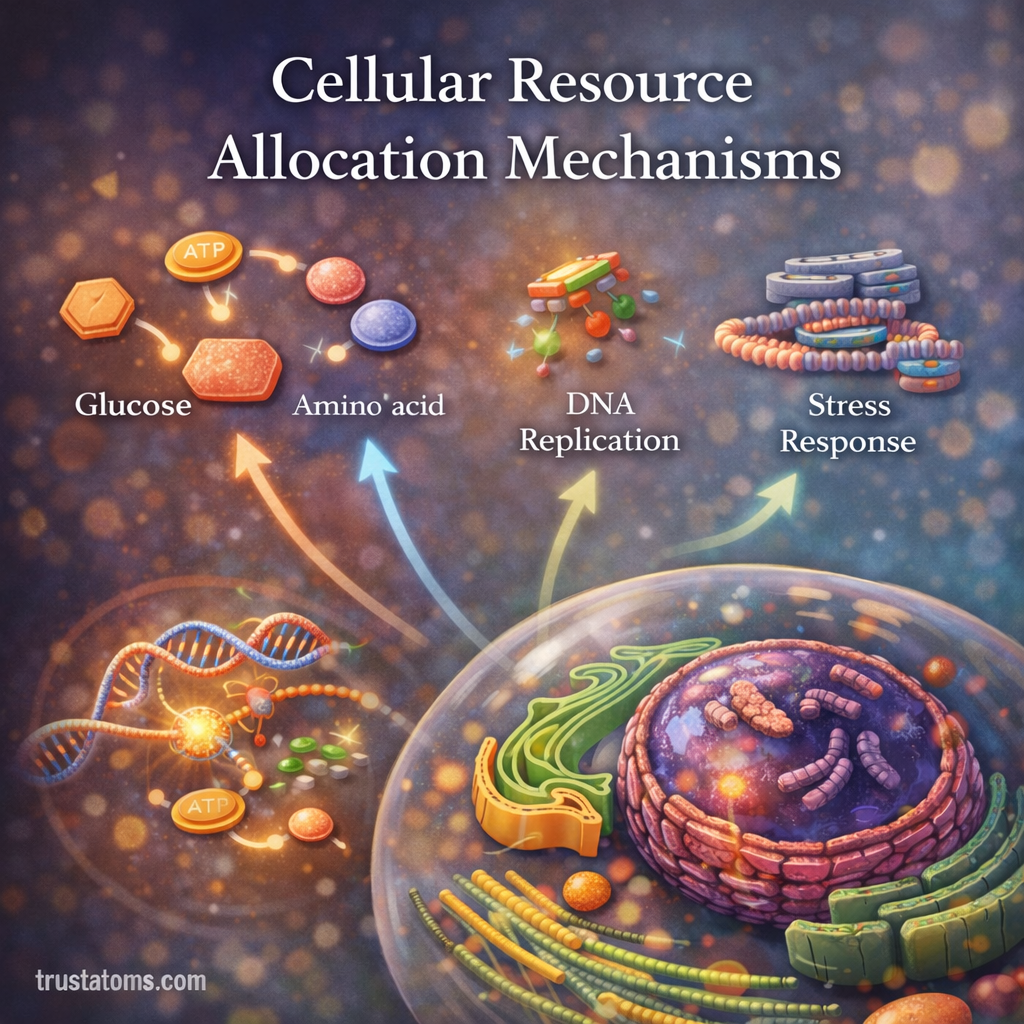
Educational biology illustration showing how cells allocate resources such as ATP, glucose, and amino acids to processes like protein synthesis, DNA replication, and stress responses.
Conceptual illustration demonstrating how cells distribute energy and molecular resources across processes like metabolism, protein synthesis, and cellular stress responses. trustatoms.com.

Cells constantly manage limited resources. Every biological process—growth, repair, movement, and metabolism—requires energy and molecular building blocks. Because resources such as ATP, nutrients, and proteins are finite, cells must carefully allocate them to maintain stability and survive environmental changes.

Cellular resource allocation mechanisms refer to the systems cells use to prioritize, distribute, and regulate energy and materials across different biological processes. These mechanisms ensure that essential functions are maintained while unnecessary or energy-intensive processes are slowed when resources are limited.

Understanding these systems is central to modern biology because they explain how cells adapt, grow, and maintain balance under changing conditions.

Continue reading “Cellular Resource Allocation Mechanisms”

Systems-Level Cellular Coordination

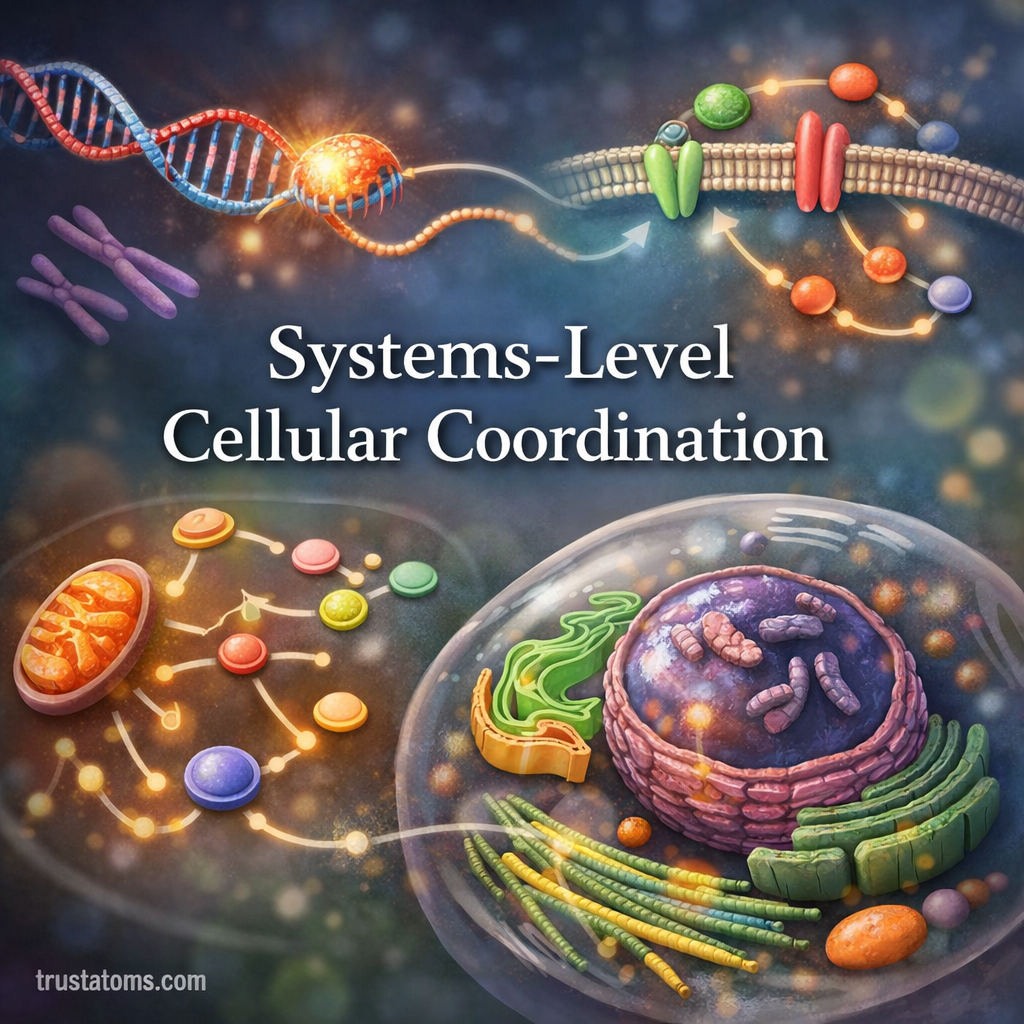
Conceptual biology illustration showing cellular systems working together including DNA, signaling pathways, metabolic networks, and organelles to represent systems-level cellular coordination.
Illustration of integrated cellular processes such as gene regulation, signaling pathways, and metabolic networks working together inside a cell. trustatoms.com.

Modern biology increasingly views cells not as collections of isolated parts but as highly coordinated systems. Every moment, thousands of biochemical reactions, signaling events, and structural processes occur inside a cell. For life to function, these activities must be tightly synchronized.

Systems-level cellular coordination refers to the integration of genes, proteins, signaling pathways, and cellular structures so that a cell behaves as a unified and adaptive biological system.

Understanding this coordination helps explain how cells grow, respond to their environment, repair damage, and maintain stability.

Continue reading “Systems-Level Cellular Coordination”

Molecular Signaling Cascades in Cells

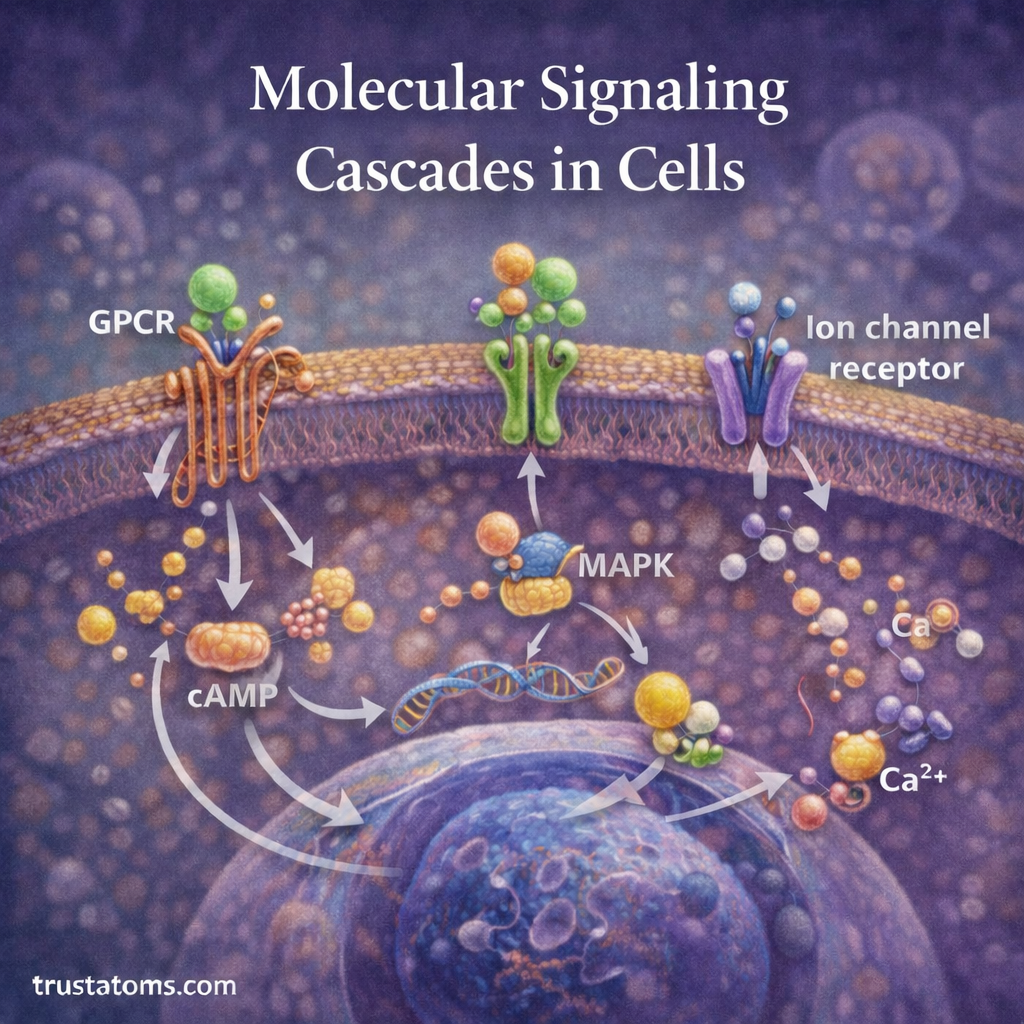
Educational biology illustration showing cell membrane receptors activating internal signaling molecules that transmit signals to the nucleus.
Illustration showing how molecular signaling cascades transmit signals from cell surface receptors through intracellular pathways to regulate gene activity. trustatoms.com.

Cells must constantly respond to signals from their environment. These signals might indicate changes in nutrient levels, stress conditions, hormonal activity, or communication from neighboring cells. To process this information, cells rely on molecular signaling cascades—chains of biochemical reactions that transmit signals from the cell surface to internal targets.

Molecular signaling cascades allow cells to detect signals, amplify them, and produce coordinated biological responses. Without these pathways, cells would not be able to regulate growth, maintain internal balance, or adapt to changing conditions.

Understanding signaling cascades is a central part of modern cell biology because these systems control many critical processes including development, immune responses, and disease progression.

Continue reading “Molecular Signaling Cascades in Cells”

Cellular Decision-Making Pathways

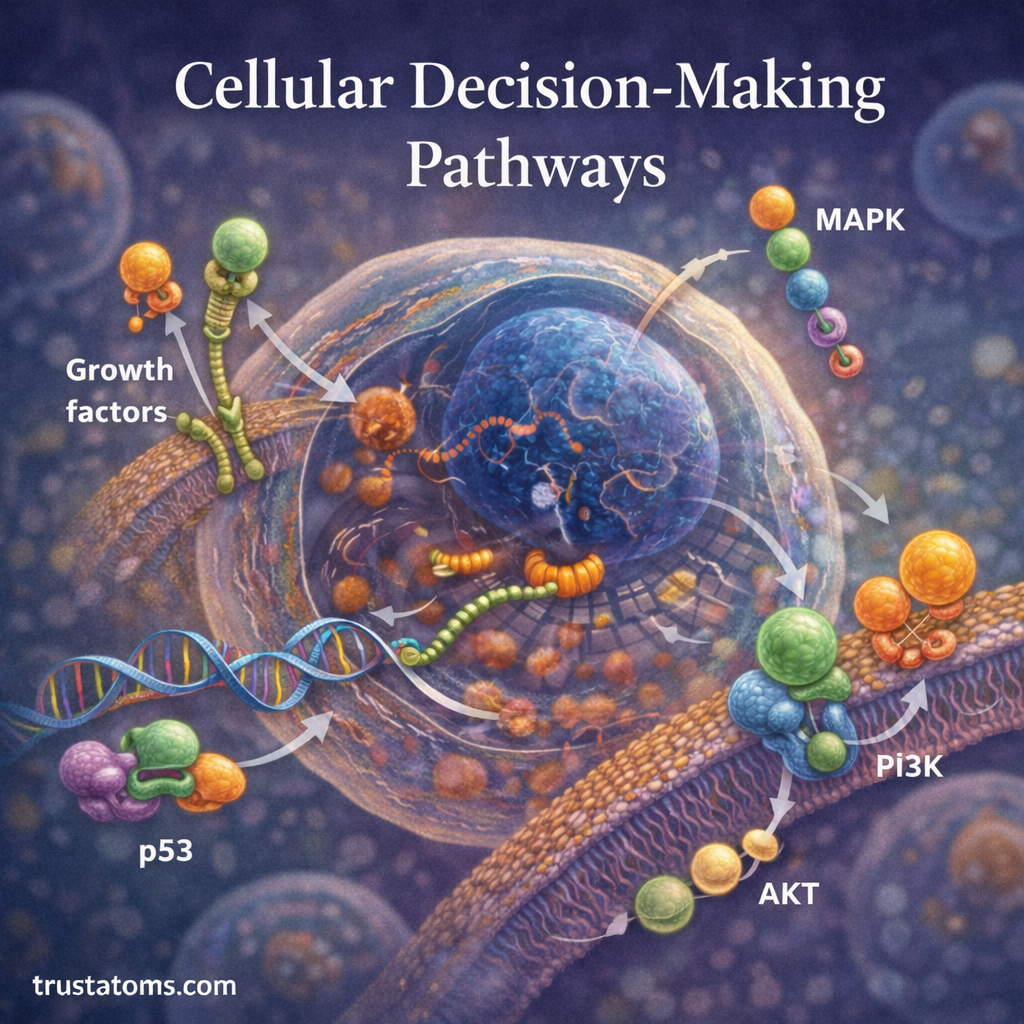
Educational biology illustration showing signaling molecules activating receptors on a cell membrane and triggering internal pathways that regulate gene expression and cellular responses.
Illustration showing how cellular signals activate molecular pathways inside a cell, guiding decisions such as growth, repair, or programmed cell death. trustatoms.com.

Cells constantly face choices. They must determine when to grow, divide, repair damage, move, or initiate programmed cell death. These biological decisions are not conscious, but they arise from complex molecular signaling systems known as cellular decision-making pathways.

Inside every cell, networks of proteins, RNA molecules, signaling compounds, and receptors communicate with one another. Together, they process environmental information and convert it into specific cellular responses.

Understanding these pathways helps explain how cells adapt to changing conditions, maintain balance in tissues, and coordinate the behavior of entire organisms.

Continue reading “Cellular Decision-Making Pathways”

Complex Biomolecular Interactions in Cells

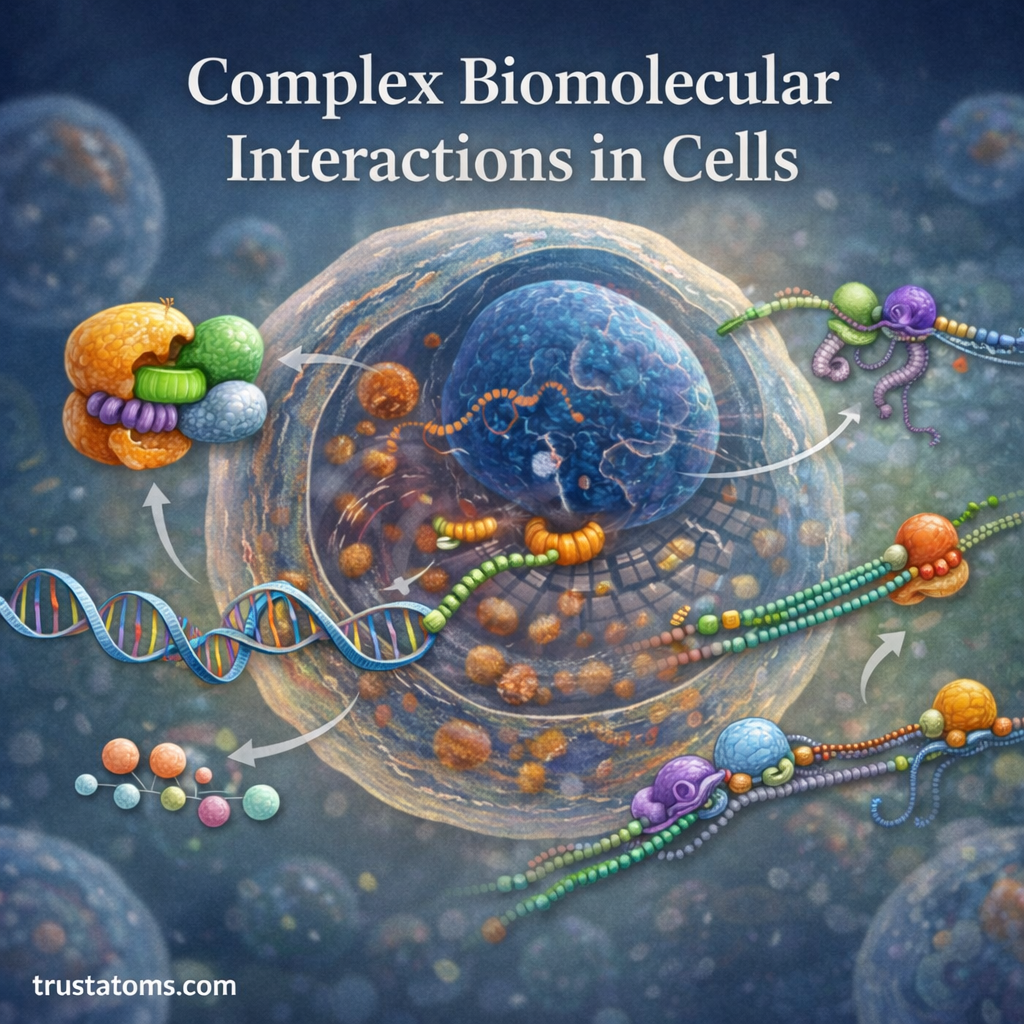
Educational biology illustration of a cell showing DNA, proteins, RNA strands, and enzymes interacting to demonstrate complex biomolecular interactions inside cells.
Illustration showing multiple biomolecules—DNA, RNA, proteins, and enzymes—interacting within a cell to coordinate essential biological processes. trustatoms.com.

Cells function through an extraordinary web of molecular interactions. Rather than acting independently, biological molecules such as proteins, DNA, RNA, lipids, and small metabolites constantly interact with one another to maintain life.

These complex biomolecular interactions allow cells to process information, regulate metabolism, respond to environmental signals, and coordinate thousands of biochemical reactions simultaneously. Understanding these interactions is essential for explaining how cells grow, divide, repair damage, and adapt to changing conditions.

Modern biology increasingly views the cell as a dynamic molecular network, where interactions between biomolecules determine cellular behavior.

Continue reading “Complex Biomolecular Interactions in Cells”

RNA Regulatory Networks in Cells

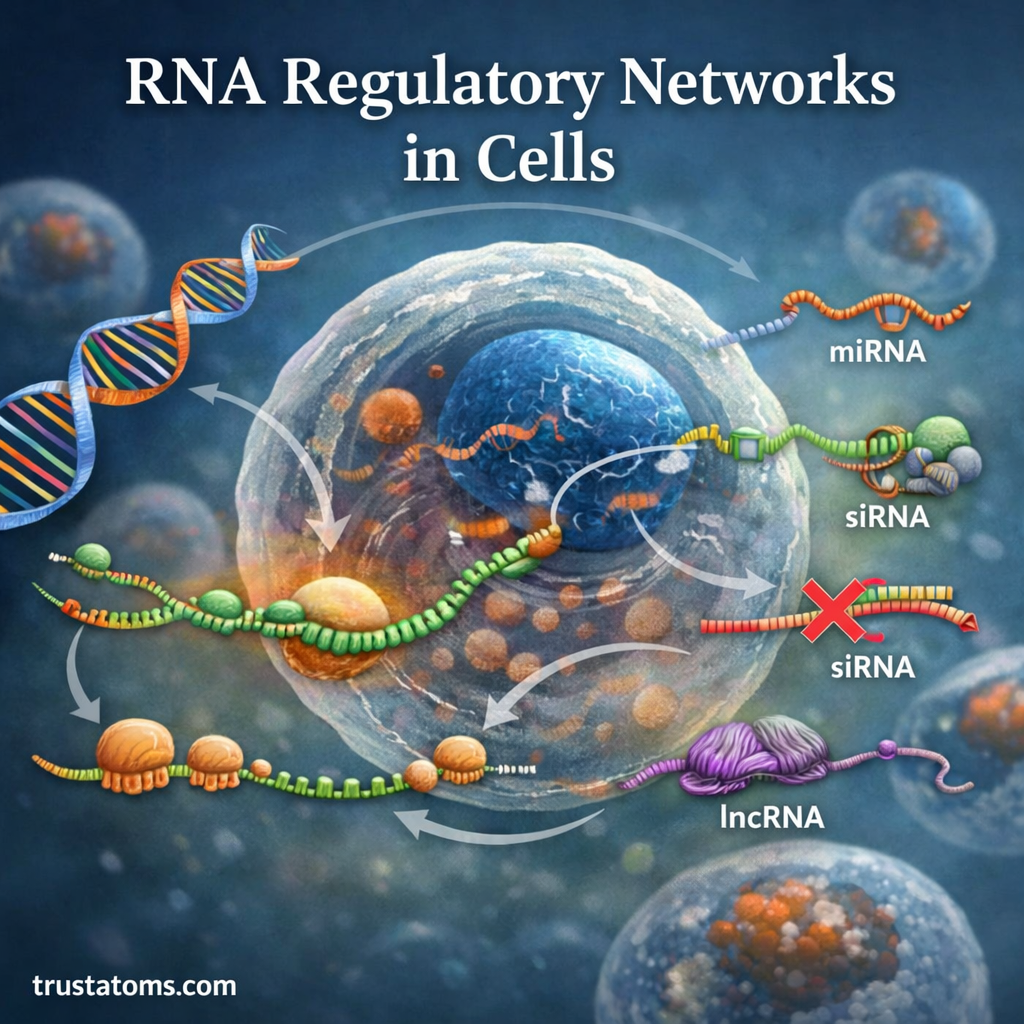
Illustrated biology diagram showing RNA regulatory networks in a cell with DNA, mRNA, miRNA, siRNA, and lncRNA interactions controlling gene expression.
Educational illustration of RNA regulatory networks in a cell, showing how different RNA molecules interact to regulate gene expression. trustatoms.com.

Cells constantly adjust which genes are active and which remain silent. While DNA provides the instructions, RNA molecules play a major role in controlling how those instructions are used. Instead of acting only as intermediates between DNA and proteins, many RNAs function as regulators that coordinate complex molecular systems inside the cell.

These systems—known as RNA regulatory networks—involve interactions among messenger RNA (mRNA), non-coding RNA molecules, proteins, and DNA. Together, they control gene expression, cellular responses, and the timing of biological processes.

Understanding RNA regulatory networks helps scientists explain how cells adapt, differentiate, and maintain stability in constantly changing environments.

Continue reading “RNA Regulatory Networks in Cells”

Molecular Mechanisms in Cellular Differentiation

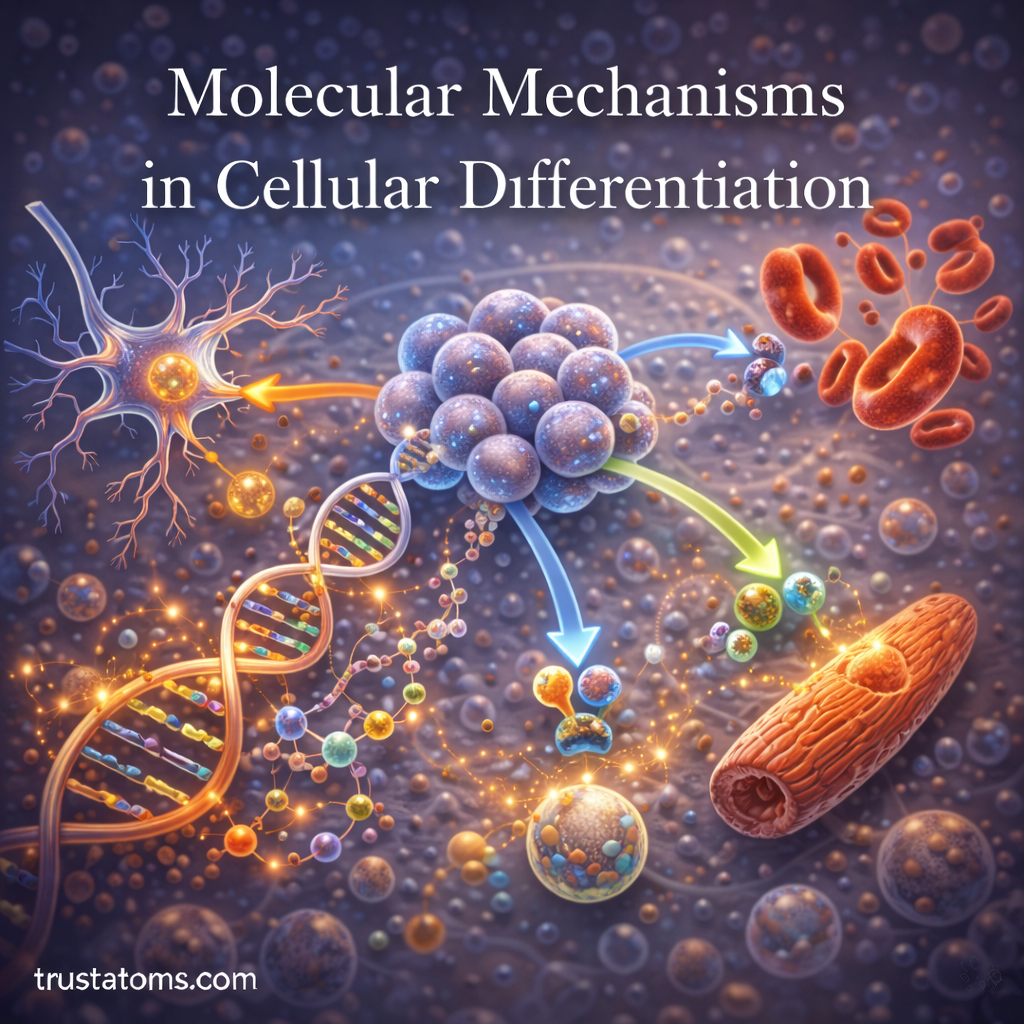
Illustration showing stem cells differentiating into specialized cells such as neurons, muscle cells, and blood cells guided by molecular signaling pathways.
Illustration depicting molecular mechanisms in cellular differentiation where stem cells develop into specialized cell types through gene regulation and signaling pathways. trustatoms.com.

Cellular differentiation is the biological process through which unspecialized cells develop into specialized cell types with unique structures and functions. This process is fundamental to the development of multicellular organisms, allowing a single fertilized egg to give rise to the many different tissues and organs found in the body.

Although most cells contain the same genetic information, different cell types express different sets of genes. Molecular mechanisms control which genes are activated or silenced, enabling cells to adopt specialized roles such as muscle cells, neurons, or blood cells.

Understanding the molecular mechanisms behind cellular differentiation is essential for developmental biology, regenerative medicine, and disease research.

Continue reading “Molecular Mechanisms in Cellular Differentiation”