What Is Physics?

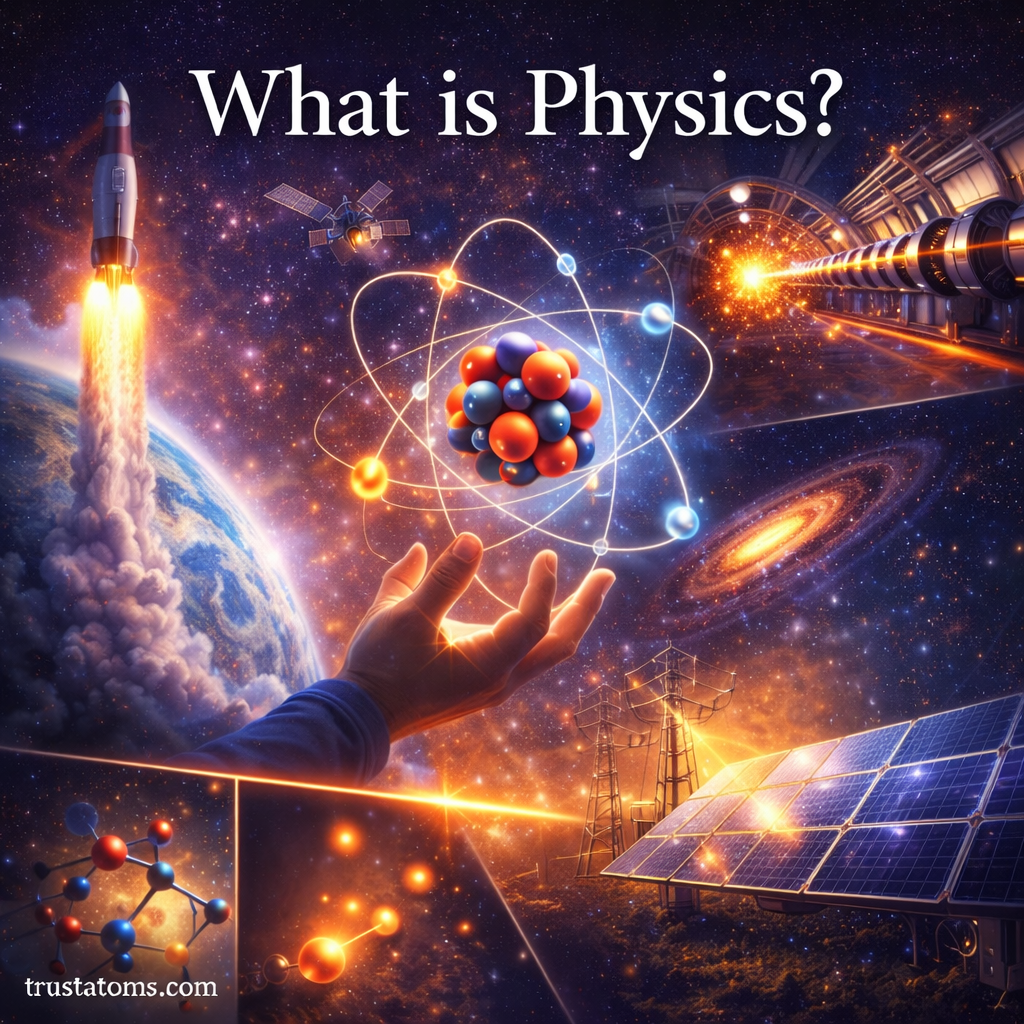
Educational illustration showing atoms, rockets, galaxies, and energy systems representing the study of physics.
Conceptual illustration showing atoms, space exploration, and energy technologies representing the science of physics. trustatoms.com.

Physics is the branch of science that studies matter, energy, motion, and the fundamental forces of the universe. It seeks to understand how the natural world works—from the smallest subatomic particles to the largest galaxies.

At its core, physics aims to answer questions such as:

  • Why do objects move?
  • How does energy transfer?
  • What are the fundamental laws that govern the universe?

By studying these principles, physics forms the foundation for many other scientific fields, including chemistry, astronomy, engineering, and modern technology.

Continue reading “What Is Physics?”

What Is a Photon?

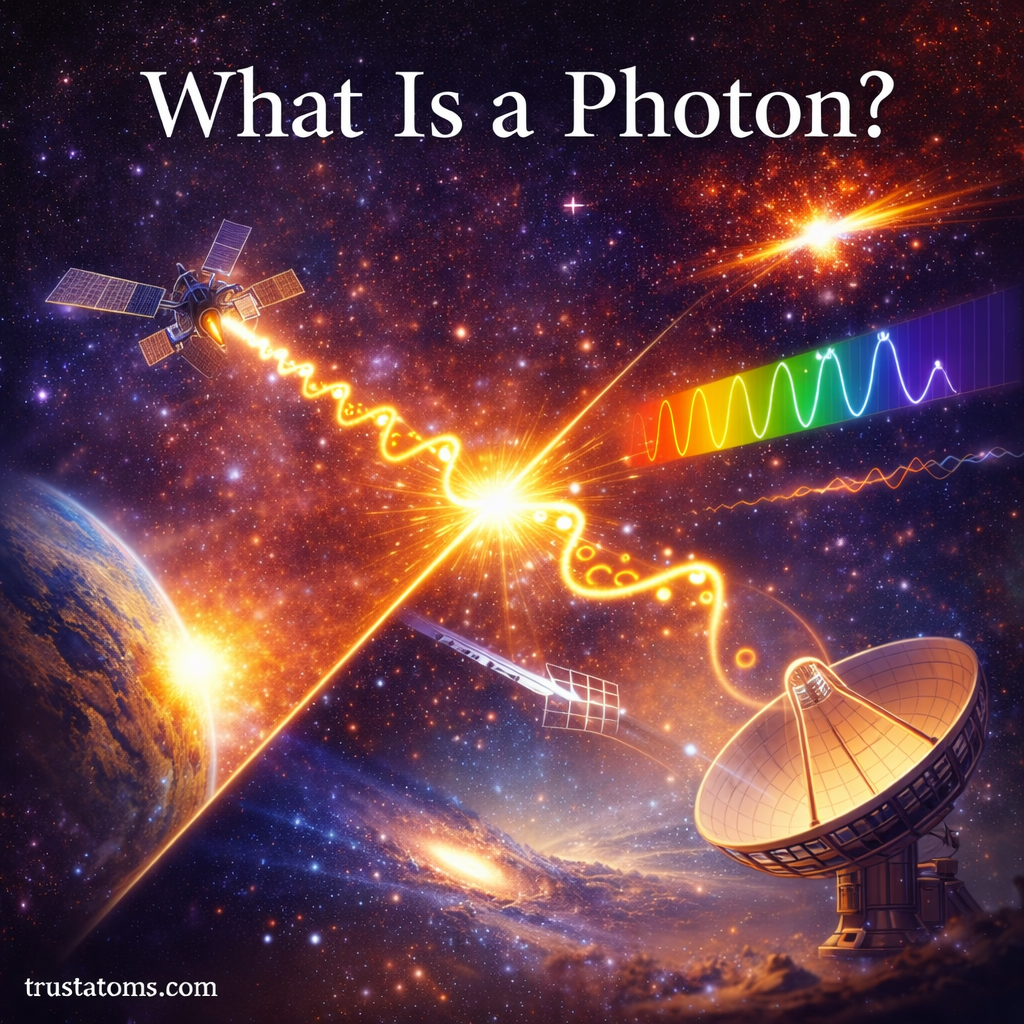
Educational illustration showing a photon traveling as light energy across space with examples of electromagnetic radiation.
Conceptual illustration showing photons carrying electromagnetic energy across space, representing light and radiation. trustatoms.com.

A photon is the fundamental particle of light and the carrier of the electromagnetic force. It is one of the most important particles in physics because it allows energy to travel through space in the form of electromagnetic radiation.

Photons are responsible for everything from visible light and radio waves to X-rays and gamma rays. Whenever light travels through space, it does so as a stream of photons.

Unlike many other particles, photons have no mass and move at the speed of light, making them unique in the world of physics.

Continue reading “What Is a Photon?”

What Is Particle Physics?

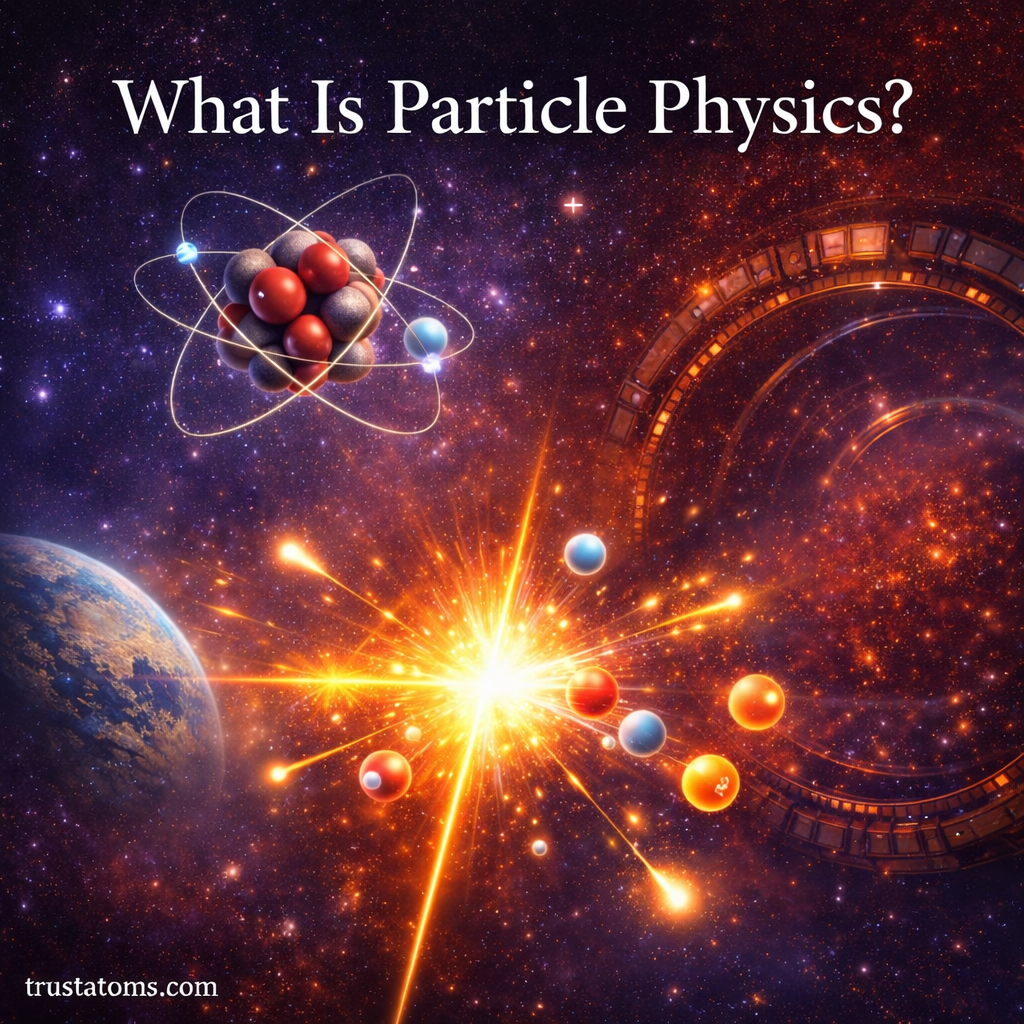
Educational illustration showing a particle collision experiment, atom structure, and particle accelerator representing particle physics.
Conceptual illustration showing a particle accelerator collision and atomic structure used to study fundamental particles. trustatoms.com.

Particle physics is the branch of physics that studies the smallest known building blocks of the universe and the forces that govern how they interact. Instead of studying large objects like planets or stars, particle physicists focus on extremely tiny components of matter called elementary particles.

By investigating these particles, scientists try to answer some of the biggest questions in science:

  • What is everything made of?
  • How did the universe begin?
  • What forces control matter and energy?

Particle physics sits at the foundation of modern science because it explores the most fundamental level of reality.

Continue reading “What Is Particle Physics?”

What Is Antimatter?

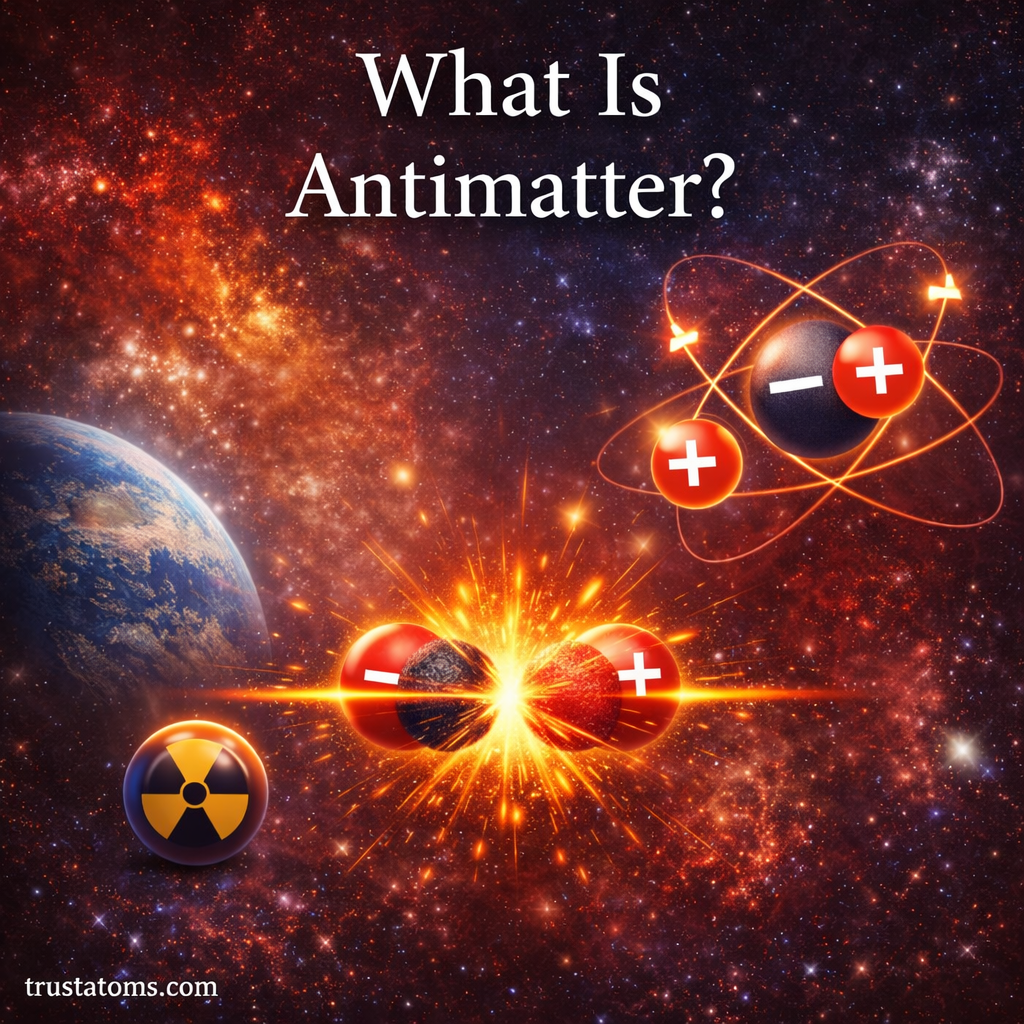
Educational space illustration showing antimatter particles colliding with matter and releasing energy.
Illustration showing antimatter particles interacting with matter and producing energy through annihilation. trustatoms.com.

Antimatter is one of the most fascinating concepts in modern physics. It refers to particles that are nearly identical to ordinary matter but have opposite electric charge and certain reversed quantum properties.

When antimatter meets normal matter, the two annihilate each other and release energy. This phenomenon makes antimatter both scientifically important and incredibly powerful.

Although antimatter sounds like science fiction, it is very real and plays a key role in particle physics, medical imaging, and our understanding of how the universe formed.

Continue reading “What Is Antimatter?”

What Is Matter–Antimatter?

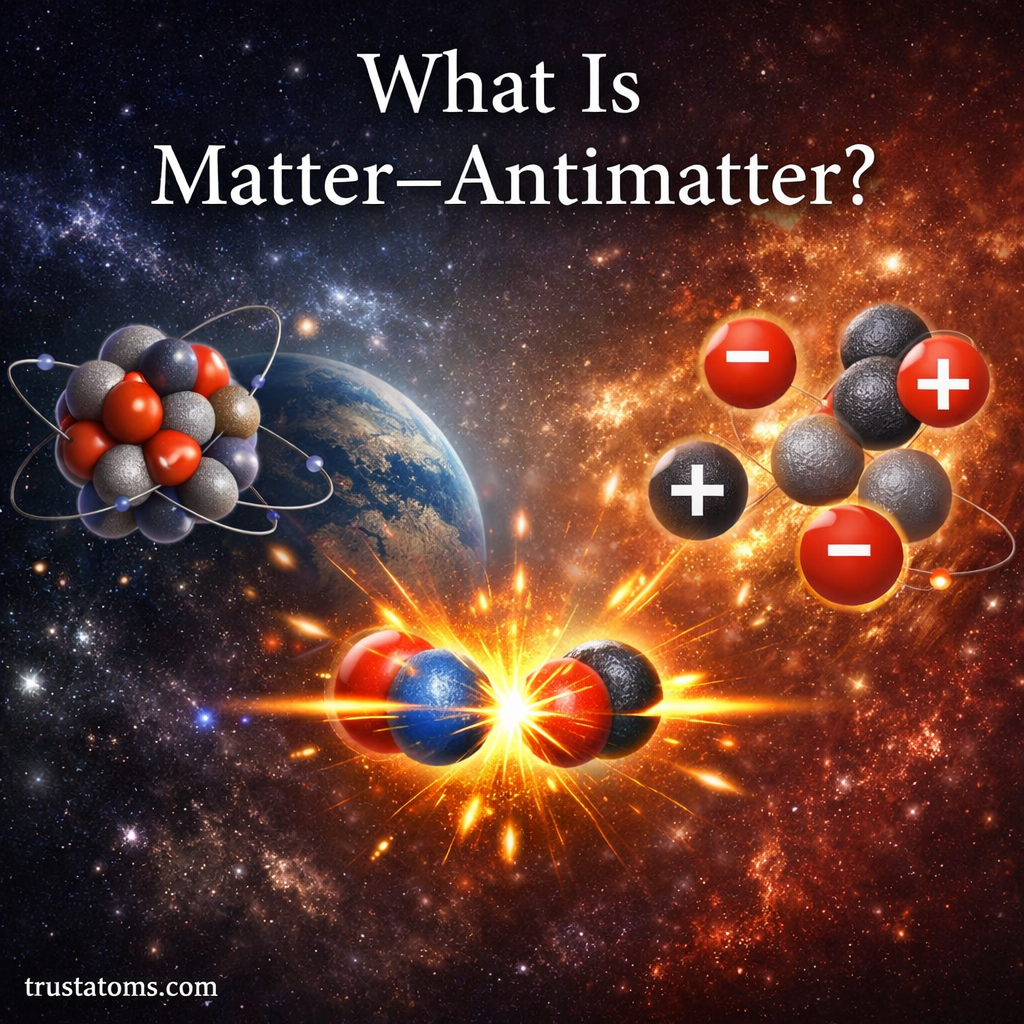
Educational illustration showing matter particles and antimatter particles colliding and releasing energy in space.
Conceptual illustration showing matter and antimatter particles colliding and annihilating into energy. trustatoms.com.

Matter and antimatter are two fundamental forms of particles in the universe. They are almost identical in mass but have opposite electrical charges and quantum properties. When matter and antimatter meet, they annihilate each other and release energy.

Understanding matter and antimatter helps scientists explore some of the deepest questions in physics, including how the universe formed and why it is made mostly of matter today.

Continue reading “What Is Matter–Antimatter?”

What Is the Photoelectric Effect?

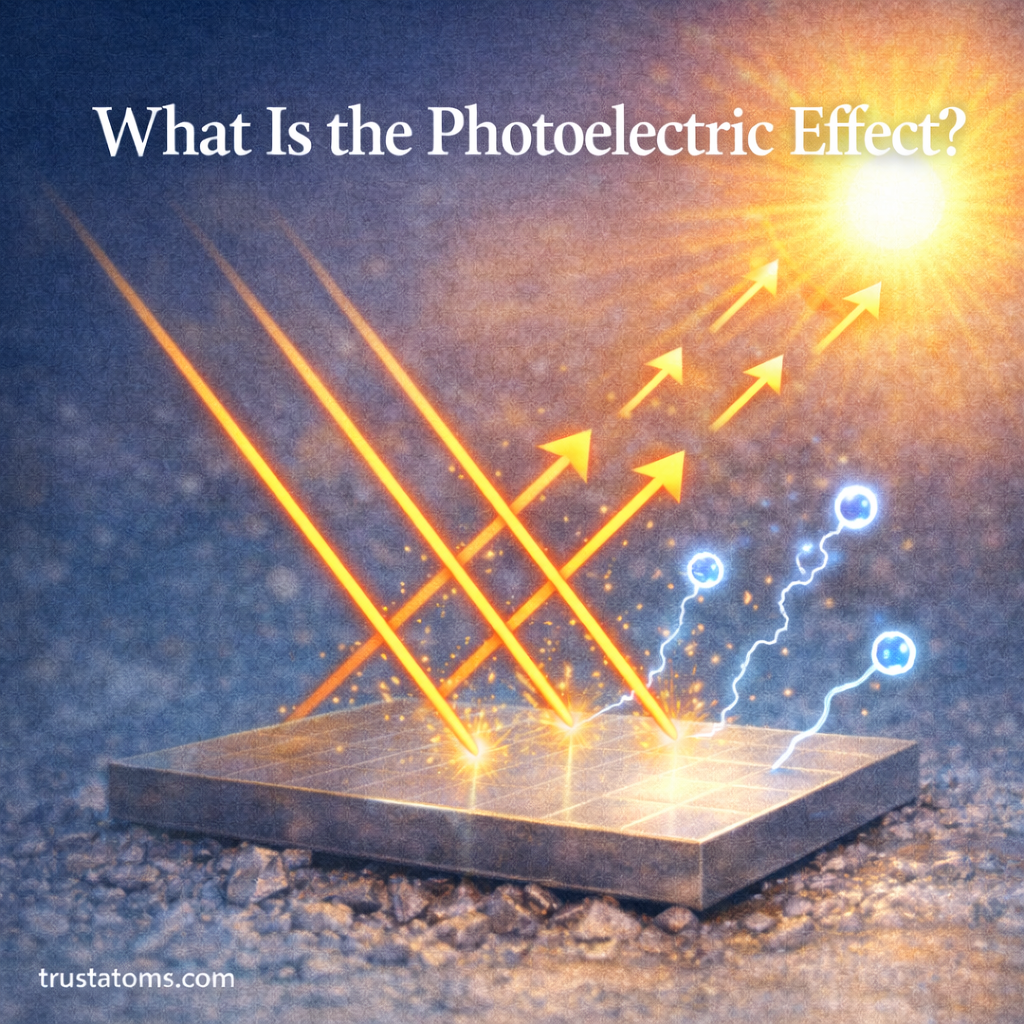
Illustration showing light rays striking a metal surface and electrons being emitted to demonstrate the photoelectric effect.
Educational illustration demonstrating the photoelectric effect, where incoming light causes electrons to be emitted from a metal surface. trustatoms.com.

The photoelectric effect is a phenomenon in physics where light striking a material causes electrons to be emitted from its surface. This discovery played a critical role in the development of modern physics and helped scientists understand that light behaves both as a wave and as a particle.

First observed in the late 19th century and later explained by Albert Einstein in 1905, the photoelectric effect became one of the key foundations of Quantum Mechanics. Einstein’s explanation showed that light can carry energy in discrete packets called photons.

Today, the photoelectric effect is used in many technologies, including solar panels, light sensors, and imaging devices.

Continue reading “What Is the Photoelectric Effect?”

What Is Latent Heat?

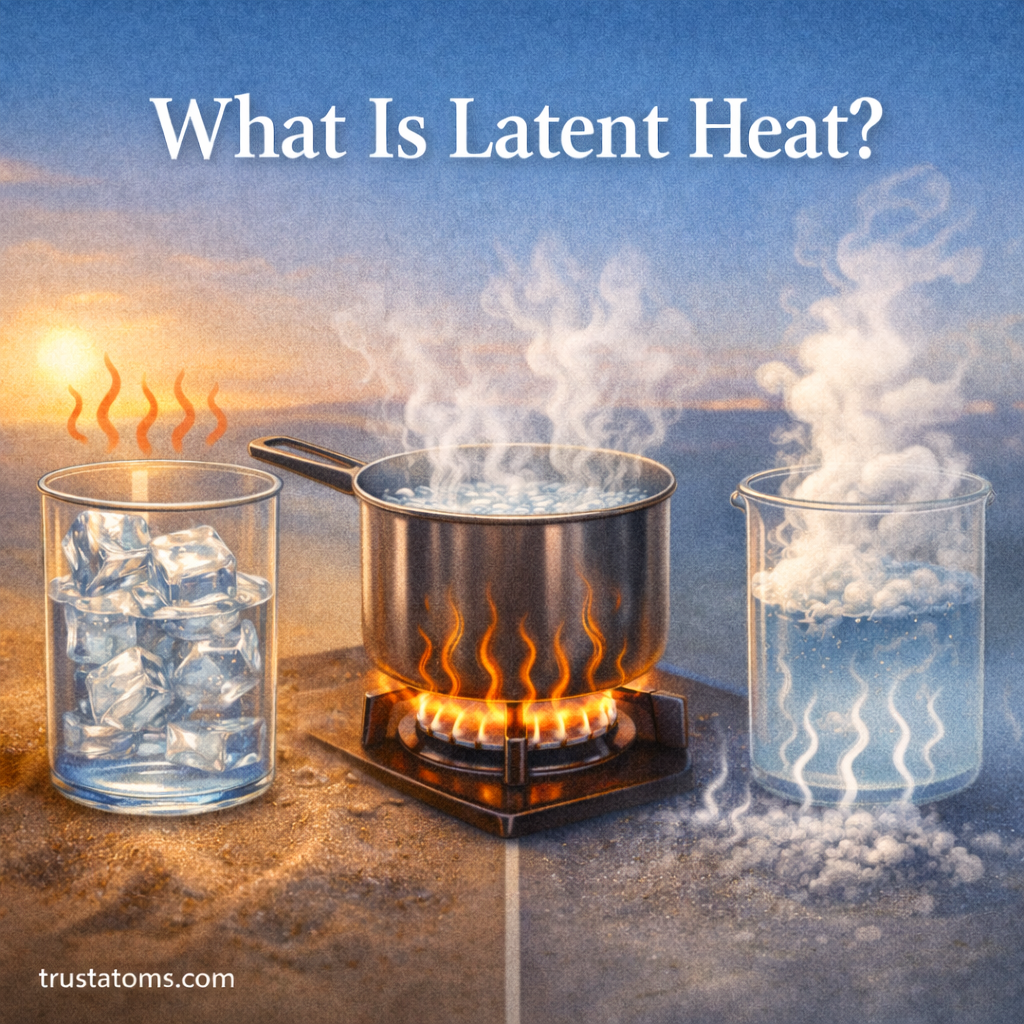
Illustration showing melting ice, boiling water on a stove, and steam formation to explain the concept of latent heat and phase changes.
Illustration demonstrating latent heat through examples of ice melting, water boiling, and steam formation during phase changes. trustatoms.com.

Latent heat is a concept in physics that describes the energy absorbed or released by a substance during a change of state without a change in temperature. When matter transitions between phases—such as solid to liquid or liquid to gas—it requires energy to rearrange its molecular structure.

Unlike normal heating, where temperature rises as heat is added, latent heat involves energy transfer while temperature stays constant. This hidden energy exchange plays a crucial role in natural processes, industrial systems, and everyday experiences.

Continue reading “What Is Latent Heat?”

What Is Heat Capacity?

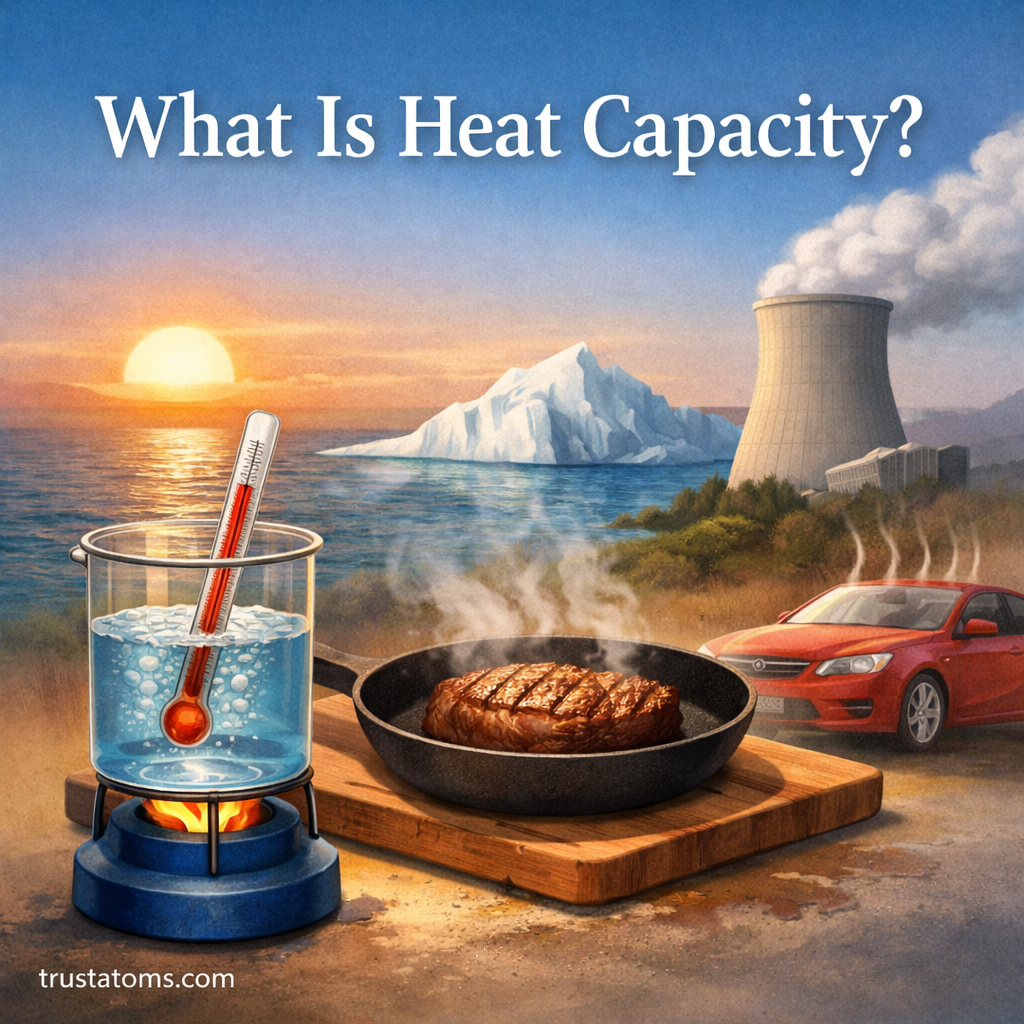
Illustration explaining heat capacity with examples of water heating in a beaker, a thermometer, cookware, and environmental heat sources.
Illustration demonstrating the concept of heat capacity using everyday examples like heated water, cooking surfaces, and environmental temperature changes. trustatoms.com.

Heat capacity is a fundamental concept in physics that describes how much heat energy a substance must absorb to change its temperature. Some materials heat up quickly, while others require much more energy to increase in temperature. Heat capacity explains why this difference occurs.

Understanding heat capacity helps scientists and engineers predict how materials respond to heating and cooling. It plays a role in everyday phenomena such as cooking, climate regulation by oceans, engine design, and thermal insulation.

Continue reading “What Is Heat Capacity?”

What Is Thermal Conductivity?

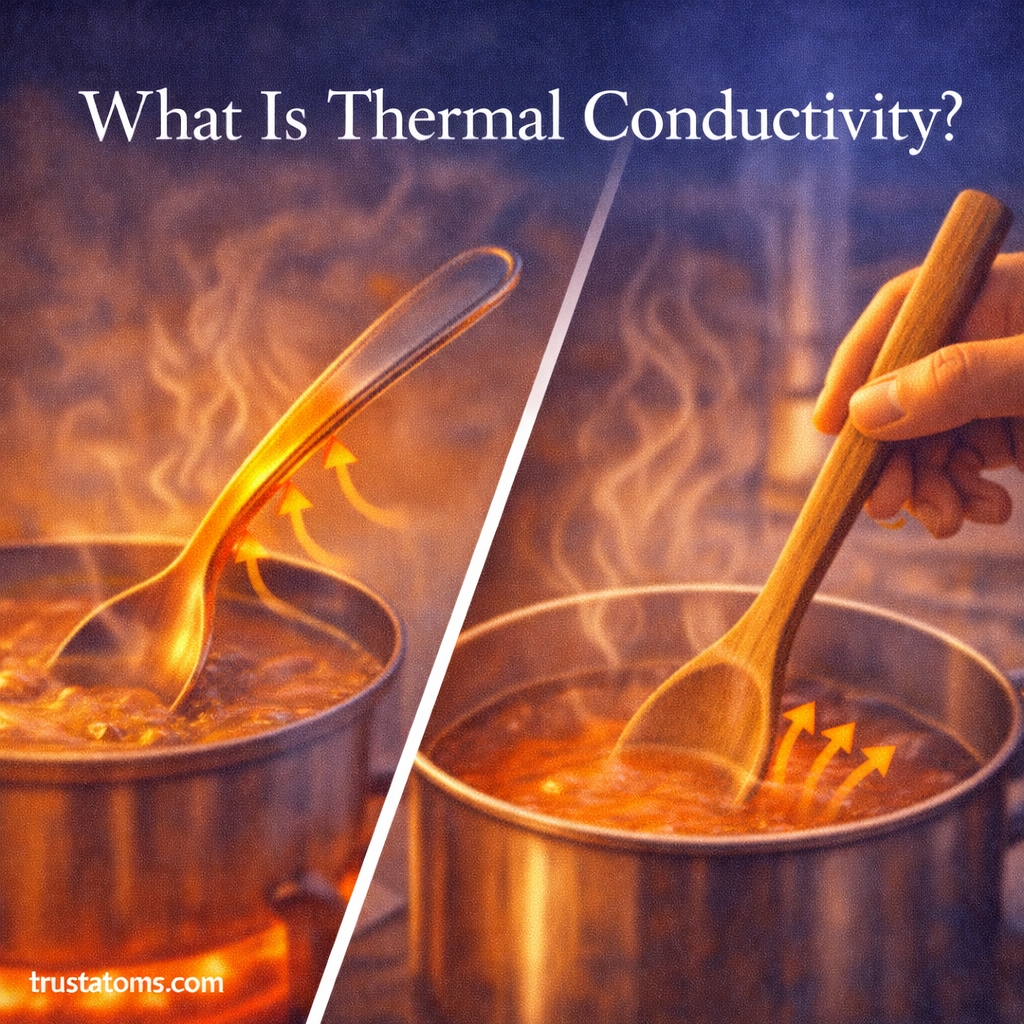
Illustration comparing a metal spoon and a wooden spoon in hot liquid to demonstrate differences in thermal conductivity.
Educational illustration comparing how metal and wood transfer heat differently when placed in hot liquid. trustatoms.com.

Introduction

Thermal conductivity is a property that describes how well a material can transfer heat. Some materials allow heat to move through them quickly, while others resist heat flow and act as insulators.

This concept is important in physics, engineering, and everyday life because it helps explain how heat moves between objects and through materials.

For example, a metal spoon placed in hot soup quickly becomes hot because metal has high thermal conductivity. In contrast, materials like wood or plastic transfer heat much more slowly.

Understanding thermal conductivity helps scientists and engineers design better buildings, cooking tools, electronic devices, and insulation systems.

Continue reading “What Is Thermal Conductivity?”

What Is Specific Heat Capacity?

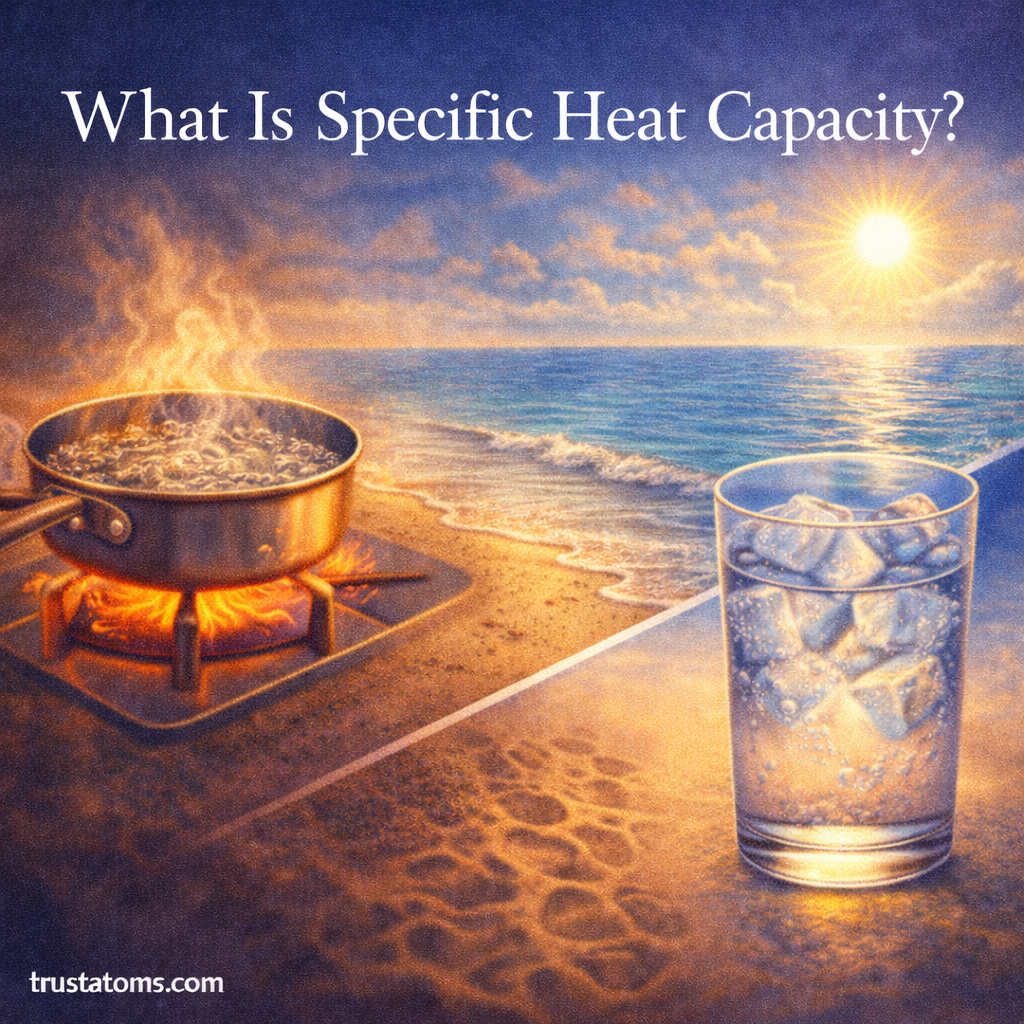
Illustration showing examples of specific heat capacity including a metal pan heating quickly, ocean water absorbing heat, and a glass of water with ice.
Educational illustration comparing how different materials respond to heat, showing metal heating quickly and water absorbing heat slowly. trustatoms.com.

Introduction

Specific heat capacity is a fundamental concept in physics that describes how much heat energy a substance needs to change its temperature. Different materials respond to heat differently—some warm up quickly, while others take much longer to heat.

Specific heat capacity explains this difference by measuring how much energy is required to raise the temperature of a substance by a certain amount.

This concept is important in physics, chemistry, environmental science, and engineering because it helps explain how heat moves through materials and how substances store thermal energy.

Continue reading “What Is Specific Heat Capacity?”