What Are the Levels of Biological Organization?

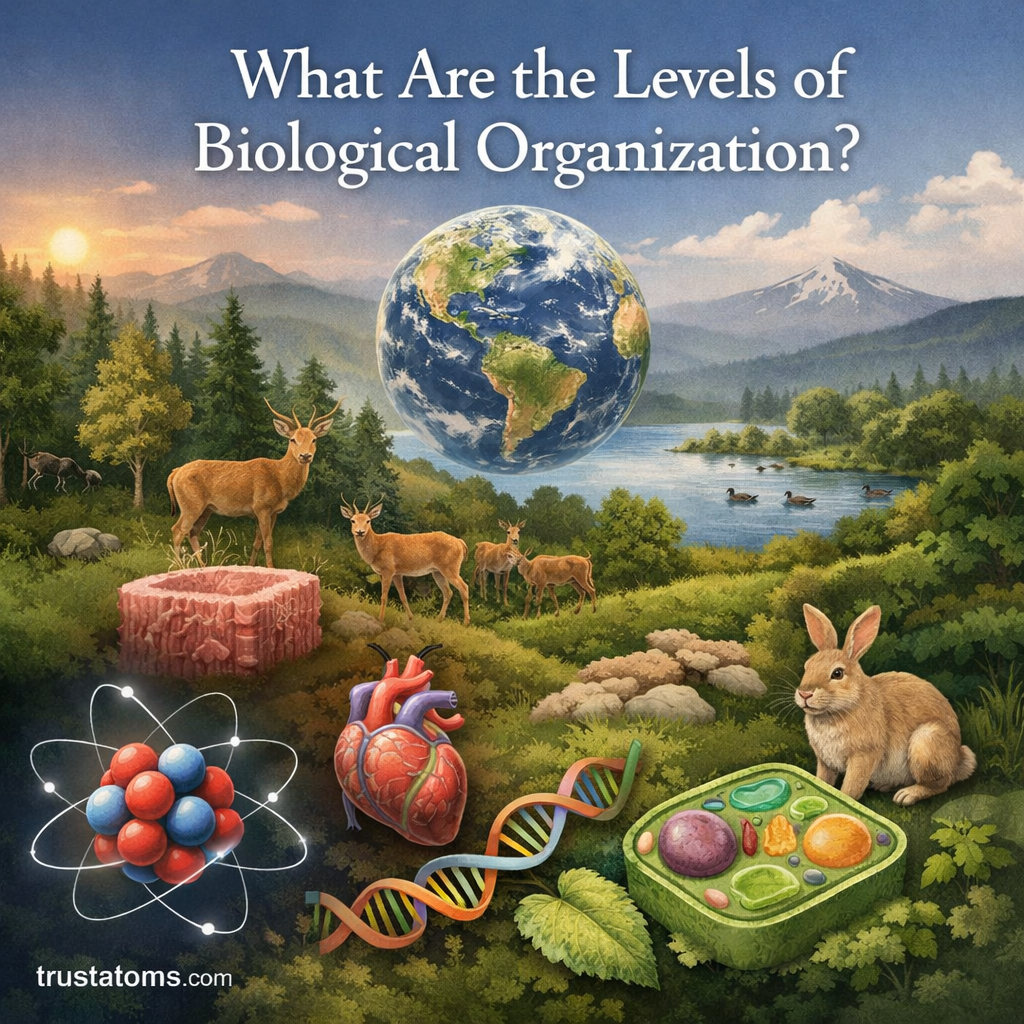
Illustrated diagram showing the levels of biological organization from atoms and cells to organisms, ecosystems, and the biosphere.
Illustration showing the hierarchy of biological organization from microscopic structures to entire ecosystems. trustatoms.com

Biology studies life from the smallest microscopic structures to the largest ecosystems on Earth. To understand how life functions, scientists organize living systems into a structured hierarchy known as the levels of biological organization.

Each level builds upon the one before it, forming increasingly complex structures that allow life to function, grow, and interact with the environment. From tiny atoms inside cells to entire ecosystems, these levels help scientists study biology in a clear and organized way.

Understanding these levels is one of the foundations of biology because it explains how simple components combine to form complex living systems.

Continue reading “What Are the Levels of Biological Organization?”
What Are Living Organisms?

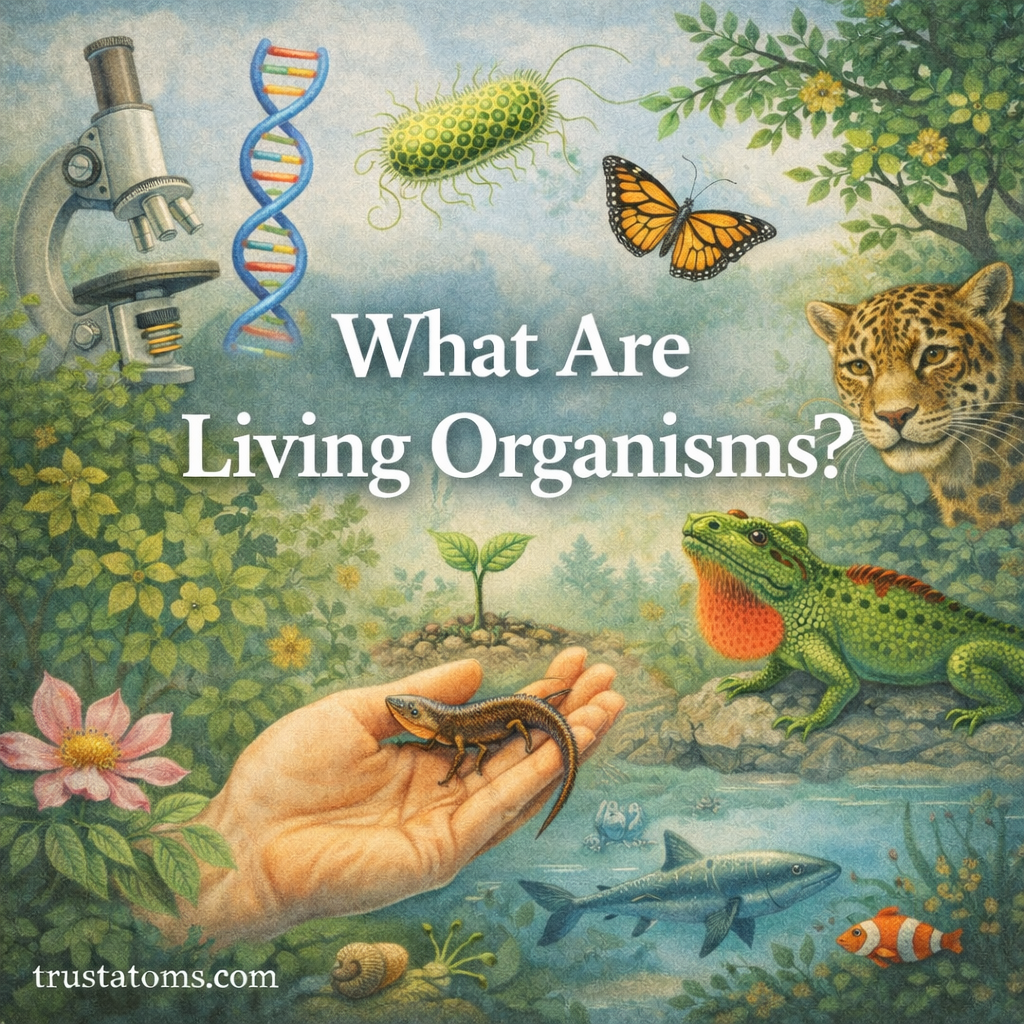
Biology illustration showing examples of living organisms including plants, animals, microorganisms, and DNA representing life on Earth.
Illustration showing different types of living organisms in biology including plants, animals, microorganisms, and marine life. trustatoms.com

Living organisms are any individual life forms capable of carrying out the essential processes required for life. These processes include growth, metabolism, reproduction, and response to the surrounding environment.

From microscopic bacteria to massive trees and complex animals, living organisms exist in countless forms across Earth. Biology—the scientific study of life—focuses on understanding how these organisms function, interact, and evolve over time.

By studying living organisms, scientists gain insight into how life survives, adapts, and maintains balance within ecosystems.

Continue reading “What Are Living Organisms?”

What Are the Characteristics of Life?

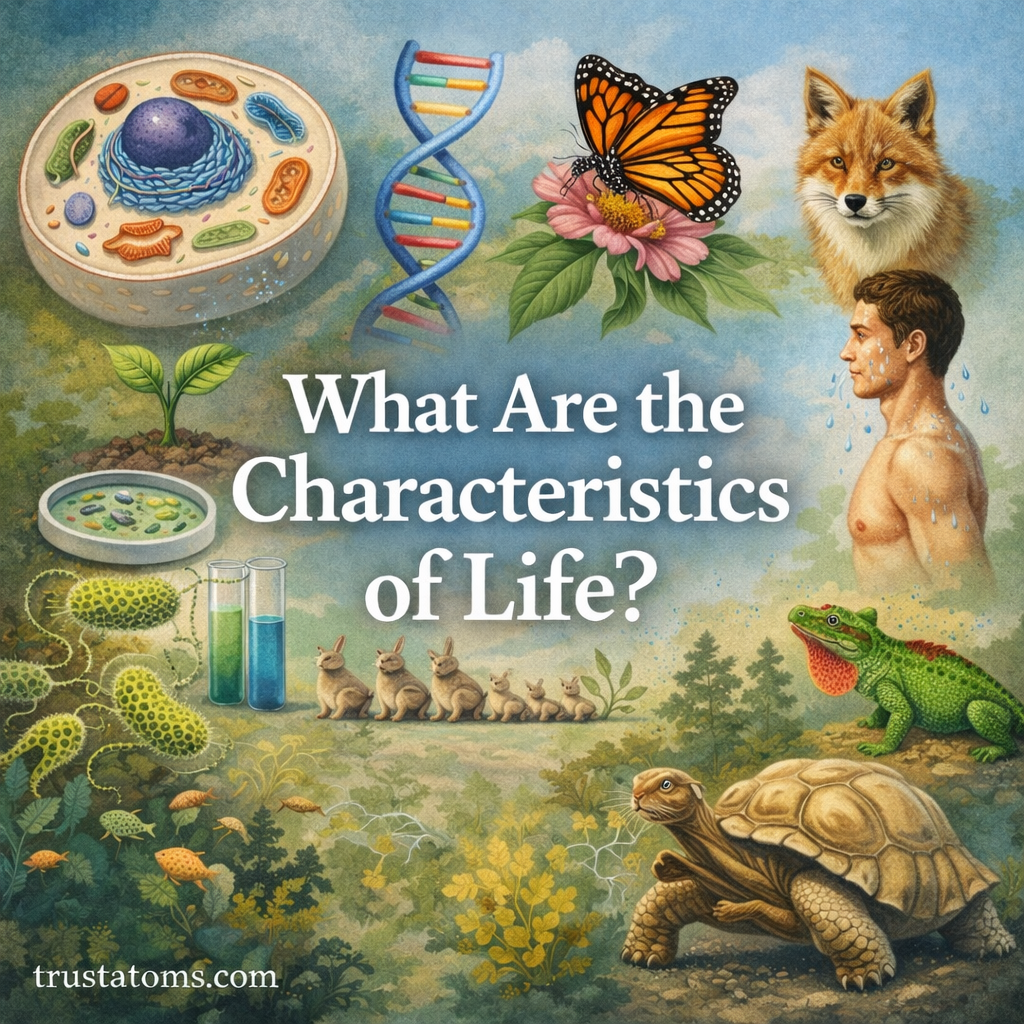
Biology illustration showing the characteristics of life including cells, DNA, organisms, growth, and reproduction.
Illustration representing the main characteristics of life in biology, including cells, DNA, growth, reproduction, and living organisms. trustatoms.com

Life on Earth exists in an incredible range of forms, from microscopic bacteria to giant trees and complex animals. Despite their differences, all living organisms share certain fundamental traits that distinguish them from nonliving matter.

Biology identifies these shared traits as the characteristics of life. These characteristics describe the processes and features that allow organisms to survive, grow, and reproduce.

Understanding these characteristics helps scientists determine whether something is alive and how living systems function in nature.

Continue reading “What Are the Characteristics of Life?”

What Is Biology?

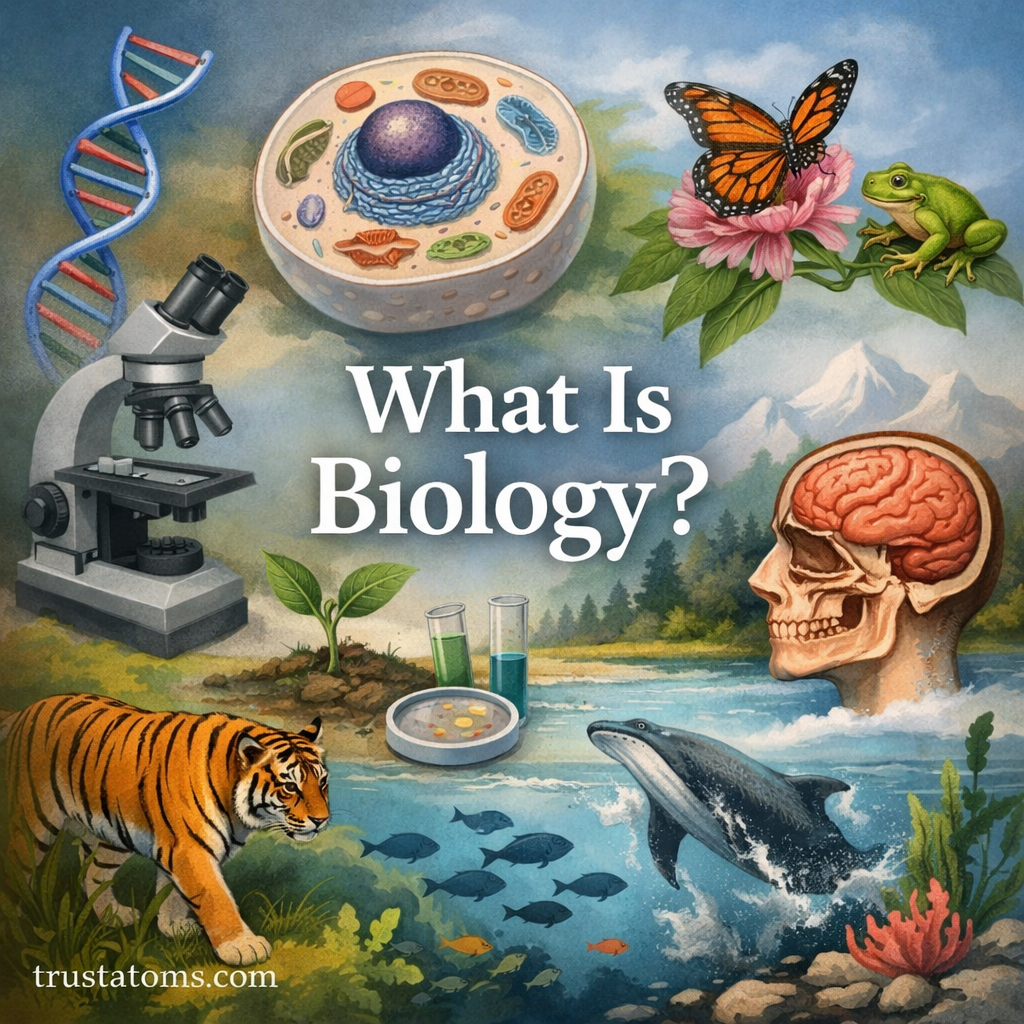
Illustration explaining what biology is with DNA, a microscope, plant growth, animals, and cell structures representing the study of life.
Illustration showing key elements of biology including cells, DNA, organisms, and ecosystems. trustatoms.com

Biology is the scientific study of life and living organisms. It explores how living things function, grow, reproduce, evolve, and interact with their environments. From microscopic bacteria to giant blue whales, biology seeks to understand the processes that make life possible on Earth.

Because life exists in many forms and environments, biology is one of the broadest scientific disciplines. It connects with chemistry, physics, environmental science, and even technology to explain how living systems work.

Understanding biology helps scientists solve problems related to health, agriculture, ecosystems, and the future of life on our planet.

Continue reading “What Is Biology?”

What Is Cellular Respiration?

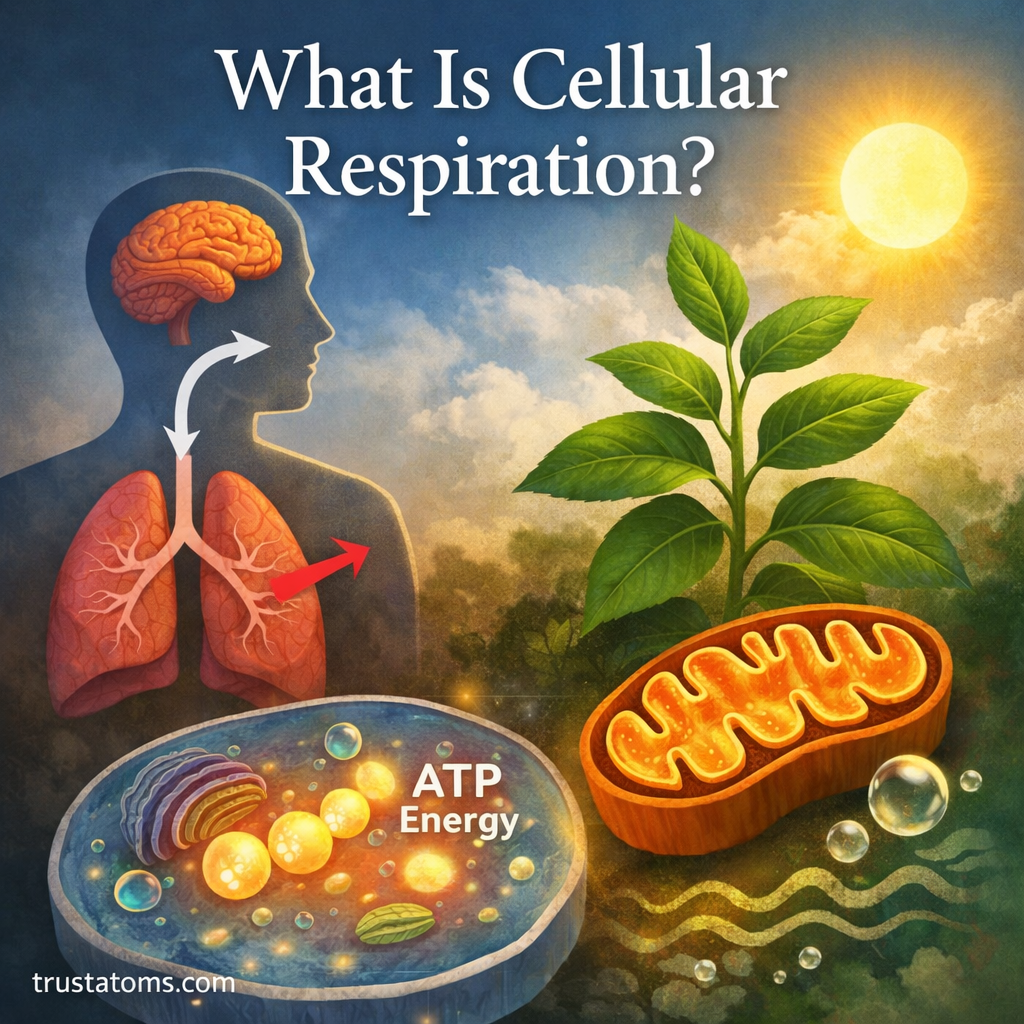
Simple educational illustration explaining cellular respiration with mitochondria producing ATP energy in cells.
Illustration showing how cells convert nutrients and oxygen into usable energy through cellular respiration. trustatoms.com

Cellular respiration is the process cells use to convert nutrients—primarily glucose—into usable energy. This energy powers nearly every activity in living organisms, from muscle movement and brain function to growth and cell repair.

In simple terms, cellular respiration allows cells to release the energy stored in food and transform it into a molecule called ATP (adenosine triphosphate). ATP acts as the cell’s main energy currency.

Without cellular respiration, cells would not have the energy needed to perform their basic functions.

Continue reading “What Is Cellular Respiration?”

What Is Photosynthesis?

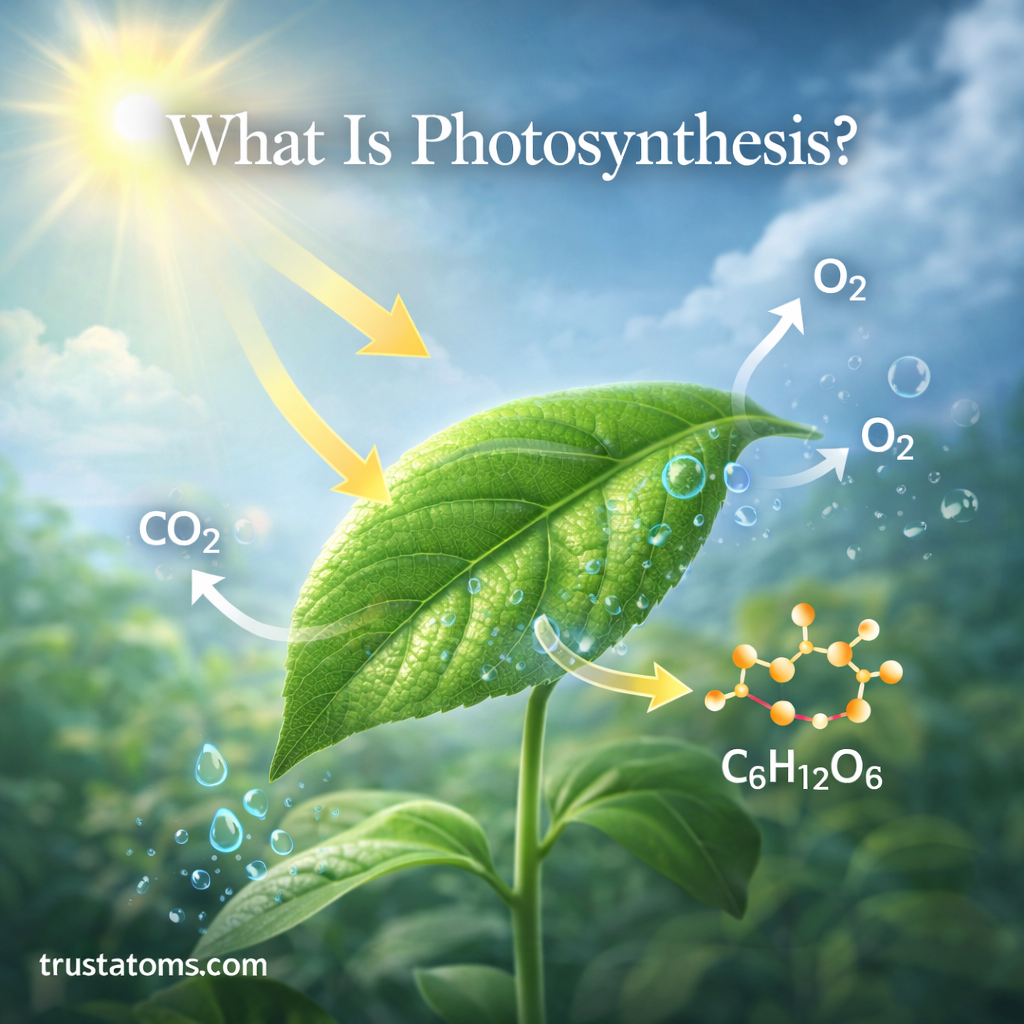
Illustration showing photosynthesis in a plant leaf where sunlight, water, and carbon dioxide produce glucose and oxygen.
Illustration explaining photosynthesis in plants, showing how sunlight, carbon dioxide, and water are converted into energy and oxygen. trustatoms.com

Photosynthesis is the biological process that allows plants, algae, and some microorganisms to convert sunlight into chemical energy. This process produces the food that plants need to grow while also releasing oxygen into the atmosphere.

Without photosynthesis, life on Earth would be dramatically different. The oxygen we breathe and much of the food we eat ultimately depend on this remarkable process.

Understanding photosynthesis helps explain how energy moves through ecosystems and how plants sustain life on the planet.

Continue reading “What Is Photosynthesis?”

Mitosis vs Meiosis

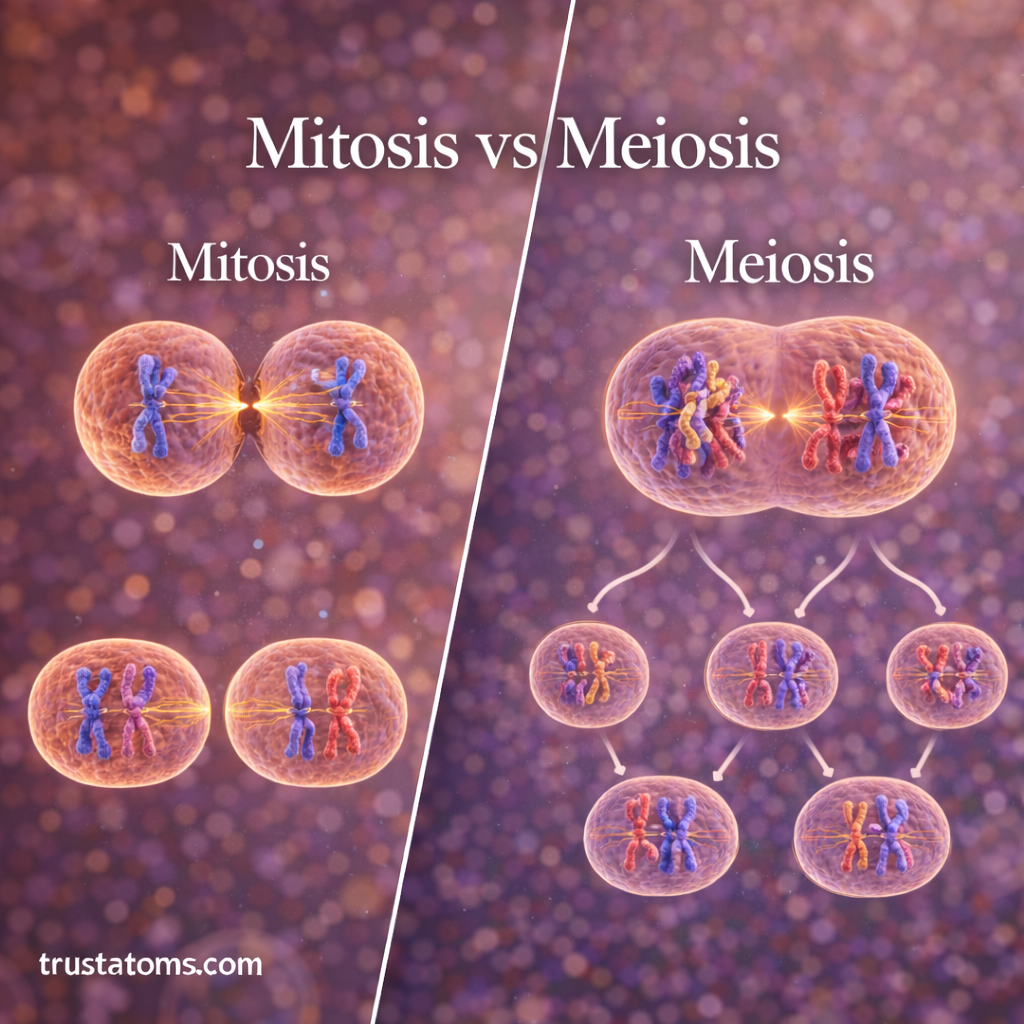
Illustration comparing mitosis and meiosis showing how mitosis produces two identical cells and meiosis produces four genetically unique cells.
Illustration comparing mitosis and meiosis, showing the difference between regular cell division and reproductive cell division. trustatoms.com

Cells divide to support growth, repair tissues, and produce reproductive cells. Two major types of cell division make this possible: mitosis and meiosis. While both processes involve dividing cells and distributing genetic material, they serve very different biological purposes.

Mitosis helps organisms grow and maintain body tissues, while meiosis produces reproductive cells required for sexual reproduction. Understanding the differences between these processes is fundamental to biology and genetics.

This guide explains how mitosis and meiosis work, their stages, and the key differences between them.

Continue reading “Mitosis vs Meiosis”

What Is Meiosis?

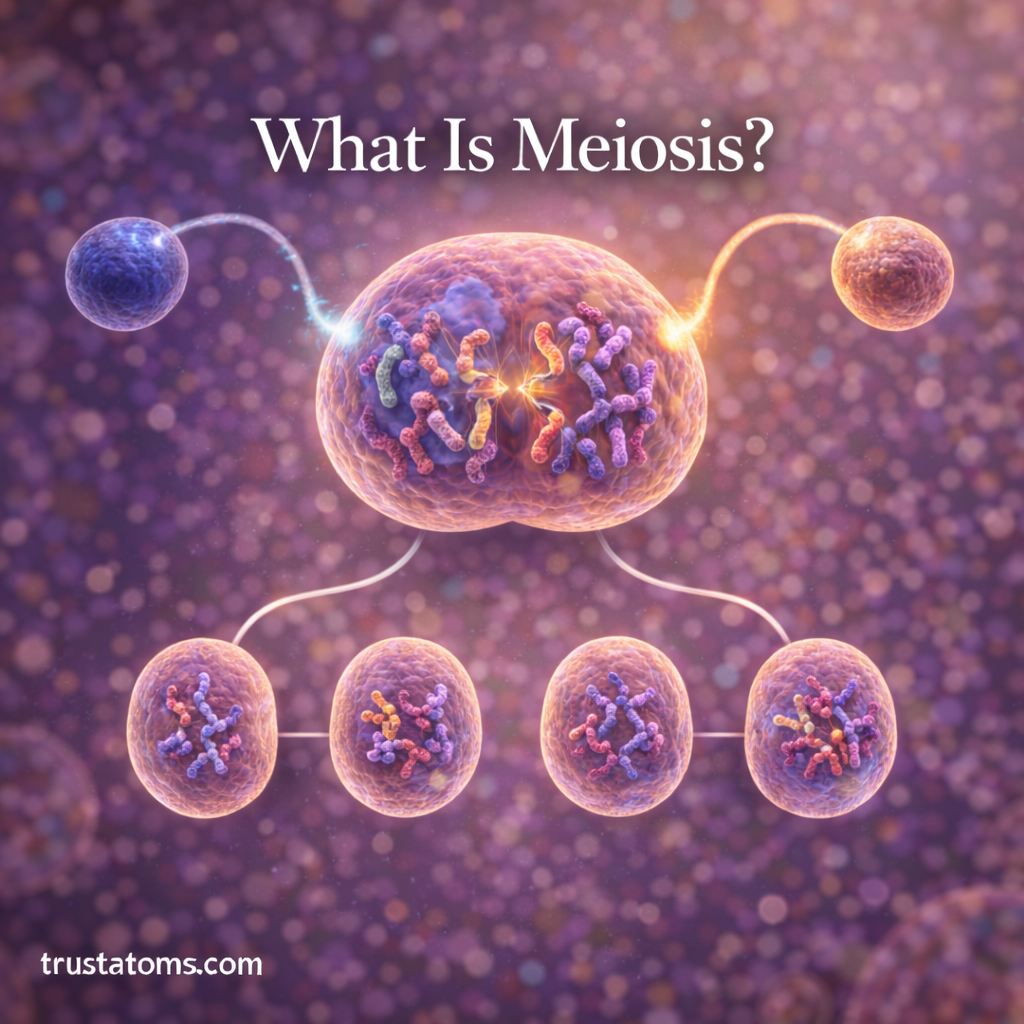
Illustration showing meiosis where one cell divides twice to produce four genetically unique reproductive cells.
Illustration of meiosis showing how one cell divides to form four genetically unique reproductive cells. trustatoms.com

Meiosis is a specialized type of cell division that produces reproductive cells such as sperm and egg cells. Unlike regular cell division, meiosis reduces the number of chromosomes by half, ensuring that when fertilization occurs, the resulting offspring has the correct number of chromosomes.

This process is essential for sexual reproduction and plays a major role in generating genetic diversity within populations.

Understanding meiosis helps explain how traits are passed from parents to offspring and why individuals within a species can have unique genetic combinations.

Continue reading “What Is Meiosis?”

What Is Mitosis?

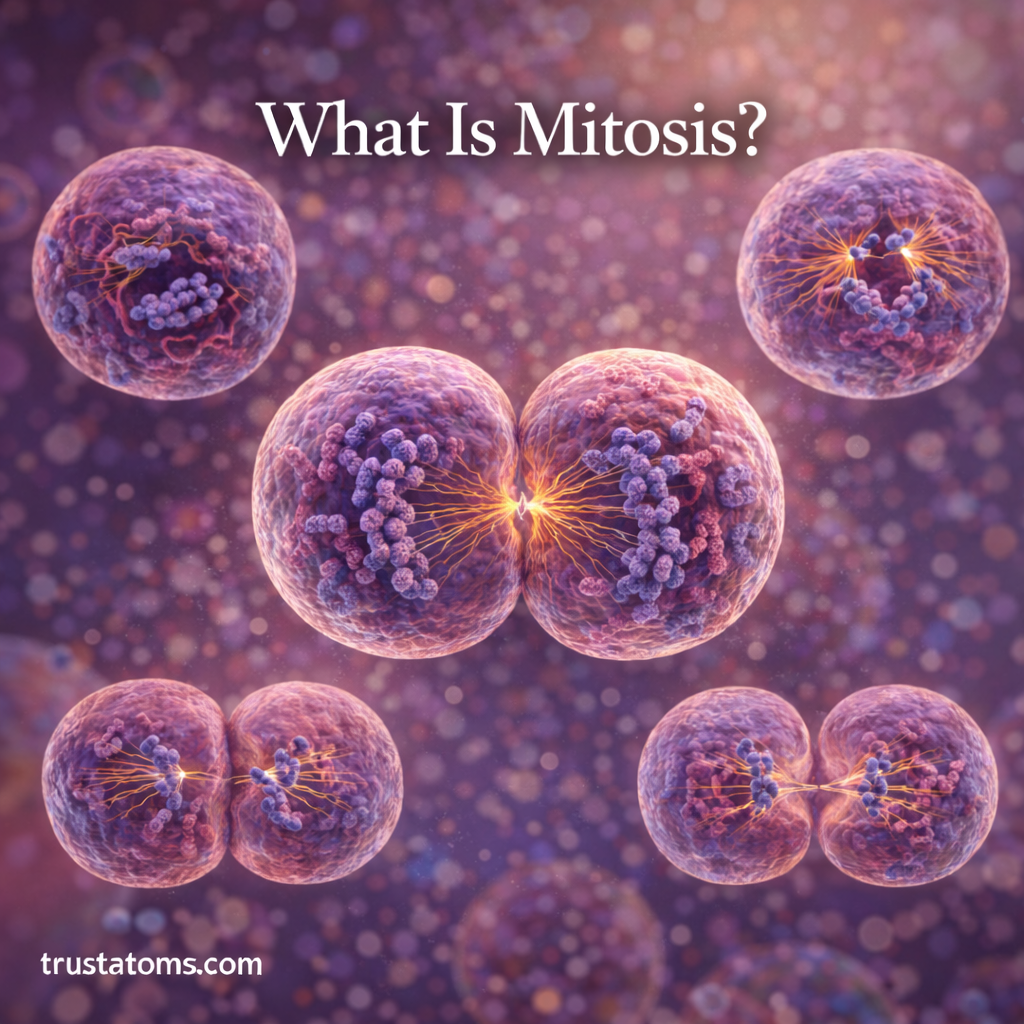
Illustration showing the stages of mitosis where a single cell divides into two identical daughter cells.
Illustration of mitosis demonstrating how one cell divides to form two genetically identical daughter cells. trustatoms.com

Mitosis is a process of cell division that allows a single cell to produce two identical daughter cells. This process is essential for growth, tissue repair, and maintaining healthy cells in multicellular organisms.

Every time your body grows, heals a wound, or replaces worn-out cells, mitosis is happening inside your tissues. By ensuring that each new cell receives an identical copy of genetic material, mitosis maintains stability in an organism’s DNA.

Understanding mitosis helps explain how organisms develop, maintain their bodies, and keep cells functioning properly.

Continue reading “What Is Mitosis?”

DNA vs RNA: Key Differences

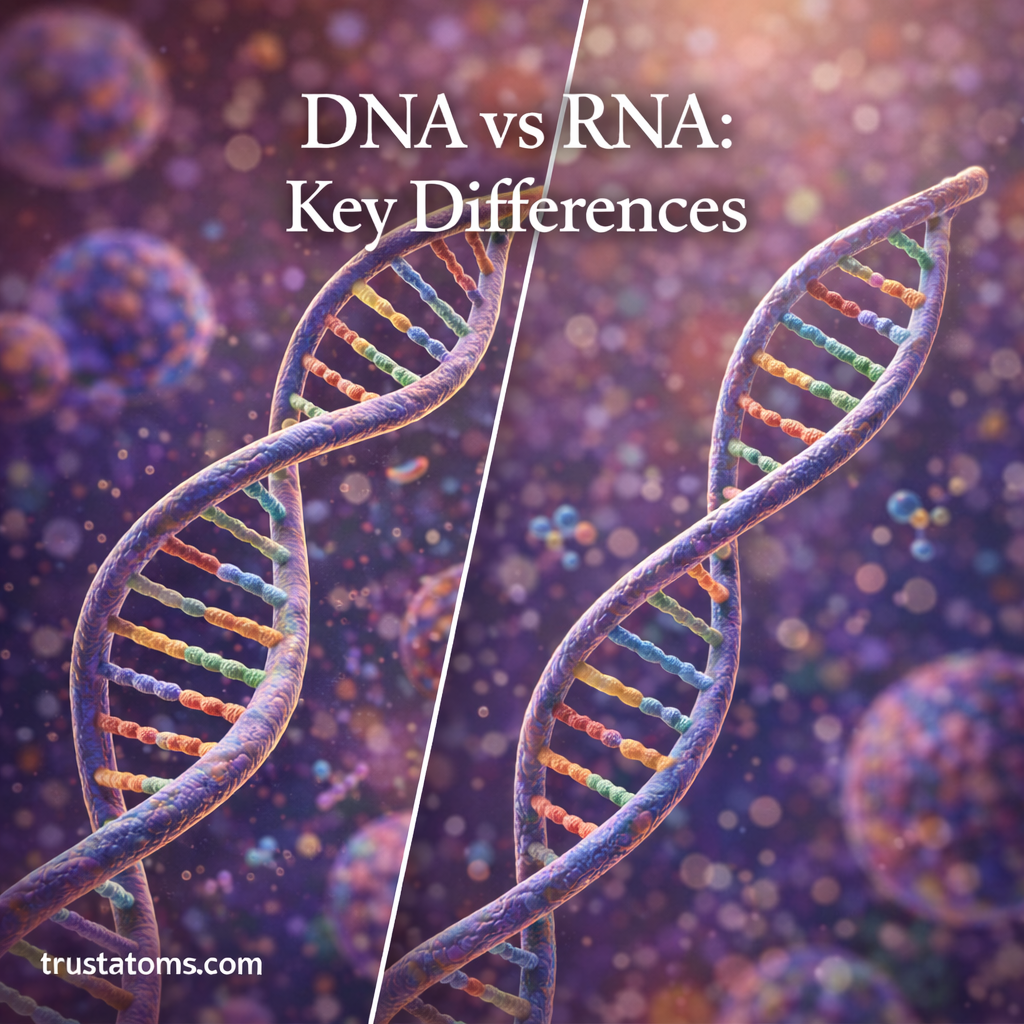
Illustration comparing DNA double helix and RNA strand structures to explain the key differences between DNA and RNA.
Illustration comparing DNA and RNA structures, highlighting the key molecular differences between the two nucleic acids. trustatoms.com

DNA and RNA are two essential molecules that carry and use genetic information in living organisms. Both belong to a group of molecules known as nucleic acids, and they work together to ensure cells can store instructions and build the proteins necessary for life.

Although DNA and RNA share some similarities, they differ in structure, function, and how they operate within the cell. Understanding these differences helps explain how genetic information flows from stored instructions to biological activity.

This article explores the key differences between DNA and RNA, their structures, and how they work together in the process of gene expression.

Continue reading “DNA vs RNA: Key Differences”