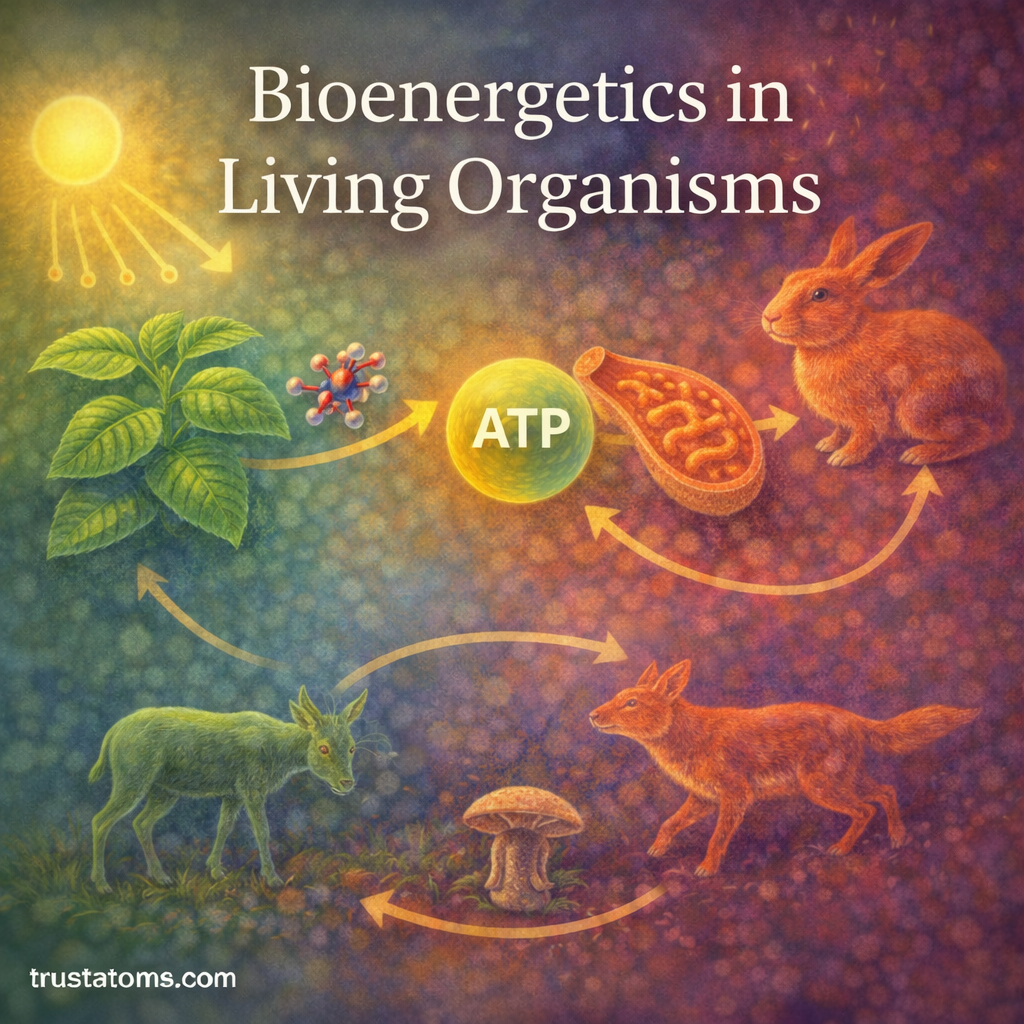
All living organisms require energy to survive, grow, and reproduce. From microscopic bacteria to complex animals, biological systems rely on chemical energy to power cellular activities. The study of how living organisms obtain, transform, and use energy is known as bioenergetics.
Bioenergetics explains how cells convert energy from nutrients or sunlight into usable forms that support metabolism. It connects fundamental biological processes such as respiration, photosynthesis, and cellular metabolism.
Understanding bioenergetics helps explain how life maintains order, grows, and adapts in constantly changing environments.
What Is Bioenergetics?
Bioenergetics is the branch of biology that studies the flow and transformation of energy in living systems.
Every organism must capture energy from its surroundings and convert it into chemical energy that cells can use. This energy powers processes such as:
- Cellular metabolism
- Growth and development
- Movement and muscle contraction
- Transport of molecules across membranes
- Maintenance of body temperature
Without a constant supply of energy, biological processes would stop and cells would lose their ability to function.
The Role of Energy in Living Systems
Energy in living organisms supports both chemical reactions and physical activities.
Cells use energy for three major types of work:
Chemical Work
Chemical work involves building complex molecules required for life.
Examples include:
- Protein synthesis
- DNA replication
- Lipid and carbohydrate production
- Repair of cellular structures
These biosynthetic processes require energy input to assemble molecules.
Transport Work
Cells must constantly move substances across membranes.
Energy is required for active transport, which allows cells to move molecules against concentration gradients.
Examples include:
- Ion pumps regulating sodium and potassium levels
- Nutrient uptake into cells
- Removal of waste products
Transport work ensures that cells maintain proper internal conditions.
Mechanical Work
Mechanical work involves movement within cells and organisms.
Energy supports activities such as:
- Muscle contraction
- Movement of cilia and flagella
- Cellular division
- Movement of vesicles within cells
These movements are powered by molecular machines that use chemical energy.
ATP: The Energy Currency of Cells
In most living organisms, energy is stored and transferred using a molecule called ATP (adenosine triphosphate).
ATP acts as a portable energy carrier that allows cells to store and release energy quickly.
When ATP loses one of its phosphate groups, it releases energy and becomes ADP (adenosine diphosphate). Cells can then regenerate ATP by adding the phosphate group back using energy from metabolic reactions.
Because ATP can be continuously recycled, it functions as a reliable energy source for cellular activities.
How Organisms Obtain Energy
Different organisms obtain energy in different ways depending on their ecological roles.
Autotrophs
Autotrophs produce their own energy-rich molecules from simple substances.
Most autotrophs use photosynthesis, a process in which sunlight is converted into chemical energy stored in glucose.
Examples of autotrophs include:
- Plants
- Algae
- Cyanobacteria
Photosynthesis allows these organisms to capture solar energy and form the base of many ecosystems.
Heterotrophs
Heterotrophs obtain energy by consuming other organisms or organic matter.
These organisms break down nutrients such as carbohydrates, fats, and proteins to release energy.
Examples of heterotrophs include:
- Animals
- Fungi
- Many bacteria
Energy stored in food molecules is converted into ATP through metabolic processes.
Cellular Respiration and Energy Production
One of the most important bioenergetic processes is cellular respiration.
Cellular respiration converts energy stored in glucose into ATP that cells can use.
This process occurs in several stages:
- Glycolysis
- The citric acid cycle
- The electron transport chain
These stages gradually extract energy from glucose molecules and transfer it to ATP.
In many eukaryotic cells, most ATP production occurs inside mitochondria, specialized organelles that serve as the cell’s energy centers.
Photosynthesis and Energy Capture
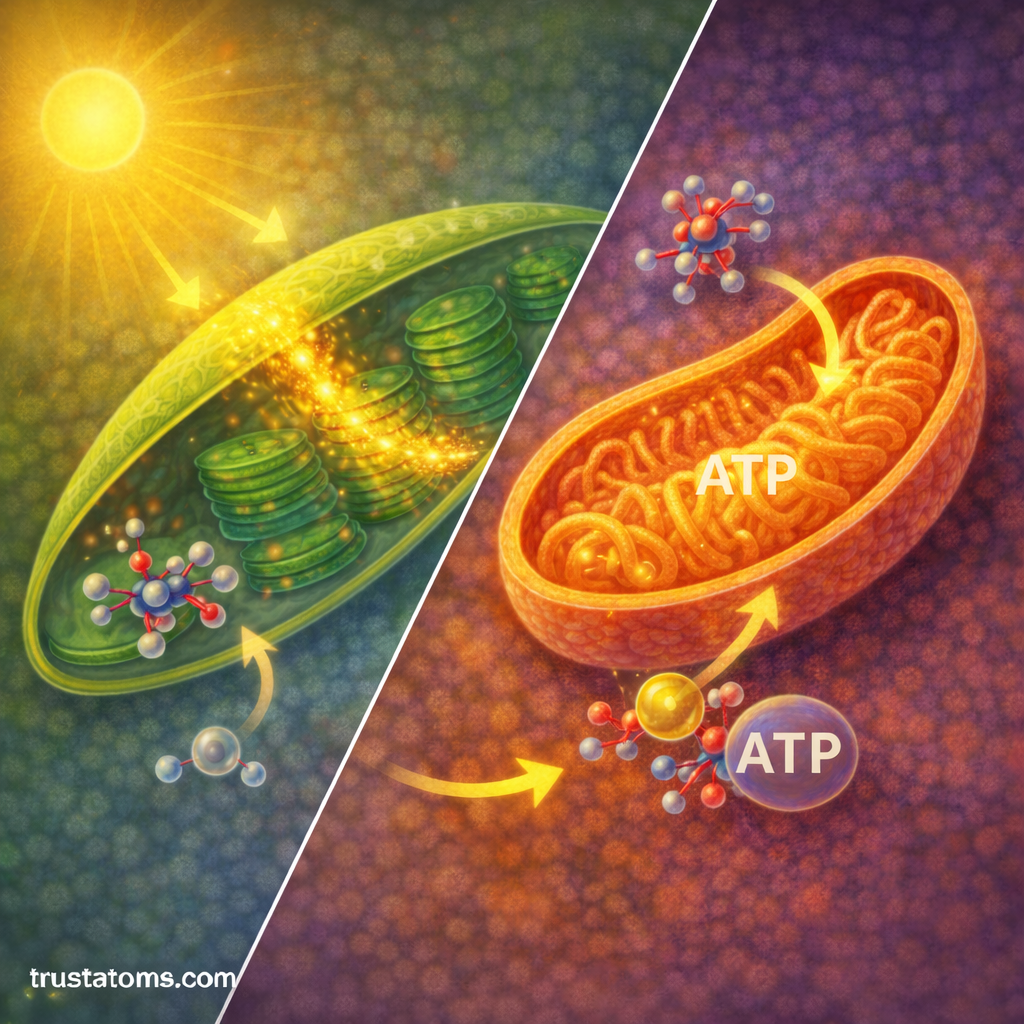
Photosynthesis is another major bioenergetic process, primarily occurring in plants, algae, and some bacteria.
During photosynthesis, organisms use sunlight to produce glucose from carbon dioxide and water.
The process occurs in two main stages:
- Light-dependent reactions that capture solar energy
- Light-independent reactions that build glucose molecules
Photosynthesis stores solar energy in chemical bonds, which can later be used by organisms during respiration.
This process supports nearly all food chains on Earth.
Energy Transfer Through Ecosystems
Bioenergetics does not occur only at the cellular level. Energy also flows through entire ecosystems.
Energy transfer generally follows a predictable pattern:
- Producers capture energy from sunlight.
- Herbivores consume producers.
- Carnivores consume herbivores.
- Decomposers break down organic matter.
At each level, some energy is used by organisms and released as heat. As a result, only a portion of energy is transferred to the next level.
This energy flow shapes ecological relationships and food webs.
The Laws of Thermodynamics in Biology
Bioenergetics follows the same physical laws that govern energy in the universe.
First Law of Thermodynamics
Energy cannot be created or destroyed, only transformed.
Living organisms convert energy from one form to another, such as transforming sunlight into chemical energy.
Second Law of Thermodynamics
Energy transformations are not perfectly efficient.
During biological processes, some energy is always lost as heat. This means organisms must constantly acquire new energy sources to maintain life.
These principles explain why living systems require continuous energy input.
Why Bioenergetics Is Essential for Life
Bioenergetics is fundamental to all biological systems.
Energy transformations allow organisms to:
- Grow and develop
- Reproduce
- Maintain internal stability
- Adapt to environmental changes
- Carry out complex metabolic processes
Without bioenergetic processes, cells would not be able to sustain the chemical reactions necessary for life.
Modern research in bioenergetics also helps scientists understand metabolism, aging, disease, and the efficiency of biological energy systems.
Final Thoughts
Bioenergetics explains how energy flows through living organisms and powers the processes that sustain life. By converting energy from sunlight or food into ATP, cells gain the ability to perform essential biological work.
From photosynthesis and cellular respiration to ecosystem energy transfer, bioenergetics connects molecular biology with the larger processes that shape life on Earth.
Understanding these energy systems provides valuable insight into how organisms survive, interact, and maintain balance within complex biological environments.