Calorimetry is a fundamental technique used in chemistry and physics to measure heat transfer during chemical reactions, physical changes, and biological processes. By carefully tracking temperature changes in a controlled environment, scientists can determine how much heat energy is absorbed or released in a system.
Understanding calorimetry is essential for analyzing energy flow in reactions, evaluating fuel efficiency, studying metabolic processes, and designing industrial chemical systems.
What Is Calorimetry?
Calorimetry is the science of measuring heat transfer. It relies on a device called a calorimeter, which isolates a system so that energy changes can be measured accurately.
When a chemical reaction or physical process occurs inside a calorimeter, heat flows between the reaction and its surroundings. By measuring temperature changes and knowing the properties of the materials involved, scientists can calculate the amount of heat exchanged.
In simple terms, calorimetry answers the question:
How much heat energy moves during a process?
This information helps scientists understand reaction behavior, energy efficiency, and thermodynamic properties.
Why Heat Transfer Matters in Chemistry
Heat transfer is central to many chemical processes. Reactions may either release heat or absorb heat, affecting reaction speed, equilibrium, and system stability.
Calorimetry helps researchers analyze:
- Energy changes in chemical reactions
- Efficiency of fuels and energy systems
- Metabolic energy production in biology
- Heat capacity of materials
- Phase changes such as melting and evaporation
Without calorimetry, it would be difficult to quantify the energy involved in many natural and industrial processes.
Types of Calorimeters
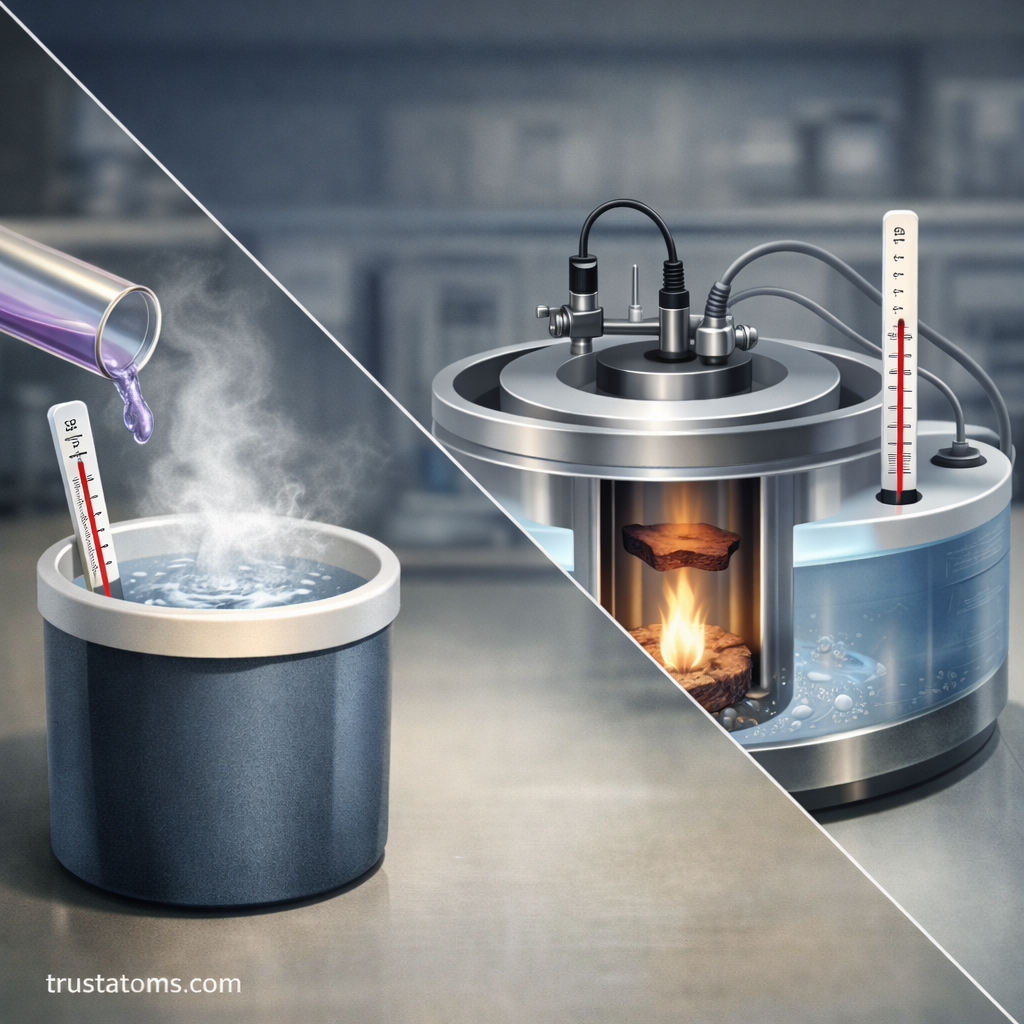
Different calorimeters are used depending on the type of process being studied.
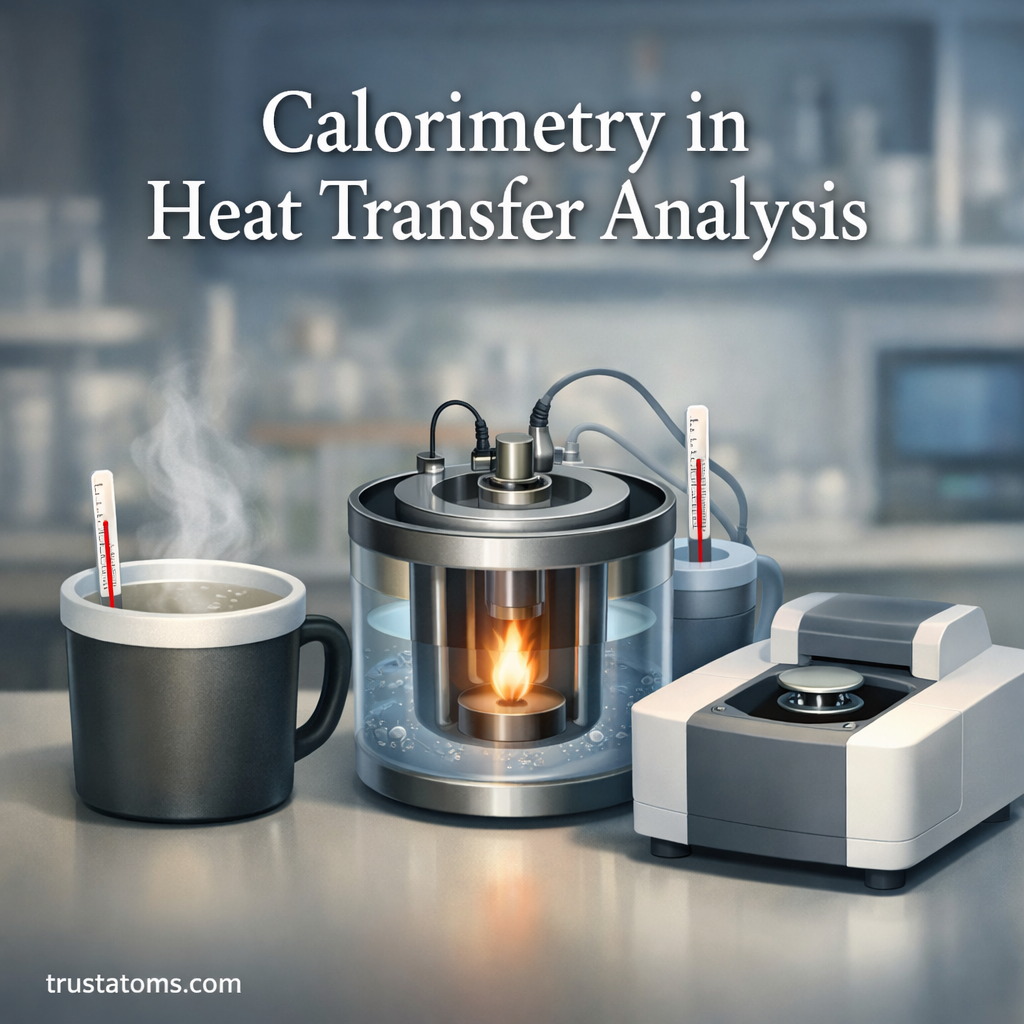
Coffee Cup Calorimeter
A coffee cup calorimeter is commonly used in educational labs. It consists of an insulated container that allows reactions to occur in a solution while minimizing heat exchange with the outside environment.
Key features:
- Simple design
- Measures heat changes in liquid reactions
- Often used to study neutralization or dissolution reactions
Although basic, this setup provides reliable measurements for many experiments.
Bomb Calorimeter
A bomb calorimeter is used to measure heat released during combustion reactions.
Important characteristics include:
- Strong sealed metal container
- Reaction occurs in a high-pressure oxygen environment
- Surrounded by water to measure temperature change
Bomb calorimeters are commonly used to determine the energy content of fuels and food.
Differential Scanning Calorimeter
A differential scanning calorimeter (DSC) measures how heat flow changes as a substance is heated or cooled.
Applications include:
- Studying melting points and phase transitions
- Analyzing polymers and materials
- Investigating chemical stability
This type of calorimeter is widely used in materials science and pharmaceutical research.
Basic Principle Behind Calorimetry
Calorimetry operates on the principle of energy conservation.
When heat is released by a reaction, that heat is absorbed by the surroundings within the calorimeter. Likewise, when a reaction absorbs heat, the surrounding materials lose heat.
The relationship can be summarized as:
Heat lost by one part of the system equals heat gained by another part.
This balance allows scientists to calculate energy transfer based on temperature change and material properties.
Key Factors in Calorimetry Measurements
Accurate calorimetry depends on several important variables.
Temperature Change
The difference between the initial and final temperatures indicates how much heat was transferred during the reaction or process.
Heat Capacity
Heat capacity describes how much heat is required to change a material’s temperature.
Materials with higher heat capacity absorb more heat before their temperature rises.
Mass of the Substance
The amount of material present affects how much heat energy is involved. Larger samples typically result in larger heat transfers.
System Isolation
A calorimeter must be insulated to minimize heat exchange with the outside environment. This ensures the measured heat change comes from the reaction itself.
Applications of Calorimetry
Calorimetry plays a critical role in both research and industry.
Chemical Reaction Analysis
Scientists measure the heat released or absorbed during reactions to understand reaction energetics and stability.
Food Energy Measurement
The calorie content of foods is determined using calorimetry by measuring heat released during controlled combustion.
Material Testing
Engineers study thermal behavior of materials such as polymers, metals, and ceramics using calorimetric techniques.
Environmental and Energy Research
Calorimetry helps evaluate:
- Fuel efficiency
- Biofuel energy output
- Combustion emissions
- Energy storage materials
These measurements guide the development of cleaner and more efficient energy technologies.
Advantages of Calorimetry
Calorimetry offers several benefits in scientific research:
- Provides precise measurement of heat transfer
- Works for both chemical and physical processes
- Applicable to many materials and reactions
- Supports thermodynamic analysis
Because of these advantages, calorimetry remains a foundational method in chemistry laboratories.
Common Sources of Error in Calorimetry
Even well-designed experiments can encounter measurement errors.
Typical sources include:
- Heat loss to the environment
- Incomplete reactions
- Measurement inaccuracies in temperature or mass
- Poor insulation of the calorimeter
Scientists minimize these errors through careful calibration, controlled experimental conditions, and repeated trials.
The Role of Calorimetry in Modern Science
Calorimetry continues to evolve with advances in instrumentation and materials science. Modern calorimeters allow extremely precise heat measurements, enabling researchers to study:
- Complex biological systems
- Advanced materials
- Pharmaceutical reactions
- Energy storage technologies
These capabilities help scientists better understand energy flow in natural and engineered systems.
Conclusion
Calorimetry is a powerful analytical tool for studying heat transfer in chemical and physical processes. By measuring temperature changes in controlled systems, scientists can determine how energy moves through reactions and materials.
From laboratory experiments to industrial energy analysis, calorimetry provides critical insights into thermodynamics, efficiency, and material behavior. As technology continues to advance, calorimetric methods will remain essential for exploring the energy dynamics that shape our physical world.