What Is Meiosis?

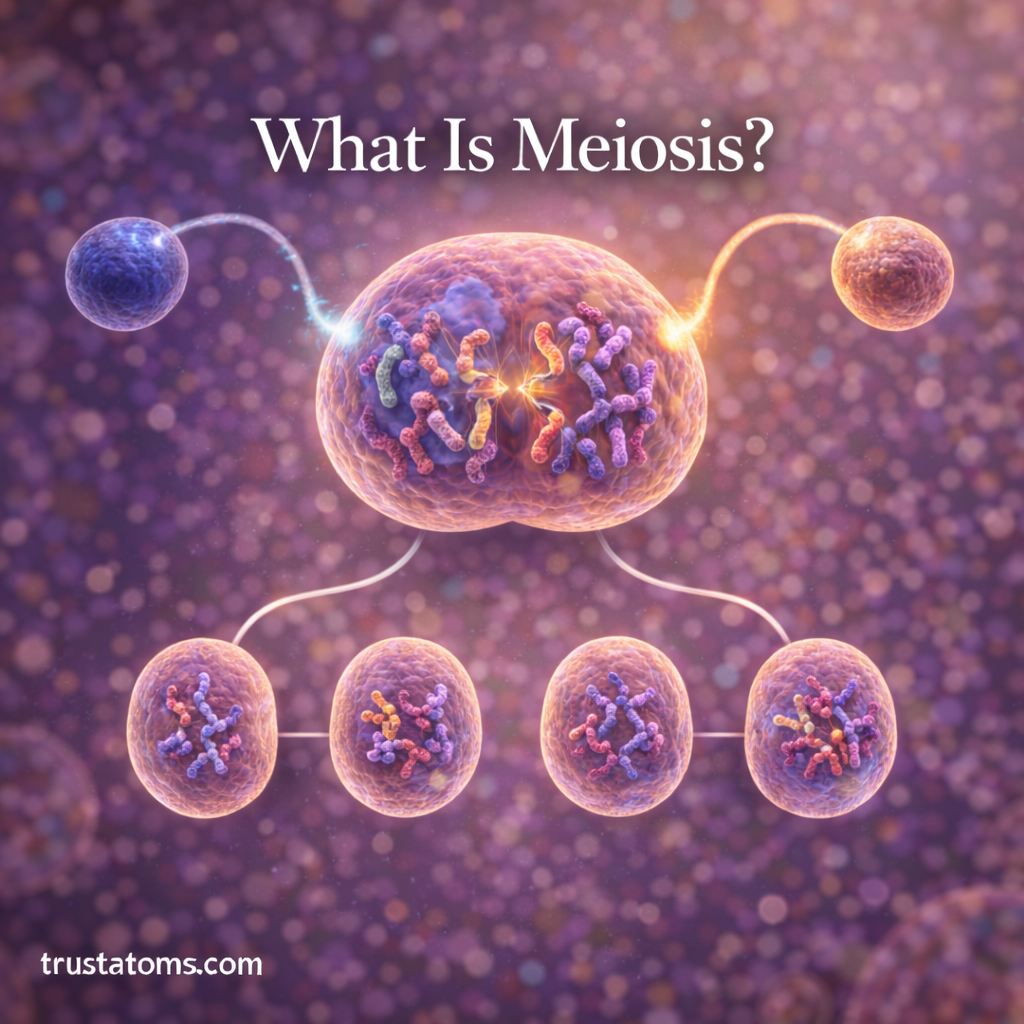
Illustration showing meiosis where one cell divides twice to produce four genetically unique reproductive cells.
Illustration of meiosis showing how one cell divides to form four genetically unique reproductive cells. trustatoms.com

Meiosis is a specialized type of cell division that produces reproductive cells such as sperm and egg cells. Unlike regular cell division, meiosis reduces the number of chromosomes by half, ensuring that when fertilization occurs, the resulting offspring has the correct number of chromosomes.

This process is essential for sexual reproduction and plays a major role in generating genetic diversity within populations.

Understanding meiosis helps explain how traits are passed from parents to offspring and why individuals within a species can have unique genetic combinations.

Continue reading “What Is Meiosis?”
What Is Mitosis?

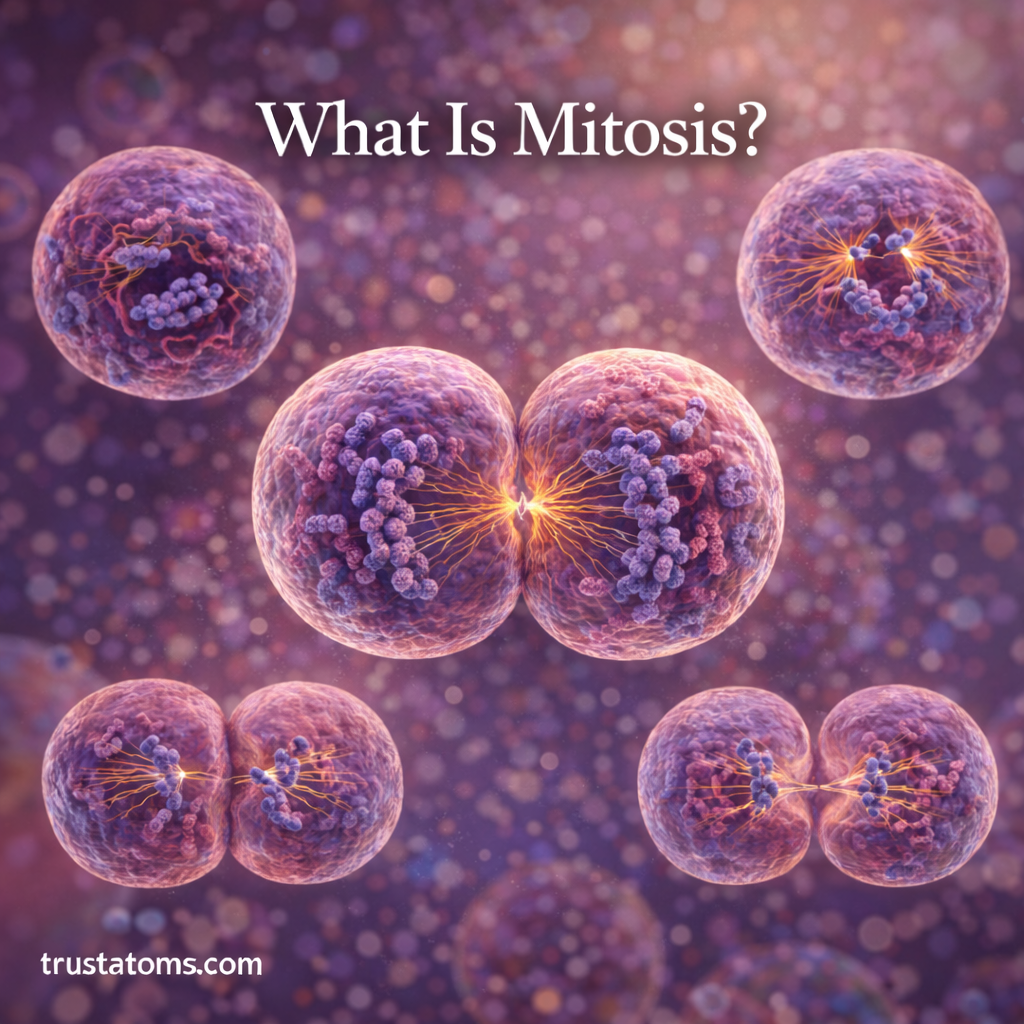
Illustration showing the stages of mitosis where a single cell divides into two identical daughter cells.
Illustration of mitosis demonstrating how one cell divides to form two genetically identical daughter cells. trustatoms.com

Mitosis is a process of cell division that allows a single cell to produce two identical daughter cells. This process is essential for growth, tissue repair, and maintaining healthy cells in multicellular organisms.

Every time your body grows, heals a wound, or replaces worn-out cells, mitosis is happening inside your tissues. By ensuring that each new cell receives an identical copy of genetic material, mitosis maintains stability in an organism’s DNA.

Understanding mitosis helps explain how organisms develop, maintain their bodies, and keep cells functioning properly.

Continue reading “What Is Mitosis?”

DNA vs RNA: Key Differences

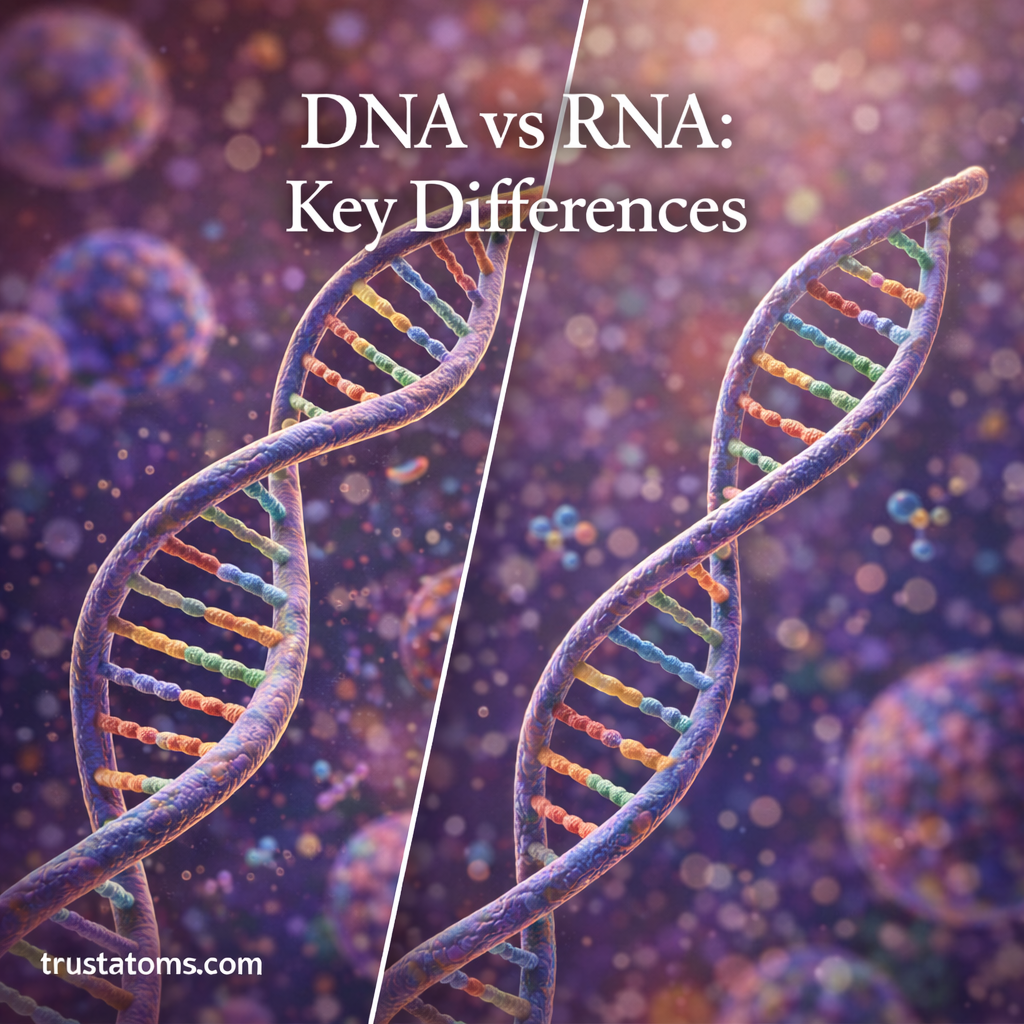
Illustration comparing DNA double helix and RNA strand structures to explain the key differences between DNA and RNA.
Illustration comparing DNA and RNA structures, highlighting the key molecular differences between the two nucleic acids. trustatoms.com

DNA and RNA are two essential molecules that carry and use genetic information in living organisms. Both belong to a group of molecules known as nucleic acids, and they work together to ensure cells can store instructions and build the proteins necessary for life.

Although DNA and RNA share some similarities, they differ in structure, function, and how they operate within the cell. Understanding these differences helps explain how genetic information flows from stored instructions to biological activity.

This article explores the key differences between DNA and RNA, their structures, and how they work together in the process of gene expression.

Continue reading “DNA vs RNA: Key Differences”

What Is RNA?

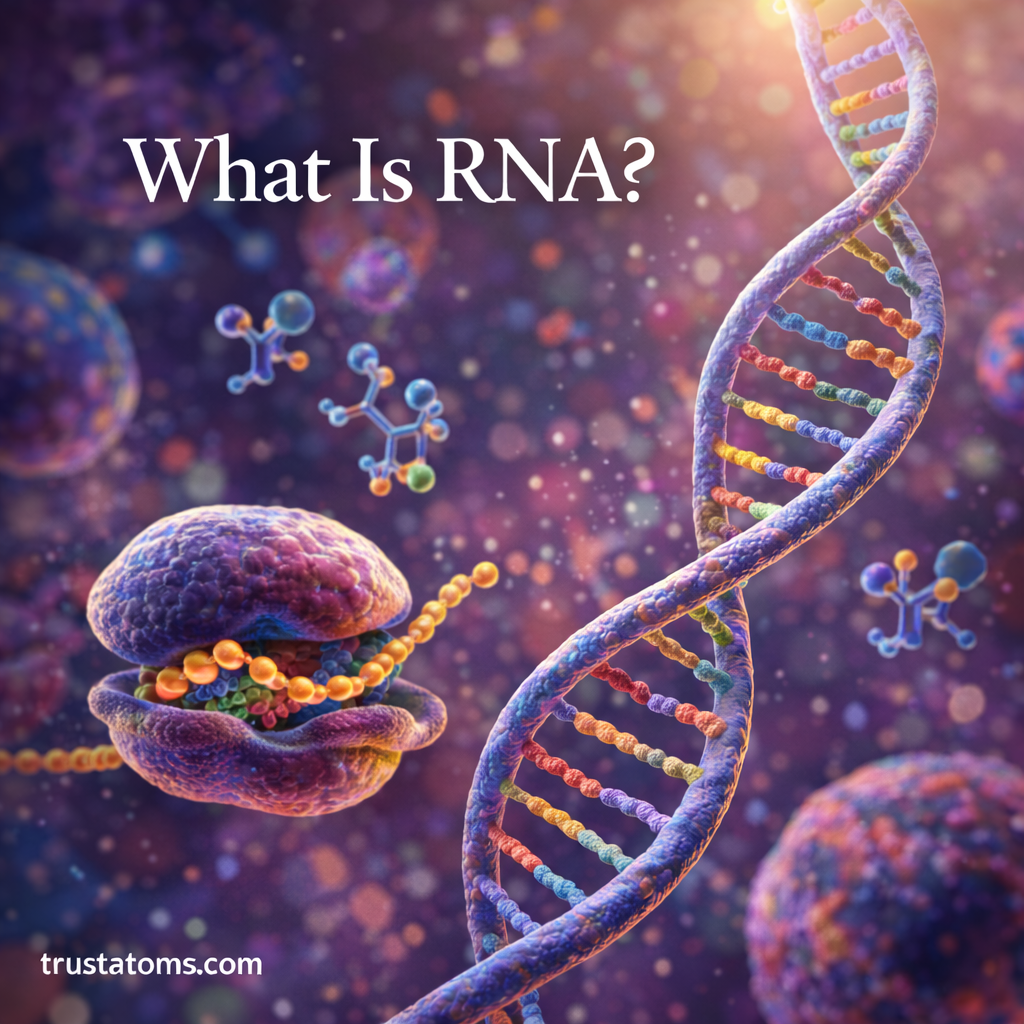
Illustration showing an RNA strand and ribosome involved in protein synthesis inside a cell.
Illustration of RNA interacting with cellular structures during protein synthesis. trustatoms.com

RNA is a molecule that plays a crucial role in how genetic information is used inside living cells. While DNA stores the instructions for life, RNA helps carry out those instructions, particularly during the process of building proteins.

The term RNA stands for ribonucleic acid, and it acts as an important intermediary between DNA and the proteins that perform most biological functions.

Understanding RNA is essential to understanding genetics, cell biology, and modern biotechnology.

Continue reading “What Is RNA?”

What Is DNA?

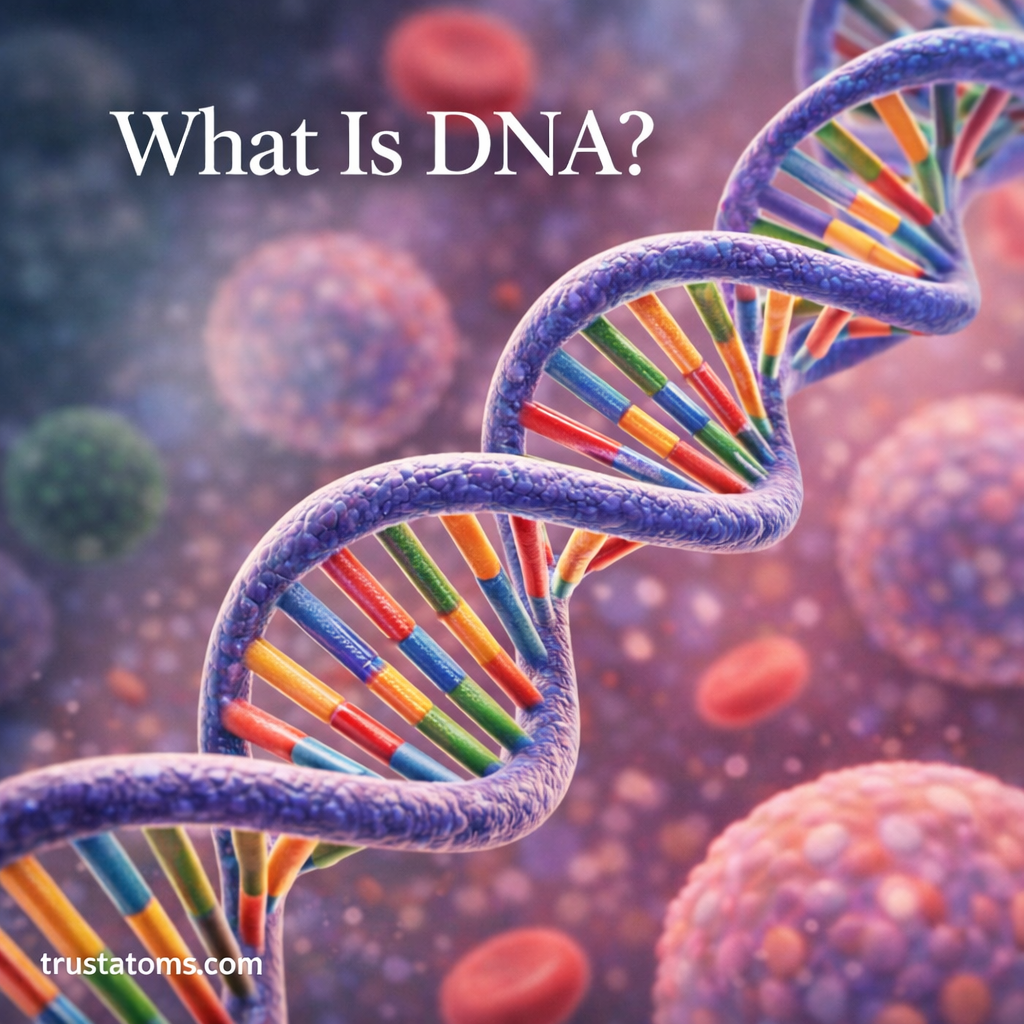
Illustration of a DNA double helix structure showing the genetic molecule that stores biological information in living organisms.
Illustration of the DNA double helix, the molecule that carries genetic instructions in living organisms. trustatoms.com

DNA is the molecule that carries the genetic instructions used to build, maintain, and reproduce living organisms. Nearly every cell in the human body contains DNA, and this remarkable molecule stores the biological information that determines how organisms grow, function, and develop.

The term DNA stands for deoxyribonucleic acid, and it acts as the blueprint for life. From physical traits like eye color to the processes that allow cells to function, DNA contains the instructions that guide biological activity.

Understanding DNA is central to modern biology, genetics, medicine, and biotechnology.

Continue reading “What Is DNA?”

Prokaryotic vs Eukaryotic Cells

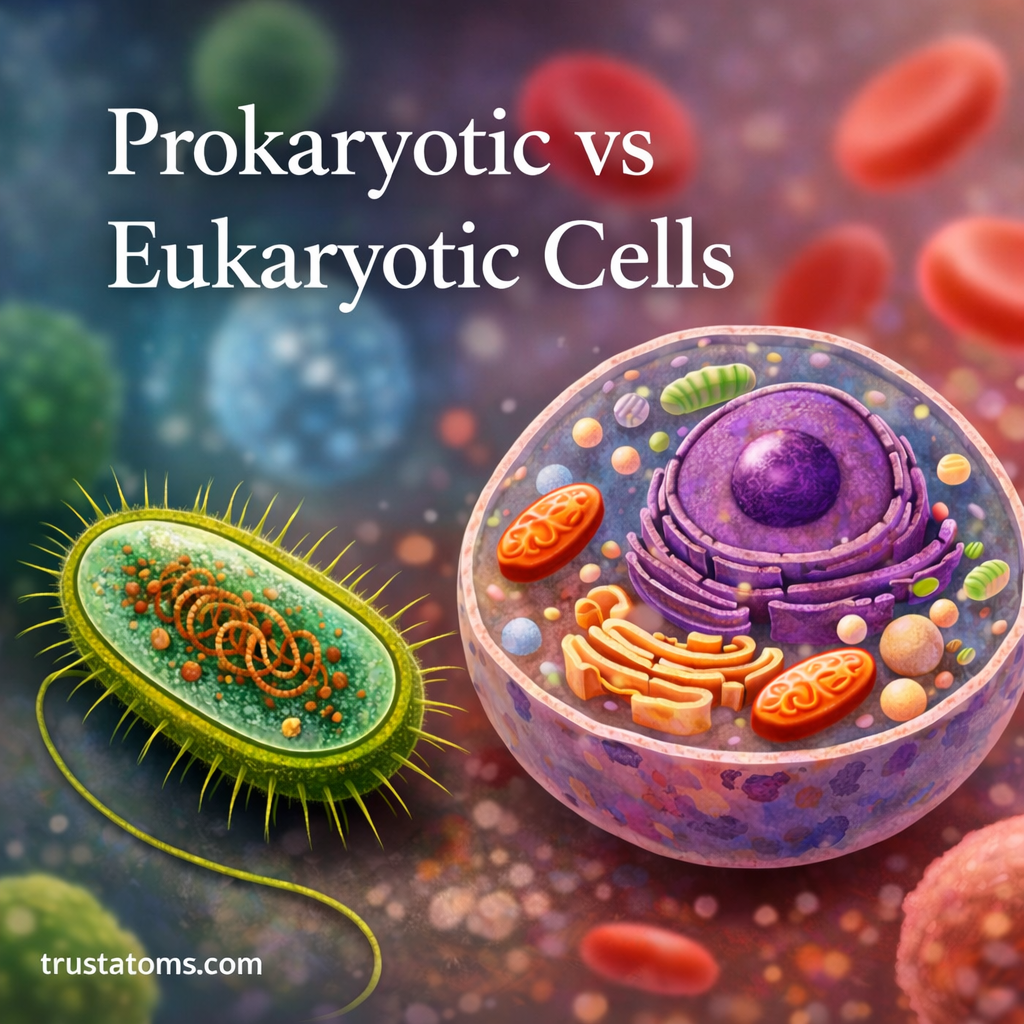
Illustration comparing prokaryotic and eukaryotic cells showing bacterial cell structure and a complex cell with nucleus and organelles.
Illustration comparing prokaryotic and eukaryotic cells, highlighting the structural differences between simple bacterial cells and complex cells with a nucleus. trustatoms.com

Cells are the fundamental units of life, but not all cells are built the same way. One of the most important distinctions in biology is between prokaryotic cells and eukaryotic cells. These two cell types differ in structure, complexity, and the kinds of organisms they form.

Understanding the differences between prokaryotic and eukaryotic cells helps explain how life evolved and how organisms function at the microscopic level.

This guide explores what defines each type of cell, their major differences, and why these distinctions matter in biology.

Continue reading “Prokaryotic vs Eukaryotic Cells”

What Is a Cell?

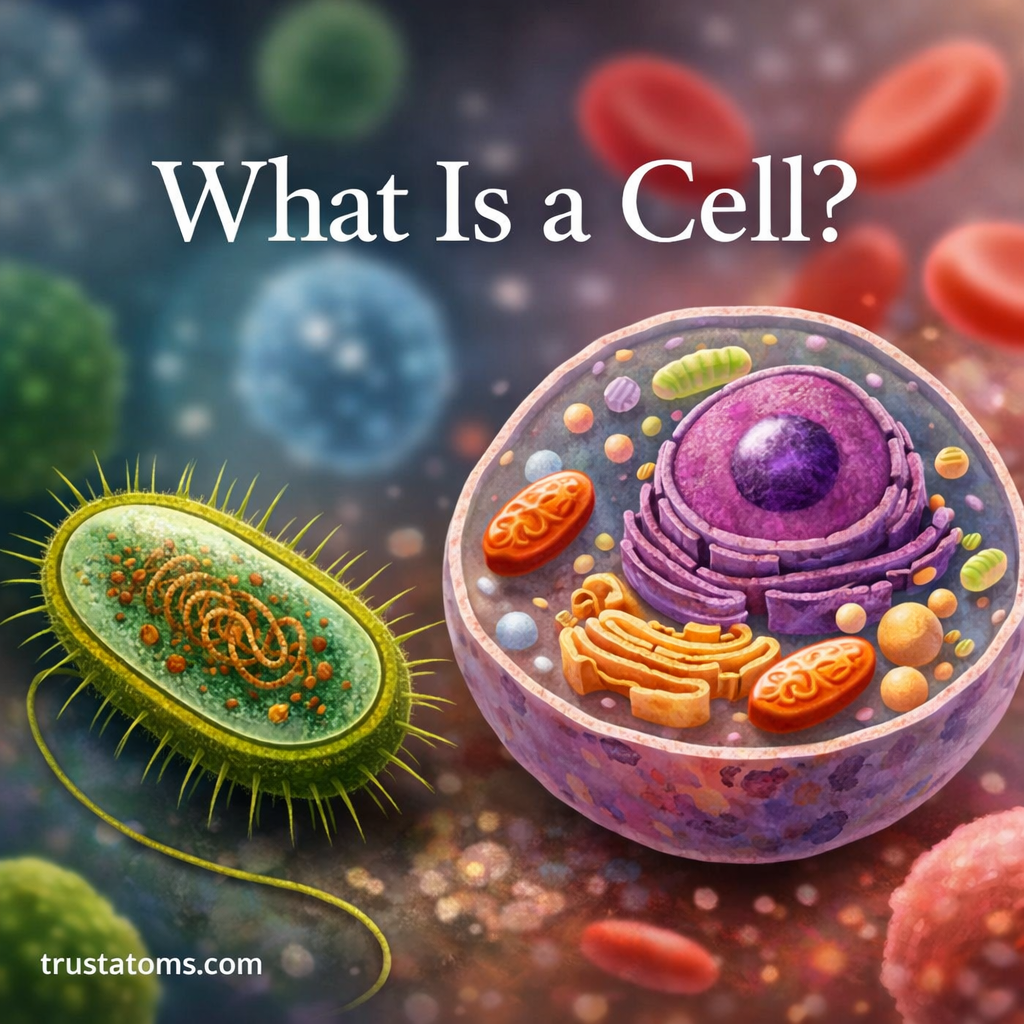
Illustration diagram showing the basic structure of a biological cell with nucleus and organelles explaining what a cell is.
Illustration showing the basic structure of a cell, the fundamental building block of all living organisms. trustatoms.com

Cells are the smallest units of life capable of carrying out all the processes necessary for survival. Every living organism on Earth—from bacteria to humans—is made of one or more cells. Because of this, cells are often described as the basic building blocks of life.

Understanding what a cell is and how it works is fundamental to biology. Cells perform essential functions such as generating energy, reproducing, responding to their environment, and maintaining internal balance.

This article explores what cells are, how they function, the main types of cells, and why they are essential to all living organisms.

Continue reading “What Is a Cell?”