Fuel Cell Chemistry in Energy Conversion

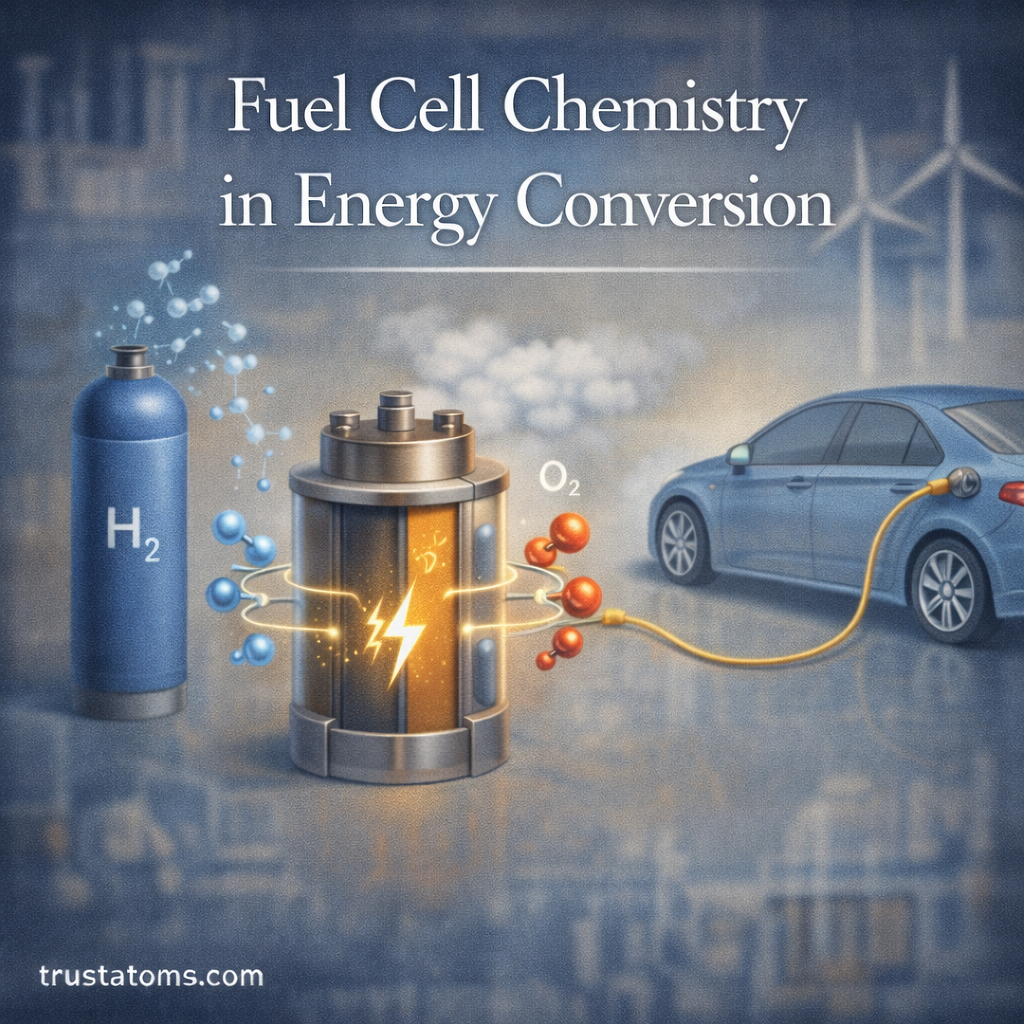
Illustration showing hydrogen fuel cell converting chemical energy into electricity to power a vehicle.
Illustration depicting hydrogen fuel cell chemistry converting hydrogen and oxygen into electrical energy. trustatoms.com.

Fuel cells are advanced electrochemical devices that convert chemical energy directly into electrical energy. Unlike conventional combustion engines that burn fuel to generate heat and mechanical work, fuel cells use controlled redox reactions to produce electricity with higher efficiency and lower emissions.

Because they can operate continuously as long as fuel is supplied, fuel cells are becoming increasingly important in clean energy systems, transportation technologies, and backup power solutions.

Understanding the chemistry behind fuel cells reveals how these systems convert fuel molecules into usable electrical energy.

Continue reading “Fuel Cell Chemistry in Energy Conversion”
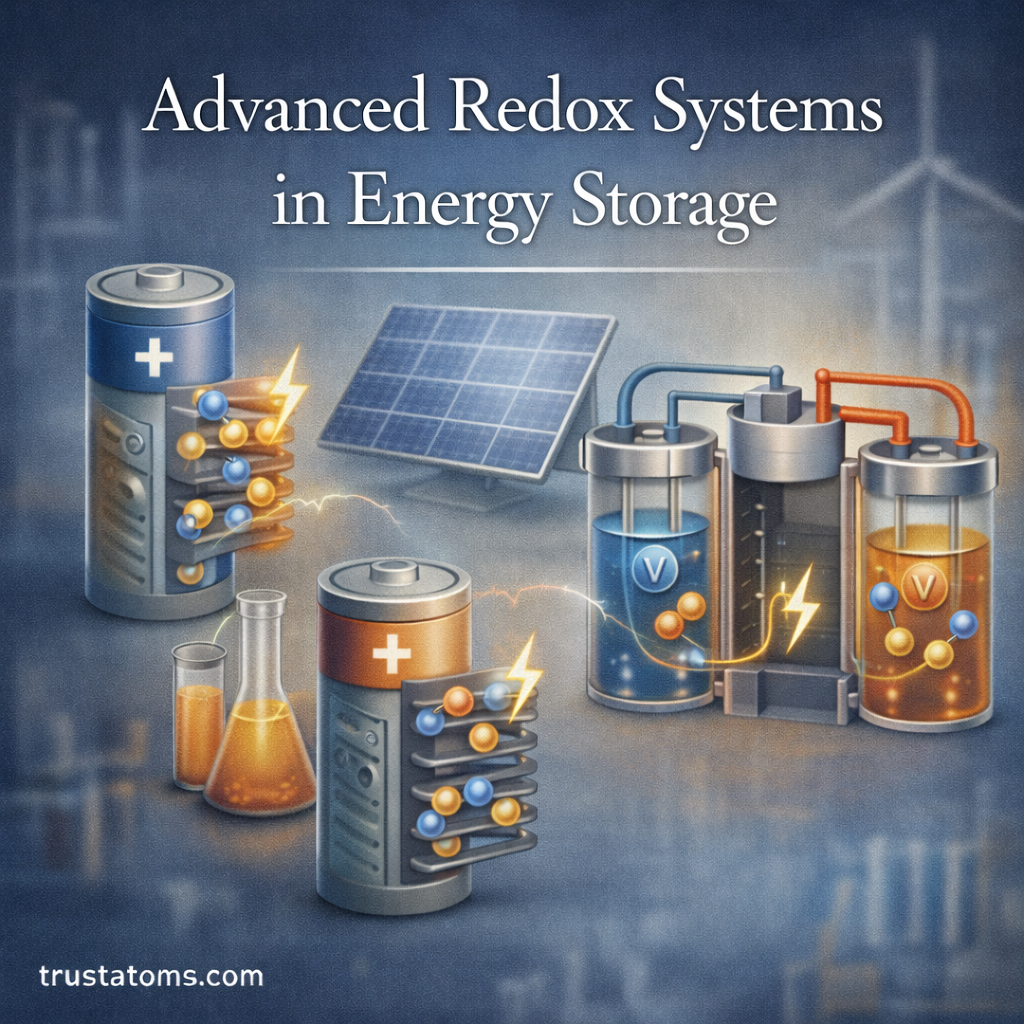
Advanced Redox Systems in Energy Storage

Illustration showing advanced redox energy storage systems including batteries and flow cells used in modern renewable energy technology.
Illustration depicting advanced redox battery systems used for modern energy storage and renewable power management. trustatoms.com.

Modern energy systems increasingly depend on efficient ways to store electricity. As renewable energy sources like solar and wind become more common, energy storage technologies must improve to handle fluctuating power generation. One of the most important chemical principles behind many storage technologies is redox chemistry.

Redox reactions—short for reduction and oxidation—allow energy to be stored and released through electron transfer. Advanced redox systems are now at the center of next-generation batteries, fuel cells, and grid-scale storage solutions.

This article explores how redox chemistry works in energy storage and how advanced redox systems are shaping the future of energy technology.

Continue reading “Advanced Redox Systems in Energy Storage”

Electron Spin in Spectroscopic Analysis

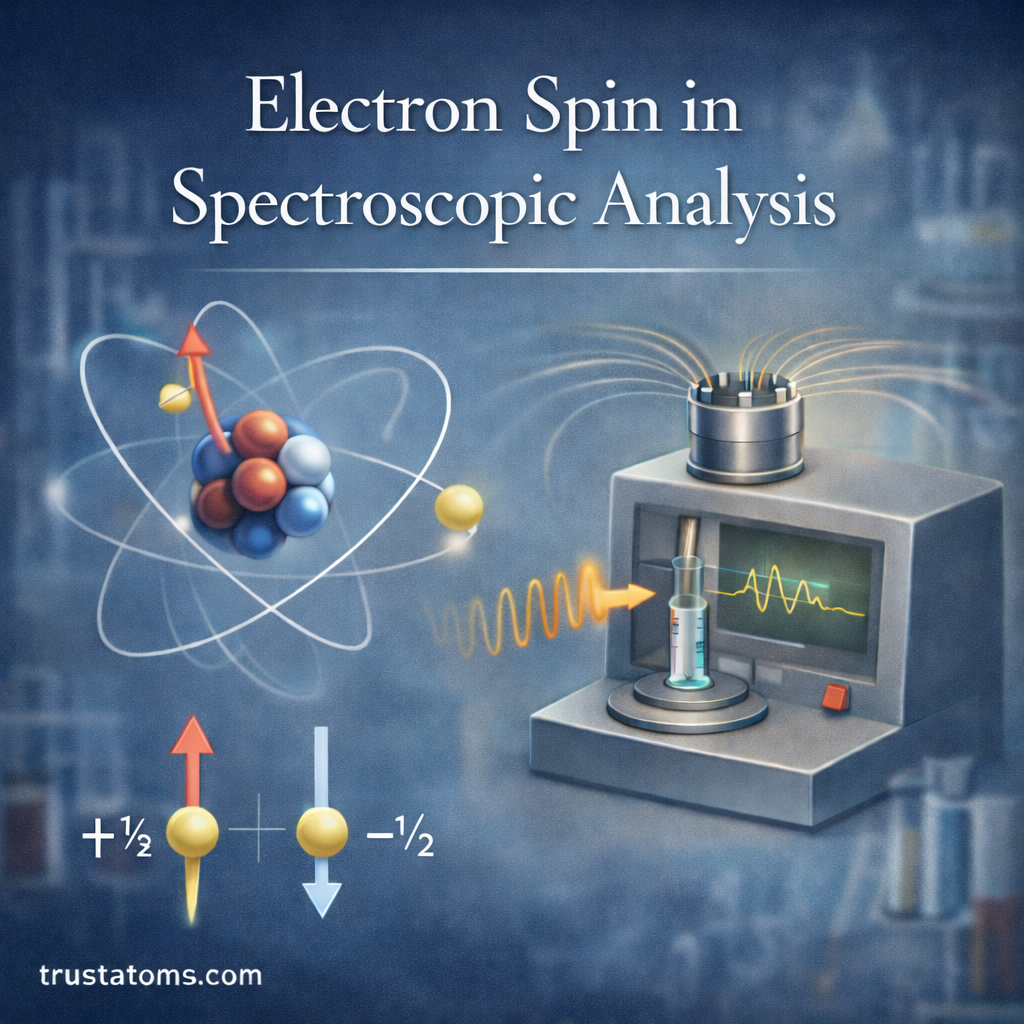
Illustration showing electron spin and a spectroscopic instrument used to analyze electron spin behavior in chemistry.
Illustration explaining how electron spin is detected and analyzed using spectroscopic instruments. trustatoms.com.

Electron spin is a fundamental property of electrons that plays an important role in modern spectroscopic techniques. Although electrons are often described as tiny particles orbiting the nucleus, they also possess an intrinsic quantum property called spin, which behaves like a miniature magnetic moment.

In spectroscopic analysis, electron spin allows scientists to study the magnetic and electronic behavior of atoms, molecules, and materials. Techniques that detect spin interactions provide valuable information about molecular structure, bonding, and chemical environments.

Understanding electron spin is essential for interpreting data from methods such as electron spin resonance (ESR) and electron paramagnetic resonance (EPR) spectroscopy.

Continue reading “Electron Spin in Spectroscopic Analysis”

Molecular Symmetry in Chemical Structures

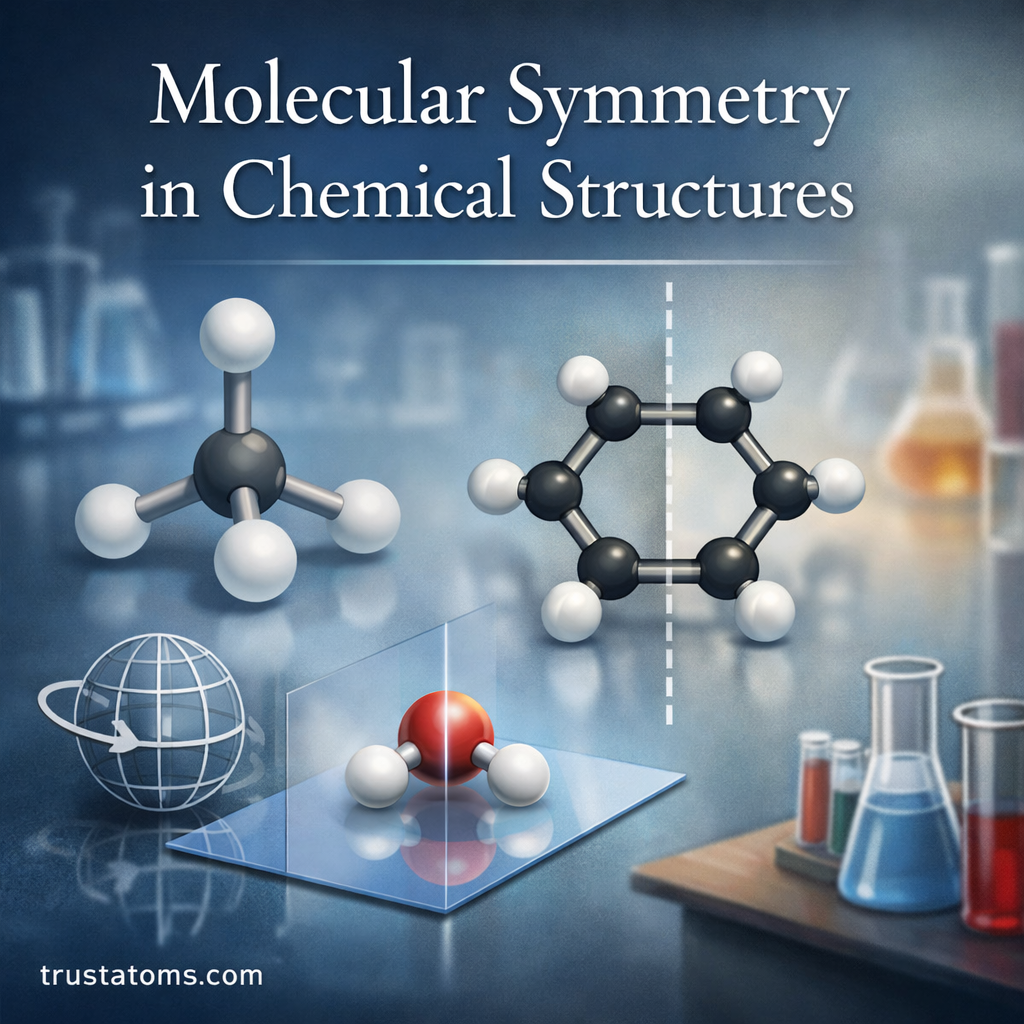
Illustration diagram showing molecular symmetry concepts with balanced molecule shapes and mirrored structure example representing symmetry in chemistry.
Illustration showing balanced molecular shapes used to explain symmetry in chemical structures. trustatoms.com

Molecular symmetry is one of the most elegant concepts in chemistry. It describes how atoms in a molecule are arranged in space and how that arrangement repeats through specific symmetry operations.

Understanding symmetry helps chemists predict molecular behavior, physical properties, chemical reactions, and spectroscopic patterns. From simple molecules like methane to complex organic compounds and crystalline materials, symmetry provides a powerful framework for analyzing chemical structures.

In this guide, we’ll explore what molecular symmetry is, the key symmetry elements, how molecules are classified into symmetry groups, and why symmetry matters in chemistry.

Continue reading “Molecular Symmetry in Chemical Structures”

Quantum Yield in Photochemical Reactions

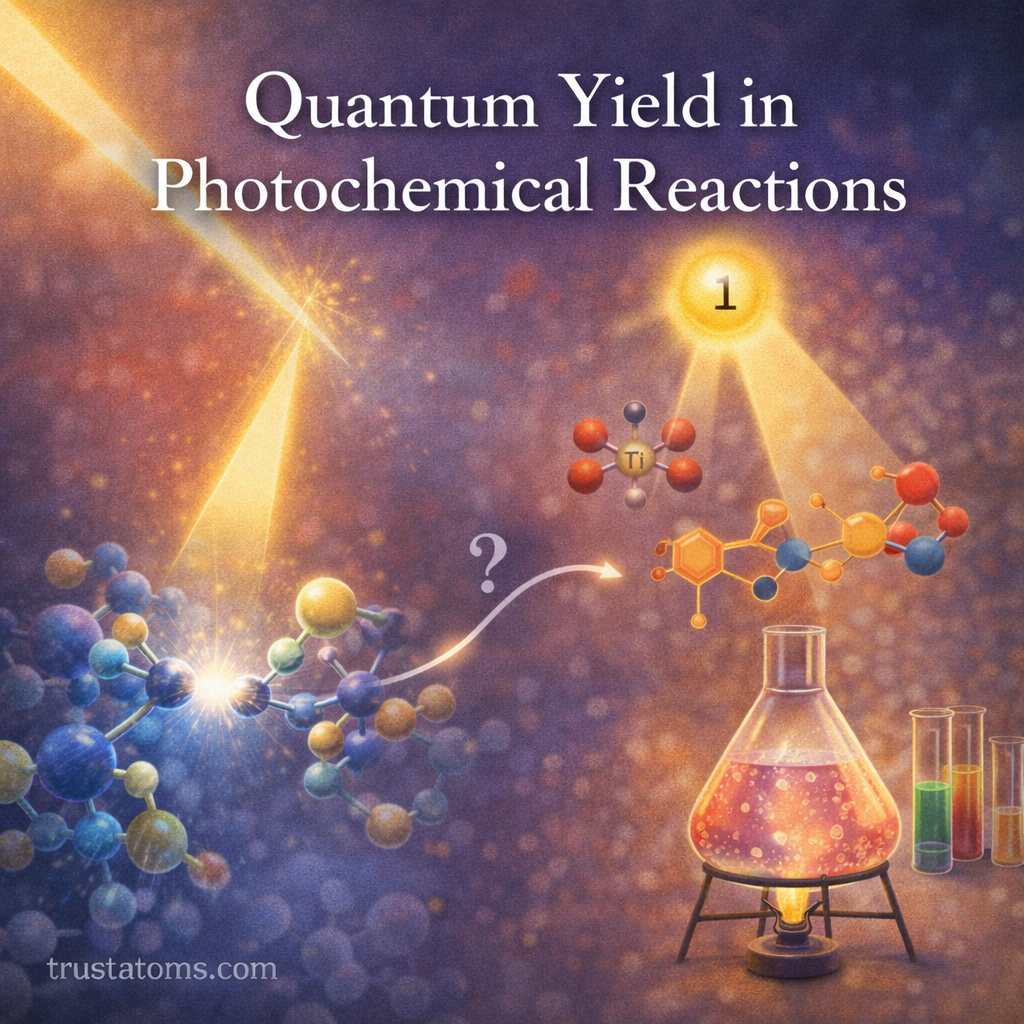
Illustration showing photons interacting with molecules to demonstrate quantum yield in photochemical reactions.
ChatGPT – Conceptual illustration explaining quantum yield in photochemical reactions, showing how absorbed light can trigger molecular reactions. trustatoms.com.

Photochemical reactions occur when molecules absorb light and undergo chemical transformations. These reactions are fundamental in processes ranging from photosynthesis and atmospheric chemistry to solar energy technologies and advanced materials science.

One of the most important concepts used to evaluate the efficiency of photochemical reactions is quantum yield. This measurement helps scientists understand how effectively absorbed light leads to chemical change. By studying quantum yield, chemists can determine how efficiently light energy drives molecular reactions.

Continue reading “Quantum Yield in Photochemical Reactions”

Advanced Polymerization Mechanisms

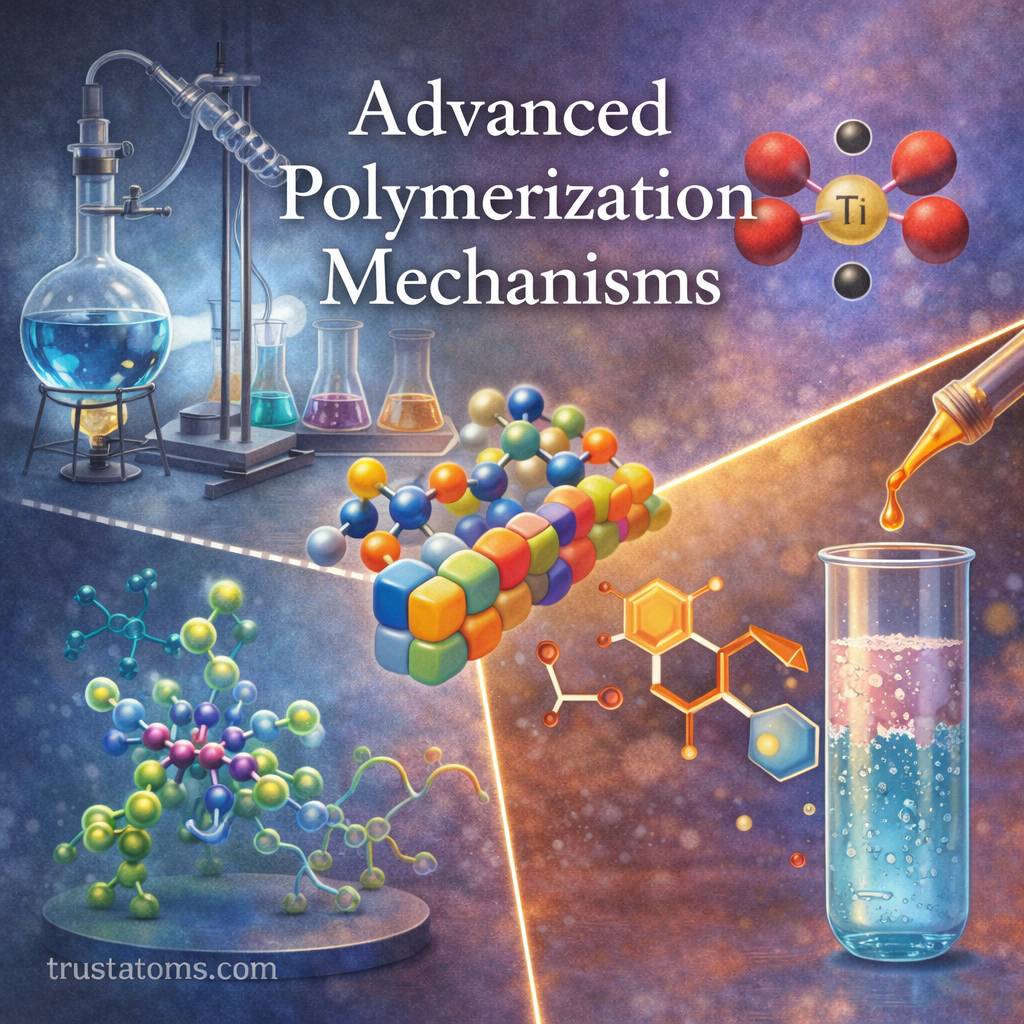
Illustration showing advanced polymerization mechanisms with laboratory equipment, polymer chains, and catalyst-driven reactions.
Conceptual illustration of advanced polymerization mechanisms used to create complex polymer materials in modern chemistry. trustatoms.com.

Polymerization is the chemical process by which small molecules called monomers join together to form large molecules known as polymers. These polymers make up many materials used in everyday life, including plastics, synthetic fibers, coatings, and advanced composites.

While basic polymerization processes are relatively straightforward, modern chemistry has developed advanced polymerization mechanisms that allow scientists to precisely control molecular structure, chain length, branching, and functionality. These sophisticated techniques are essential for creating high-performance materials used in electronics, medicine, aerospace, and nanotechnology.

Understanding advanced polymerization mechanisms helps chemists design materials with specific mechanical, chemical, and physical properties.

Continue reading “Advanced Polymerization Mechanisms”

Chemical Thermodynamics in Multiphase Systems

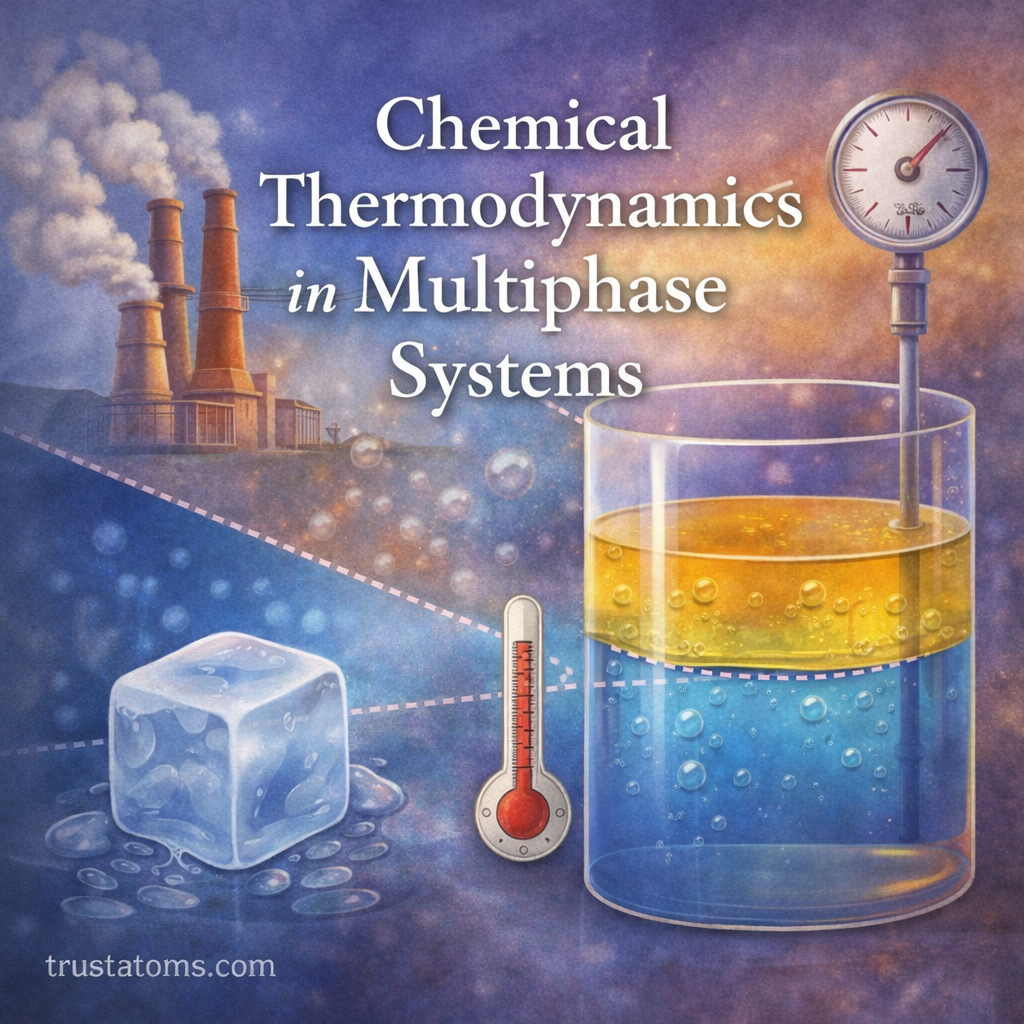
Illustration showing chemical thermodynamics in multiphase systems with examples of solid, liquid, and gas interactions including ice melting and liquid phase separation.
Conceptual illustration of chemical thermodynamics in multiphase systems showing energy interactions between solid, liquid, and gas phases. trustatoms.com.

Chemical thermodynamics studies how energy, heat, and work influence chemical systems. When a system contains more than one physical phase—such as solids, liquids, and gases—it becomes a multiphase system. Understanding thermodynamics in these systems helps scientists predict how substances behave when phases interact, separate, or reach equilibrium.

Multiphase thermodynamics plays a central role in fields such as chemical engineering, environmental science, materials science, and geochemistry. From boiling water to oil–water mixtures and industrial reactors, many real-world processes involve interactions between multiple phases.

Continue reading “Chemical Thermodynamics in Multiphase Systems”

Noncovalent Interactions in Molecular Systems

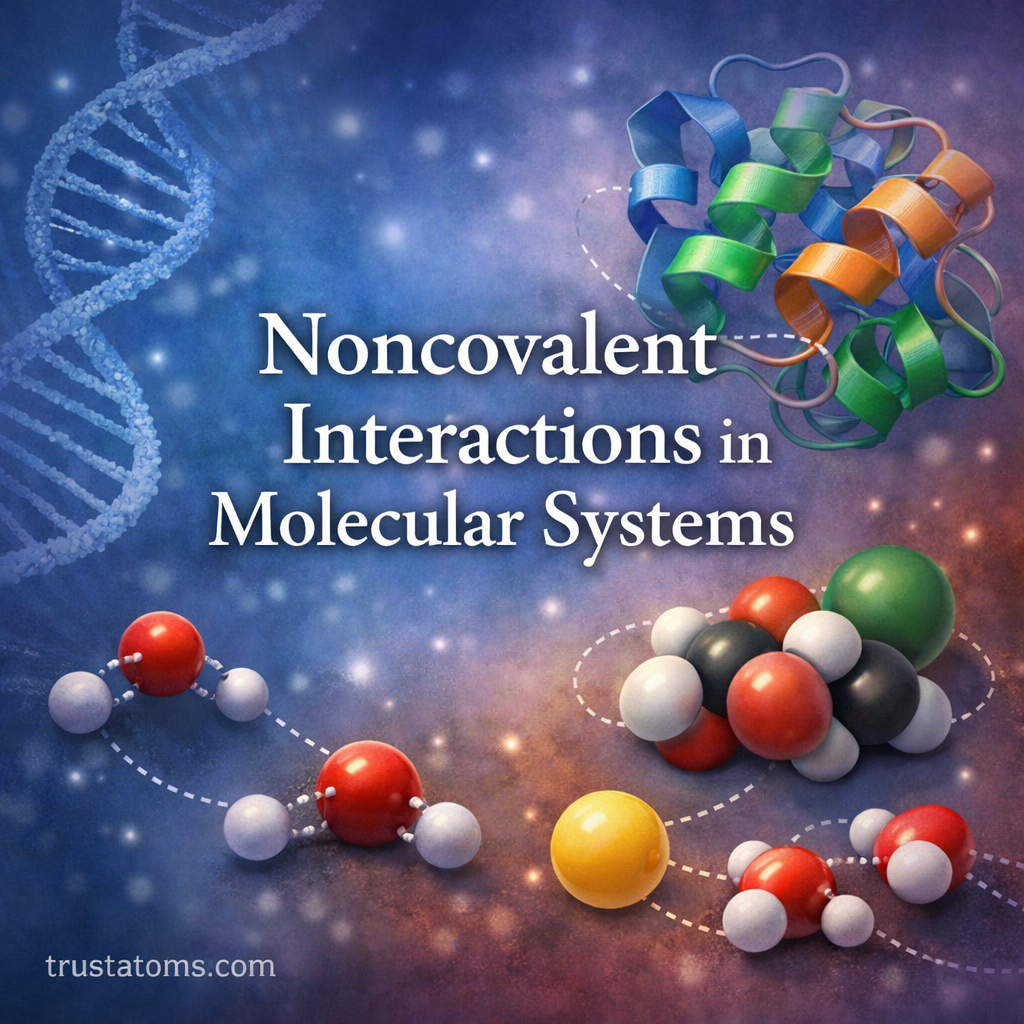
Illustration showing noncovalent interactions in molecular systems including hydrogen bonding, molecular attraction, and biological structures.
Conceptual illustration of noncovalent interactions between molecules in biological and chemical systems. trustatoms.com.

Noncovalent interactions are weak forces that occur between molecules or different parts of a molecule without the sharing of electrons that defines covalent bonds. Although individually weaker than covalent or ionic bonds, these interactions play a crucial role in chemistry, biology, and materials science.

From the folding of proteins to the structure of DNA and the behavior of liquids, noncovalent forces determine how molecules recognize, attract, and organize themselves. Understanding these interactions helps scientists explain everything from drug binding to the properties of everyday materials.

Continue reading “Noncovalent Interactions in Molecular Systems”

Isotope Effects in Reaction Mechanisms

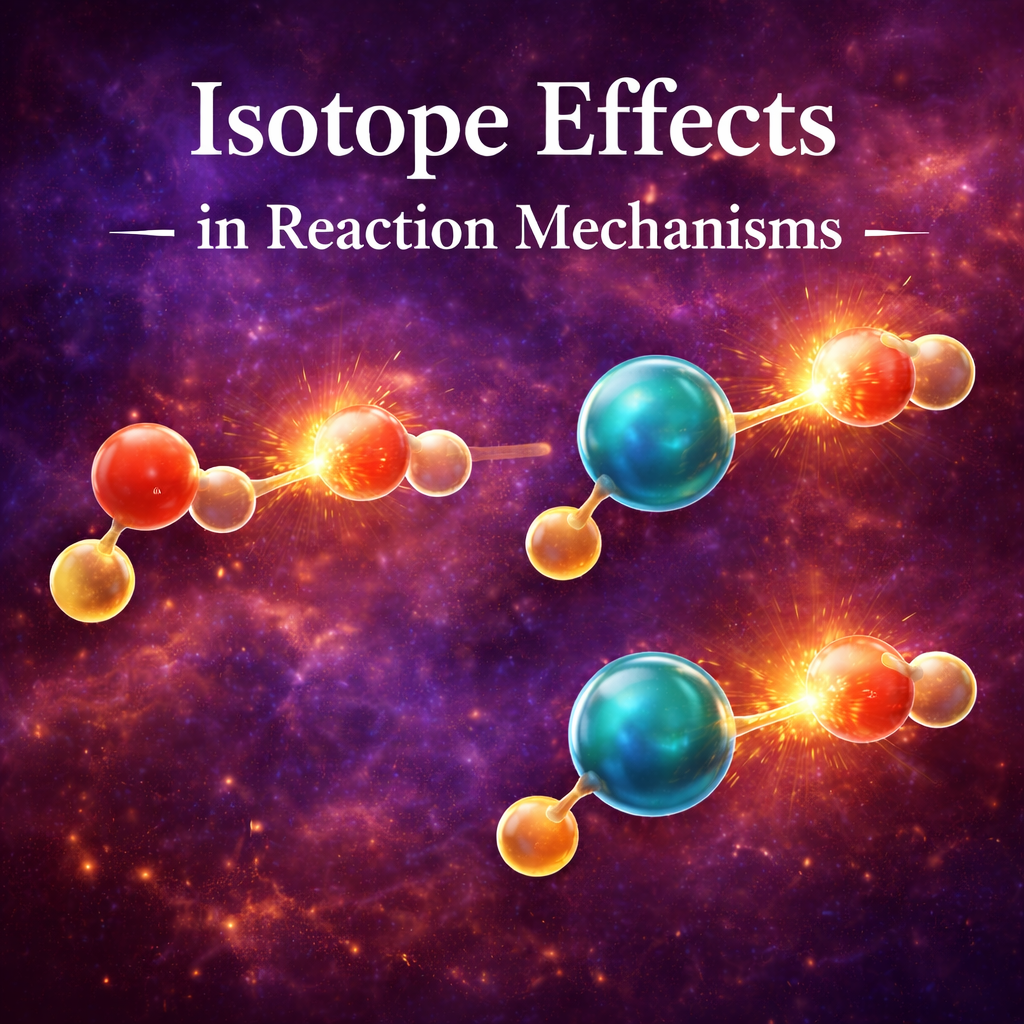
Simple illustration showing isotope substitution affecting chemical reaction rates.
Conceptual illustration of isotope substitution influencing reaction mechanisms in chemistry. trustatoms.com.

Isotope effects play an important role in understanding how chemical reactions occur. In chemistry, isotopes are atoms of the same element that contain the same number of protons but different numbers of neutrons, giving them different atomic masses.

Although isotopes behave similarly in many chemical reactions, their mass differences can influence reaction rates and mechanisms. By observing how reactions change when atoms are replaced with heavier or lighter isotopes, chemists can gain valuable insights into the steps that occur during a reaction.

These differences are known as isotope effects, and they have become powerful tools in modern chemistry for studying reaction mechanisms, enzyme behavior, and molecular dynamics.

Continue reading “Isotope Effects in Reaction Mechanisms”

Radical Reactions in Organic Chemistry

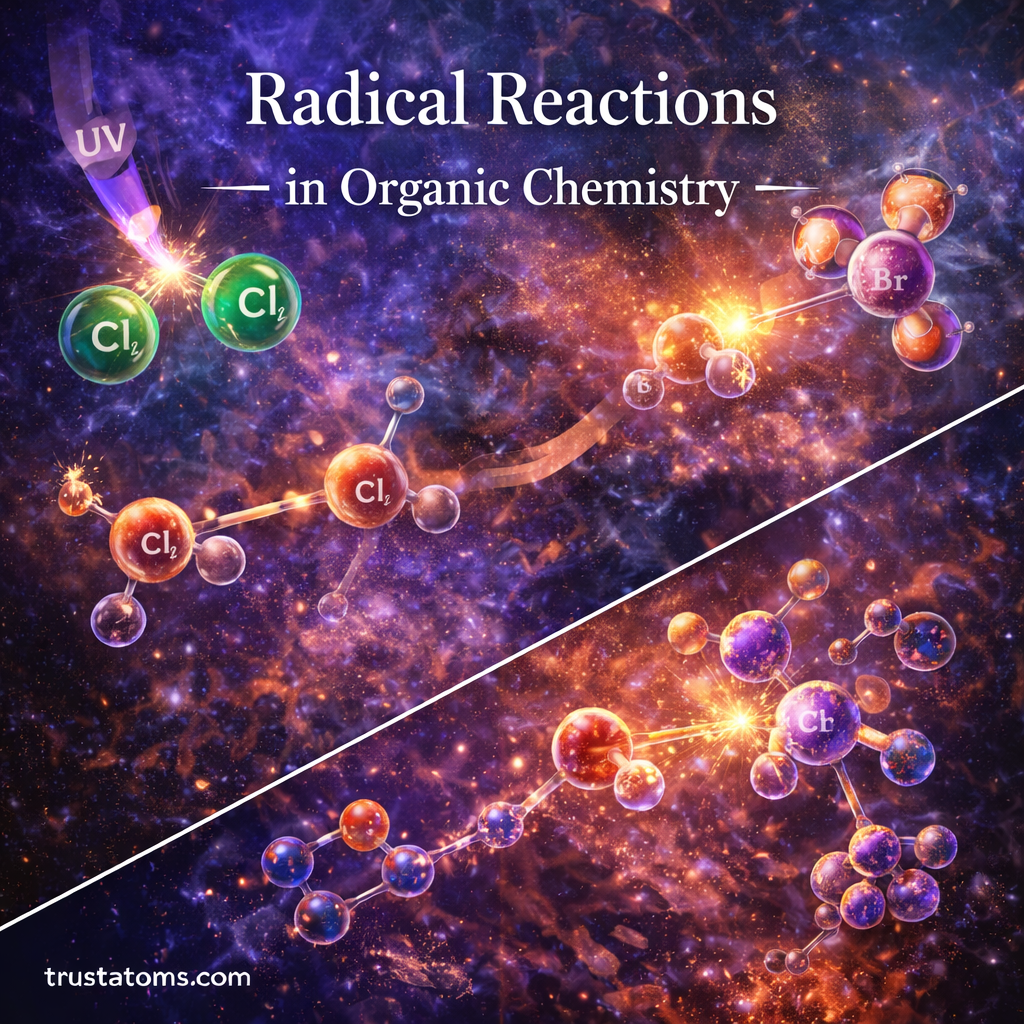
Illustration showing radical reaction mechanisms and free radical interactions in organic chemistry.
Illustration depicting free radical chain reactions and molecular interactions in organic chemistry. trustatoms.com.

Radical reactions are an important class of chemical reactions in organic chemistry. Unlike many reactions that involve pairs of electrons moving together, radical reactions involve highly reactive species known as free radicals, which contain an unpaired electron.

Because of this unpaired electron, radicals are extremely reactive and can participate in chain reactions that rapidly transform molecules. Radical chemistry plays a role in many natural processes, industrial chemical reactions, and biological systems.

Understanding radical reactions helps chemists explain processes such as combustion, polymer formation, and atmospheric chemistry.

Continue reading “Radical Reactions in Organic Chemistry”