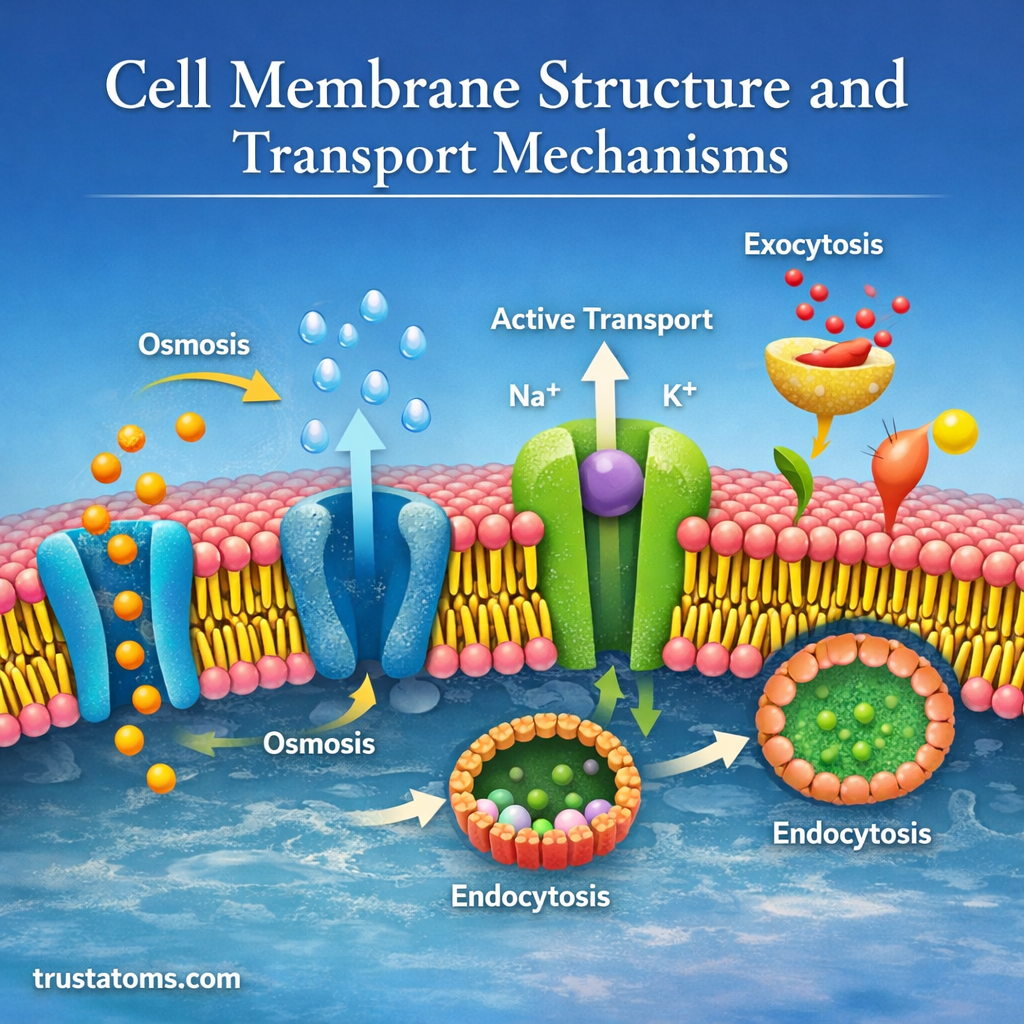
Cell Membrane Structure and Transport Mechanisms

Illustration of cell membrane structure showing the phospholipid bilayer and basic transport mechanisms such as diffusion, osmosis, active transport, endocytosis, and exocytosis.
Simplified illustration of the cell membrane showing the phospholipid bilayer and common transport mechanisms that move substances in and out of cells. trustatoms.com.

The cell membrane is one of the most important structures in biology. It forms the boundary of every cell, separating the internal environment from the outside world. While it acts as a protective barrier, the membrane is also highly dynamic and selective, allowing cells to exchange nutrients, gases, and waste products with their surroundings.

Understanding how the cell membrane is structured and how substances move across it is essential to understanding how living cells function.

Continue reading “Cell Membrane Structure and Transport Mechanisms”
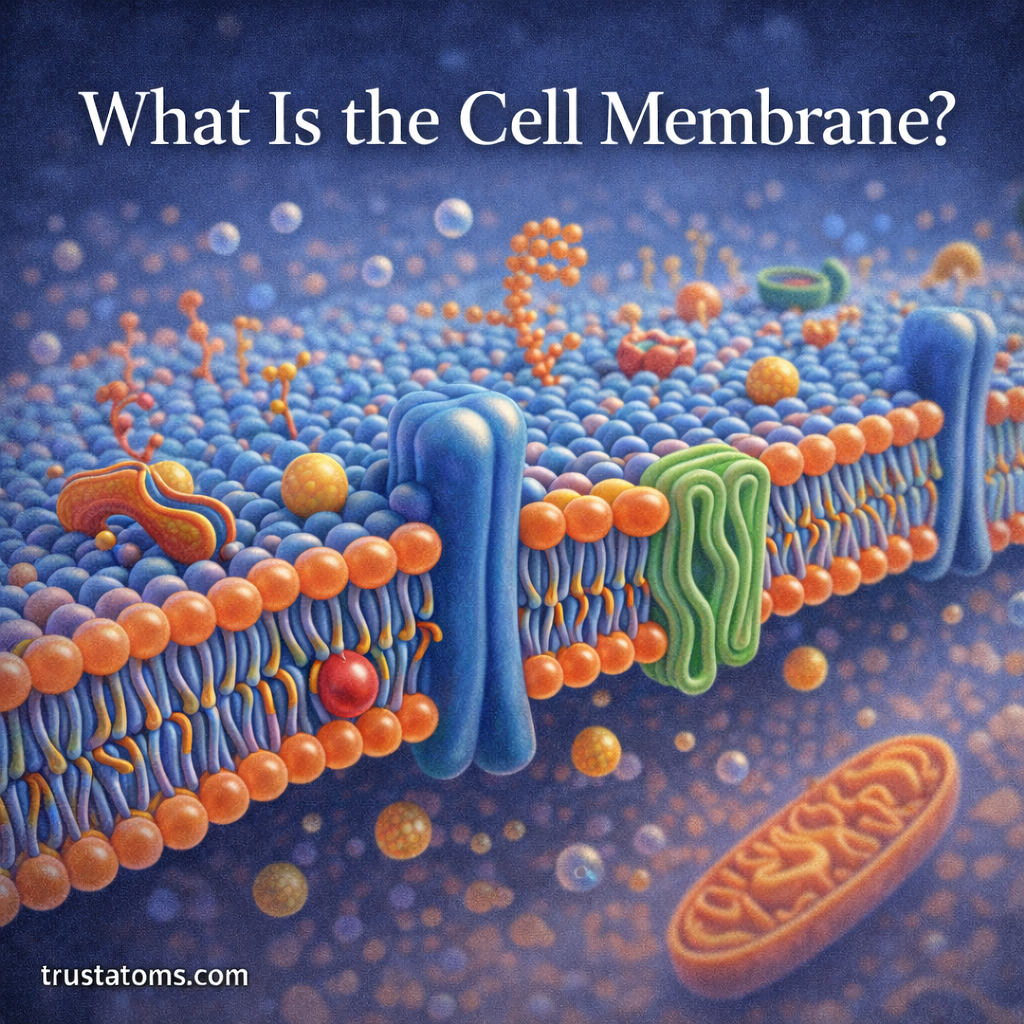
What Is the Cell Membrane?

Illustration of the cell membrane showing the phospholipid bilayer with embedded proteins and molecules.
Scientific illustration of the cell membrane structure highlighting the phospholipid bilayer and membrane proteins. trustatoms.com.

The cell membrane is a thin, flexible layer that surrounds and protects every cell. It acts as a boundary between the inside of the cell and the external environment, controlling what enters and leaves the cell.

Often described as the cell’s protective barrier, the cell membrane plays a crucial role in maintaining the cell’s internal balance. By regulating the movement of molecules and signals, it ensures that the cell can function properly and respond to changes in its surroundings.

Understanding the cell membrane is fundamental to biology because it is involved in nearly every cellular process.

Continue reading “What Is the Cell Membrane?”

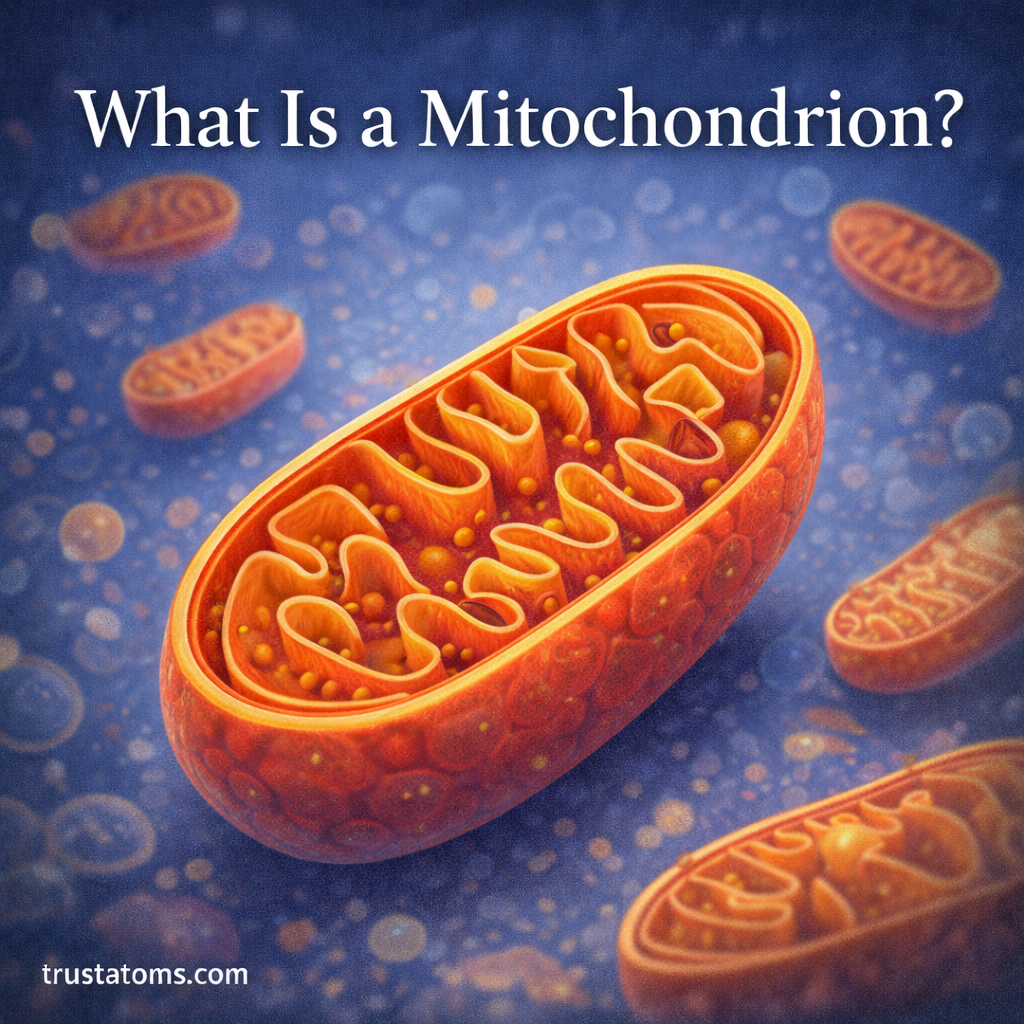
What Is a Mitochondrion?

Illustration of a mitochondrion showing its folded inner membrane structure responsible for cellular energy production.
Detailed illustration of a mitochondrion, the cellular organelle responsible for producing energy through cellular respiration. trustatoms.com.

A mitochondrion is a specialized structure inside a cell responsible for producing energy. Often called the powerhouse of the cell, mitochondria convert nutrients into a form of usable energy known as ATP (adenosine triphosphate). This energy powers many essential cellular processes, including movement, growth, and repair.

Mitochondria are found in most eukaryotic cells, including those of animals, plants, fungi, and many single-celled organisms. Without mitochondria, cells would struggle to generate the energy required to survive.

Continue reading “What Is a Mitochondrion?”

What Is an Organelle?

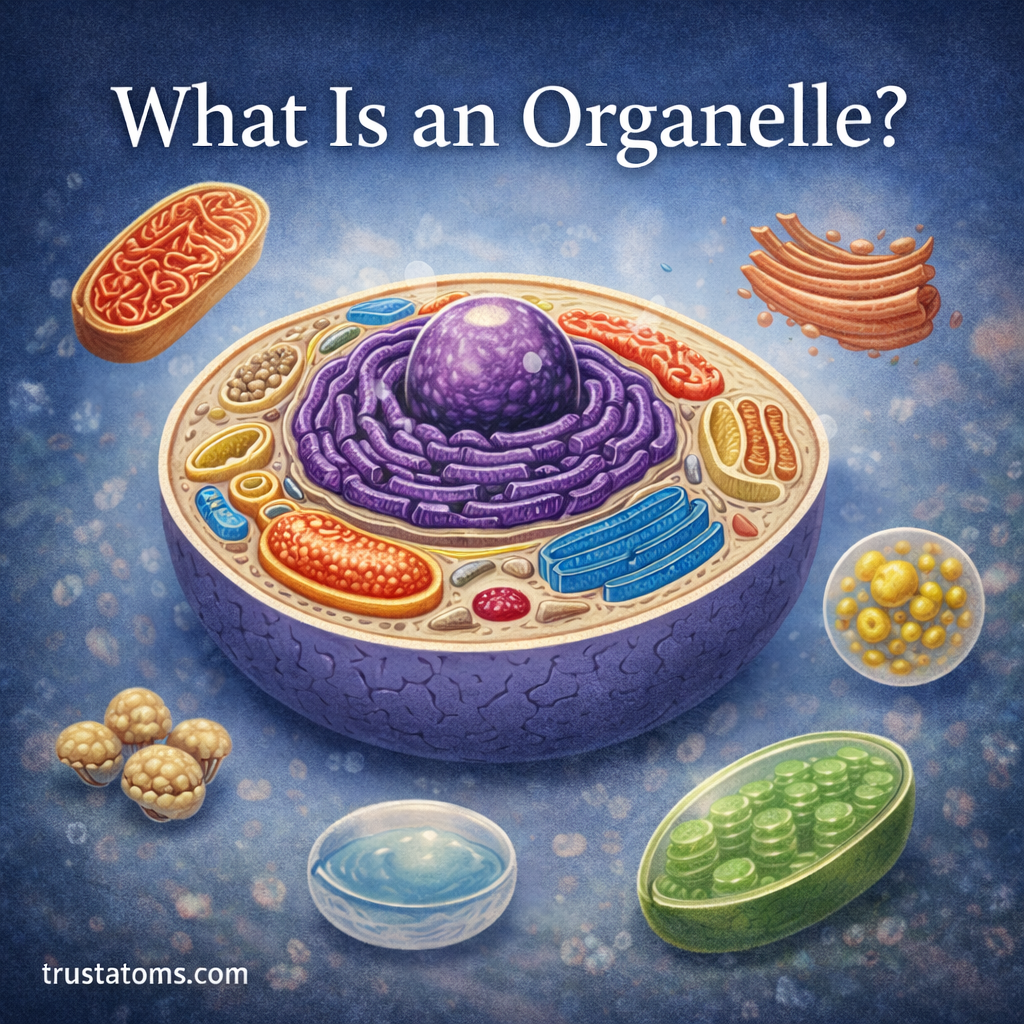
Illustration of a eukaryotic cell showing organelles such as the nucleus, mitochondria, Golgi apparatus, and chloroplast.
Educational illustration of a cell highlighting key organelles that perform specialized functions inside living cells. trustatoms.com.

Organelles are specialized structures inside cells that perform specific tasks necessary for life. Much like organs in the human body, organelles carry out essential functions that keep cells alive and operating efficiently.

Cells are the basic units of life, and organelles allow them to organize complex biological processes into manageable systems. By dividing tasks among different structures, cells can grow, produce energy, build molecules, and maintain internal balance.

Understanding organelles helps scientists explain how cells function, how diseases affect cellular processes, and how living organisms develop and survive.

Continue reading “What Is an Organelle?”

How Scientists Study Living Systems

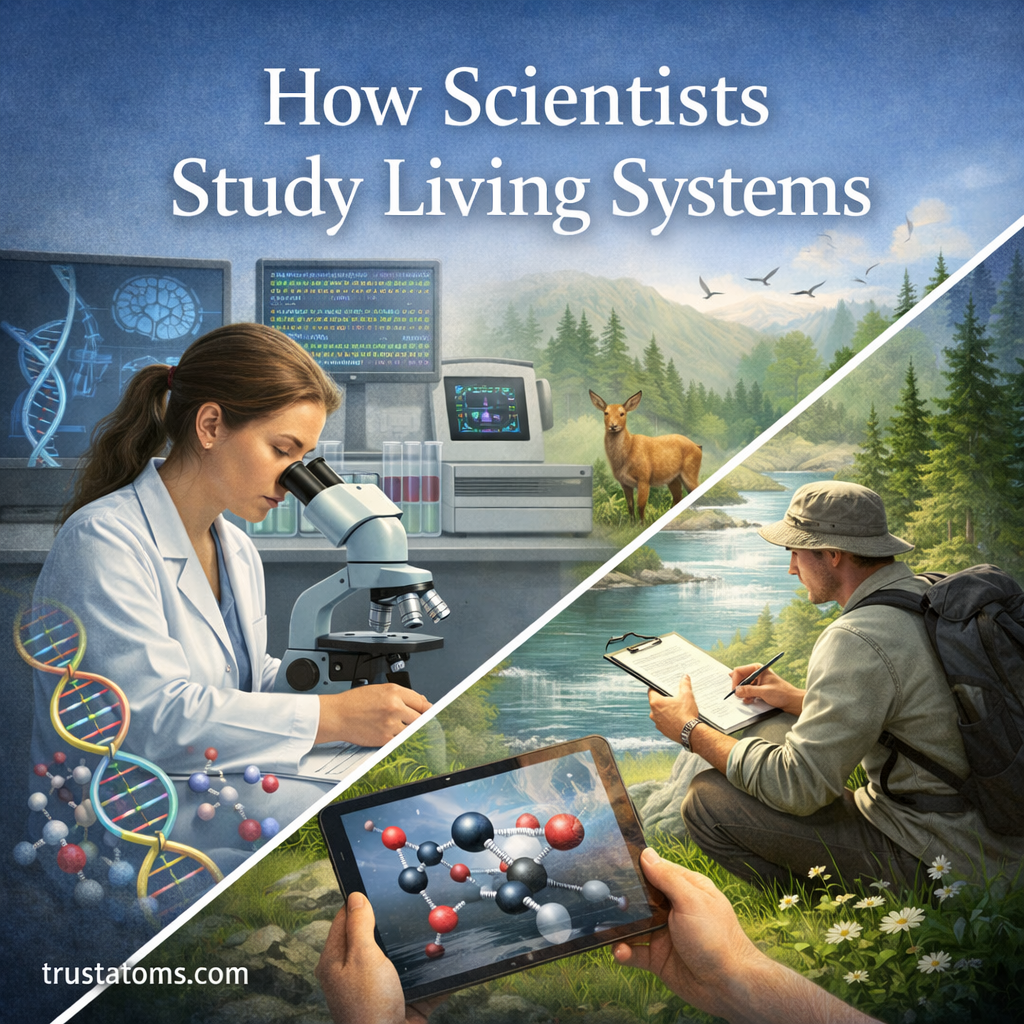
Illustration showing scientists studying living systems through lab research, microscopes, DNA analysis, and field ecology observations.
Scientists studying living systems through laboratory experiments, DNA analysis, and ecological field research. trustatoms.com.

Living systems are incredibly complex. From single cells to entire ecosystems, life operates through intricate networks of chemical reactions, genetic instructions, and environmental interactions. To understand how these systems function, scientists use a wide range of methods and tools that allow them to observe, measure, analyze, and model biological processes.

The study of living systems is a central focus of biology. Through careful research and experimentation, scientists can uncover how organisms grow, adapt, reproduce, and interact with their surroundings.

Continue reading “How Scientists Study Living Systems”

What Is Biological Complexity?

Illustration explaining biological complexity showing a cell, DNA, organs, animals, and ecosystem layers representing levels of biological organization.
Illustration showing multiple levels of biological complexity, from cells and DNA to organisms and ecosystems. trustatoms.com.

Biological complexity refers to the intricate structure, organization, and interactions found within living systems. From the microscopic machinery inside cells to the vast networks that sustain ecosystems, life is built from layers of interconnected processes that work together to maintain stability, adaptability, and survival.

Understanding biological complexity helps scientists explain how living organisms function, evolve, and respond to changing environments. It also provides insight into why life can be both remarkably resilient and extraordinarily delicate.

Continue reading “What Is Biological Complexity?”

How Biological Systems Maintain Stability

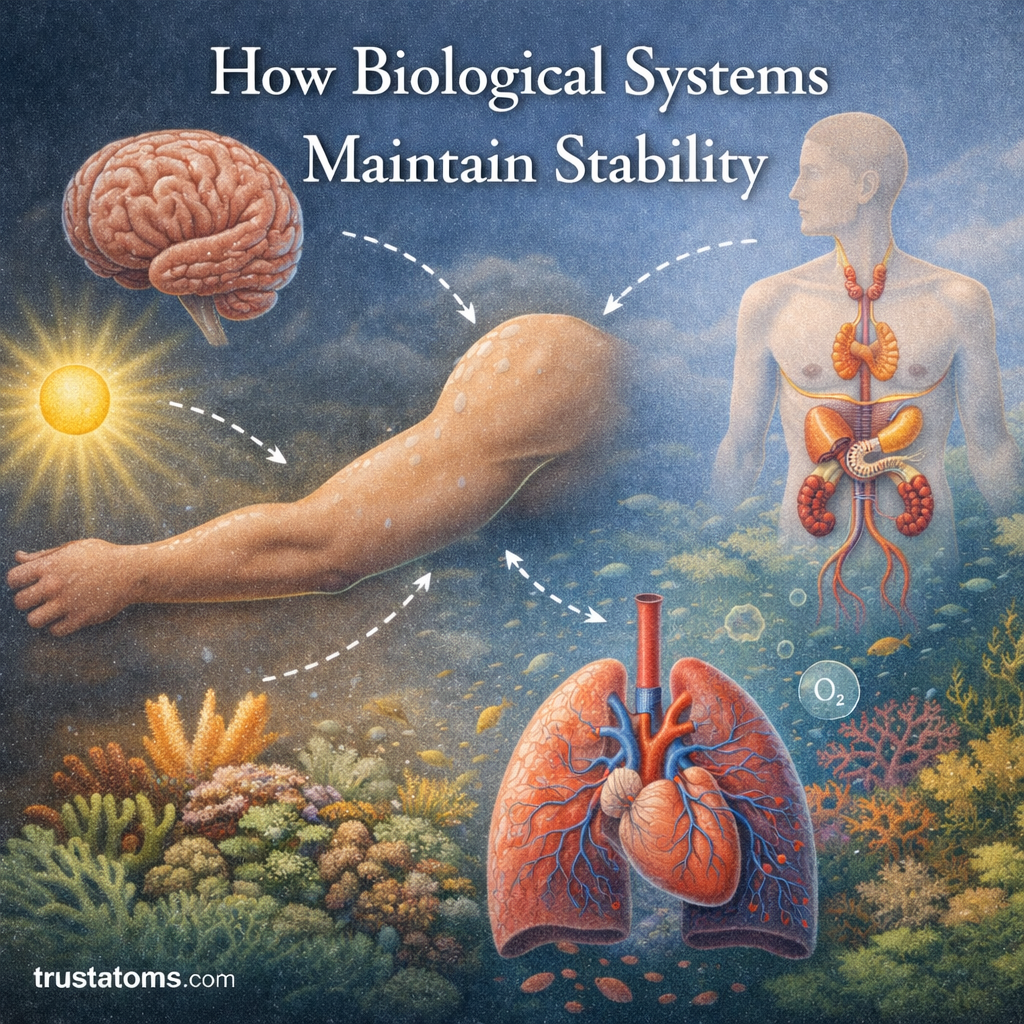
Illustration showing biological stability through homeostasis including brain regulation, sweating for temperature control, and respiratory and circulatory systems maintaining oxygen balance.
Illustration demonstrating how biological systems maintain stability through homeostasis, including temperature regulation, nervous system signaling, and respiratory balance. trustatoms.com

Living organisms constantly face changes both inside and outside their bodies. Temperature fluctuates, nutrients vary, and environmental conditions shift. Despite these challenges, living systems are able to maintain a relatively stable internal environment.

This ability to maintain stability is essential for survival and is known in biology as homeostasis. Biological systems use complex regulatory processes to monitor conditions and adjust when necessary.

Understanding how biological systems maintain stability helps explain how organisms function, adapt, and survive in changing environments.

Continue reading “How Biological Systems Maintain Stability”

Structure and Function in Living Systems

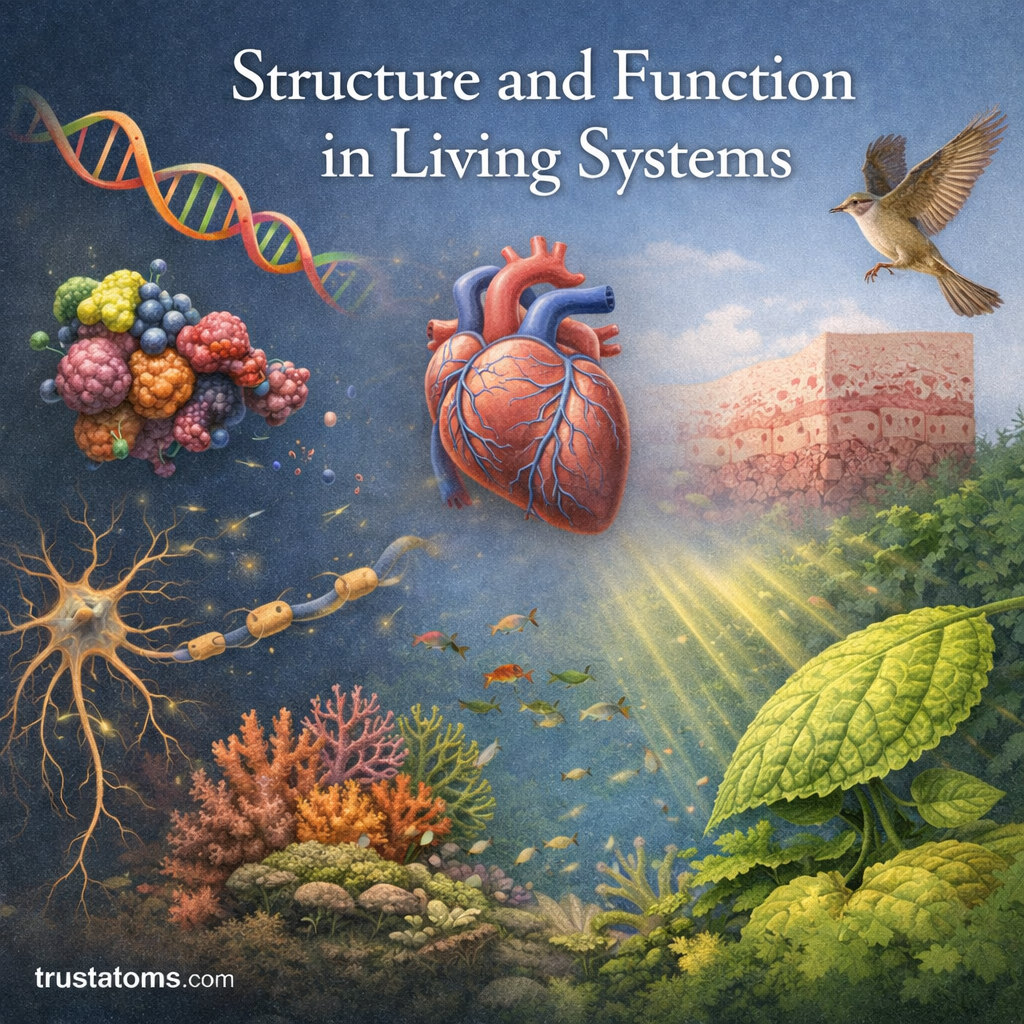
Illustration showing examples of structure and function in biology including DNA, proteins, a heart, neuron, bird wings, plant leaves, and coral reef ecosystem.
Illustration demonstrating how biological structures such as DNA, organs, cells, and ecosystems relate to their functions in living systems. trustatoms.com

One of the most important principles in biology is the relationship between structure and function. This concept explains that the physical form of a biological structure is closely connected to the job it performs.

From tiny molecules inside cells to large organs in the body, biological structures are shaped in ways that help them carry out specific tasks efficiently. Scientists study this relationship to understand how living organisms survive, grow, and interact with their environments.

Understanding structure and function helps explain why biological systems are organized the way they are and how small changes in structure can affect how a system works.

Continue reading “Structure and Function in Living Systems”

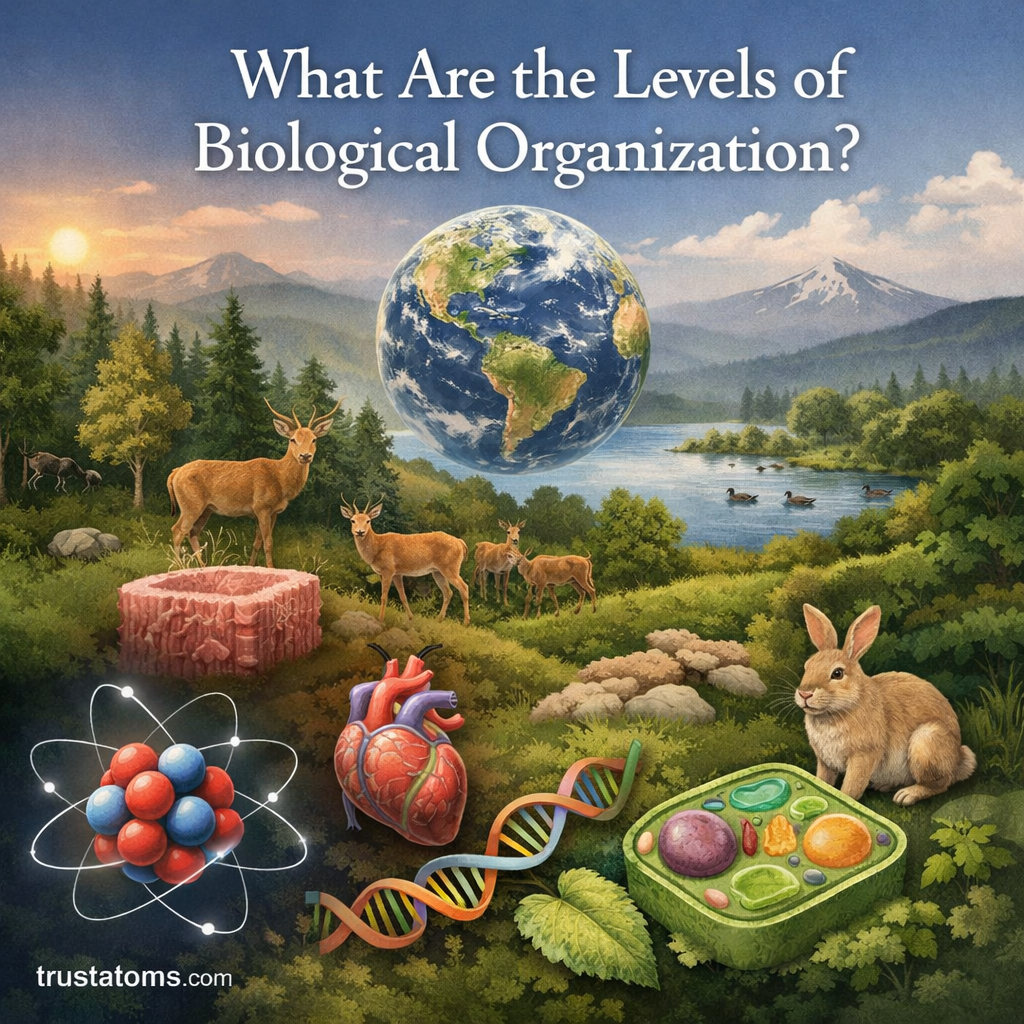
What Are the Levels of Biological Organization?

Illustrated diagram showing the levels of biological organization from atoms and cells to organisms, ecosystems, and the biosphere.
Illustration showing the hierarchy of biological organization from microscopic structures to entire ecosystems. trustatoms.com

Biology studies life from the smallest microscopic structures to the largest ecosystems on Earth. To understand how life functions, scientists organize living systems into a structured hierarchy known as the levels of biological organization.

Each level builds upon the one before it, forming increasingly complex structures that allow life to function, grow, and interact with the environment. From tiny atoms inside cells to entire ecosystems, these levels help scientists study biology in a clear and organized way.

Understanding these levels is one of the foundations of biology because it explains how simple components combine to form complex living systems.

Continue reading “What Are the Levels of Biological Organization?”

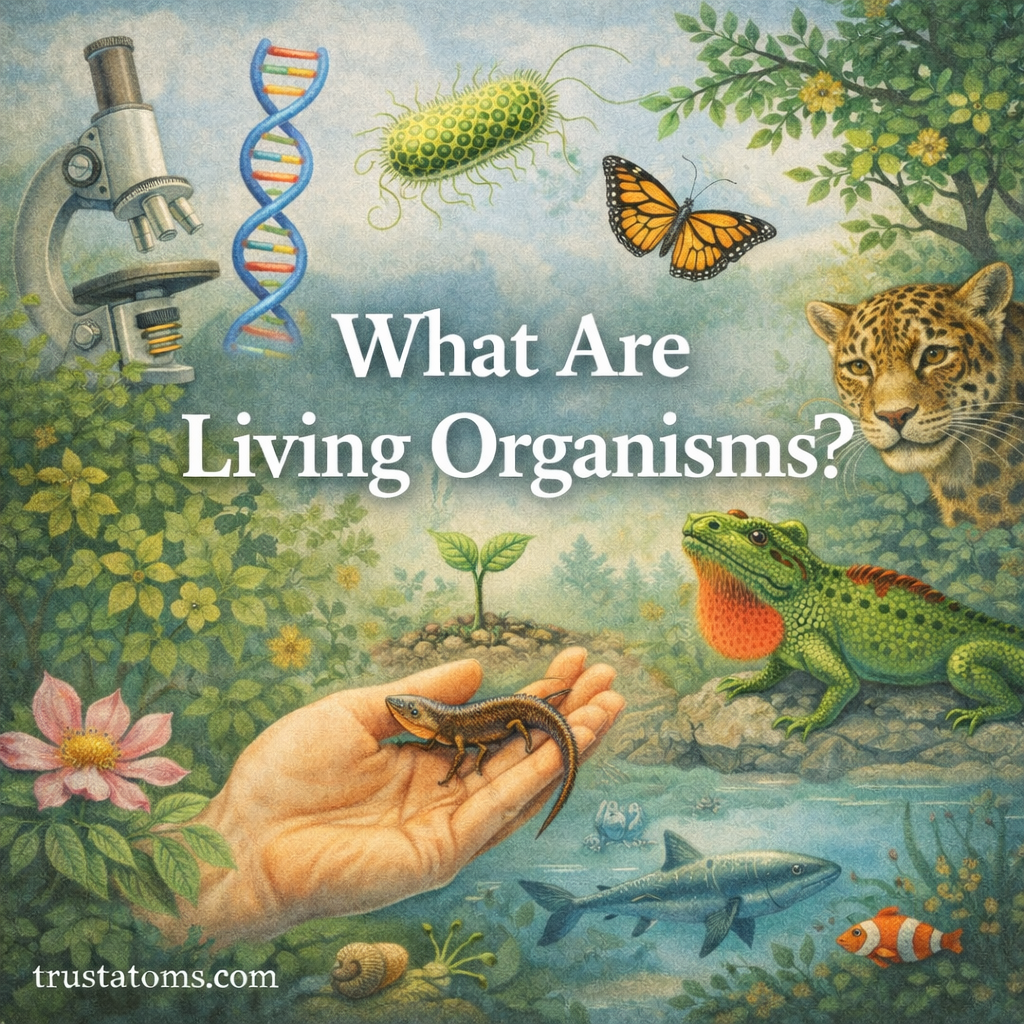
What Are Living Organisms?

Biology illustration showing examples of living organisms including plants, animals, microorganisms, and DNA representing life on Earth.
Illustration showing different types of living organisms in biology including plants, animals, microorganisms, and marine life. trustatoms.com

Living organisms are any individual life forms capable of carrying out the essential processes required for life. These processes include growth, metabolism, reproduction, and response to the surrounding environment.

From microscopic bacteria to massive trees and complex animals, living organisms exist in countless forms across Earth. Biology—the scientific study of life—focuses on understanding how these organisms function, interact, and evolve over time.

By studying living organisms, scientists gain insight into how life survives, adapts, and maintains balance within ecosystems.

Continue reading “What Are Living Organisms?”