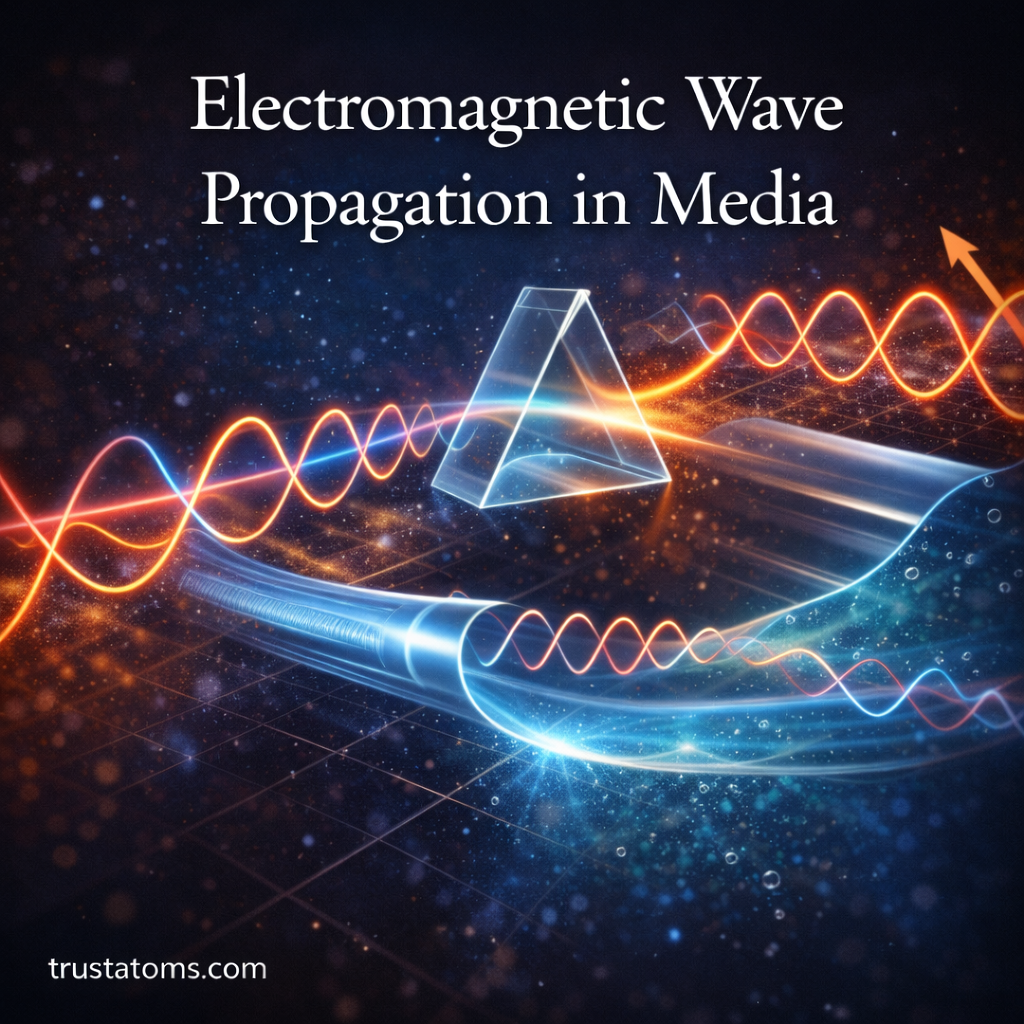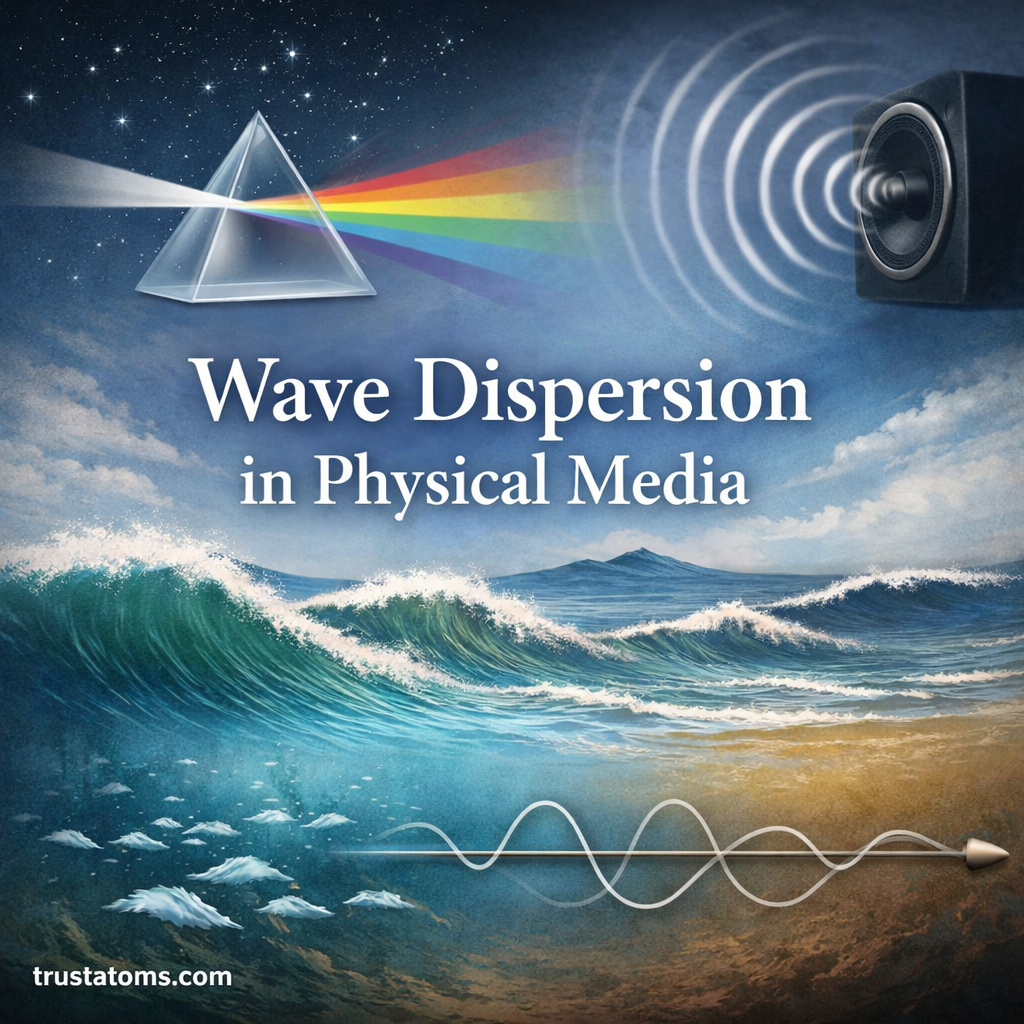
Wave dispersion is one of the most important — and often misunderstood — concepts in physics. It explains why ocean swells stretch out over distance, why a prism splits white light into colors, and why signals traveling through materials can lose clarity.
In simple terms, dispersion occurs when different frequencies (or wavelengths) of a wave travel at different speeds through a physical medium.
This article breaks down wave dispersion in physical media in a clear, practical way — with real-world examples and the physics behind it.
Continue reading “Wave Dispersion in Physical Media”