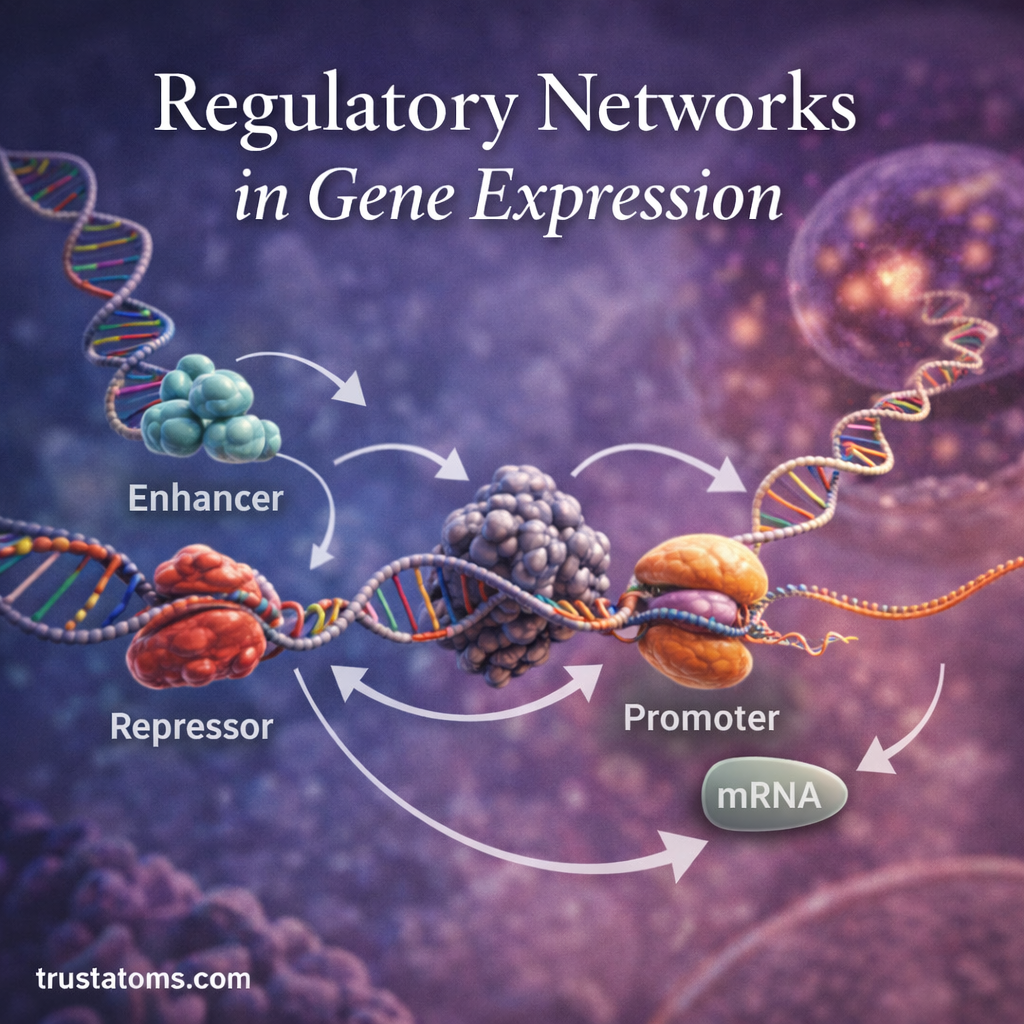
Gene expression is not controlled by a single switch. Instead, it is regulated through complex systems known as regulatory networks. These networks coordinate how genes are activated, suppressed, or modified so that cells can function properly.
Regulatory networks are essential for processes such as development, adaptation to environmental changes, immune responses, and cellular specialization. By controlling when and how genes are expressed, cells maintain balance and respond to internal and external signals.
Understanding gene regulatory networks helps scientists explain how biological systems maintain stability while remaining flexible enough to adapt.
Continue reading “Regulatory Networks in Gene Expression”