Cells must grow and divide in a controlled and coordinated way. In multicellular organisms, billions of cells work together to maintain tissues, repair damage, and support development. To keep this system balanced, cells rely on complex regulatory mechanisms that control when growth occurs and when it stops.
Cell growth regulation ensures that cells divide only when necessary. These biological systems monitor internal signals, environmental conditions, and genetic instructions to determine whether growth should continue or pause. When these mechanisms function correctly, tissues maintain stability and healthy cellular turnover.
Understanding how cell growth is regulated helps scientists study development, tissue repair, and diseases that involve abnormal cell division.
What Is Cell Growth Regulation?
Cell growth regulation refers to the biological processes that control how cells increase in size, replicate their DNA, and divide into new cells.
Growth regulation allows organisms to:
- Develop properly during early life stages
- Replace damaged or worn-out cells
- Maintain tissue structure
- Prevent uncontrolled cell division
Cells constantly receive signals from their environment and from neighboring cells. These signals help determine whether the cell should grow, remain inactive, or prepare to divide.
The Cell Cycle and Its Control Points
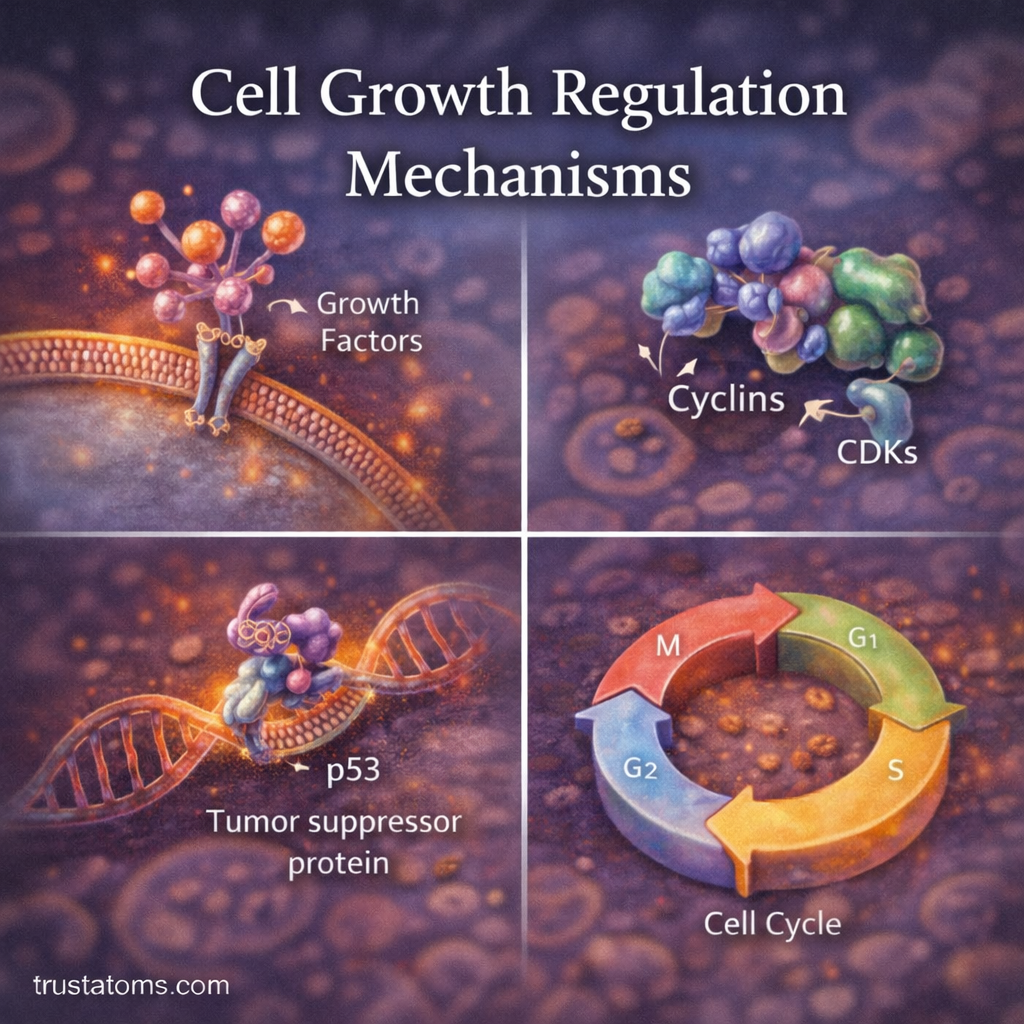
Cell growth and division occur through a structured sequence called the cell cycle. The cell cycle is carefully regulated to ensure DNA is copied accurately and that new cells receive the correct genetic material.
The cell cycle consists of several phases:
- G1 Phase (Growth Phase)
The cell increases in size and produces proteins needed for DNA replication. - S Phase (DNA Synthesis)
The cell duplicates its DNA so that each new cell will receive a full genetic copy. - G2 Phase (Preparation Phase)
The cell checks DNA for errors and prepares for division. - M Phase (Mitosis)
The cell divides into two daughter cells.
Cell Cycle Checkpoints
Cells contain built-in checkpoints that monitor whether each stage of the cycle has been completed correctly. These checkpoints act like safety controls that prevent damaged cells from continuing through the cycle.
Key checkpoints include:
- G1 checkpoint: ensures the cell is ready to replicate DNA
- G2 checkpoint: verifies that DNA replication is complete and accurate
- M checkpoint: confirms chromosomes are properly aligned before division
If problems are detected, the cycle may pause while the cell attempts repairs.
Growth Factors and External Signals
Cells respond to signals from their surrounding environment. These signals often come from molecules known as growth factors.
Growth factors are proteins that bind to receptors on the surface of cells. When a growth factor binds to its receptor, it activates signaling pathways inside the cell that promote growth and division.
Common roles of growth factors include:
- Stimulating tissue repair
- Supporting development during early life
- Coordinating cell replacement in adult tissues
Cells without proper growth signals often remain inactive or enter a resting state.
Intracellular Signaling Pathways
Once a growth signal reaches the cell, internal signaling pathways transmit that information to the nucleus, where genetic instructions are activated.
These signaling pathways act like communication networks within the cell. They involve chains of interacting proteins that pass signals from one molecule to the next.
These pathways help control processes such as:
- Protein production
- DNA replication
- Cellular metabolism
- Preparation for cell division
The accuracy of these signaling systems is essential for proper growth regulation.
Cyclins and Cyclin-Dependent Kinases
Two groups of proteins play central roles in controlling the cell cycle: cyclins and cyclin-dependent kinases (CDKs).
Cyclins
Cyclins are proteins whose concentrations rise and fall during different stages of the cell cycle. Their presence signals that the cell is ready to move to the next phase.
Cyclin-Dependent Kinases
Cyclin-dependent kinases are enzymes that activate when they bind to cyclins. Once activated, these enzymes trigger the molecular changes needed for the cell to progress through the cycle.
Together, cyclins and CDKs act as molecular switches that regulate cell division.
Tumor Suppressor Proteins
Cells also contain protective mechanisms that slow or stop growth when problems occur. These safeguards are controlled by proteins known as tumor suppressors.
Tumor suppressor proteins help prevent uncontrolled cell division by:
- Detecting DNA damage
- Halting the cell cycle for repairs
- Initiating cellular self-destruction if damage is severe
These proteins are critical for maintaining healthy growth regulation within tissues.
Contact Inhibition and Tissue Organization
Cells in multicellular organisms do not grow indefinitely. One reason is a process called contact inhibition.
Contact inhibition occurs when cells stop dividing once they become crowded by neighboring cells. This mechanism helps maintain organized tissue structure and prevents excessive cell accumulation.
When cells sense nearby neighbors, growth signals decrease and the cell cycle slows or stops.
This process helps maintain stable tissue boundaries.
Cellular Signals That Stop Growth
Not all signals promote cell growth. Some signals actively prevent cells from dividing.
These inhibitory signals may be triggered by:
- DNA damage
- Nutrient shortages
- Cellular stress
- Lack of growth factor signals
Cells receiving these signals may enter a resting phase known as the G0 phase, where they temporarily stop dividing.
Some specialized cells remain in this resting state for extended periods.
Apoptosis and Controlled Cell Removal
In addition to controlling growth, organisms must also remove cells that are damaged or no longer needed. This process is called apoptosis.
Apoptosis is a controlled form of cell death that allows the body to eliminate harmful or unnecessary cells without damaging surrounding tissues.
This process helps regulate cell populations and maintain healthy tissue balance.
Apoptosis plays important roles in:
- Embryonic development
- Tissue renewal
- Removal of damaged cells
- Immune system function
Cell Growth Regulation and Disease
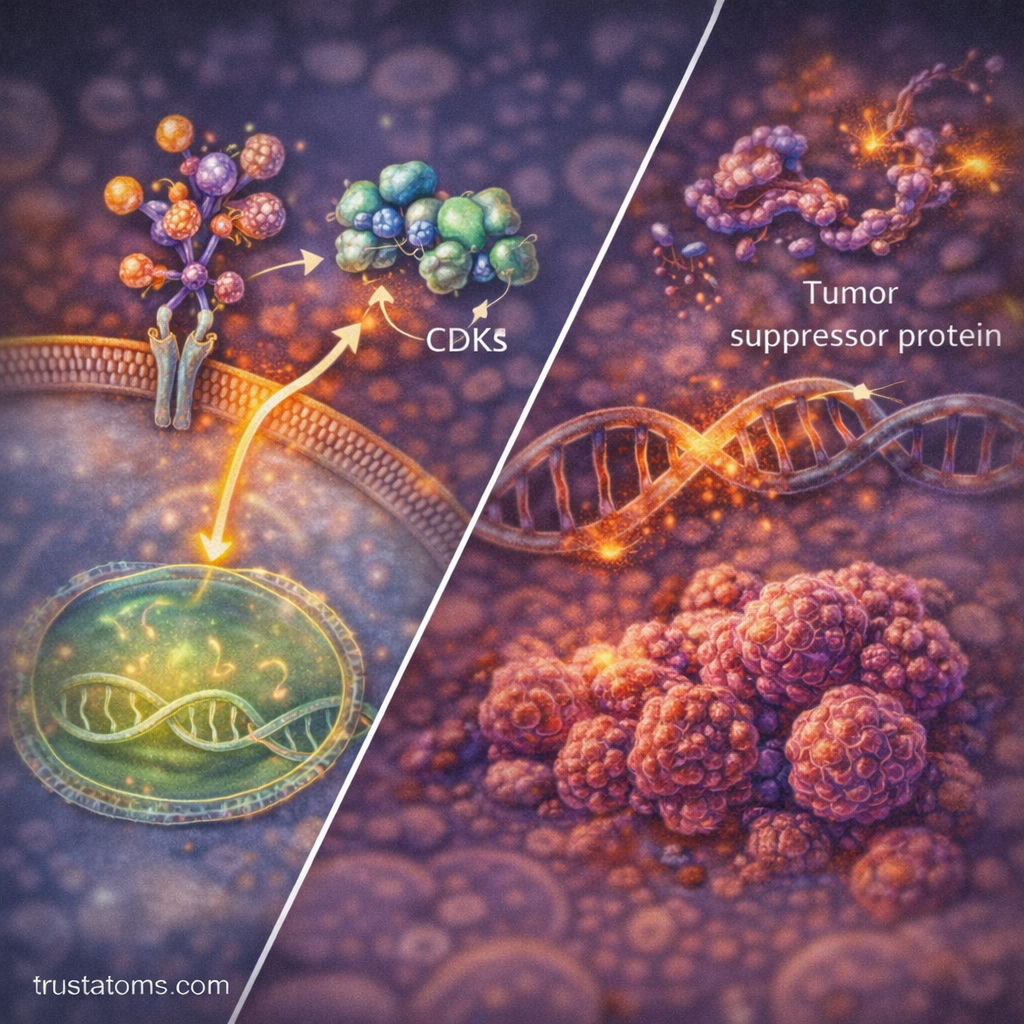
When cell growth regulation systems malfunction, cells may divide uncontrollably. This loss of regulation can contribute to serious biological conditions.
Examples of problems associated with disrupted growth control include:
- Uncontrolled cell division
- Tumor formation
- Tissue overgrowth
- Genetic instability
Scientists study these mechanisms to understand how cells normally maintain balance and what happens when regulation fails.
Factors That Influence Cell Growth
Several factors influence how effectively cells regulate their growth.
Genetic Factors
Genes determine the production of proteins involved in signaling pathways, cell cycle checkpoints, and repair systems.
Environmental Conditions
External influences such as toxins, radiation, and nutrient availability can affect cellular growth signals.
Cellular Stress
Damage to DNA or proteins may trigger protective mechanisms that pause cell growth until repairs occur.
Why Cell Growth Regulation Matters in Biology
Cell growth regulation is essential for maintaining balance within living organisms. These mechanisms ensure that cells divide only when necessary and that damaged cells do not continue to grow.
By coordinating growth signals, repair systems, and protective checkpoints, cells maintain the stability required for healthy tissue function.
Scientists continue studying these processes to better understand development, aging, and the biological systems that maintain life.
Final Thoughts
Cell growth regulation mechanisms form a highly coordinated network that guides when cells grow, divide, pause, or self-destruct. Through cell cycle checkpoints, signaling pathways, growth factors, and protective proteins, cells maintain careful control over their own reproduction.
These systems allow organisms to develop properly, repair tissues, and maintain stable biological function throughout life. When growth regulation operates correctly, cells work together in a balanced and organized system that supports the health of the entire organism.