The cell membrane is one of the most important structures in biology. It forms the boundary of every cell, separating the internal environment from the outside world. While it acts as a protective barrier, the membrane is also highly dynamic and selective, allowing cells to exchange nutrients, gases, and waste products with their surroundings.
Understanding how the cell membrane is structured and how substances move across it is essential to understanding how living cells function.
What Is the Cell Membrane?
The cell membrane, also called the plasma membrane, is a thin, flexible layer that surrounds the cell. It regulates what enters and exits the cell, helping maintain stable internal conditions necessary for life.
Key functions of the cell membrane include:
- Protecting the cell’s internal components
- Controlling the movement of substances in and out
- Enabling communication between cells
- Maintaining the cell’s shape and structure
Despite being extremely thin, the membrane is complex and carefully organized.
The Fluid Mosaic Model
Scientists describe the cell membrane using the fluid mosaic model.
This model explains that the membrane is made of a fluid combination of molecules that move within a flexible layer.
The main components include:
- Phospholipids
- Proteins
- Cholesterol (in many animal cells)
- Carbohydrates attached to proteins or lipids
The term fluid refers to how molecules can move sideways within the membrane, while mosaic refers to the patchwork arrangement of different molecules embedded in it.
Phospholipid Bilayer Structure
The basic structure of the membrane is called the phospholipid bilayer.
Each phospholipid molecule has two parts:
- A hydrophilic (water-loving) head
- Two hydrophobic (water-repelling) tails
Because cells exist in watery environments, phospholipids automatically arrange themselves into two layers:
- Hydrophilic heads face outward toward water
- Hydrophobic tails face inward away from water
This arrangement creates a stable barrier that helps separate the inside of the cell from the external environment.
Membrane Proteins and Their Functions
Proteins embedded within the membrane play important roles in cell activity.
Different types of membrane proteins include:
Channel Proteins
Channel proteins form small openings that allow specific molecules or ions to pass through the membrane.
These channels are often selective and may only allow certain substances to pass.
Carrier Proteins
Carrier proteins bind to molecules and change shape to move them across the membrane.
This process is commonly used for transporting glucose and amino acids.
Receptor Proteins
Receptor proteins allow cells to receive signals from other cells or the environment.
When a signaling molecule binds to the receptor, it triggers a response inside the cell.
Enzymatic Proteins
Some membrane proteins function as enzymes that speed up chemical reactions at the cell surface.
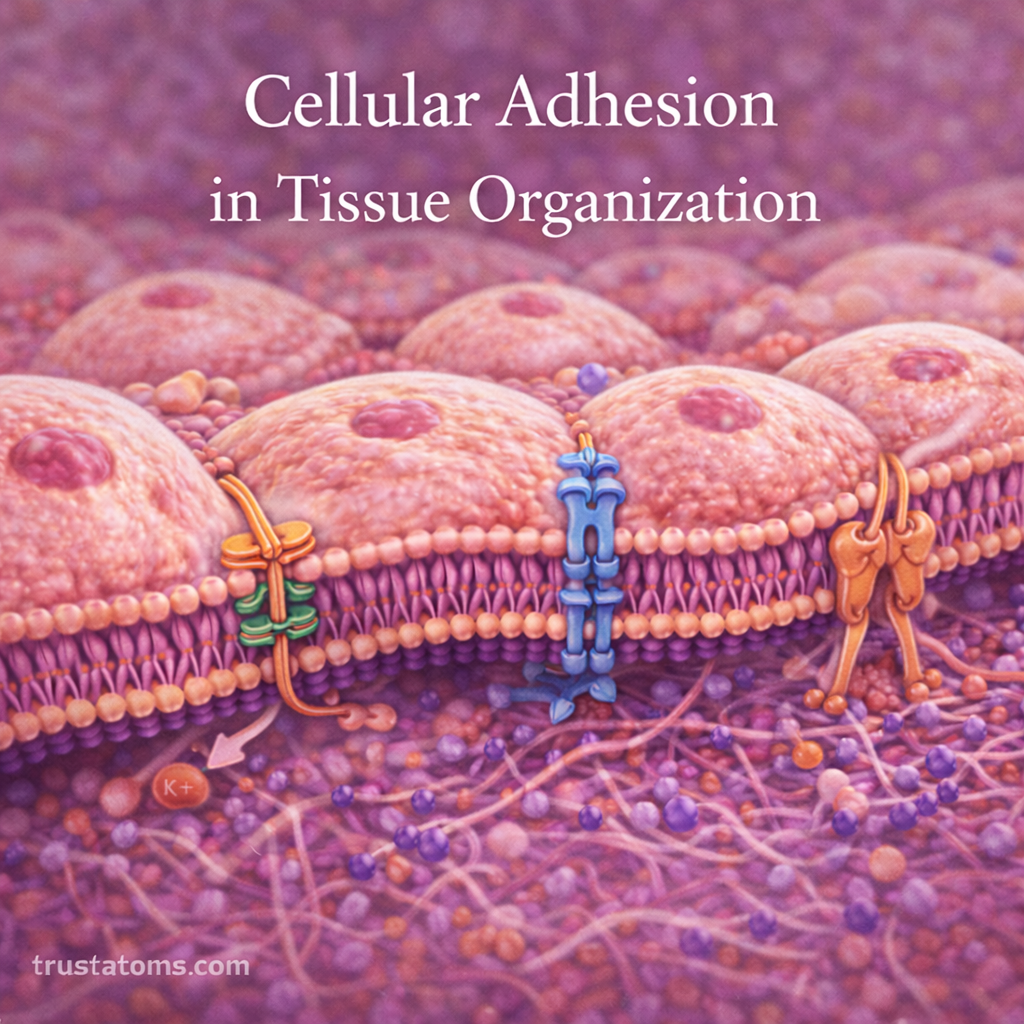
Membrane Carbohydrates
Carbohydrates attached to proteins or lipids form structures called:
- Glycoproteins
- Glycolipids
These molecules extend outward from the membrane and play roles in:
- Cell recognition
- Cell communication
- Immune system responses
For example, immune cells often recognize foreign cells based on these carbohydrate markers.
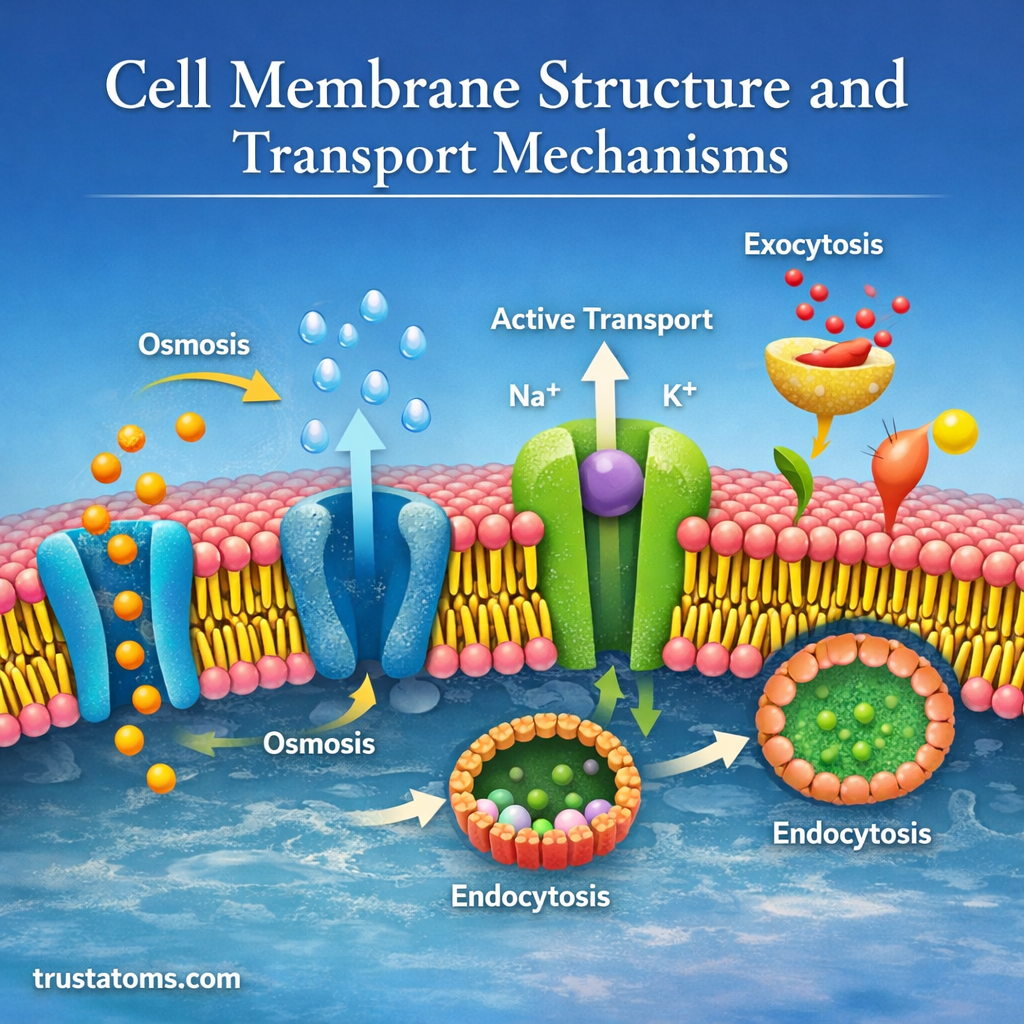
Transport Across the Cell Membrane
One of the membrane’s most important roles is controlling how substances move in and out of the cell.
Transport mechanisms fall into two main categories:
- Passive transport
- Active transport
The difference depends on whether the cell uses energy.
Passive Transport
Passive transport moves substances without using cellular energy. Molecules move from areas of higher concentration to areas of lower concentration.
Diffusion
Diffusion is the movement of molecules directly through the membrane from high concentration to low concentration.
Small nonpolar molecules such as oxygen and carbon dioxide often cross the membrane this way.
Facilitated Diffusion
Some molecules cannot pass directly through the phospholipid bilayer. Instead, they use transport proteins.
Facilitated diffusion involves:
- Channel proteins or carrier proteins
- Movement down a concentration gradient
- No energy requirement
Examples include glucose and certain ions.
Osmosis
Osmosis is the diffusion of water across a selectively permeable membrane.
Water moves from areas of lower solute concentration to areas of higher solute concentration.
This helps maintain proper fluid balance inside cells.
Active Transport
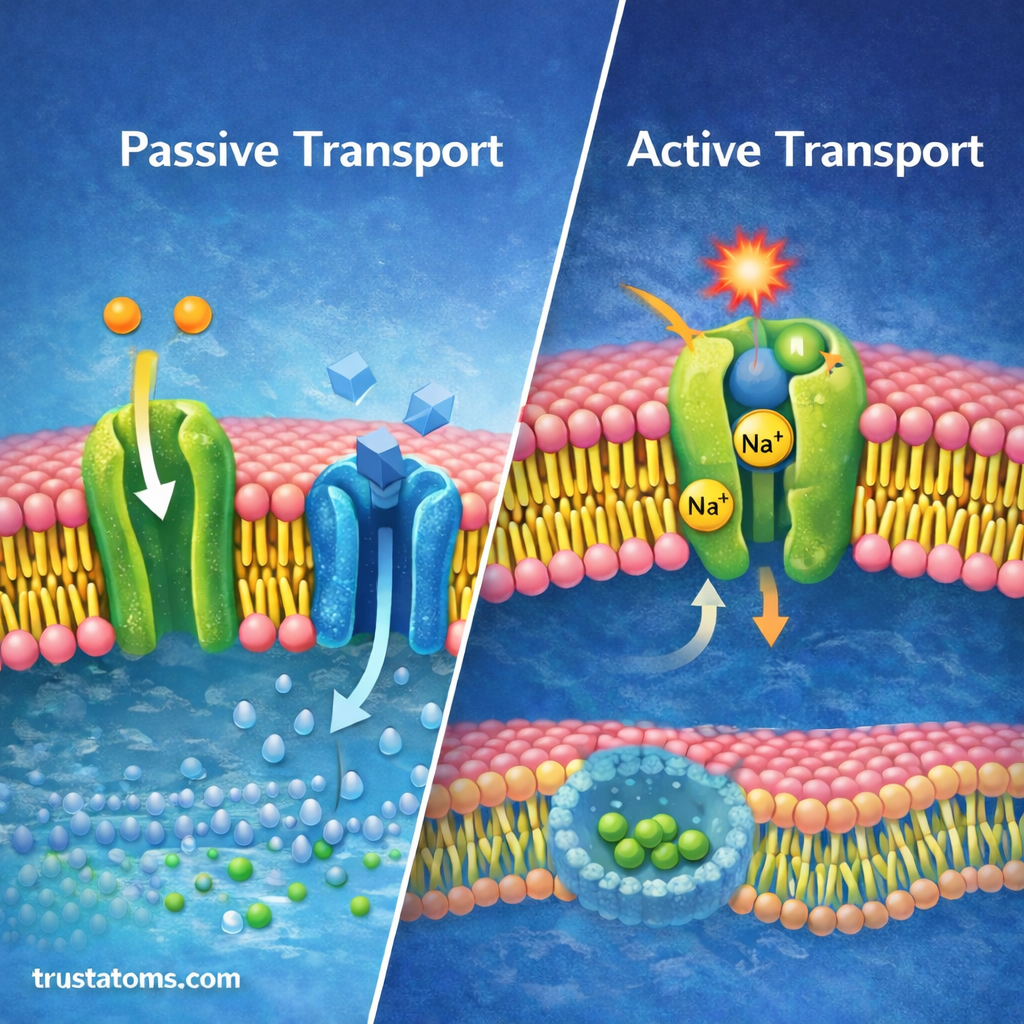
Active transport requires energy because molecules move against their concentration gradient, from lower concentration to higher concentration.
Cells use energy stored in ATP to power this process.
Examples of active transport include:
- Ion pumps that move sodium and potassium across membranes
- Transport of nutrients into cells when internal concentrations are already high
One well-known example is the sodium-potassium pump, which maintains electrical balance in nerve and muscle cells.
Bulk Transport Mechanisms
Large molecules cannot cross the membrane using typical transport proteins. Instead, cells use bulk transport processes.
Endocytosis
Endocytosis occurs when the membrane folds inward to bring materials into the cell.
Types include:
- Phagocytosis (cell eating)
- Pinocytosis (cell drinking)
- Receptor-mediated endocytosis
Exocytosis
Exocytosis is the opposite process. Vesicles inside the cell fuse with the membrane and release materials outside the cell.
Cells use exocytosis to:
- Release hormones
- Secrete enzymes
- Remove cellular waste
Why Membrane Transport Is Important
The ability of the membrane to regulate transport is essential for cell survival.
Transport mechanisms allow cells to:
- Obtain nutrients
- Remove metabolic waste
- Maintain proper ion balance
- Communicate with other cells
- Respond to environmental changes
Without these processes, cells would quickly lose internal stability and stop functioning.
Final Thoughts
The cell membrane is far more than a simple boundary. Its structure, built around the phospholipid bilayer and embedded proteins, allows it to function as a flexible and highly selective control center.
Through passive transport, active transport, and bulk transport mechanisms, the membrane carefully regulates the movement of substances in and out of the cell. This regulation supports cellular stability, communication, and overall biological function.
Understanding the cell membrane and its transport systems provides a foundational insight into how all living organisms maintain life at the cellular level.