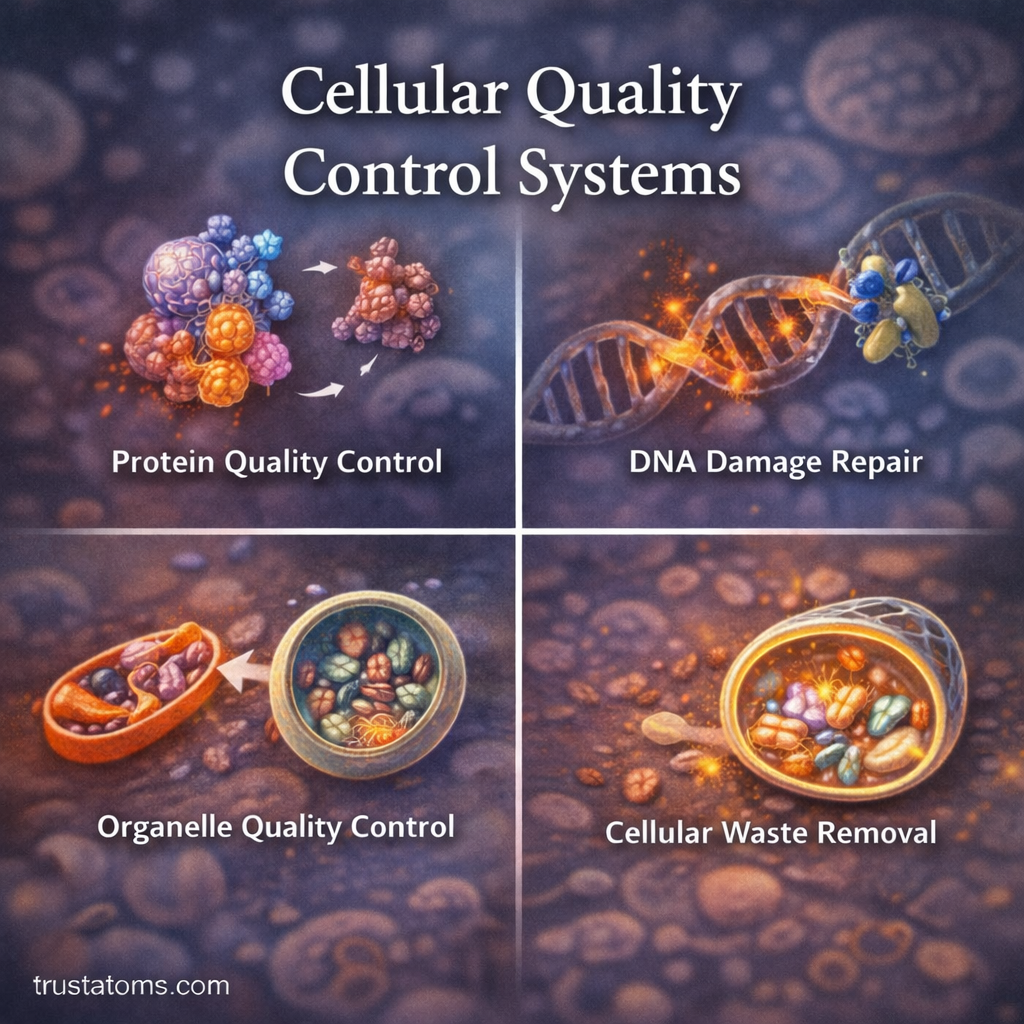
Cells operate through complex biochemical processes that require precision and stability. Proteins must fold correctly, DNA must remain intact, and organelles must function efficiently. To maintain this internal balance, cells rely on several built-in monitoring and repair mechanisms known as cellular quality control systems.
These systems continuously detect errors, remove damaged components, and repair molecular structures. Without these safeguards, cells would quickly accumulate defective proteins, malfunctioning organelles, and genetic damage. Over time, this buildup could disrupt normal biological processes and threaten cell survival.
Cellular quality control systems therefore play a central role in maintaining healthy biological function across tissues and organisms.
What Are Cellular Quality Control Systems?
Cellular quality control systems are regulatory processes that monitor the condition of molecules and structures inside the cell. When damage or malfunction is detected, the cell activates specific pathways to repair or remove the affected components.
These systems help ensure that only properly functioning molecules participate in cellular activities.
Key goals of cellular quality control include:
- Detecting damaged proteins and DNA
- Repairing molecular structures
- Recycling defective components
- Preventing toxic accumulation
- Maintaining cellular stability
Together, these processes allow cells to maintain internal order despite constant environmental and metabolic stress.
Why Quality Control Is Essential for Cells
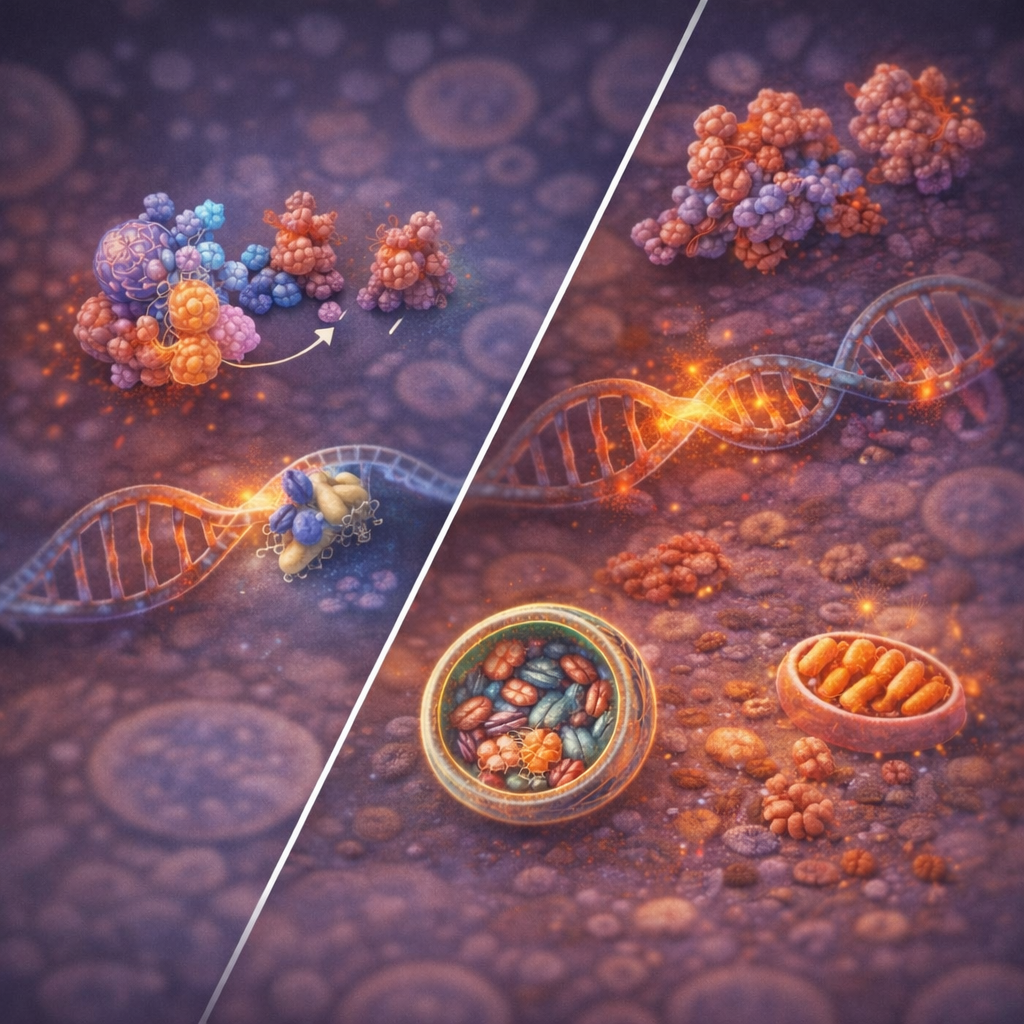
Cells are constantly exposed to factors that can disrupt their internal systems. Even normal metabolic activity produces byproducts that may damage proteins or DNA.
Common sources of cellular stress include:
- Oxidative molecules produced during metabolism
- Environmental toxins
- Radiation exposure
- Replication errors during cell division
- Temperature fluctuations
Without quality control systems, damaged components would accumulate quickly. This buildup could interfere with cellular signaling, energy production, and structural integrity.
By identifying and removing damaged structures early, quality control mechanisms prevent these problems from escalating.
Protein Quality Control
Proteins carry out most of the work inside cells. They act as enzymes, structural components, signaling molecules, and transport systems. Because proteins must maintain precise shapes to function correctly, cells carefully monitor protein structure.
Protein Folding Surveillance
Newly produced proteins must fold into specific three-dimensional shapes. Specialized molecules called molecular chaperones assist with this folding process.
If a protein fails to fold properly, the cell may attempt to refold it using chaperones. When refolding fails, the protein is marked for degradation.
Protein Degradation Pathways
Damaged or misfolded proteins are removed through two primary systems:
- The proteasome system
- Autophagy pathways
The proteasome breaks down smaller defective proteins into amino acids that can be reused for new protein synthesis.
Autophagy, in contrast, can remove larger protein aggregates and damaged cellular structures.
These degradation systems help maintain a healthy pool of functional proteins inside the cell.
DNA Damage Detection and Repair
DNA contains the genetic instructions required for cellular function. Because of its importance, cells have developed sophisticated mechanisms to detect and repair DNA damage.
Several types of DNA damage can occur, including:
- Base modifications
- Single-strand breaks
- Double-strand breaks
- Replication errors
Cells rely on multiple repair systems to correct these problems.
Major DNA Repair Mechanisms
Some of the most important DNA repair pathways include:
- Base excision repair
- Nucleotide excision repair
- Mismatch repair
- Double-strand break repair
Each system specializes in correcting different types of DNA damage. By repairing these errors, cells help preserve genetic stability and prevent harmful mutations.
Organelle Quality Control
Organelles are specialized structures inside cells that perform specific functions. Examples include mitochondria, the endoplasmic reticulum, and lysosomes.
When organelles become damaged, their function can decline and interfere with overall cellular performance.
Cells use several strategies to maintain organelle quality.
Mitophagy
Mitophagy is a specialized form of autophagy that targets damaged mitochondria.
Because mitochondria generate cellular energy, defective mitochondria can produce harmful reactive molecules. Removing these damaged structures helps protect the cell from oxidative stress.
Endoplasmic Reticulum Stress Response
The endoplasmic reticulum plays an important role in protein folding and processing. When protein production overwhelms this system, misfolded proteins may accumulate.
Cells respond by activating the unfolded protein response, which slows protein production and increases repair capacity until balance is restored.
Cellular Waste Removal Systems
In addition to monitoring individual molecules, cells maintain systems for clearing large-scale cellular debris.
These systems include:
- Lysosomes that digest waste material
- Autophagosomes that transport damaged components
- Proteasomes that break down defective proteins
Together, these systems act as a cellular cleanup network that prevents harmful accumulation of molecular waste.
Efficient waste removal helps maintain cellular efficiency and structural integrity.
Cellular Quality Control and Aging
As organisms age, cellular quality control systems often become less efficient. Repair mechanisms slow down, and damaged molecules may accumulate inside cells.
This gradual decline can contribute to several biological changes associated with aging, including:
- Reduced cellular repair capacity
- Increased oxidative damage
- Accumulation of misfolded proteins
- Mitochondrial dysfunction
Scientists believe that maintaining strong cellular quality control may play an important role in supporting long-term cellular health.
Cellular Quality Control and Disease
When quality control systems fail or become overwhelmed, cells may experience serious dysfunction.
Researchers have linked breakdowns in these systems to several types of disease.
Examples include:
- Neurodegenerative disorders involving protein buildup
- Certain cancers linked to DNA repair failure
- Metabolic diseases associated with mitochondrial dysfunction
- Immune disorders related to cellular stress responses
Understanding how these systems function helps scientists develop strategies for improving cellular stability and disease resistance.
Factors That Influence Cellular Quality Control
Several biological factors influence how efficiently cells perform quality control functions.
Genetic Factors
Some genes regulate repair enzymes, chaperone proteins, and degradation pathways. Variations in these genes may affect how effectively cells respond to damage.
Environmental Conditions
External stressors such as toxins, radiation, and extreme temperatures can increase cellular damage and challenge repair systems.
Cellular Energy Availability
Quality control processes require energy. Cells with reduced metabolic efficiency may struggle to maintain proper repair and recycling activity.
Why Cellular Quality Control Matters in Biology
Cellular quality control systems protect the integrity of biological systems by continuously monitoring internal structures.
These processes help cells:
- Maintain functional proteins
- Protect genetic information
- Preserve organelle health
- Remove harmful molecular waste
- Adapt to environmental stress
Without these systems, cellular function would deteriorate quickly, leading to widespread biological instability.
Final Thoughts
Cellular quality control systems form a vital defense network that protects cells from internal damage and molecular instability. Through protein monitoring, DNA repair, organelle maintenance, and waste removal, these systems help preserve the delicate balance required for cellular function.
Although cells face constant stress from metabolism and environmental factors, quality control mechanisms allow them to repair damage, recycle materials, and maintain long-term stability.
By studying these systems, scientists gain valuable insight into how cells preserve health, resist disease, and adapt to the challenges of biological life.