Cells require a constant supply of energy to maintain life. Activities such as muscle contraction, nutrient transport, protein synthesis, and cellular repair all depend on a reliable energy source. In most eukaryotic organisms, this energy is produced through cellular respiration within mitochondria.
Mitochondria are specialized organelles that convert the chemical energy stored in nutrients into ATP (adenosine triphosphate), the molecule that powers cellular processes. Because of their central role in energy production, mitochondria are often referred to as the powerhouses of the cell.
Understanding how cellular respiration operates inside mitochondria helps explain how cells generate the energy needed to support life.
What Is Cellular Respiration?
Cellular respiration is the biological process through which cells convert nutrients, especially glucose, into usable energy.
This process involves a sequence of metabolic reactions that:
- Break down glucose molecules
- Transfer electrons through biochemical pathways
- Generate ATP for cellular work
- Produce carbon dioxide and water as byproducts
Cellular respiration allows organisms to extract energy from food in a controlled and efficient way.
Structure of Mitochondria
Mitochondria are uniquely structured to support energy production.
Each mitochondrion contains several specialized components:
Outer Membrane
The outer membrane forms the protective boundary of the organelle and allows certain molecules to pass through.
Inner Membrane
The inner membrane is folded into structures called cristae, which greatly increase the surface area available for biochemical reactions.
These folds are critical because they host proteins involved in ATP production.
Mitochondrial Matrix
The matrix is the fluid-filled interior of the mitochondrion. It contains enzymes required for key metabolic reactions, including those in the citric acid cycle.
Intermembrane Space
The space between the outer and inner membranes plays an important role in creating proton gradients during energy production.
This specialized structure allows mitochondria to carry out cellular respiration efficiently.
Stages of Cellular Respiration in Mitochondria
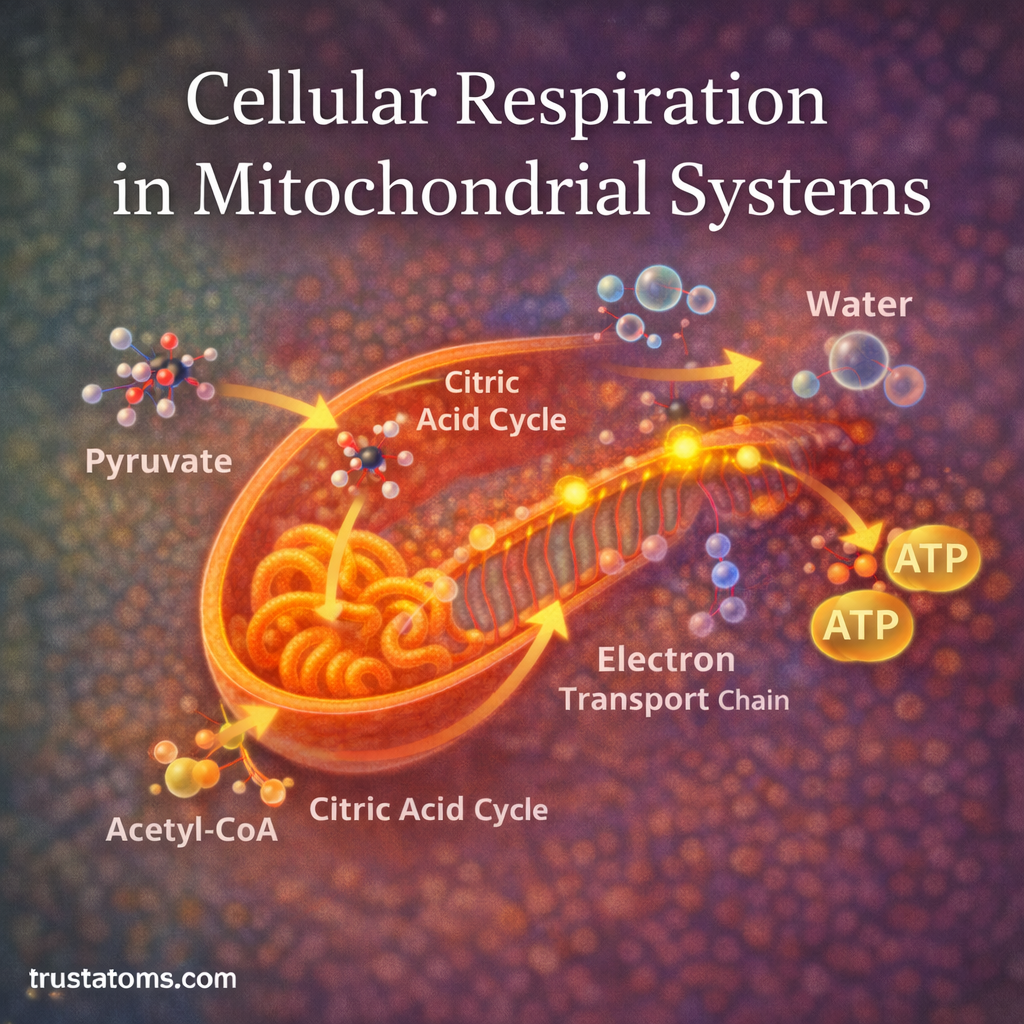
Although cellular respiration begins with glycolysis in the cytoplasm, the most important energy-producing stages occur within mitochondria.
These stages include:
- Pyruvate oxidation
- The citric acid cycle
- The electron transport chain
Each stage contributes to the production of ATP.
Pyruvate Oxidation
After glycolysis breaks down glucose into pyruvate in the cytoplasm, the pyruvate molecules enter the mitochondria.
Inside the mitochondrial matrix, pyruvate undergoes a conversion process known as pyruvate oxidation.
During this step:
- Pyruvate is converted into acetyl-CoA
- Carbon dioxide is released
- NADH is produced
Acetyl-CoA then enters the next stage of cellular respiration.
The Citric Acid Cycle
The citric acid cycle, also known as the Krebs cycle, occurs in the mitochondrial matrix.
This cycle completes the breakdown of acetyl-CoA molecules derived from glucose.
Main functions of the citric acid cycle
The cycle:
- Releases carbon dioxide as a waste product
- Generates electron carriers (NADH and FADH₂)
- Produces a small amount of ATP
Energy carriers produced
For each glucose molecule processed, the cycle generates:
- 6 NADH
- 2 FADH₂
- 2 ATP
The electron carriers produced here transport high-energy electrons to the next stage of cellular respiration.
The Electron Transport Chain
The electron transport chain (ETC) is located in the inner mitochondrial membrane.
This stage is responsible for producing the majority of ATP during cellular respiration.
How the electron transport chain works
- NADH and FADH₂ deliver electrons to protein complexes in the membrane.
- Electrons move through the complexes in a series of redox reactions.
- Energy released during these transfers pumps protons into the intermembrane space.
- A proton gradient forms across the inner membrane.
- Protons flow back into the matrix through the enzyme ATP synthase.
- ATP synthase uses this flow to produce ATP.
This process is known as oxidative phosphorylation.
The Role of Oxygen in Mitochondrial Respiration
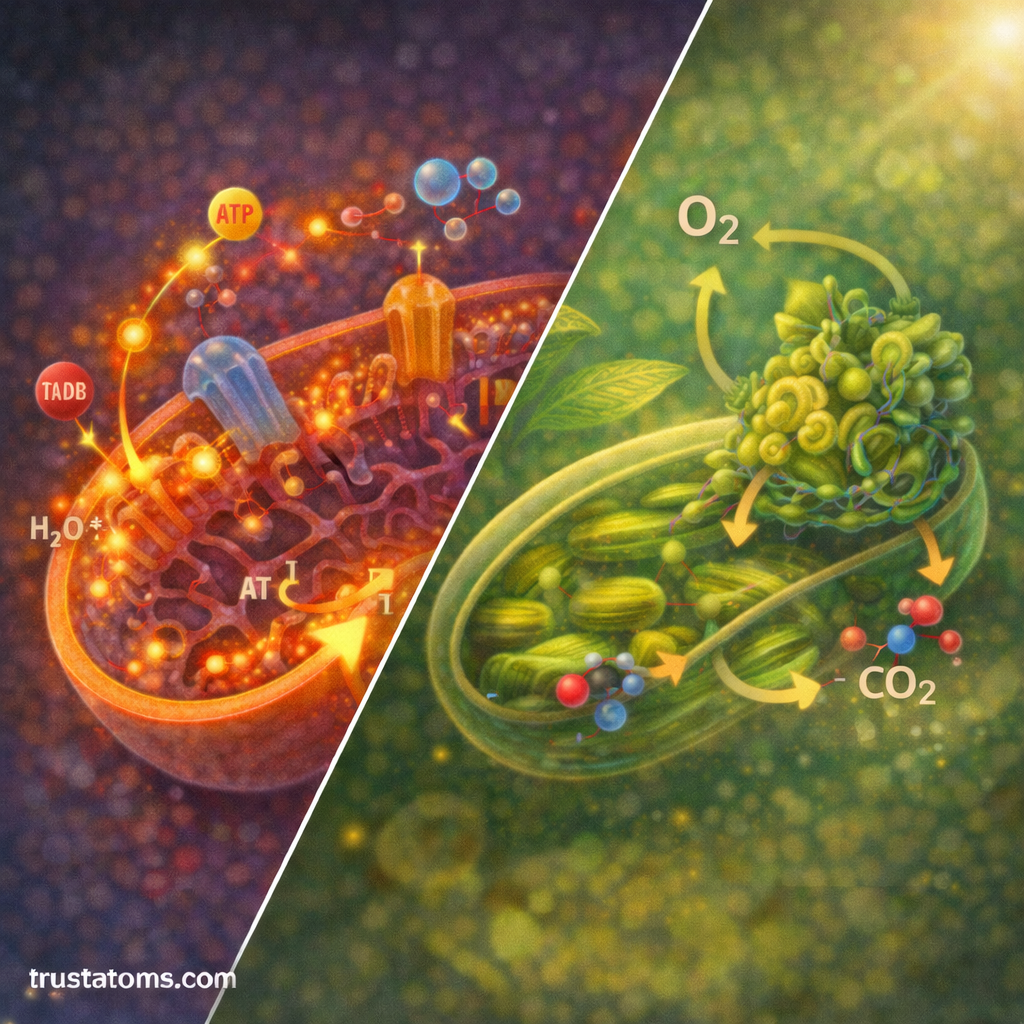
Oxygen is essential for the final step of the electron transport chain.
At the end of the chain:
- Oxygen accepts electrons
- Hydrogen ions combine with oxygen
- Water is produced
Without oxygen, electrons would accumulate in the electron transport chain, preventing ATP production.
For this reason, mitochondrial respiration is considered an aerobic process.
ATP Production in Mitochondria
Mitochondria generate most of the ATP used by eukaryotic cells.
Approximate ATP production per glucose molecule includes:
- Glycolysis: 2 ATP
- Citric acid cycle: 2 ATP
- Electron transport chain: 26–34 ATP
Most ATP is produced during oxidative phosphorylation in the electron transport chain.
This high energy yield makes mitochondrial respiration highly efficient.
Regulation of Mitochondrial Respiration
Cells regulate mitochondrial respiration to match energy production with cellular demand.
Several factors influence the rate of respiration:
- Availability of glucose and nutrients
- Oxygen levels
- ATP concentration within the cell
- Activity of key metabolic enzymes
When ATP levels are high, respiration slows. When ATP levels fall, respiration accelerates to meet energy needs.
This feedback regulation helps maintain cellular energy balance.
Importance of Mitochondria in Cellular Metabolism
Beyond energy production, mitochondria play additional roles in cellular metabolism.
These functions include:
- Regulation of metabolic pathways
- Participation in heat generation
- Involvement in programmed cell death (apoptosis)
- Production of certain metabolic intermediates
Because of these roles, mitochondria are essential not only for energy production but also for overall cellular health.
Final Thoughts
Cellular respiration in mitochondrial systems is one of the most important processes in biology. Through pyruvate oxidation, the citric acid cycle, and the electron transport chain, mitochondria efficiently convert nutrients into ATP.
This energy powers countless biological activities, enabling cells to function, organisms to grow, and life to persist.
Understanding mitochondrial respiration provides insight into how energy flows through living systems and how cells maintain the metabolic balance necessary for survival.