Chromosomal organization in eukaryotes refers to how DNA is packaged, structured, and arranged within the nucleus of complex cells. Unlike simpler organisms such as bacteria, eukaryotic cells—including those of animals, plants, fungi, and protists—store their genetic material in a highly organized system of chromosomes.
This organization allows cells to efficiently store vast amounts of DNA, regulate gene expression, and ensure accurate DNA replication and division during cell cycles.
Understanding chromosomal organization helps explain how genetic information is managed inside the cell and how cells maintain stability while controlling biological processes.
What Are Eukaryotic Chromosomes?
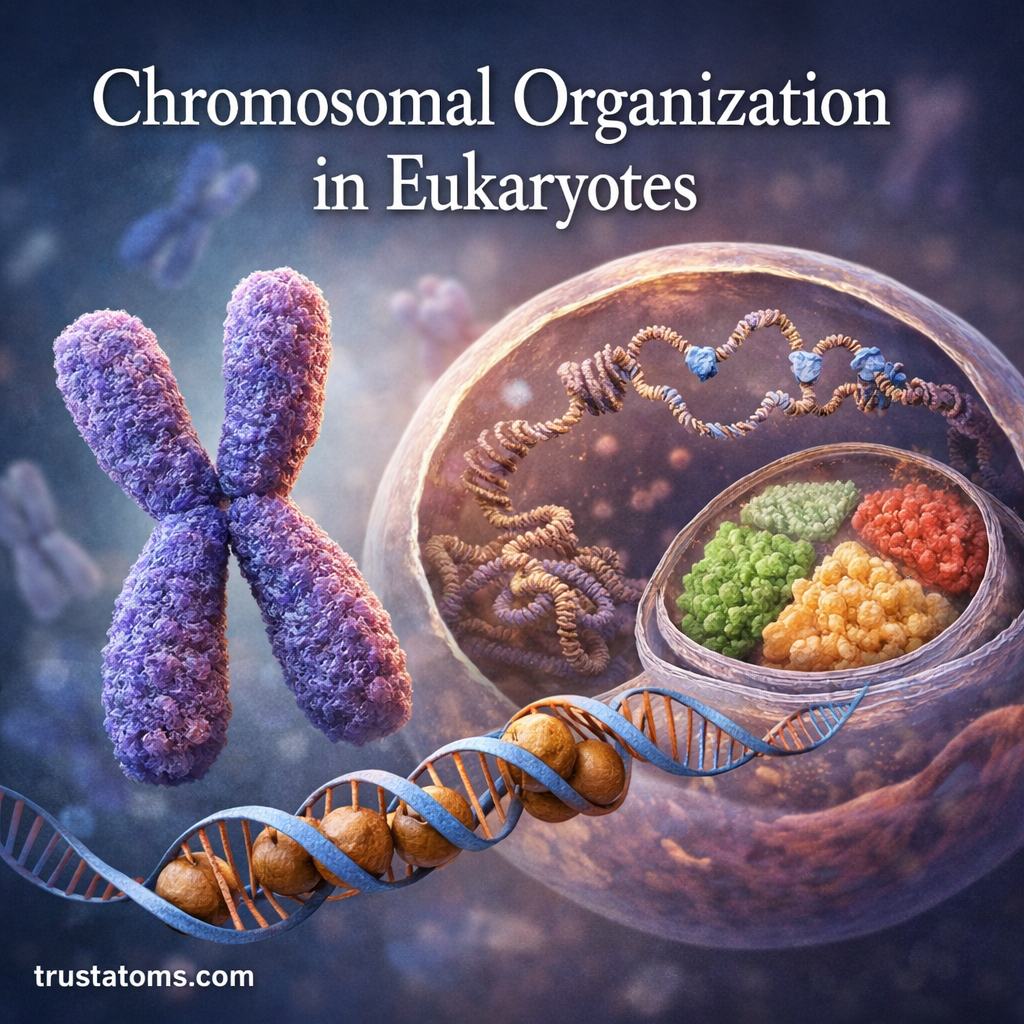
Eukaryotic chromosomes are long, linear DNA molecules wrapped around proteins called histones. Together, DNA and these associated proteins form a structure known as chromatin.
In most eukaryotic cells:
- DNA is stored inside a membrane-bound nucleus
- Each chromosome contains thousands of genes
- Chromosomes are tightly compacted to fit inside the nucleus
For example, human cells contain approximately 2 meters of DNA packed into a nucleus only a few micrometers wide.
Chromosomal organization solves this space problem while still allowing DNA to be accessible for transcription, replication, and repair.
Levels of DNA Packaging
DNA inside the nucleus is not randomly folded. Instead, it is organized through multiple hierarchical levels of packaging.
DNA Double Helix
At the most basic level, DNA exists as a double helix composed of two strands of nucleotides. This structure contains the genetic code used to build proteins and regulate cellular functions.
However, the double helix alone is far too long to fit inside the nucleus without additional organization.
Nucleosomes
The first level of DNA packaging occurs when DNA wraps around histone proteins.
- About 147 DNA base pairs wrap around a histone core
- This structure forms a nucleosome
- Nucleosomes resemble “beads on a string” when viewed under a microscope
Nucleosomes help condense DNA and also play a role in controlling gene accessibility.
Chromatin Fibers
Nucleosomes fold into thicker structures called chromatin fibers. These fibers further compact DNA and contribute to the structural framework of chromosomes.
Chromatin exists in two main forms:
- Euchromatin – loosely packed and actively transcribed
- Heterochromatin – tightly packed and usually inactive
The balance between these forms influences gene expression.
Higher-Order Chromosome Structure
Beyond chromatin fibers, DNA is further organized into loops and domains that help regulate gene activity and maintain genome stability.
Chromatin Loops
Chromatin loops bring distant DNA regions closer together, allowing regulatory elements such as enhancers to interact with genes.
These loops are stabilized by structural proteins that help control when genes are activated or silenced.
Topologically Associating Domains (TADs)
Within the nucleus, chromosomes are divided into regions called topologically associating domains.
These domains:
- Group genes and regulatory sequences together
- Prevent unwanted interactions between distant genomic regions
- Help maintain proper gene regulation
TADs act like neighborhoods within the genome where genes interact primarily with nearby regulatory elements.
Chromosome Territories in the Nucleus
Inside the nucleus, each chromosome occupies a distinct region known as a chromosome territory.
Instead of being tangled together randomly, chromosomes maintain spatial separation.
This organization helps:
- Prevent excessive DNA entanglement
- Coordinate gene expression
- Support efficient DNA repair mechanisms
The arrangement of chromosome territories can vary depending on cell type and developmental stage.
Key Structural Components of Eukaryotic Chromosomes
Several specialized regions and structures contribute to the stability and function of chromosomes.
Centromeres
Centromeres are constricted regions of chromosomes where spindle fibers attach during cell division.
Their primary role is to ensure chromosomes separate correctly during mitosis and meiosis.
Telomeres
Telomeres are protective DNA sequences located at the ends of chromosomes.
They:
- Prevent chromosome ends from degrading
- Protect against DNA damage
- Shorten gradually during cell division
Telomere shortening is associated with aging and cellular lifespan.
Scaffold Proteins
Structural proteins form a scaffold that helps maintain chromosome shape and organization.
These proteins stabilize chromatin loops and support higher-order chromosome folding.
How Chromosomal Organization Supports Gene Regulation
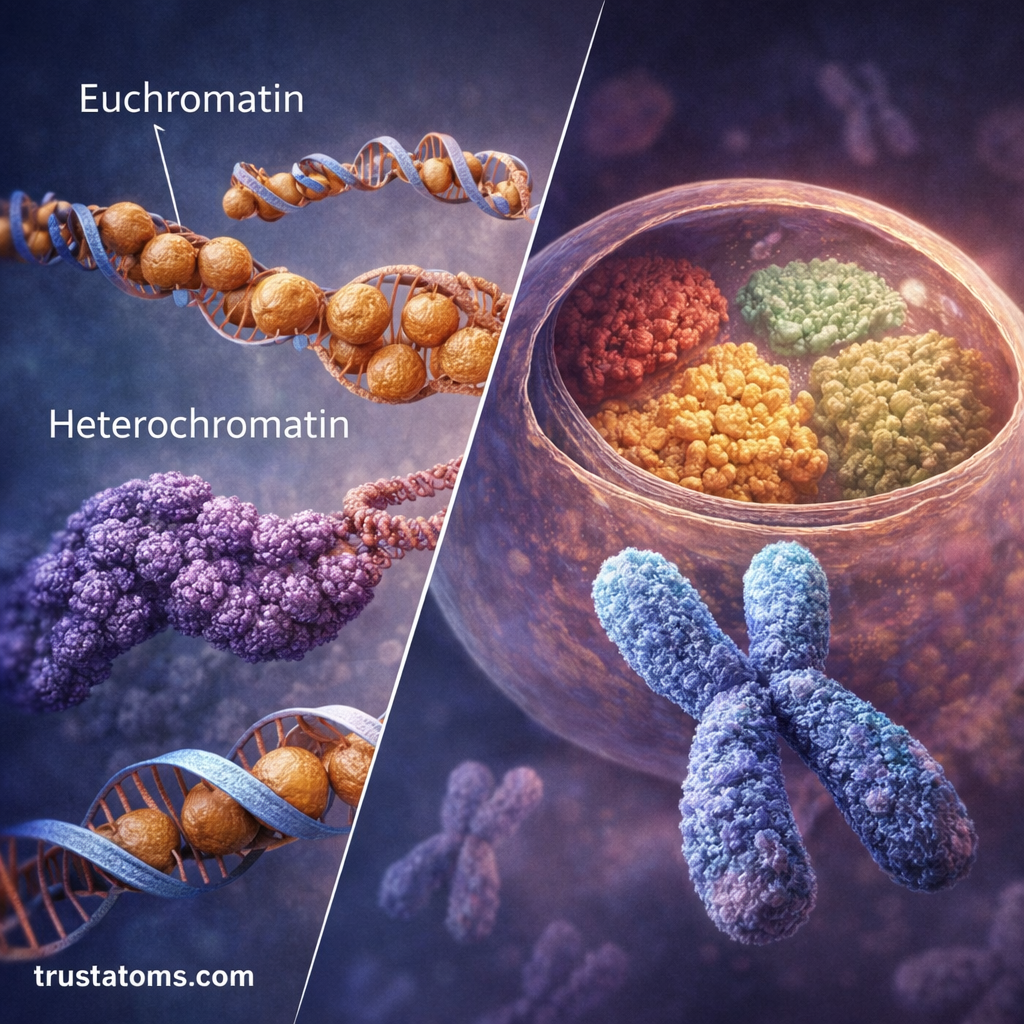
Chromosomal organization is not just about packaging DNA—it also plays a central role in regulating genes.
Cells control gene activity by adjusting how tightly DNA is packed.
For example:
- Loosely packed chromatin allows genes to be accessed and transcribed
- Tightly packed chromatin prevents transcription machinery from reaching genes
Epigenetic modifications—such as DNA methylation and histone modification—can alter chromatin structure without changing the underlying DNA sequence.
These changes allow cells to respond to environmental signals and developmental cues.
Chromosomal Changes During the Cell Cycle
Chromosomal organization changes dramatically during the cell cycle.
During interphase:
- Chromosomes exist as loosely organized chromatin
- Genes are actively transcribed
- DNA replication occurs
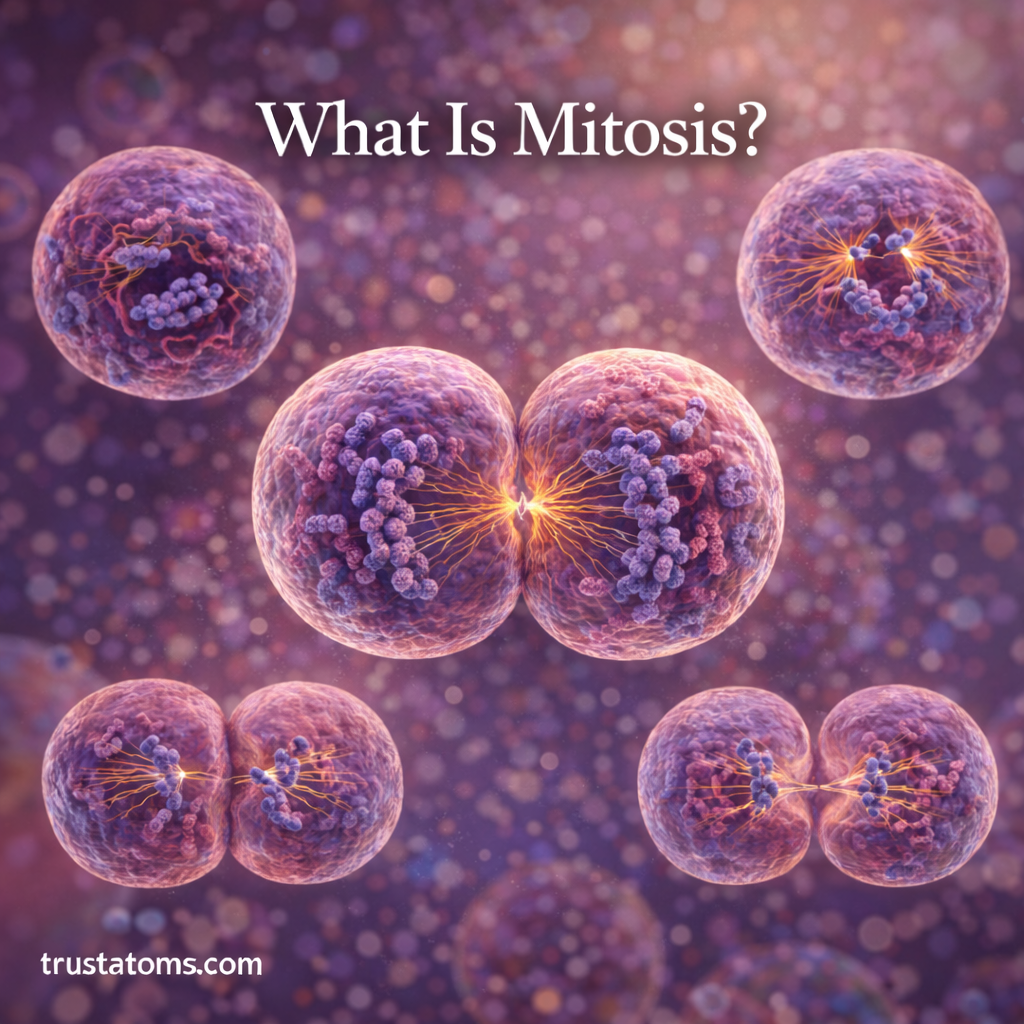
During mitosis:
- Chromatin condenses into highly compact chromosomes
- Each chromosome becomes visible under a microscope
- Sister chromatids separate to ensure each daughter cell receives identical genetic material
This dynamic reorganization ensures accurate DNA transmission during cell division.
Why Chromosomal Organization Matters
Chromosomal organization is essential for maintaining cellular health and stability.
Proper organization allows cells to:
- Store large genomes efficiently
- Control when genes are turned on or off
- Protect DNA from damage
- Ensure accurate chromosome segregation during cell division
Disruptions in chromosomal organization can lead to genetic disorders, cancer, and developmental abnormalities.
As scientists continue studying chromosomal architecture, new insights are emerging about how genome structure influences health, disease, and evolution.
Final Thoughts
Chromosomal organization in eukaryotes represents a remarkable balance between DNA compaction and accessibility. Through multiple layers of structural organization—from nucleosomes to chromosome territories—cells manage massive amounts of genetic information within a tiny nuclear space.
This intricate system allows DNA to remain both protected and functional, supporting everything from gene regulation to cell division. Understanding chromosomal organization provides a foundation for studying genetics, molecular biology, and the mechanisms that sustain life.