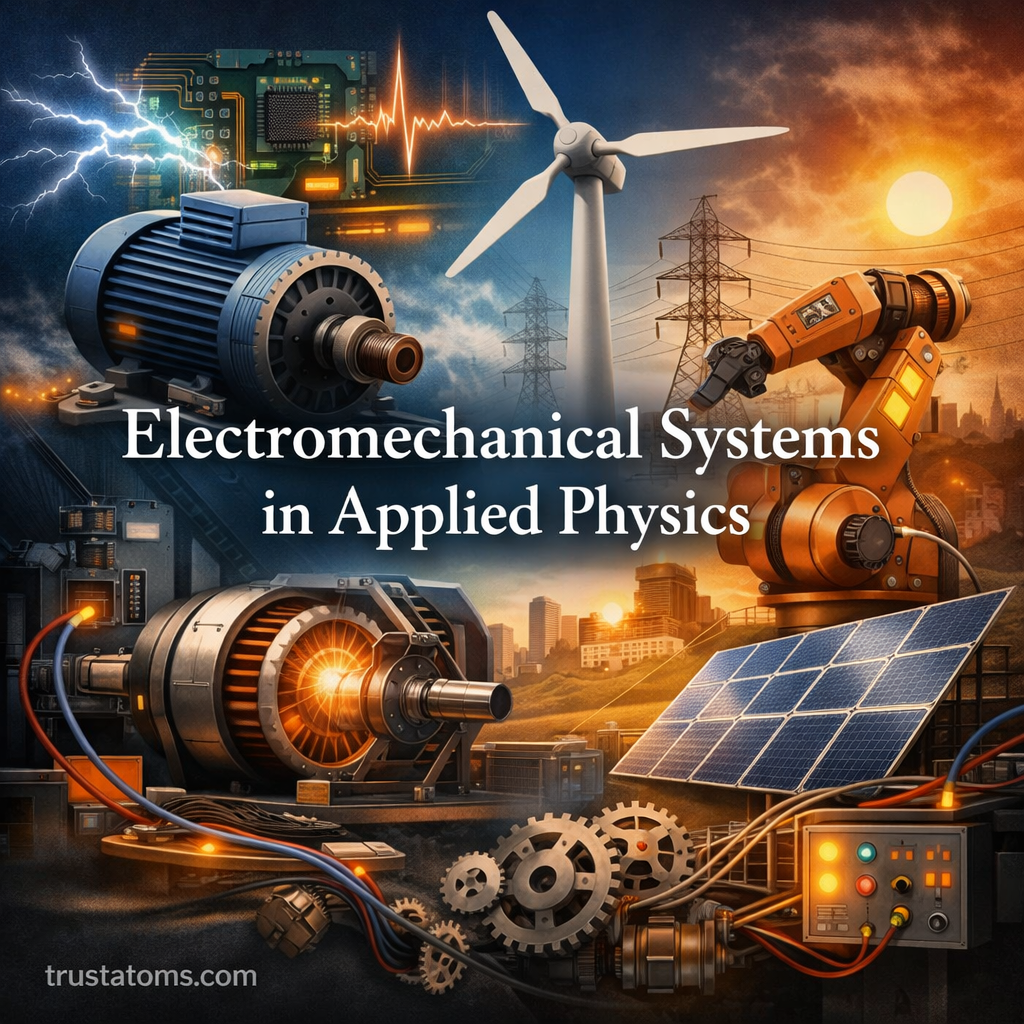
Electromechanical systems sit at the heart of modern engineering. From electric vehicles and robotic arms to washing machines and power plants, these systems convert electrical energy into mechanical motion — and vice versa.
In applied physics, electromechanical systems represent the practical bridge between electromagnetic theory and real-world machines. Understanding how they work helps explain everything from motors and generators to advanced automation and renewable energy technologies.
This guide breaks down the core principles, components, and real-world applications of electromechanical systems in clear, practical terms.
What Are Electromechanical Systems?
An electromechanical system is any system that:
- Converts electrical energy into mechanical motion
- Converts mechanical motion into electrical energy
- Or tightly integrates both within a feedback-controlled system
In applied physics, these systems are studied through:
- Electromagnetism
- Mechanics
- Energy transfer principles
- Control theory
- Materials science
At their core, electromechanical systems rely on the interaction between magnetic fields and electric currents.
The Physics Behind Electromechanical Systems
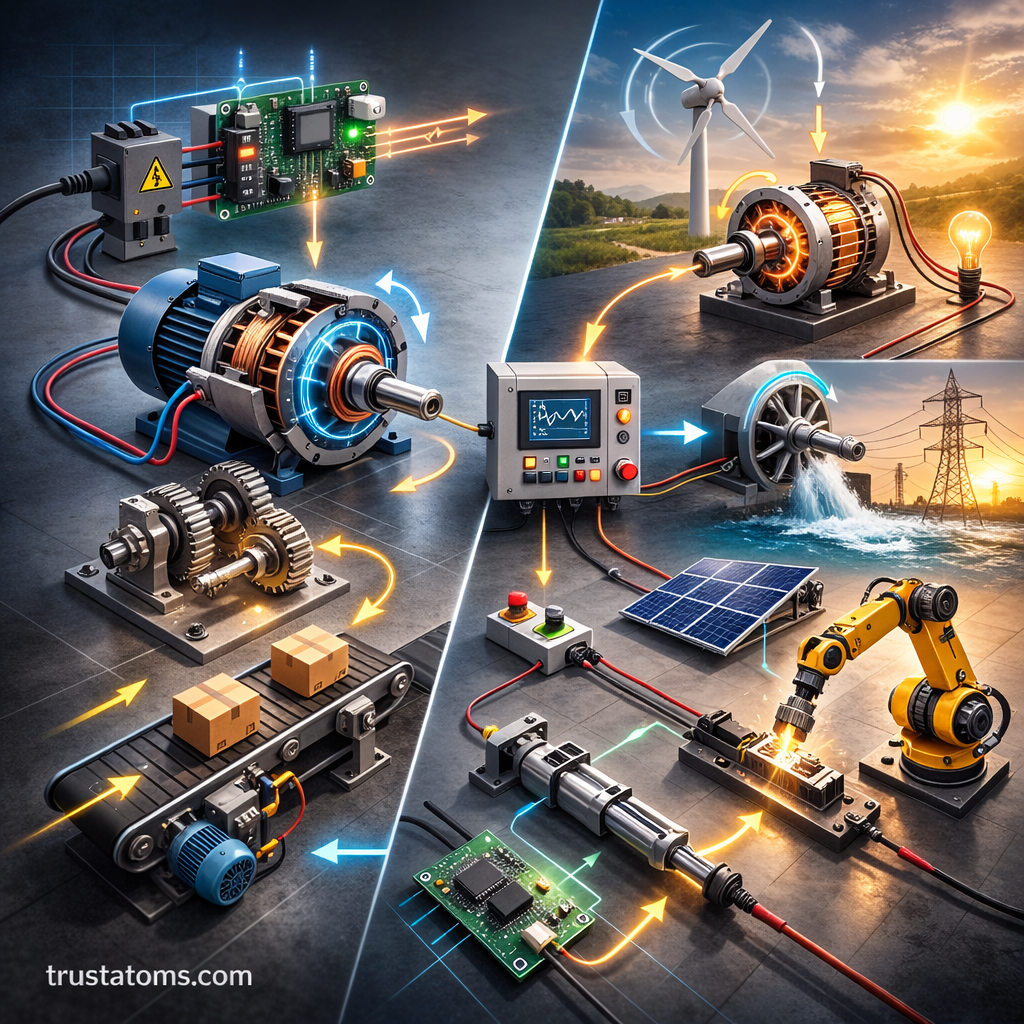
To understand how these systems work, we need to look at a few foundational principles.
1. Electromagnetic Force
When electric current flows through a conductor in a magnetic field, it experiences a force. This is described by the Lorentz force law.
This principle is what makes electric motors rotate.
2. Electromagnetic Induction
When a conductor moves through a magnetic field, a voltage is generated across it. This is Faraday’s Law of Induction.
This principle is what makes electric generators produce electricity.
3. Energy Conversion
Electromechanical systems follow the conservation of energy:
- Electrical energy → Mechanical energy (motors)
- Mechanical energy → Electrical energy (generators)
- Mechanical energy → Controlled motion (actuators)
Applied physics focuses on optimizing this conversion to reduce losses due to heat, friction, and resistance.
Core Components of Electromechanical Systems
Most electromechanical systems contain several fundamental parts.
Electrical Components
- Power supply (AC or DC)
- Conductors and windings
- Switches and relays
- Controllers and microprocessors
- Sensors
Mechanical Components
- Rotors and shafts
- Bearings
- Gears
- Springs
- Structural supports
Control Systems
Modern electromechanical systems use feedback control to regulate performance. These include:
- Position control
- Speed control
- Torque control
- Temperature monitoring
Control theory ensures stability, efficiency, and safety.
Types of Electromechanical Systems
Electromechanical systems vary widely depending on their purpose. Here are the major categories.
Electric Motors
Electric motors convert electrical energy into rotational motion.
Common types:
- DC motors
- AC induction motors
- Synchronous motors
- Stepper motors
- Brushless DC motors
Applications:
- Industrial machinery
- Electric vehicles
- Robotics
- Home appliances
Electric Generators
Generators convert mechanical motion into electrical energy.
Examples:
- Wind turbines
- Hydroelectric generators
- Backup power generators
These systems rely heavily on electromagnetic induction.
Actuators
Actuators convert electrical signals into controlled movement.
Types include:
- Linear actuators
- Rotary actuators
- Solenoids
Used in:
- Robotics
- Aerospace systems
- Manufacturing automation
Mechatronic Systems
Mechatronics combines:
- Mechanical systems
- Electronics
- Control systems
- Software
Examples:
- CNC machines
- Drones
- Smart manufacturing systems
- Medical devices
These represent the advanced frontier of applied electromechanical physics.
Mathematical Modeling in Applied Physics
Electromechanical systems are described using differential equations that combine:
- Newton’s laws of motion
- Maxwell’s equations
- Circuit equations (Ohm’s Law, Kirchhoff’s Laws)
For example, a basic DC motor model may include:
- Electrical equation (voltage balance)
- Mechanical equation (torque balance)
- Coupling equation (electromagnetic interaction)
Engineers use simulation software to analyze:
- Efficiency
- Heat generation
- Stability
- Dynamic response
This modeling allows optimization before physical prototypes are built.
Energy Losses and Efficiency
No electromechanical system is perfectly efficient. Energy losses occur due to:
- Electrical resistance (I²R losses)
- Magnetic hysteresis
- Eddy currents
- Mechanical friction
- Air drag
Improving efficiency involves:
- Better magnetic materials
- Reduced resistance windings
- Precision mechanical design
- Advanced cooling systems
Efficiency is especially critical in electric vehicles and renewable energy systems.
Real-World Applications
Electromechanical systems are everywhere in modern life.
Transportation
- Electric cars
- Trains
- Aircraft control surfaces
- Elevators
Renewable Energy
- Wind turbines
- Solar tracking systems
- Hydropower systems
Robotics and Automation
- Assembly-line robots
- Automated warehouses
- Surgical robots
Consumer Electronics
- Hard drives
- Cooling fans
- Washing machines
- Power tools
Without electromechanical systems, modern infrastructure would not function.
Electromechanical Systems and Emerging Technologies
Applied physics continues to expand this field in exciting ways.
Electric Vehicles (EVs)
EVs rely on high-efficiency motors, regenerative braking systems, and battery management systems — all deeply rooted in electromechanical physics.
Smart Grids
Smart power grids use electromechanical switching systems and automated controls to balance supply and demand.
Aerospace Systems
Aircraft rely on electromechanical actuators for:
- Landing gear
- Wing flaps
- Navigation systems
Robotics and AI Integration
Modern robotics integrates:
- Precision motors
- Embedded sensors
- Real-time feedback control
This integration allows machines to perform delicate tasks with remarkable accuracy.
Why Electromechanical Systems Matter in Applied Physics
Electromechanical systems demonstrate how theoretical physics translates into practical engineering.
They:
- Bridge electromagnetism and mechanics
- Enable large-scale energy production
- Power automation and robotics
- Improve efficiency in transportation
- Drive technological innovation
For physics students and engineers, mastering electromechanical systems means understanding how energy moves, transforms, and performs useful work in the real world.
Final Thoughts
Electromechanical systems represent one of the most powerful applications of physics in modern society. By harnessing the interaction between electricity and motion, these systems enable everything from renewable energy production to robotic surgery.
In applied physics, studying electromechanical systems means studying the machinery of progress itself.
As technology advances, improvements in materials, control systems, and energy efficiency will continue to shape the future — making electromechanical systems even more central to innovation.