Energy is one of the most fundamental concepts in physics. In classical mechanics, we often talk about the energy of objects—kinetic energy, potential energy, thermal energy.
But in field theories, energy is not just stored in objects.
It is distributed continuously throughout space.
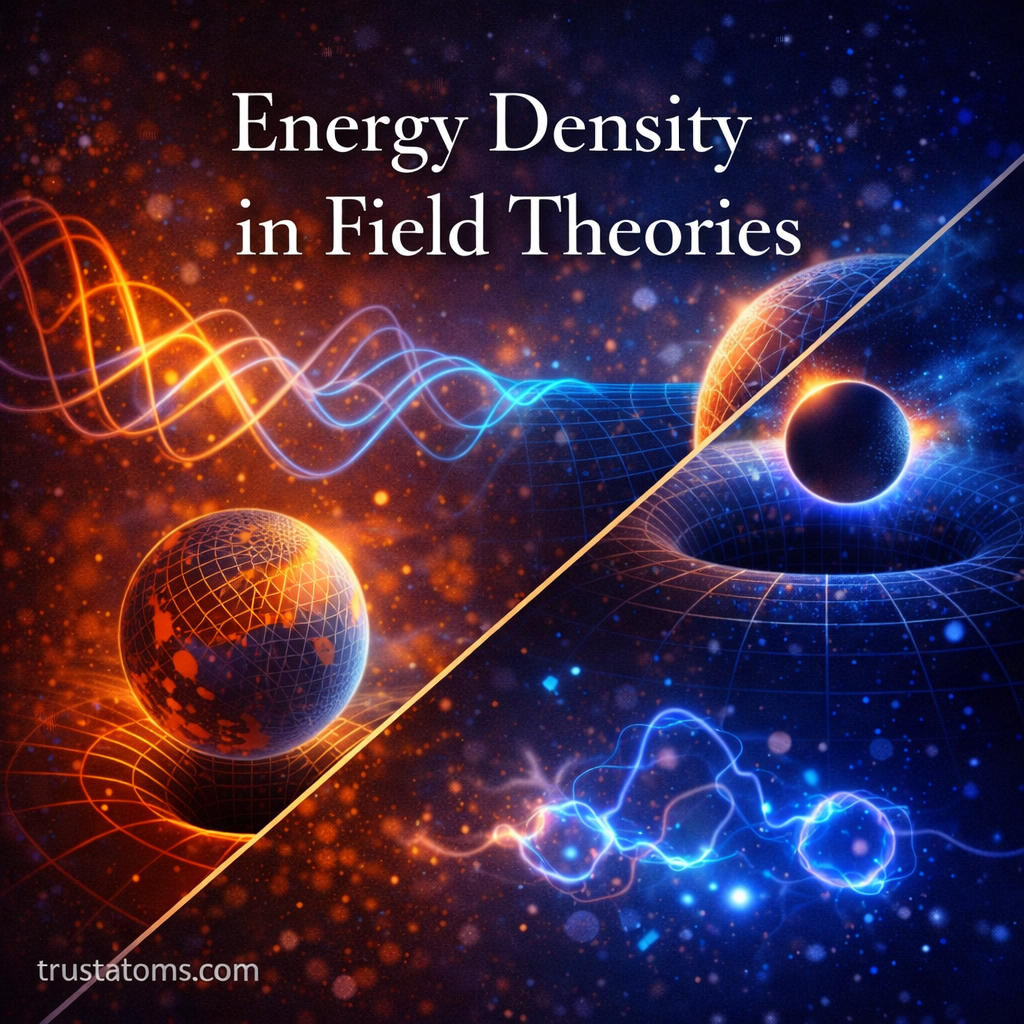
Energy density describes how much energy exists per unit volume within a field. This concept is central to electromagnetism, general relativity, quantum field theory, and modern cosmology.
Understanding energy density helps physicists describe how fields carry, store, and transfer energy across the universe.
What Is Energy Density?
Energy density is defined as the amount of energy per unit volume.
In field theories, it answers the question:
How much energy is present at a specific point in space due to a field?
Rather than assigning energy only to particles, field theory treats energy as something that exists in space itself.
Fields fill space, and wherever a field exists, energy may be present.
Fields in Physics
A field is a quantity defined at every point in space and time.
Examples include:
- Electric fields
- Magnetic fields
- Gravitational fields
- Scalar fields (such as temperature or quantum fields)
Fields describe how forces act without direct contact.
Energy density measures the energy stored within these fields.
Energy Density in Electromagnetic Fields
One of the clearest examples of energy density appears in electromagnetism.
An electromagnetic field contains energy due to:
- Electric field strength
- Magnetic field strength
Even in empty space, electromagnetic waves carry energy.
For example:
- Sunlight traveling through space carries energy density.
- Radio waves transmit energy across long distances.
- Microwaves heat food through field energy.
Energy density in electromagnetic theory explains how energy moves without matter transporting it.
Field Energy vs. Particle Energy
In classical mechanics:
- Energy is often associated with objects (like a moving ball).
In field theory:
- Energy can exist even in regions with no particles.
This shift in perspective was revolutionary.
For example:
- A region of space containing only an electric field still contains energy.
- A gravitational field around a planet represents stored energy in spacetime curvature.
Field energy density allows physics to describe energy continuously across space.
Energy Density and Wave Propagation
Waves in field theories carry energy.
As a wave moves:
- Energy density fluctuates.
- Regions of higher field strength contain higher energy density.
This applies to:
- Sound waves (energy in pressure variations)
- Water waves (energy in fluid motion)
- Electromagnetic waves (energy in oscillating fields)
Energy density helps quantify how much power passes through a given area.
Energy Density and Stress-Energy Tensor
In advanced field theories, energy density is part of a larger mathematical object known as the stress-energy tensor.
This tensor describes:
- Energy density
- Momentum density
- Pressure
- Stress
In general relativity:
- Energy density determines how spacetime curves.
- Spacetime curvature determines gravitational motion.
Energy density does not just describe energy—it shapes the geometry of the universe.
Energy Density in General Relativity
In Einstein’s theory of gravity:
- Mass and energy both contribute to gravitational effects.
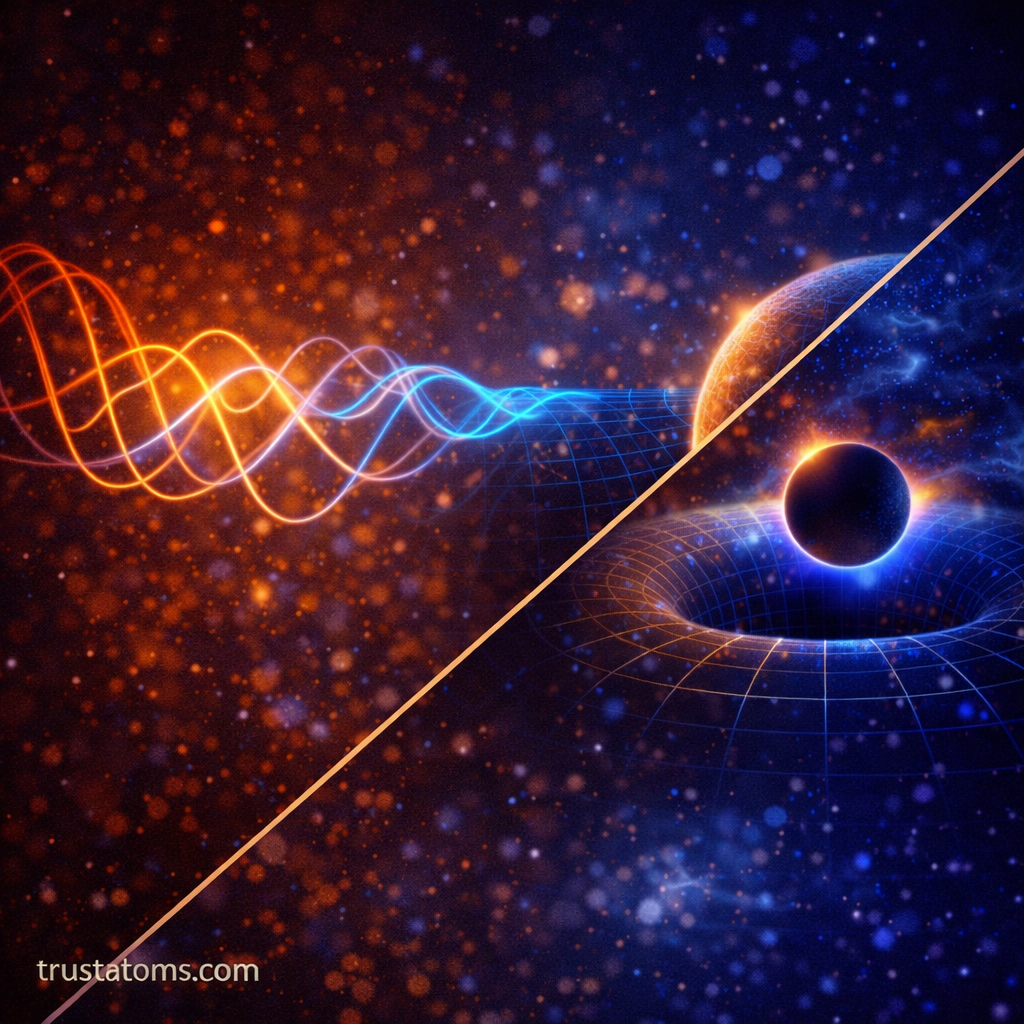
- Energy density acts as a source of spacetime curvature.
Examples include:
- Stars curve spacetime due to high energy density.
- Black holes represent extreme concentrations of energy density.
- Cosmological energy density influences the expansion of the universe.
Energy density drives cosmic evolution.
Energy Density in Quantum Field Theory
Quantum field theory treats particles as excitations of underlying fields.
In this framework:
- Fields exist everywhere.
- Even the vacuum may have energy density.
This leads to important concepts such as:
- Vacuum energy
- Zero-point energy
- Quantum fluctuations
Vacuum energy density plays a role in cosmology and the accelerating expansion of the universe.
Energy Density and Conservation Laws
Energy density is closely tied to conservation principles.
In field theory:
- Energy can move through space.
- Energy density changes locally.
- Total energy remains conserved globally.
Conservation laws are expressed using continuity equations, which connect energy density and energy flow.
These principles ensure consistent physical predictions.
Applications of Energy Density
Energy density plays a key role in many areas of physics and engineering.
Electromagnetic Engineering
- Power transmission lines
- Antenna design
- Laser systems
Astrophysics
- Stellar interiors
- Neutron stars
- Supernova explosions
Cosmology
- Dark energy density
- Matter density of the universe
- Cosmic microwave background
Plasma Physics
- Fusion research
- Magnetic confinement systems
Energy density determines stability, structure, and evolution.
Energy Density and Stability
High energy density can lead to instability.
Examples include:
- Plasma instabilities in fusion reactors
- Structural failure in materials under stress
- Explosive energy release in stars
Understanding how energy density distributes in space helps physicists predict when systems become unstable.
Conceptual Importance
Energy density changed how physicists think about energy.
Instead of asking:
Where is the energy stored?
Field theory asks:
How is energy distributed in space?
This perspective unifies:
- Waves
- Forces
- Radiation
- Gravitation
- Quantum behavior
Energy density connects geometry, motion, and field dynamics into a single framework.
Challenges in Measuring Energy Density
In practice, measuring energy density can be complex.
Challenges include:
- Extremely high densities (such as in neutron stars)
- Extremely low densities (such as vacuum energy)
- Indirect measurement through observable effects
Often, physicists infer energy density from:
- Field strength
- Pressure
- Gravitational influence
Direct measurement is not always possible.
The Role of Energy Density in Modern Physics
Energy density plays a central role in:
- Unifying classical and quantum theories
- Explaining cosmic expansion
- Describing radiation transport
- Modeling high-energy particle interactions
As physics progresses toward deeper unification, energy density remains a foundational concept.
Final Thoughts
Energy density in field theories reveals that energy is not confined to objects—it permeates space itself.
From electromagnetic radiation to spacetime curvature, energy density describes how fields store and transport energy across the universe.
It links classical physics, relativity, and quantum theory into a unified framework where energy is continuous, dynamic, and deeply connected to the structure of reality.
In modern physics, understanding energy density means understanding how the universe carries its power through space.