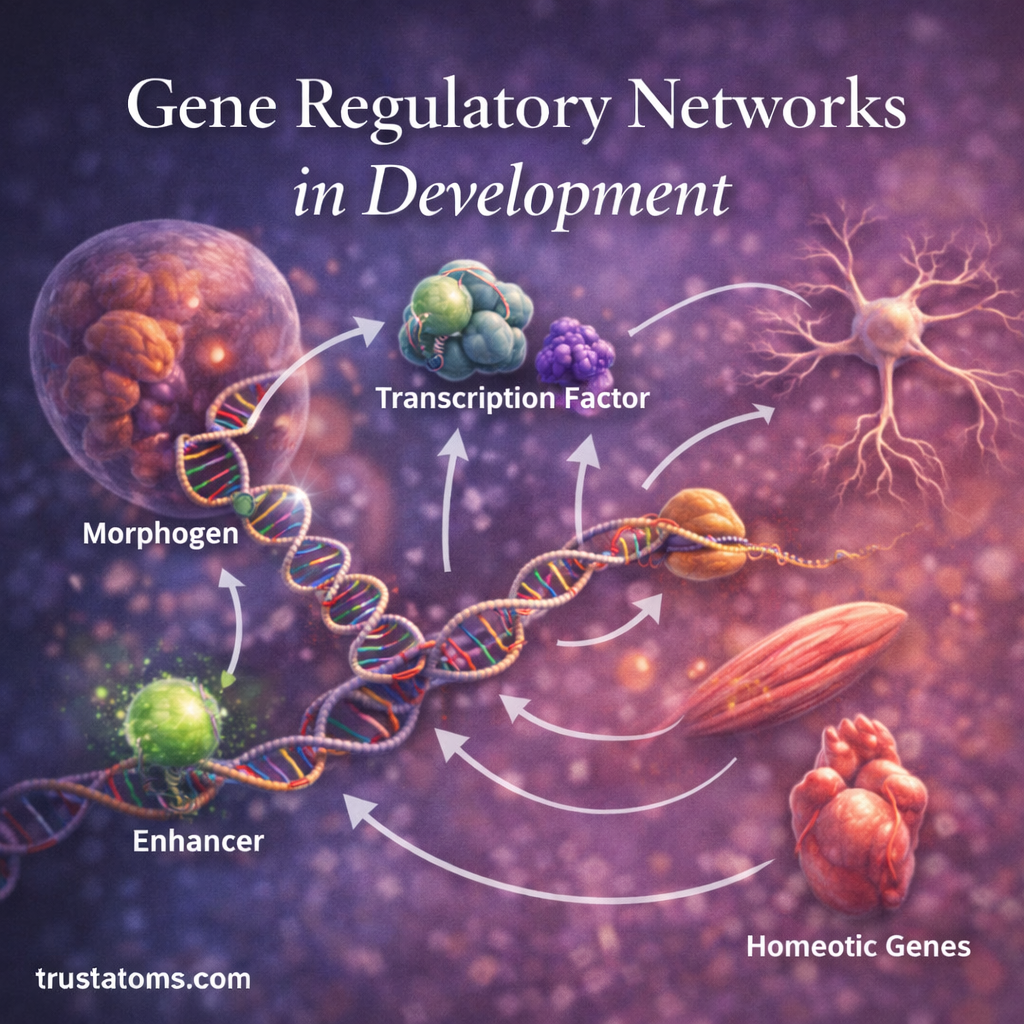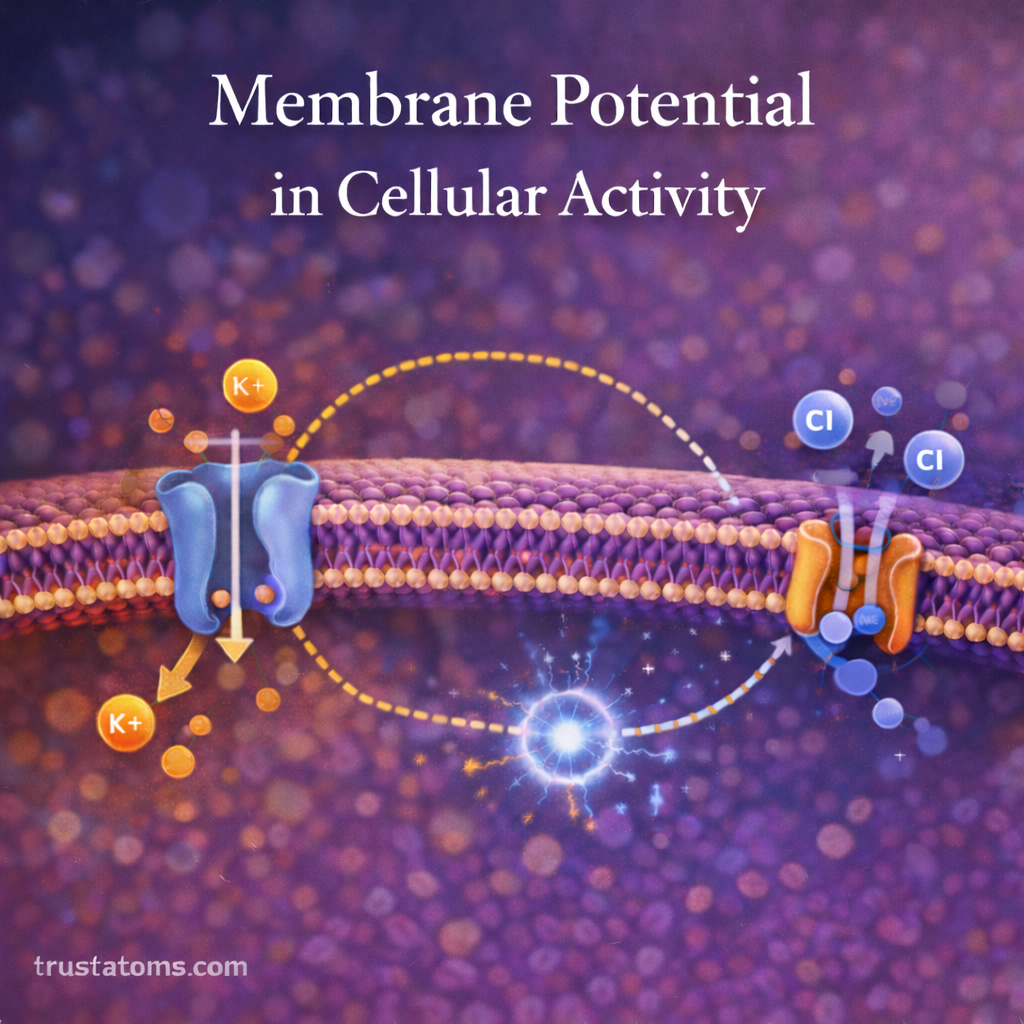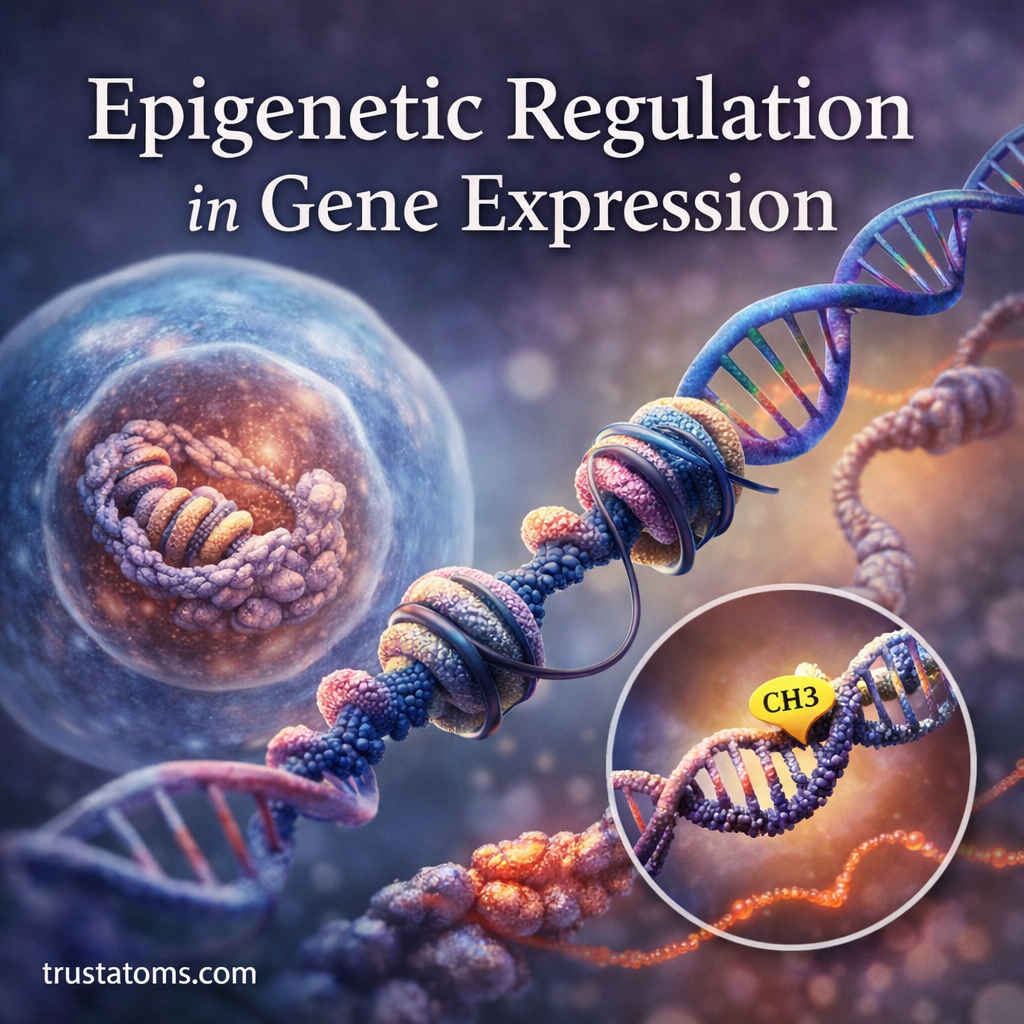
Epigenetic regulation refers to changes in gene activity that occur without altering the DNA sequence itself. These changes determine when genes are turned on or off, allowing cells with identical DNA to perform very different functions.
In multicellular organisms, epigenetic mechanisms help control development, cellular specialization, and responses to environmental factors. They act as a layer of regulation that sits “above” the genetic code, influencing how genetic information is used.
Understanding epigenetic regulation is essential in modern biology because it explains processes such as cell differentiation, aging, disease development, and environmental adaptation.
What Is Epigenetics?
Epigenetics is the study of heritable changes in gene expression that do not involve changes to the DNA sequence.
While DNA contains the instructions for building proteins, epigenetic mechanisms control how accessible those instructions are to the cellular machinery that reads them.
These regulatory mechanisms influence:
- Which genes are active or inactive
- When genes are expressed during development
- How cells respond to environmental signals
- Long-term biological changes such as aging
Epigenetic regulation works by modifying DNA itself or the proteins associated with DNA, particularly histones, which help package DNA inside the cell nucleus.
DNA is tightly organized within chromosomes inside the nucleus, and the structure of this packaging plays a key role in gene accessibility and regulation.
Why Epigenetic Regulation Is Important
Every cell in the human body contains nearly the same DNA. Yet different cell types perform very different functions.
For example:
- Neurons transmit electrical signals
- Muscle cells generate contraction
- Liver cells regulate metabolism
Epigenetic regulation enables this specialization by controlling which genes are active in each cell type.
Key biological processes influenced by epigenetics include:
- Embryonic development
- Cell differentiation
- Immune system responses
- Aging processes
- Disease susceptibility
Without epigenetic control, cells would not be able to develop distinct identities.
Major Mechanisms of Epigenetic Regulation
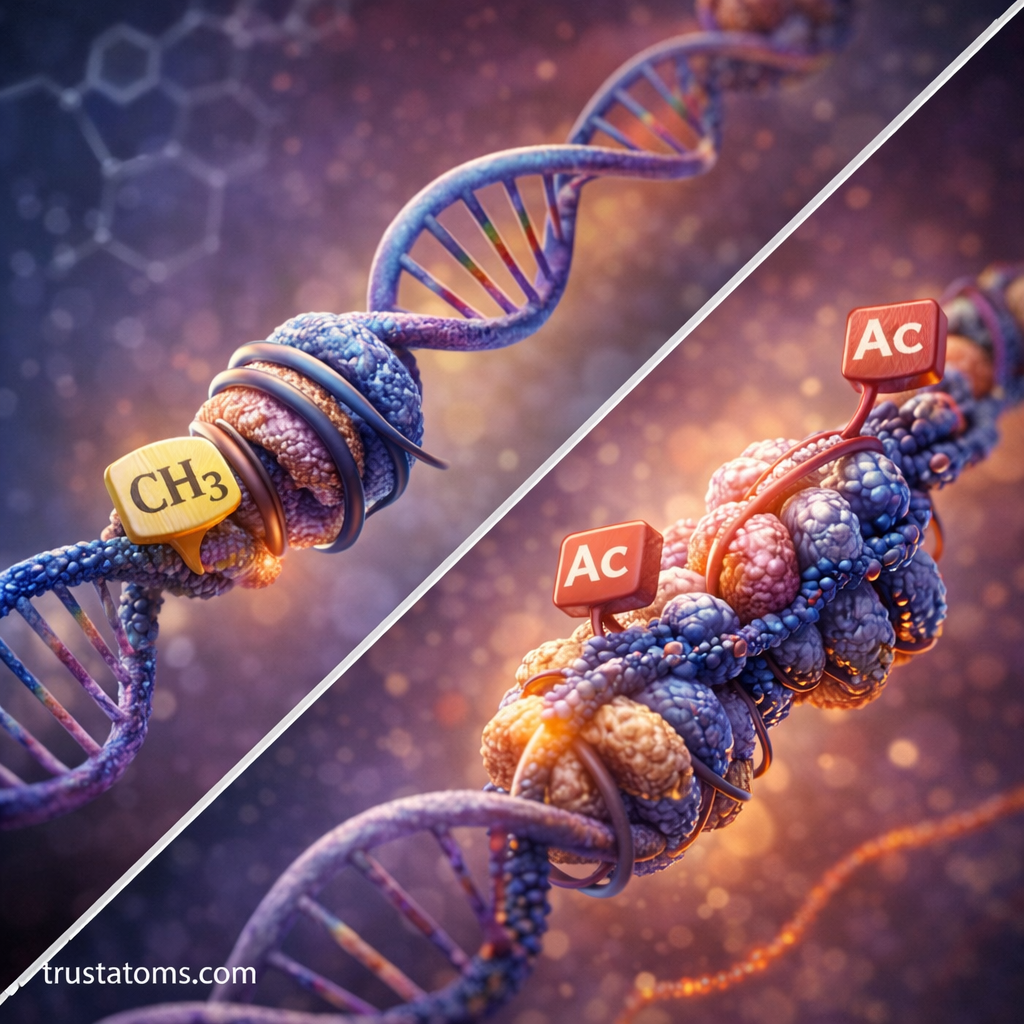
Several molecular mechanisms regulate gene expression epigenetically.
DNA Methylation
DNA methylation is one of the most well-studied epigenetic modifications.
This process involves the addition of methyl groups (–CH₃) to specific DNA bases, typically cytosine.
Effects of DNA methylation include:
- Reduced gene expression
- Prevention of transcription factor binding
- Long-term gene silencing
DNA methylation is crucial for:
- X-chromosome inactivation
- Genomic imprinting
- Suppression of transposable elements
Abnormal methylation patterns are associated with various diseases, including cancer.
Histone Modification
DNA wraps around proteins called histones, forming structures known as nucleosomes.
Chemical modifications to histone proteins influence how tightly DNA is packed.
Common histone modifications include:
- Acetylation
- Methylation
- Phosphorylation
- Ubiquitination
These modifications affect gene expression by altering chromatin structure.
Two general outcomes occur:
- Loosely packed chromatin (euchromatin) allows genes to be actively transcribed.
- Tightly packed chromatin (heterochromatin) restricts access to genes, reducing expression.
Histone modifications therefore act as a dynamic system that adjusts gene accessibility.
Chromatin Remodeling
Chromatin remodeling complexes are specialized proteins that rearrange nucleosomes along DNA.
Their actions can:
- Slide nucleosomes along DNA
- Remove nucleosomes
- Replace histone variants
These changes influence how easily transcription machinery can access specific genes.
Chromatin remodeling plays an important role in:
- Developmental gene regulation
- Cellular stress responses
- DNA repair processes
Non-Coding RNA Regulation
Not all RNA molecules encode proteins. Many RNA molecules regulate gene expression.
Important examples include:
- MicroRNAs (miRNAs)
- Small interfering RNAs (siRNAs)
- Long non-coding RNAs (lncRNAs)
These RNA molecules can:
- Block translation of messenger RNA
- Promote degradation of mRNA
- Recruit chromatin-modifying proteins
Through these mechanisms, non-coding RNAs add another layer of epigenetic control.
Epigenetics and Development
During early development, epigenetic regulation determines how a single fertilized egg develops into a complex organism.
As cells divide and differentiate:
- Certain genes become permanently activated.
- Others are permanently silenced.
- Some remain flexible and responsive to environmental signals.
This process allows the formation of many specialized tissues such as:
- Brain tissue
- Muscle tissue
- Skin cells
- Blood cells
Each tissue type maintains its identity through stable epigenetic patterns.
Environmental Influences on Epigenetics
Unlike DNA mutations, many epigenetic changes are influenced by environmental factors.
Examples include:
- Diet and nutrition
- Stress levels
- Exposure to toxins
- Physical activity
- Aging processes
Some epigenetic modifications can persist for long periods and, in certain cases, may even be passed to future generations.
This interaction between environment and gene expression is known as epigenetic plasticity.
Epigenetics and Disease
Abnormal epigenetic regulation can contribute to disease.
Disrupted gene expression patterns may lead to:
- Cancer development
- Neurological disorders
- Metabolic diseases
- Immune dysfunction
For example, tumor cells often show:
- Abnormal DNA methylation patterns
- Silencing of tumor-suppressor genes
- Activation of genes that promote cell growth
Because epigenetic modifications are reversible, they are promising targets for new medical treatments.
Epigenetic Therapies and Future Research
Scientists are developing drugs that modify epigenetic markers to treat disease.
Examples of epigenetic therapies include:
- DNA methylation inhibitors
- Histone deacetylase (HDAC) inhibitors
- RNA-based regulatory therapies
These treatments aim to restore normal gene expression patterns in affected cells.
Future research continues to explore how epigenetic mechanisms influence:
- Aging
- Brain development
- Environmental adaptation
- Personalized medicine
Final Thoughts
Epigenetic regulation is a fundamental biological system that determines how genetic information is used within cells. By controlling gene activity without changing the DNA sequence, epigenetic mechanisms allow organisms to develop specialized tissues, respond to environmental changes, and maintain stable cellular identities.
As research advances, the field of epigenetics is reshaping our understanding of genetics, health, and disease. The ability to influence gene expression through reversible molecular changes also opens exciting possibilities for future medical treatments.