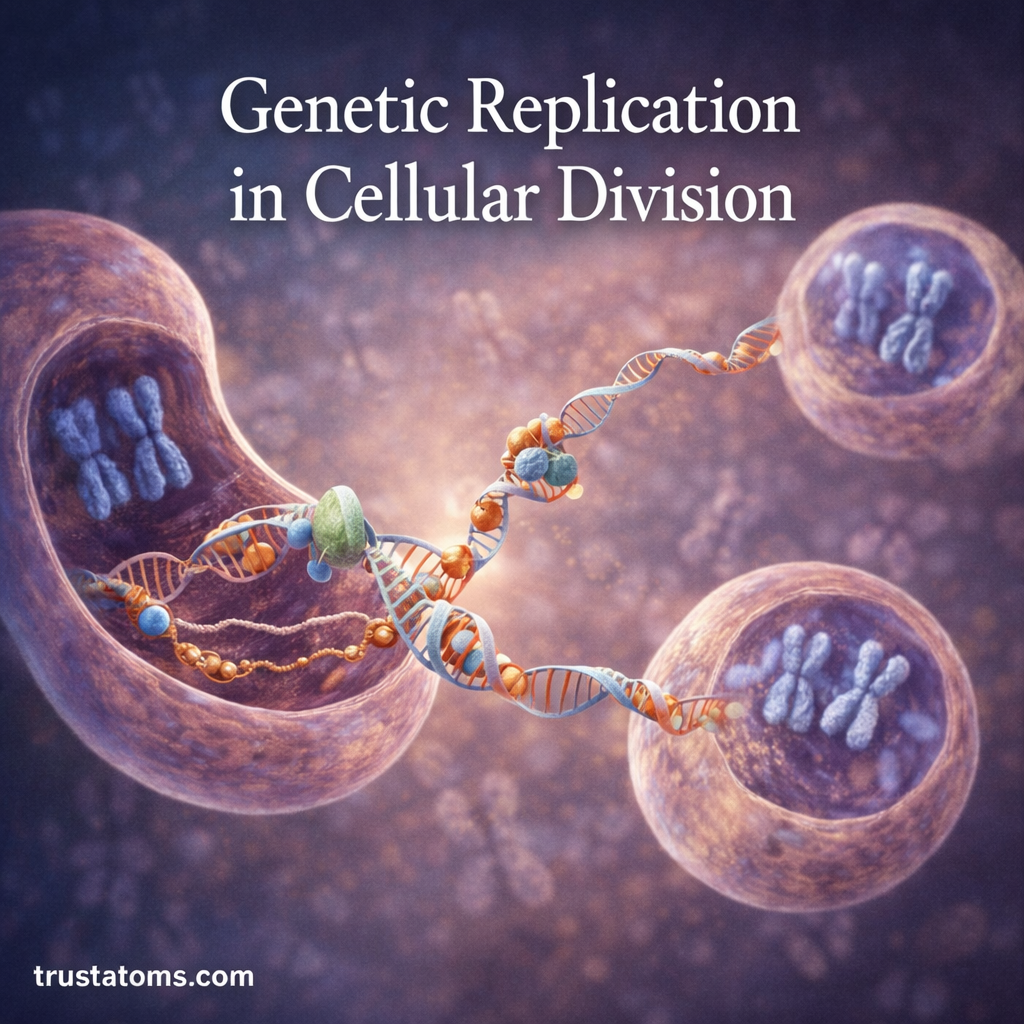
Genetic replication in cellular division is the process by which a cell copies its DNA before dividing into two new cells. This process ensures that each daughter cell receives a complete and identical set of genetic instructions.
DNA replication is essential for growth, tissue repair, reproduction, and maintaining biological stability across generations of cells. Without accurate replication, cells would accumulate genetic errors that could disrupt normal biological functions.
In eukaryotic organisms—such as animals, plants, and fungi—genetic replication occurs during a specific phase of the cell cycle and involves a coordinated set of enzymes and molecular mechanisms that carefully copy billions of DNA base pairs.
Why DNA Replication Is Necessary
Cells divide for several important biological reasons:
- Growth and development of organisms
- Repair and replacement of damaged cells
- Reproduction in single-celled organisms
- Maintenance of tissues and organs
Before a cell divides, it must duplicate its genetic material so that both new cells inherit the same genetic blueprint.
If DNA replication did not occur before cell division, daughter cells would receive incomplete or missing genetic information.
The Structure of DNA and Its Role in Replication
DNA (deoxyribonucleic acid) contains the instructions needed for cellular function and organismal development.
DNA consists of:
- Two complementary strands
- A sugar-phosphate backbone
- Nitrogenous bases (adenine, thymine, cytosine, and guanine)
These bases pair in a specific way:
- Adenine pairs with thymine
- Cytosine pairs with guanine
This base-pairing system allows DNA to serve as a template during replication, ensuring that new strands are copied accurately.
When DNA Replication Occurs in the Cell Cycle
The cell cycle consists of several phases that prepare a cell for division.
DNA replication occurs during the S phase (synthesis phase) of interphase.
The major stages of the cell cycle include:
- G1 Phase – The cell grows and prepares for DNA replication
- S Phase – DNA is duplicated
- G2 Phase – The cell prepares for division
- M Phase – The cell divides through mitosis or meiosis
By the end of the S phase, each chromosome consists of two identical copies called sister chromatids.
Key Steps of DNA Replication
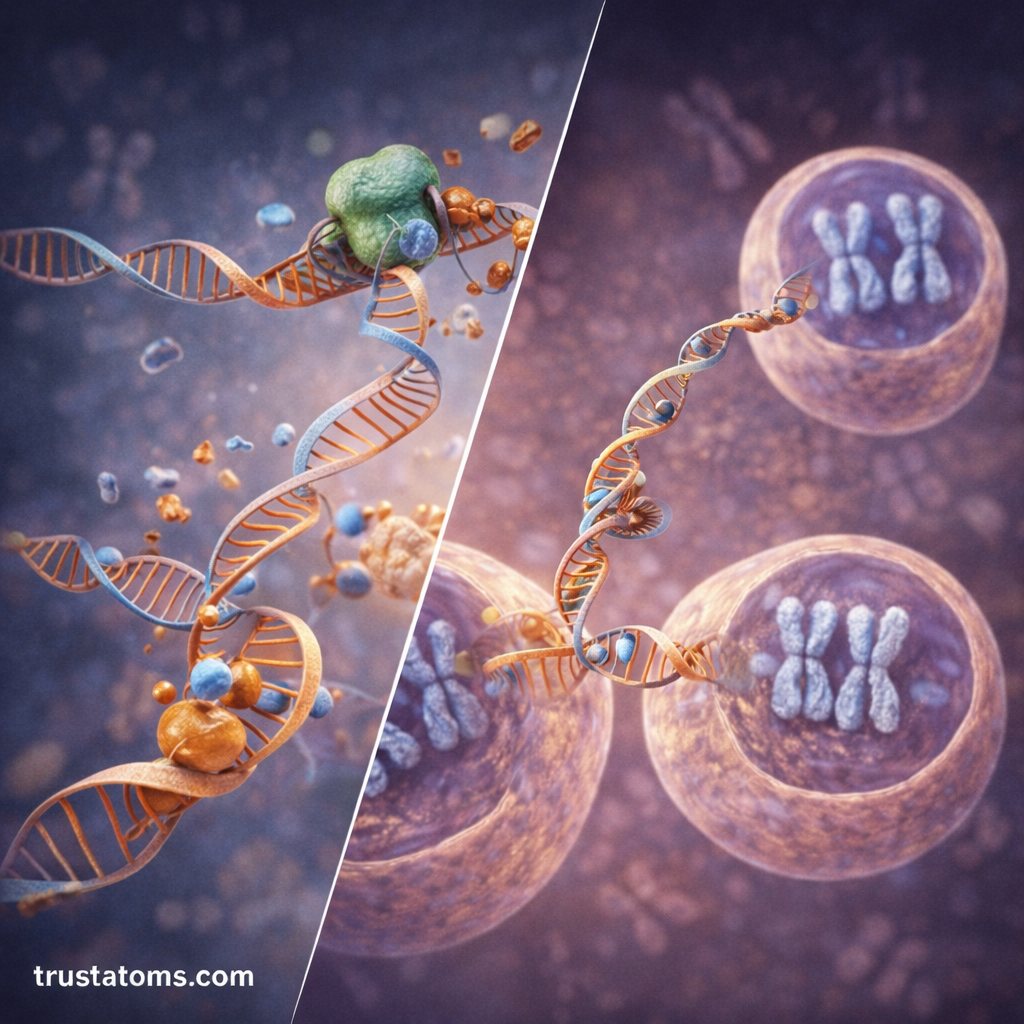
DNA replication follows a highly coordinated sequence of steps involving specialized enzymes.
1. DNA Unwinding
Replication begins when the DNA double helix unwinds.
An enzyme called helicase breaks the hydrogen bonds between base pairs, separating the two DNA strands.
This creates a structure known as the replication fork, where the copying process occurs.
2. Primer Formation
Before DNA synthesis can begin, short RNA segments called primers must be placed on the template strands.
These primers provide a starting point for the enzyme responsible for building new DNA strands.
3. DNA Strand Synthesis
The enzyme DNA polymerase adds new nucleotides to the growing DNA strand.
Replication occurs in a specific direction, which results in two different synthesis patterns:
- Leading strand – synthesized continuously
- Lagging strand – synthesized in short segments called Okazaki fragments
These fragments are later joined together to create a continuous DNA strand.
4. Fragment Joining and Error Correction
Another enzyme called DNA ligase connects Okazaki fragments on the lagging strand.
During replication, proofreading mechanisms check for mistakes.
DNA polymerase can detect and correct incorrect nucleotides, helping maintain high replication accuracy.
Semi-Conservative Replication
DNA replication follows a model known as semi-conservative replication.
This means that each new DNA molecule contains:
- One original (parent) DNA strand
- One newly synthesized strand
This mechanism helps preserve genetic information while allowing DNA to be copied efficiently.
Replication Origins in Eukaryotic Cells
Eukaryotic chromosomes are much larger than those in prokaryotes, so replication begins at multiple locations called origins of replication.
Each origin forms a replication bubble where DNA synthesis begins.
Multiple replication bubbles allow large genomes to be copied quickly and efficiently.
As replication progresses, bubbles expand and eventually merge, completing the duplication of the entire chromosome.
Accuracy and DNA Repair Mechanisms
DNA replication is extremely accurate, but errors can still occur.
Cells use several repair systems to correct mistakes:
- Proofreading during replication
- Mismatch repair
- DNA damage repair pathways
These systems help maintain genetic stability and prevent mutations that could lead to disease.
Genetic Replication in Mitosis vs Meiosis
Although DNA replication occurs before both mitosis and meiosis, the outcomes of these processes differ.
Mitosis
Mitosis produces two genetically identical daughter cells.
This type of cell division supports:
- Growth
- Tissue repair
- Routine cellular replacement
Meiosis
Meiosis produces four genetically unique cells known as gametes (sperm or egg cells).
Genetic variation occurs through processes such as:
- Crossing over
- Independent assortment of chromosomes
Despite these differences, both processes rely on accurate DNA replication beforehand.
Why Genetic Replication Matters
Accurate genetic replication is fundamental to life.
It ensures that:
- Cells maintain their proper functions
- Organisms grow and develop normally
- Genetic information is passed to future generations
Errors in DNA replication can lead to mutations, which may contribute to genetic disorders, cancer, or evolutionary changes.
Because of its importance, DNA replication is one of the most tightly regulated processes in cellular biology.
Final Thoughts
Genetic replication in cellular division is a critical biological process that allows life to grow, repair itself, and reproduce. Through a complex network of enzymes and molecular interactions, cells accurately copy their DNA before division.
The precision of this process ensures that genetic information remains stable across countless generations of cells. By studying DNA replication, scientists gain deeper insight into genetics, disease prevention, biotechnology, and the fundamental mechanisms that sustain living organisms.