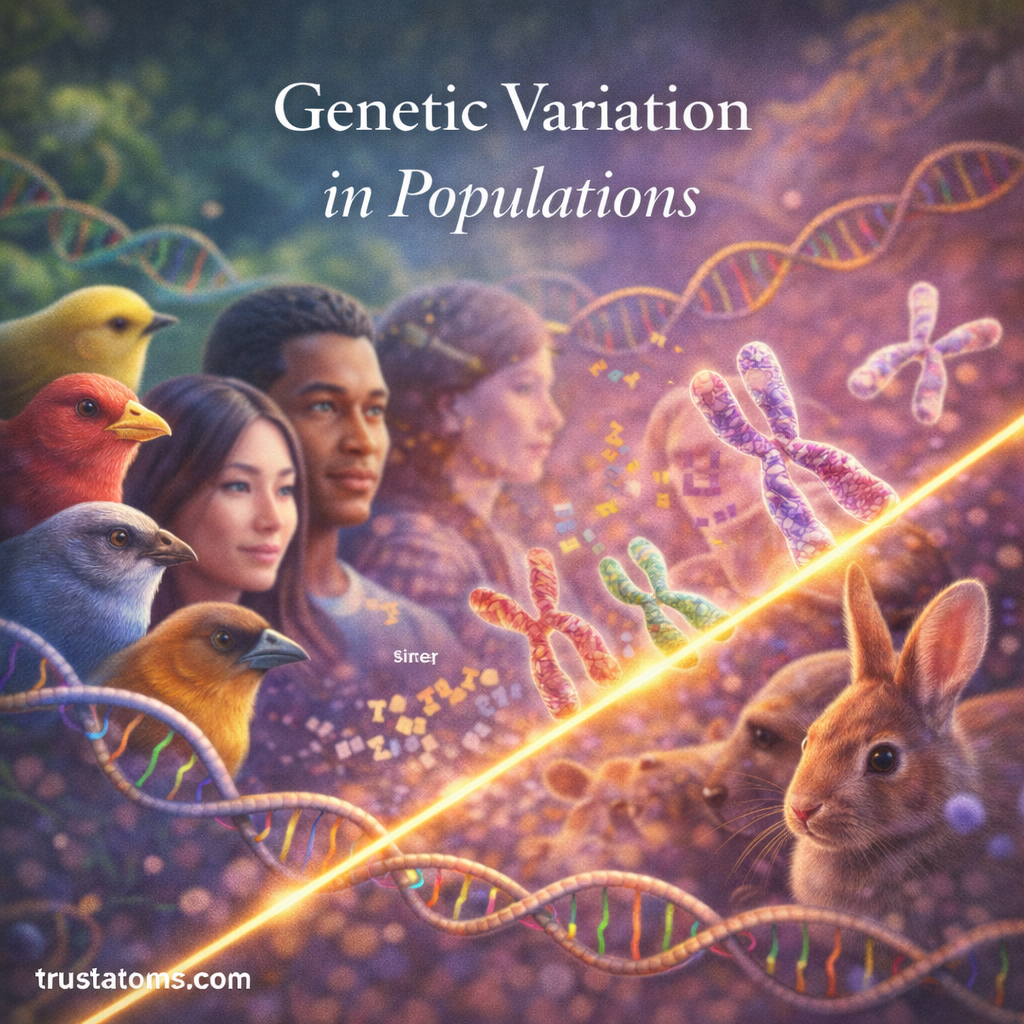
Genetic variation is the foundation of biological diversity. Within any population of organisms, individuals differ in their genetic makeup, which leads to differences in traits such as appearance, physiology, and behavior. These genetic differences allow populations to adapt to changing environments and play a crucial role in evolution.
Without genetic variation, populations would struggle to survive environmental challenges such as disease, climate shifts, or competition for resources. Understanding how genetic variation arises and spreads within populations helps scientists explain evolutionary change and biodiversity.
What Is Genetic Variation?
Genetic variation refers to differences in DNA sequences among individuals within a population.
These differences can occur in many parts of the genome and may influence traits such as:
- Physical characteristics
- Metabolic processes
- Disease resistance
- Reproductive success
Even small changes in DNA sequences can lead to observable variations in phenotype, which is the set of traits expressed by an organism.
Genetic variation is present in nearly all species and is essential for natural selection to occur.
Sources of Genetic Variation
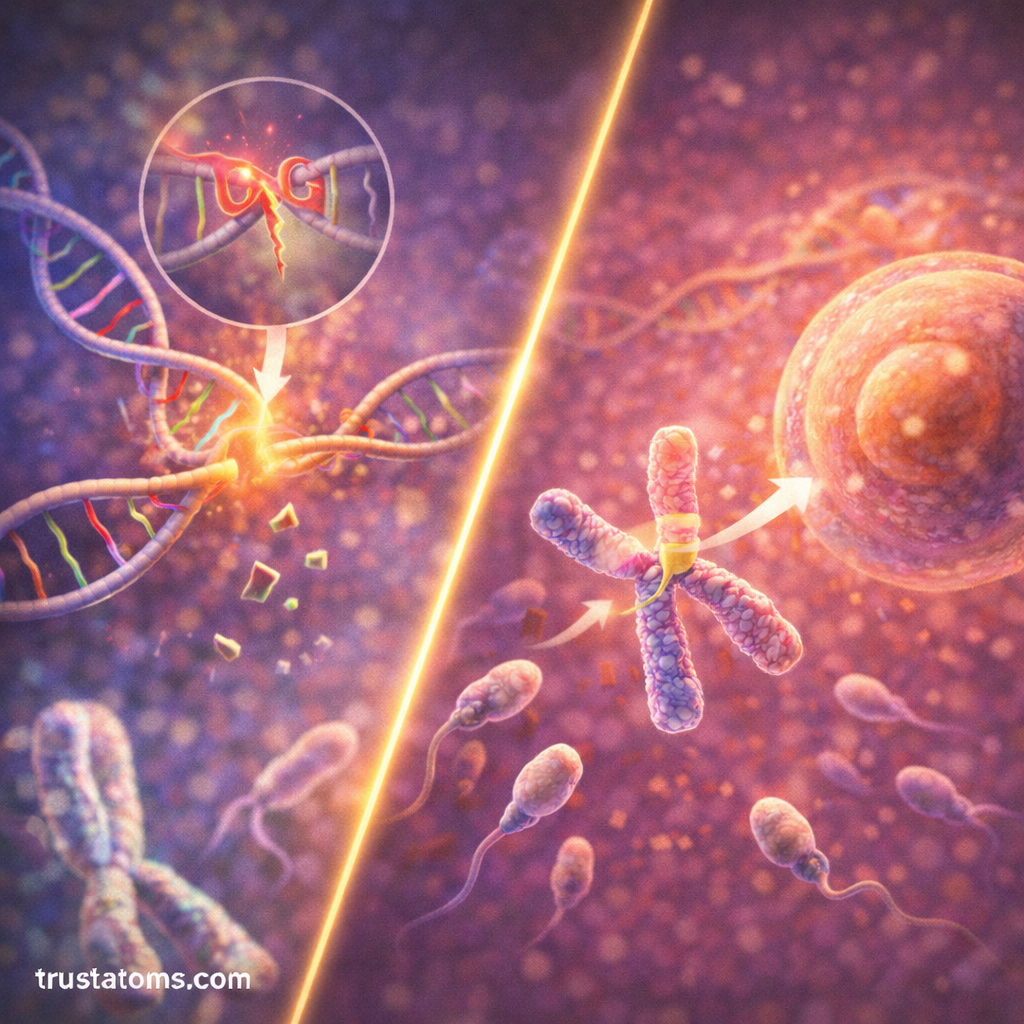
Several biological processes generate genetic variation in populations.
Mutations
Mutations are permanent changes in DNA sequences. They occur spontaneously during DNA replication or due to environmental factors such as radiation or chemical exposure.
Types of mutations include:
- Single nucleotide substitutions
- Insertions or deletions of DNA segments
- Large chromosomal rearrangements
Most mutations have little or no effect, but some may alter traits in ways that influence survival or reproduction.
Genetic Recombination
Genetic recombination occurs during sexual reproduction when chromosomes exchange segments of DNA.
This process happens during meiosis and produces new combinations of genes in offspring.
Recombination increases genetic diversity by mixing genetic information from both parents.
Gene Flow
Gene flow occurs when individuals from different populations interbreed.
Migration allows new genetic variants to enter a population, increasing diversity and potentially introducing beneficial traits.
Random Fertilization
In sexually reproducing organisms, fertilization involves the random union of gametes.
Because each gamete carries different genetic combinations, random fertilization creates additional variation among offspring.
Types of Genetic Variation
Genetic variation can appear in different forms depending on the type of DNA changes involved.
Allelic Variation
Alleles are alternative versions of the same gene.
For example, different alleles may produce variations in traits such as eye color or enzyme function.
Populations often contain multiple alleles for many genes.
Structural Variation
Structural variation involves larger changes in chromosome structure, including:
- Duplications
- Deletions
- Inversions
- Translocations
These changes can significantly alter gene expression and genome organization.
Copy Number Variation
Copy number variation occurs when sections of DNA are repeated multiple times in the genome.
Different individuals may carry varying numbers of gene copies, which can affect how strongly certain genes are expressed.
Genetic Variation and Natural Selection
Natural selection acts on genetic variation by favoring traits that improve survival or reproduction.
Individuals with beneficial genetic traits are more likely to reproduce and pass those genes to future generations.
Over time, advantageous alleles may increase in frequency within a population.
This process can lead to evolutionary adaptation.
Examples of traits influenced by natural selection include:
- Camouflage coloration in animals
- Antibiotic resistance in bacteria
- Drought tolerance in plants
Without genetic variation, natural selection would have no material to act upon.
Genetic Drift in Populations
Genetic drift refers to random changes in allele frequencies within a population.
Unlike natural selection, genetic drift occurs due to chance rather than adaptive advantages.
Genetic drift is especially noticeable in small populations.
Two common examples include:
Founder Effect
The founder effect occurs when a small group of individuals establishes a new population.
Because the new population originates from only a few individuals, its genetic diversity may differ from the original population.
Population Bottleneck
A bottleneck occurs when a population experiences a drastic reduction in size due to events such as natural disasters or disease.
After the population recovers, genetic diversity may remain limited.
Genetic drift can reduce variation and increase the frequency of certain alleles purely by chance.
Measuring Genetic Variation
Scientists use several methods to study genetic diversity in populations.
These methods help researchers understand evolutionary relationships and population structure.
Common approaches include:
- DNA sequencing to identify genetic differences
- Microsatellite analysis to examine repeating DNA regions
- Single nucleotide polymorphism (SNP) analysis to detect small genetic variations
- Population genetics models to estimate allele frequencies
Modern genomic technologies allow scientists to analyze thousands of genes simultaneously across populations.
Genetic Variation and Population Health
Genetic diversity often contributes to the overall health and resilience of populations.
Populations with high genetic diversity may be better able to:
- Resist infectious diseases
- Adapt to environmental changes
- Maintain stable reproductive success
Low genetic diversity can increase the risk of inherited disorders and reduce a population’s ability to respond to environmental stress.
This is why conservation biologists often focus on maintaining genetic diversity in endangered species.
Genetic Variation in Human Populations
Human populations also display genetic variation across the genome.
Most human genetic variation occurs within populations rather than between them.
These variations influence traits such as:
- Immune responses
- Metabolism
- Physical characteristics
- Susceptibility to certain diseases
Studying human genetic diversity helps researchers understand evolutionary history, migration patterns, and medical genetics.
Final Thoughts
Genetic variation is a fundamental aspect of life that allows populations to adapt, evolve, and survive environmental challenges. Through processes such as mutation, recombination, and gene flow, populations continually generate new genetic combinations.
Natural selection and genetic drift then shape how these variations spread across generations.
By studying genetic variation in populations, scientists gain deeper insight into evolution, biodiversity, and the mechanisms that sustain life on Earth.