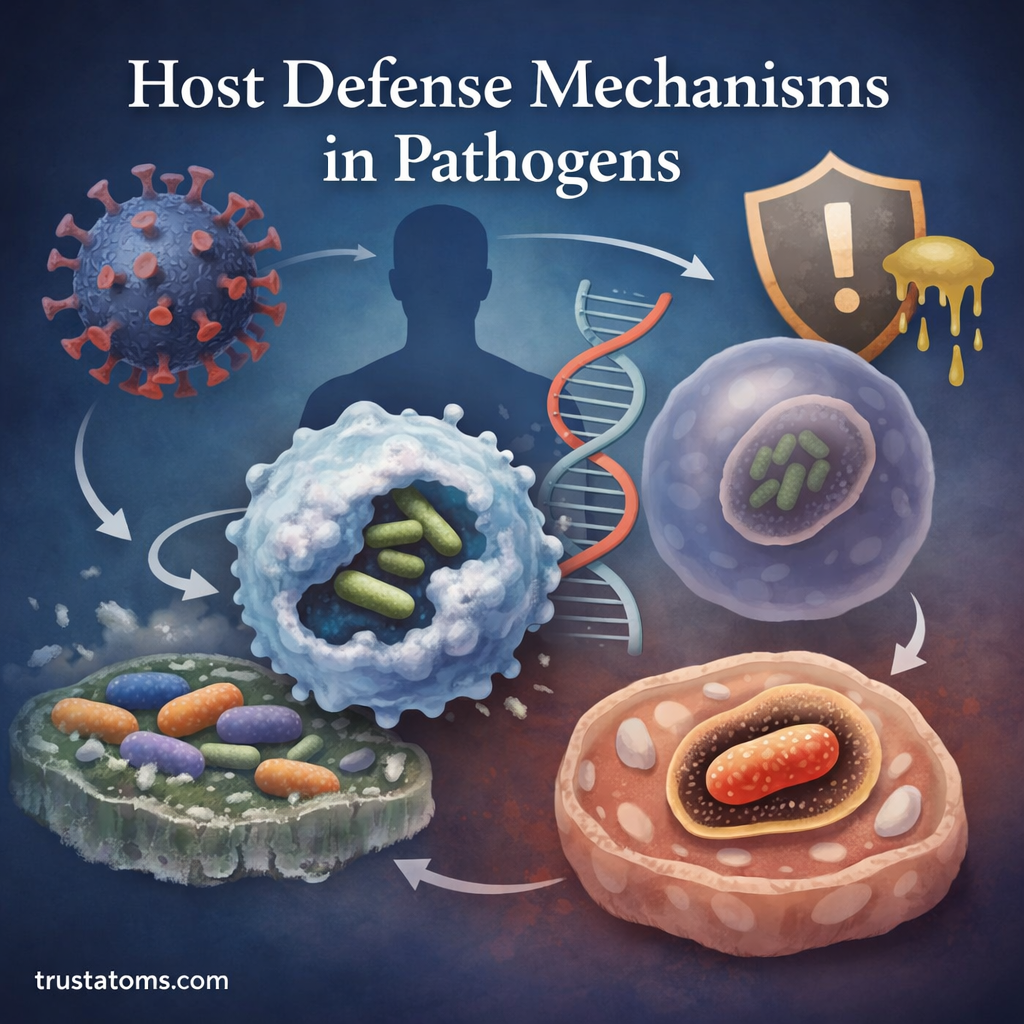
Pathogens such as bacteria, viruses, fungi, and parasites constantly face attacks from the immune systems of the organisms they infect. To survive, replicate, and spread, these microorganisms have evolved host defense mechanisms that allow them to evade, resist, or manipulate the immune responses of their hosts.
These strategies are the result of long-term evolutionary competition between pathogens and host immune systems. While hosts develop stronger defenses, pathogens simultaneously evolve ways to overcome them. Understanding these mechanisms is important in biology, medicine, and epidemiology because they explain how infections persist and why some diseases are difficult to treat.
This article explores the major ways pathogens defend themselves against host immune responses and how these strategies influence disease progression.
What Are Host Defense Mechanisms in Pathogens?
Host defense mechanisms in pathogens are biological strategies that help infectious organisms survive inside a host despite immune system attacks.
These mechanisms allow pathogens to:
- Avoid detection by immune cells
- Resist immune responses once detected
- Hide inside host tissues or cells
- Manipulate immune signaling pathways
- Persist in the host long enough to reproduce and spread
Without these survival strategies, most pathogens would be quickly eliminated by the body’s immune defenses.
The Host–Pathogen Evolutionary Arms Race
The interaction between pathogens and hosts is often described as an evolutionary arms race.
Hosts evolve defenses such as:
- Physical barriers (skin and mucus)
- Innate immune responses
- Adaptive immune responses (T cells and antibodies)
In response, pathogens evolve mechanisms to bypass or weaken these defenses.
Over time, this constant adaptation leads to increasingly complex strategies on both sides.
Major Categories of Pathogen Defense Mechanisms
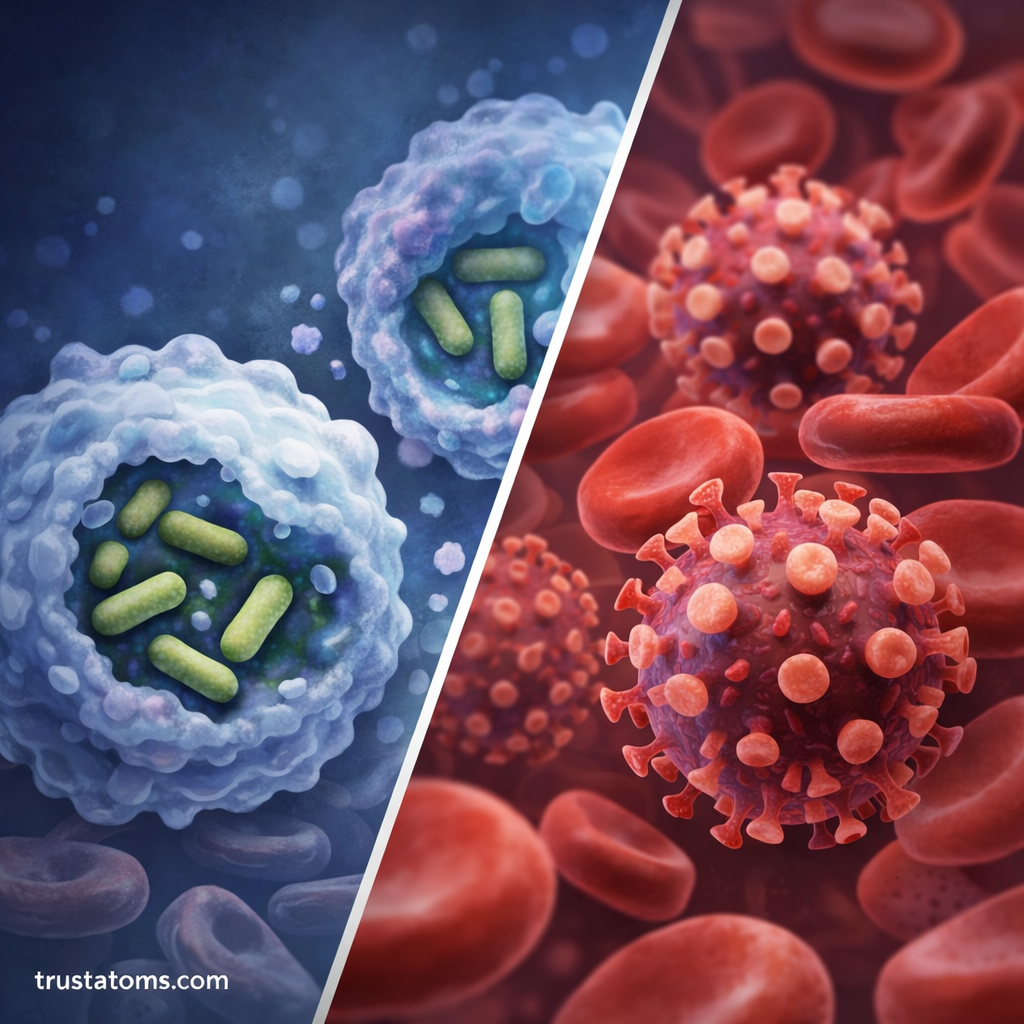
Pathogens use several broad strategies to survive within hosts.
1. Immune Evasion
Immune evasion allows pathogens to avoid detection by the host immune system.
Common methods include:
- Changing surface proteins
- Mimicking host molecules
- Hiding inside host cells
- Suppressing immune signaling
By staying hidden, pathogens can reproduce before the immune system responds effectively.
2. Antigenic Variation
Antigenic variation is the ability of pathogens to change their surface proteins, making it difficult for the immune system to recognize them.
The immune system typically identifies pathogens by detecting antigens, which are specific molecules on the pathogen’s surface.
Some pathogens regularly alter these antigens.
Examples include:
- Influenza viruses
- HIV
- Trypanosomes (parasites causing sleeping sickness)
This variation forces the immune system to continually adapt, delaying immune control of the infection.
3. Intracellular Survival
Some pathogens survive by living inside host cells, where they are partially protected from immune defenses.
Examples include:
- Viruses replicating inside cells
- Bacteria such as Mycobacterium tuberculosis
- Parasites like Plasmodium (malaria)
Inside cells, pathogens can:
- Avoid antibodies circulating in blood
- Manipulate host cell processes
- Use cellular resources to reproduce
Some even prevent the cell from destroying them through specialized immune compartments.
4. Biofilm Formation
Many bacteria form biofilms, which are protective communities of microorganisms attached to surfaces.
Biofilms consist of:
- Microbial cells
- Extracellular polymeric substances (protective matrix)
This matrix acts as a barrier against:
- Immune cells
- Antibodies
- Antibiotics
Biofilms commonly develop on:
- Medical devices
- Teeth (dental plaque)
- Lung tissues
- Wounds
Because biofilms are difficult to remove, infections involving them are often chronic.
5. Resistance to Immune Killing
Even when detected, some pathogens can survive immune attacks.
Immune cells such as macrophages and neutrophils kill pathogens using:
- Reactive oxygen molecules
- Digestive enzymes
- Antimicrobial peptides
Certain pathogens have evolved mechanisms to resist these attacks.
Examples include:
- Enzymes that neutralize reactive oxygen species
- Thick protective cell walls
- Proteins that block immune signaling
These adaptations increase pathogen survival inside the host.
6. Immune Suppression
Some pathogens actively weaken the host immune response.
They may produce molecules that:
- Block immune signaling pathways
- Reduce inflammation
- Disable immune cells
Viruses are particularly effective at immune suppression.
For example:
- HIV targets immune cells directly
- Some viruses block interferon signaling
- Others interfere with antigen presentation
By weakening immune responses, pathogens create an environment where infection can persist.
7. Molecular Mimicry
Molecular mimicry occurs when pathogens produce molecules that closely resemble host proteins.
Because these molecules look similar to host components, the immune system may fail to recognize them as foreign.
This strategy helps pathogens:
- Avoid immune detection
- Blend into host tissues
- Reduce immune activation
In some cases, molecular mimicry can lead to autoimmune diseases, where the immune system mistakenly attacks host tissues.
8. Latency and Dormancy
Some pathogens enter latent or dormant states inside the host.
During latency:
- Pathogens remain inactive
- Few or no symptoms occur
- The immune system cannot fully eliminate the pathogen
Examples include:
- Herpes viruses
- Varicella-zoster virus (chickenpox and shingles)
- Tuberculosis bacteria
These pathogens can reactivate later when immune defenses weaken.
Examples of Pathogens Using Defense Mechanisms
Different pathogens combine multiple survival strategies.
Influenza Virus
Uses:
- Antigenic variation
- Rapid mutation
- Immune evasion
This is why new influenza vaccines are required each year.
HIV
Uses:
- Rapid mutation
- Immune suppression
- Infection of immune cells
- Latency
These strategies make HIV extremely difficult to eliminate.
Mycobacterium tuberculosis
Uses:
- Intracellular survival
- Resistance to immune killing
- Long-term dormancy
This allows tuberculosis infections to persist for years.
Staphylococcus aureus
Uses:
- Biofilm formation
- Toxin production
- Immune system evasion
This bacterium commonly causes hospital-acquired infections.
Why Pathogen Defense Mechanisms Matter
Understanding pathogen survival strategies helps scientists develop better medical treatments.
Research into host–pathogen interactions supports advances in:
- Vaccine development
- Antibiotic design
- Antiviral therapies
- Immunotherapies
- Disease prevention strategies
By identifying how pathogens evade immune defenses, researchers can create treatments that target these specific survival mechanisms.
The Future of Studying Host–Pathogen Interactions
Modern research tools are improving our understanding of pathogen defense systems.
Scientists now study these interactions using:
- Genomics
- Molecular biology
- Structural biology
- Systems biology
- Artificial intelligence modeling
These approaches allow researchers to identify new vulnerabilities in pathogens, leading to improved treatments and vaccines.
As infectious diseases continue to emerge and evolve, understanding pathogen defense mechanisms will remain a critical area of biological research.
Final Thoughts
Host defense mechanisms in pathogens are sophisticated survival strategies that allow infectious organisms to persist inside hosts despite powerful immune defenses. Through immune evasion, antigenic variation, intracellular survival, biofilm formation, immune suppression, and dormancy, pathogens adapt to overcome host immunity.
The ongoing evolutionary battle between hosts and pathogens shapes the biology of infectious disease. Studying these mechanisms not only deepens our understanding of microbial life but also plays a key role in improving public health and developing effective medical treatments.