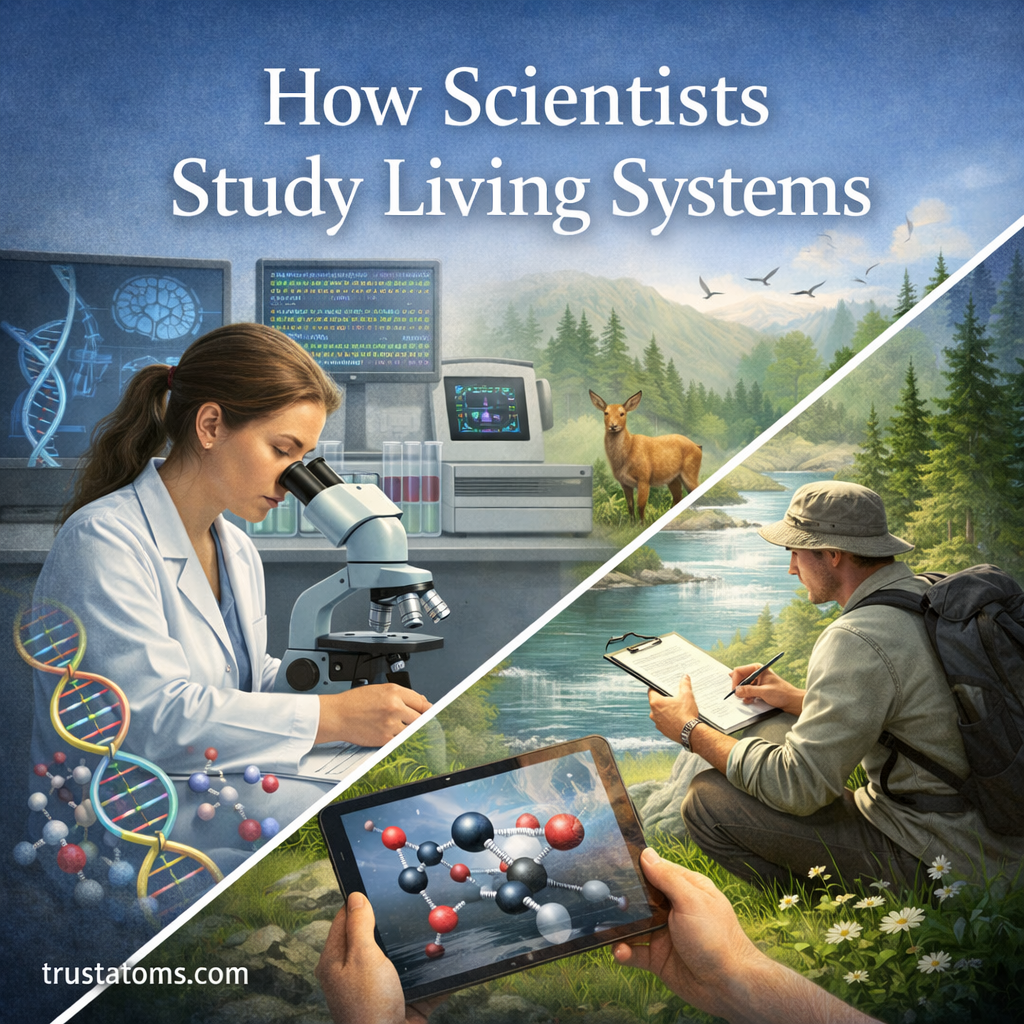
Living systems are incredibly complex. From single cells to entire ecosystems, life operates through intricate networks of chemical reactions, genetic instructions, and environmental interactions. To understand how these systems function, scientists use a wide range of methods and tools that allow them to observe, measure, analyze, and model biological processes.
The study of living systems is a central focus of biology. Through careful research and experimentation, scientists can uncover how organisms grow, adapt, reproduce, and interact with their surroundings.
What Are Living Systems?
Living systems refer to any organized structure that exhibits characteristics of life. These systems can exist at multiple levels of biological organization, including cells, organisms, populations, and ecosystems.
Common characteristics of living systems include:
- Metabolism and energy use
- Growth and development
- Response to environmental stimuli
- Reproduction
- Regulation and homeostasis
- Adaptation through evolution
Because living systems involve many interconnected processes, scientists often study them using specialized approaches that focus on both individual components and the interactions between them.
Major Approaches Scientists Use to Study Living Systems
Biologists rely on several core scientific approaches to investigate how life works.
Observation
Observation is one of the most fundamental tools in biology. Scientists carefully watch and record biological processes in nature or controlled environments.
Examples of biological observation include:
- Monitoring animal behavior in the wild
- Examining cells under microscopes
- Tracking plant growth over time
- Studying ecosystem changes across seasons
Observation often leads to new research questions and hypotheses.
Experimentation
Experiments allow scientists to test hypotheses under controlled conditions. By manipulating variables and observing outcomes, researchers can determine cause-and-effect relationships.
Typical steps in biological experimentation include:
- Formulating a research question
- Creating a testable hypothesis
- Designing a controlled experiment
- Collecting and analyzing data
- Drawing conclusions
Experiments are essential for verifying biological theories and discoveries.
Comparative Studies
Comparative biology examines similarities and differences among organisms.
Scientists compare:
- Anatomical structures
- Genetic sequences
- Physiological functions
- Behavior patterns
These comparisons help researchers understand evolutionary relationships and how different organisms adapt to their environments.
Key Tools Used to Study Living Systems
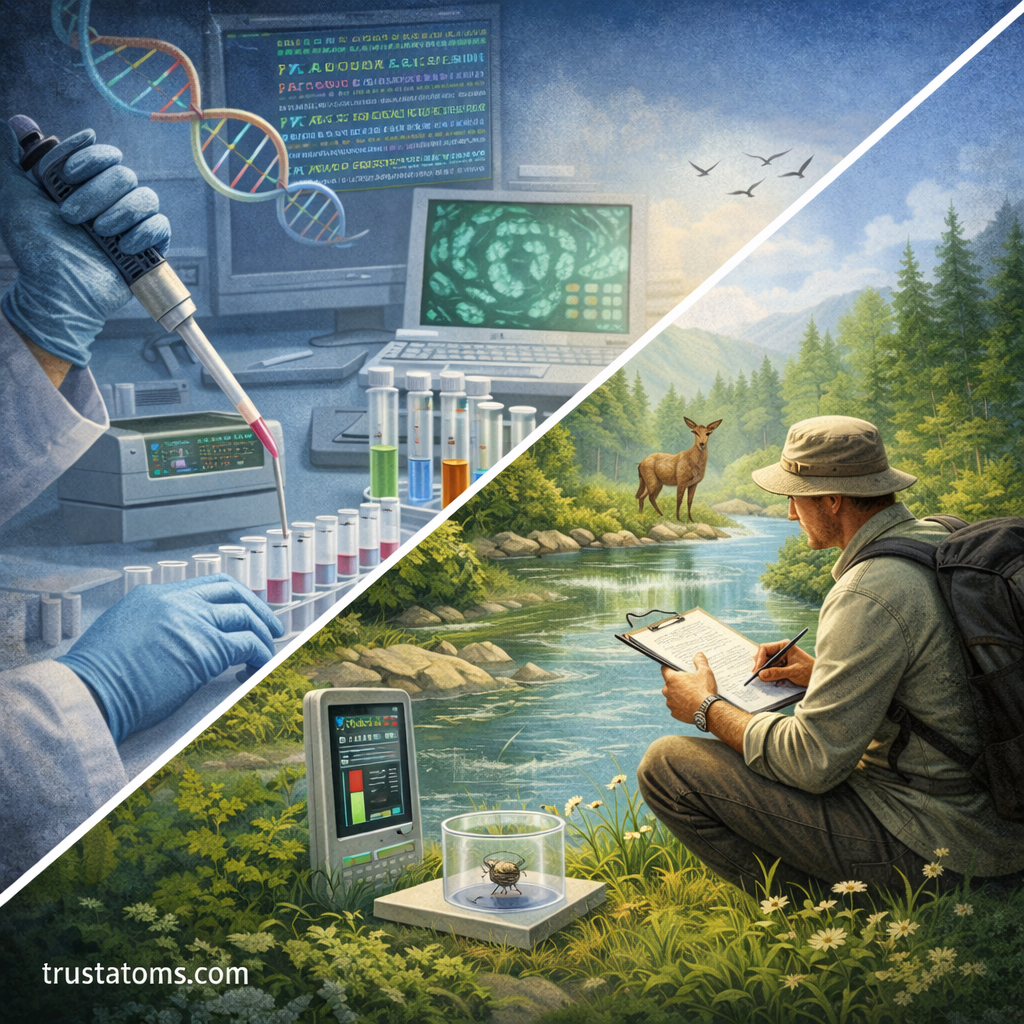
Modern biological research relies on advanced tools that allow scientists to investigate life at increasingly detailed levels.
Microscopes
Microscopes are essential for studying structures too small to see with the naked eye.
Different types of microscopes include:
- Light microscopes for viewing cells and tissues
- Electron microscopes for examining ultrastructures
- Fluorescence microscopes for tracking molecules inside cells
These instruments allow scientists to observe organelles, bacteria, and other microscopic components of living systems.
Genetic Sequencing
Genetic sequencing technology allows scientists to read the DNA of organisms.
This technique helps researchers:
- Identify genes and mutations
- Study evolutionary relationships
- Understand inherited diseases
- Track the spread of pathogens
DNA sequencing has become one of the most powerful tools in modern biology.
Imaging Technologies
Biologists also use advanced imaging technologies to study living systems in real time.
Examples include:
- MRI scans for studying internal organs
- CT scans for detailed body structures
- Live-cell imaging for monitoring cellular processes
These tools allow researchers to visualize biological systems without invasive procedures.
Systems Biology: Studying Interactions in Living Systems
One of the most important modern approaches to studying life is systems biology.
Instead of studying biological components individually, systems biology examines how multiple parts interact within a larger system.
For example, researchers may analyze:
- How genes regulate protein production
- How metabolic pathways interact inside cells
- How immune responses coordinate across multiple organs
By studying interactions rather than isolated parts, scientists can better understand how biological systems maintain balance and adapt to change.
Computational Biology and Modeling
Biological systems often involve enormous amounts of data. To analyze this information, scientists use computational biology.
Computational tools allow researchers to:
- Simulate biological processes
- Analyze large genetic datasets
- Predict disease progression
- Model ecosystem dynamics
Computer models help scientists explore biological questions that would be difficult or impossible to test experimentally.
Field Research and Ecological Studies
Not all biological research occurs in laboratories. Many scientists study living systems directly in their natural environments.
Field research allows scientists to observe real-world biological interactions.
Common field study methods include:
- Tracking animal migration patterns
- Monitoring plant populations
- Measuring environmental changes in ecosystems
- Studying predator-prey relationships
Field research is essential for understanding biodiversity, conservation, and ecosystem health.
Ethical Considerations in Studying Living Systems
Because biological research often involves living organisms, ethical guidelines are an important part of scientific study.
Researchers must ensure that experiments are conducted responsibly and with minimal harm.
Common ethical principles include:
- Humane treatment of animals used in research
- Protection of human research participants
- Responsible use of genetic technologies
- Environmental conservation practices
Ethical oversight helps maintain trust in scientific research while protecting living organisms and ecosystems.
Why Studying Living Systems Matters
Understanding living systems has far-reaching implications for science, medicine, and environmental sustainability.
Research in this area helps scientists:
- Develop new medical treatments
- Improve agricultural productivity
- Protect endangered species
- Understand climate change impacts
- Advance biotechnology and genetics
By studying how life functions and adapts, scientists gain knowledge that can improve human health and protect the natural world.
Final Thoughts
Scientists study living systems using a combination of observation, experimentation, advanced technology, and computational modeling. These methods allow researchers to explore life at every level—from molecules and cells to organisms and ecosystems.
As scientific tools continue to evolve, our understanding of living systems will deepen, helping us address major challenges in health, sustainability, and environmental protection.