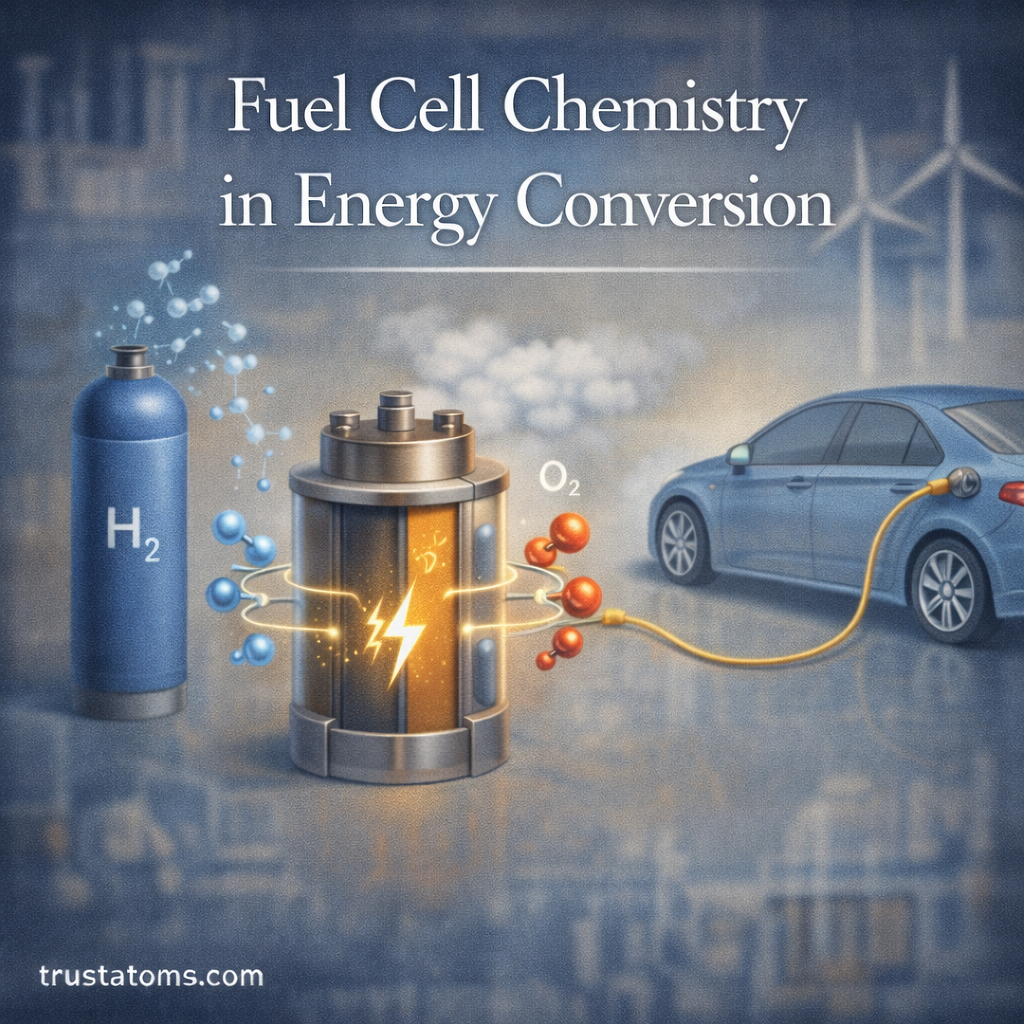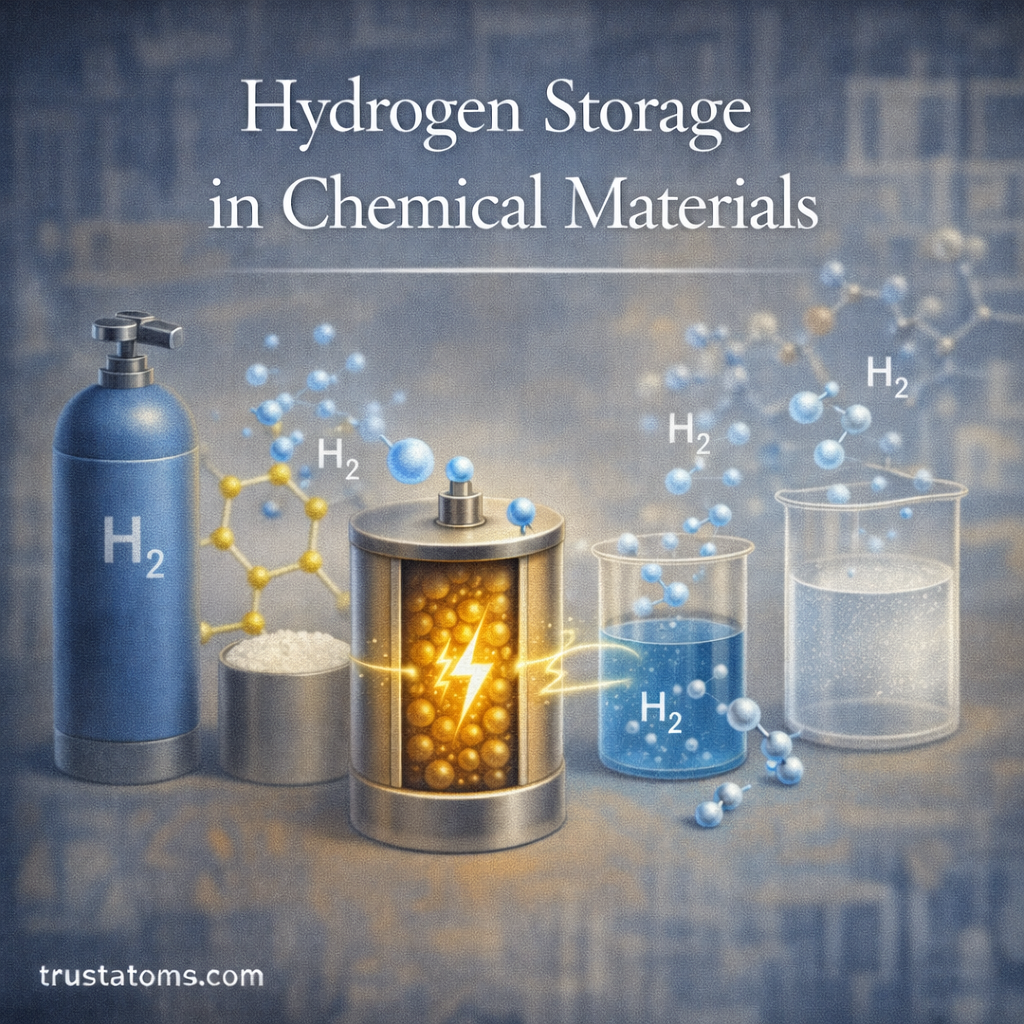
Hydrogen is widely considered one of the most promising clean energy carriers of the future. It can be used in fuel cells, industrial processes, and transportation systems while producing minimal emissions when used properly. However, storing hydrogen efficiently and safely remains one of the biggest challenges in building a hydrogen-based energy economy.
Hydrogen storage in chemical materials offers an innovative solution. Instead of storing hydrogen as compressed gas or cryogenic liquid, scientists are developing materials that absorb, bind, or chemically store hydrogen atoms within their structure.
This article explores how chemical materials store hydrogen, the technologies involved, and the role these systems may play in future energy systems.
Why Hydrogen Storage Is Important
Hydrogen has an extremely high energy content by weight, but it has a very low energy density by volume. This makes storage and transportation more difficult compared to traditional fuels.
Efficient hydrogen storage systems must address several key challenges:
- Safety
- Storage capacity
- Weight and size
- Cost of materials
- Energy required for hydrogen release
Chemical materials provide a promising approach because they can store hydrogen in solid or liquid compounds that are easier to handle than compressed hydrogen gas.
Traditional Hydrogen Storage Methods
Before exploring chemical materials, it helps to understand the traditional storage approaches.
Compressed Hydrogen Gas
Hydrogen can be stored in high-pressure tanks.
Typical storage pressures may exceed hundreds of atmospheres.
Advantages include:
- Mature technology
- Fast refueling
However, compressed storage requires strong containers and presents safety concerns.
Liquid Hydrogen
Hydrogen can also be stored as a cryogenic liquid.
This requires extremely low temperatures.
Challenges include:
- High energy consumption for cooling
- Hydrogen boil-off during storage
- Specialized insulated containers
Because of these limitations, researchers are actively developing chemical storage alternatives.
What Is Chemical Hydrogen Storage?
Chemical hydrogen storage involves materials that can store hydrogen within their molecular or crystal structure.
Hydrogen atoms become chemically bound to the material and can later be released through controlled reactions.
This approach offers several advantages:
- Higher volumetric hydrogen density
- Safer handling conditions
- Lower pressure storage
- Potential for reversible storage cycles
Many of these materials function through reversible chemical reactions that absorb and release hydrogen when conditions change.
Metal Hydrides
One of the most studied chemical hydrogen storage materials is metal hydrides.
Metal hydrides form when hydrogen atoms bond with certain metals or metal alloys.
How Metal Hydrides Work
During hydrogen absorption:
- Hydrogen gas contacts the metal surface
- Hydrogen molecules split into atoms
- Hydrogen atoms diffuse into the metal structure
- A metal–hydrogen compound forms
When heat is applied, the hydrogen can be released again.
Advantages of Metal Hydrides
Metal hydrides provide several benefits for hydrogen storage.
These include:
- High hydrogen density
- Safe storage at moderate pressures
- Reversible hydrogen absorption and release
Common metal hydride materials include alloys based on:
- Magnesium
- Titanium
- Nickel
- Rare earth metals
Researchers continue to improve these materials to enhance storage capacity and reduce weight.
Complex Hydrides
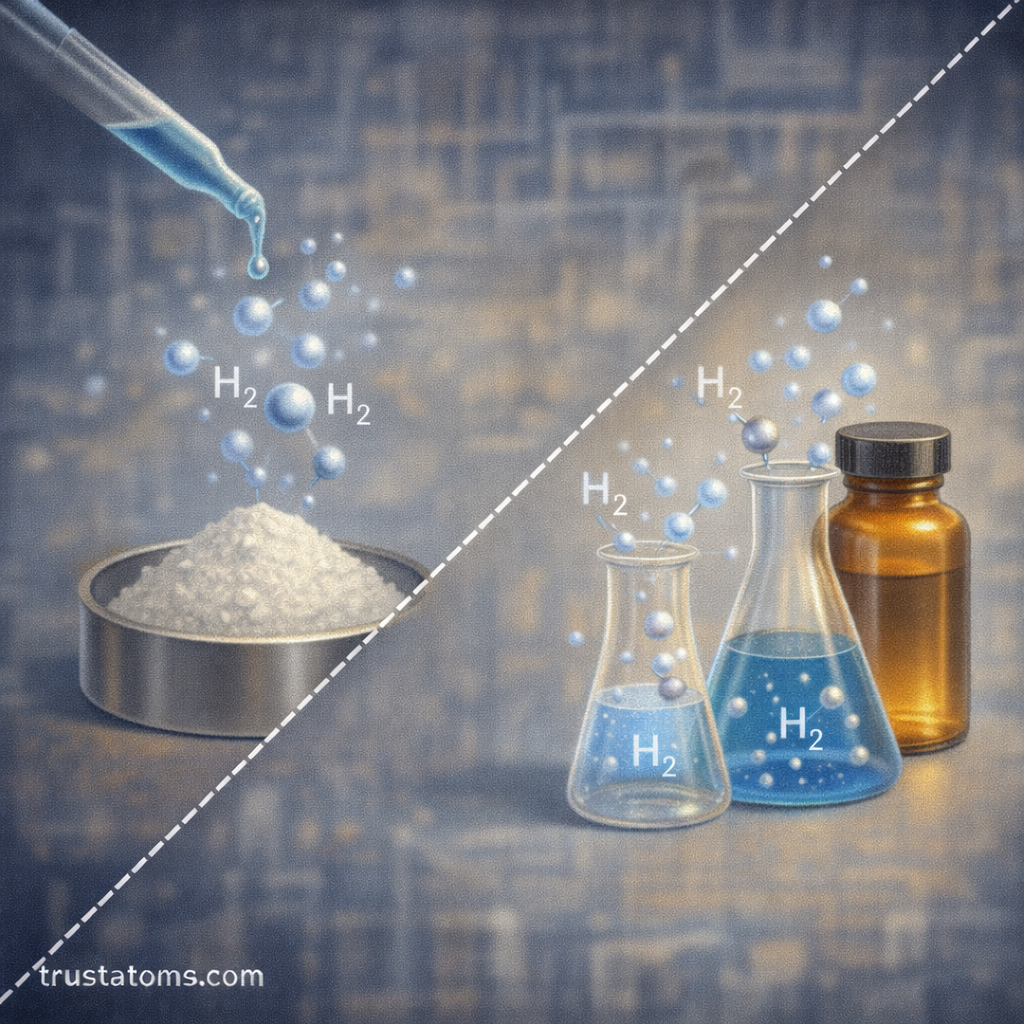
Complex hydrides are another important category of hydrogen storage materials.
Unlike metal hydrides, these materials contain hydrogen bonded within more complex chemical structures.
Examples include:
- Sodium borohydride
- Lithium aluminum hydride
- Ammonia borane
These compounds contain large amounts of hydrogen relative to their mass.
Hydrogen Release from Complex Hydrides
Hydrogen is typically released through controlled chemical reactions or thermal decomposition.
The release process may involve:
- Heating the material
- Adding catalysts
- Chemical reactions with water
Because these reactions can produce high hydrogen yields, complex hydrides are attractive candidates for hydrogen storage systems.
Chemical Hydrogen Carriers
Chemical hydrogen carriers are materials that store hydrogen within stable liquid or solid molecules.
These materials can release hydrogen when processed in reactors.
Examples include:
- Ammonia
- Methanol
- Formic acid
- Liquid organic hydrogen carriers (LOHCs)
These carriers allow hydrogen to be transported using existing fuel infrastructure.
Liquid Organic Hydrogen Carriers (LOHCs)
LOHC systems store hydrogen through reversible chemical reactions.
A hydrogen-rich molecule can release hydrogen in a reactor and then be reused after rehydrogenation.
Advantages include:
- Liquid storage at room temperature
- Compatibility with existing fuel transport systems
- Safe and stable handling
LOHC technology is currently being developed for industrial-scale hydrogen transport.
Nanostructured Hydrogen Storage Materials
Recent research focuses on nanostructured materials that enhance hydrogen storage capacity.
These materials include:
- Carbon nanotubes
- Metal-organic frameworks (MOFs)
- Porous carbon materials
- Nanoporous metals
Their extremely high surface areas allow hydrogen molecules to adsorb onto their surfaces.
This adsorption can store hydrogen without forming strong chemical bonds.
Metal-Organic Frameworks (MOFs)
Metal-organic frameworks are one of the most promising hydrogen storage materials.
MOFs are crystalline materials composed of metal ions connected by organic linkers.
Their structure creates a network of tiny pores capable of storing gas molecules.
Advantages include:
- Extremely high surface area
- Tunable chemical structure
- Potential for high hydrogen capacity
Researchers continue to design MOFs with improved hydrogen adsorption properties.
Challenges in Chemical Hydrogen Storage
Although chemical hydrogen storage technologies show promise, several challenges remain.
Storage Capacity
Many materials must store larger amounts of hydrogen to be practical for transportation or large-scale energy storage.
Energy for Hydrogen Release
Some materials require high temperatures to release hydrogen.
Reducing the energy required for hydrogen release is an important research goal.
Material Stability
Repeated hydrogen absorption and release cycles can degrade storage materials.
Improving long-term stability is essential for commercial use.
Cost and Scalability
Some advanced materials are expensive or difficult to produce at large scales.
Developing affordable materials is key for widespread adoption.
Applications of Hydrogen Storage Materials
Chemical hydrogen storage materials could support many future technologies.
Hydrogen Fuel Cell Vehicles
Efficient storage systems are critical for hydrogen-powered transportation.
Chemical materials could provide safer alternatives to high-pressure tanks.
Renewable Energy Storage
Hydrogen can store excess electricity from renewable sources like solar and wind.
Chemical storage materials allow hydrogen to be stored until energy is needed.
Portable Energy Systems
Hydrogen storage materials may power portable devices, remote sensors, and backup power systems.
These materials can provide long-lasting, high-energy fuel sources.
The Future of Hydrogen Storage Chemistry
Advances in materials science are rapidly improving hydrogen storage technologies.
Scientists are exploring:
- Advanced metal hydrides
- New complex hydride chemistries
- Nanostructured materials
- Hybrid hydrogen storage systems
Combining multiple storage strategies may lead to safer and more efficient hydrogen energy systems.
As the demand for clean energy grows, hydrogen storage materials will play an increasingly important role in enabling hydrogen-based technologies.
Final Thoughts
Hydrogen storage in chemical materials represents one of the most promising solutions for managing hydrogen energy systems. By binding hydrogen atoms within solid or liquid compounds, these materials allow hydrogen to be stored more safely and efficiently than traditional high-pressure or cryogenic methods.
From metal hydrides to liquid hydrogen carriers and advanced nanomaterials, ongoing research continues to expand the possibilities for hydrogen storage technologies. As these materials improve, they will become a crucial component of future clean energy infrastructure.