Cells constantly process information to survive, adapt, and function properly. Even though a cell may appear simple under a microscope, it is actually an incredibly organized system where molecules continuously send and receive signals.
Intracellular communication refers to the processes that allow different parts of a cell to exchange information. Through chemical signals, proteins, and molecular pathways, cells coordinate activities such as metabolism, growth, division, and responses to environmental changes.
Understanding intracellular communication helps explain how cells maintain balance, respond to stress, and perform specialized tasks within tissues and organs.
What Is Intracellular Communication?
Intracellular communication is the exchange of signals within a single cell that allows different cellular components to coordinate their activities.
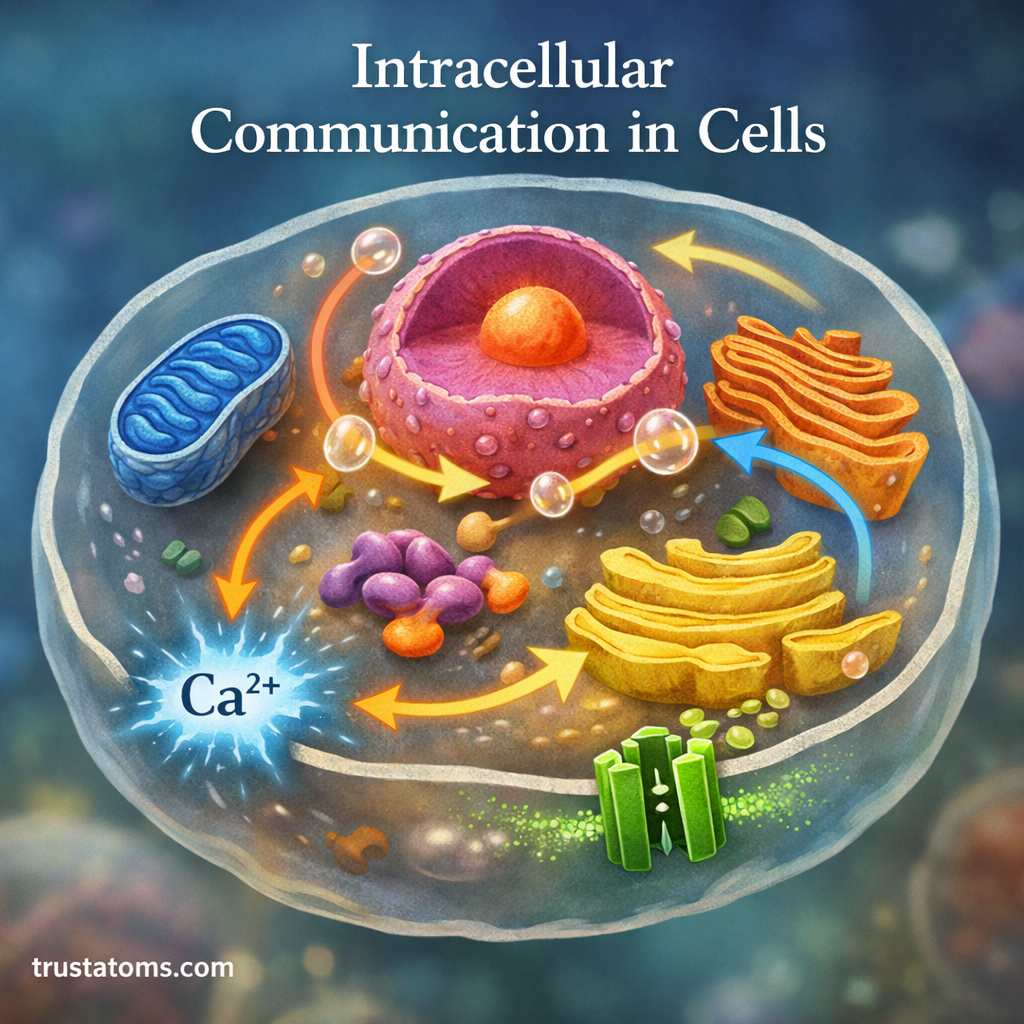
Inside every cell are structures called organelles—such as the nucleus, mitochondria, endoplasmic reticulum, and Golgi apparatus. These structures must constantly interact and share information to keep the cell functioning.
Signals inside a cell often involve:
- Chemical messengers
- Protein interactions
- Molecular binding events
- Changes in ion concentrations
- Phosphorylation and enzyme activation
These internal messages allow the cell to quickly adjust to changes and maintain stability.
Why Intracellular Communication Is Important
Without communication inside the cell, essential processes would become disorganized or fail entirely.
Intracellular signaling allows cells to:
- Coordinate metabolic reactions
- Control gene expression
- Respond to stress or damage
- Regulate cell growth and division
- Maintain internal balance (homeostasis)
For example, when nutrients enter a cell, signaling pathways help activate enzymes needed to process those nutrients efficiently.
Major Components Involved in Cellular Communication
Several key molecules and structures help transmit signals throughout the cell.
Signaling Molecules
Small molecules or proteins often act as messengers.
Examples include:
- Calcium ions (Ca²⁺)
- Cyclic AMP (cAMP)
- ATP
- Lipid signaling molecules
These messengers trigger specific cellular responses by activating proteins or enzymes.
Protein Kinases and Enzymes
Many signals are transmitted through enzymes that modify other proteins.
Protein kinases add phosphate groups to proteins in a process called phosphorylation. This modification can activate or deactivate the protein’s function.
Enzymes allow signals to move rapidly through complex biochemical pathways.
Cellular Receptors
Some receptors are embedded in membranes within the cell.
These receptors bind to signaling molecules and trigger internal responses such as:
- Activation of enzymes
- Opening of ion channels
- Initiation of signaling cascades
Receptors help ensure signals reach the correct targets.
Signaling Pathways Inside the Cell
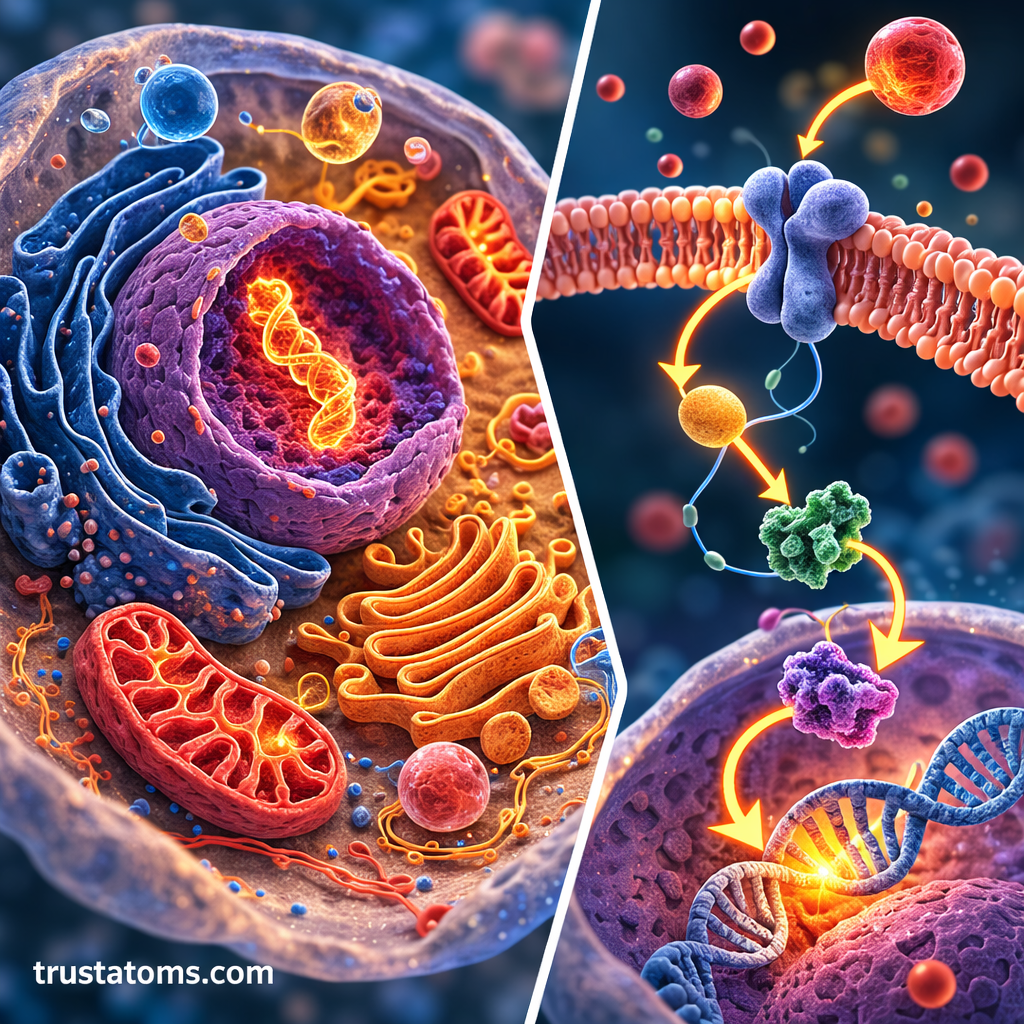
Signals often travel through organized molecular pathways called signaling cascades.
In a signaling cascade:
- A signal molecule activates a receptor or enzyme.
- That enzyme activates additional proteins.
- The signal is amplified through multiple steps.
- The final proteins trigger a cellular response.
This layered system allows a small signal to produce a large and precise response.
Common intracellular signaling pathways include:
- MAP kinase pathway
- Calcium signaling pathway
- cAMP signaling pathway
Each pathway regulates specific cellular activities.
Communication Between Organelles
Different organelles inside the cell must coordinate their work.
Examples of organelle communication include:
- The nucleus sending instructions to ribosomes for protein production
- The endoplasmic reticulum interacting with the Golgi apparatus for protein processing
- Mitochondria adjusting energy production based on cellular demand
Specialized contact sites between organelles allow molecules to move efficiently between compartments.
Role of Calcium in Intracellular Signaling
Calcium ions play one of the most important roles in cellular communication.
Cells maintain very low calcium levels in the cytoplasm. When calcium is released from storage sites such as the endoplasmic reticulum, it acts as a signal that activates multiple cellular processes.
Calcium signaling helps regulate:
- Muscle contraction
- Neurotransmitter release
- Gene expression
- Metabolic activity
Because calcium signals can spread rapidly through the cell, they are ideal for coordinating quick responses.
Signal Amplification in Cells
One powerful feature of intracellular communication is signal amplification.
A single activated receptor can trigger:
- Dozens of enzymes
- Hundreds of signaling molecules
- Thousands of downstream reactions
This amplification ensures that even weak external signals can produce a strong cellular response.
However, cells also include mechanisms that shut down signals to prevent excessive activity.
Regulation and Control of Cellular Signals
Cells carefully regulate communication pathways to maintain balance.
Several mechanisms control intracellular signals:
- Enzymes that deactivate signaling molecules
- Proteins that block receptors
- Ion pumps that restore normal concentrations
- Feedback loops that regulate pathway activity
These controls help prevent errors that could lead to disease or cellular dysfunction.
Intracellular Communication and Human Health
Many diseases occur when intracellular signaling pathways malfunction.
Examples include:
- Cancer caused by uncontrolled growth signaling
- Diabetes involving impaired insulin signaling
- Neurodegenerative diseases affecting cellular communication pathways
Modern medicine often targets these pathways to develop treatments.
Many drugs work by modifying specific signaling proteins or receptors within cells.
Final Thoughts
Intracellular communication is essential for the survival and coordination of every cell in the body. Through networks of signaling molecules, enzymes, and pathways, cells are able to process information and respond to constantly changing conditions.
These internal communication systems allow cells to regulate metabolism, control gene expression, and maintain balance within complex biological systems.
As scientists continue studying intracellular signaling, they uncover deeper insights into how life operates at the microscopic level—and how disruptions in these communication networks contribute to disease.