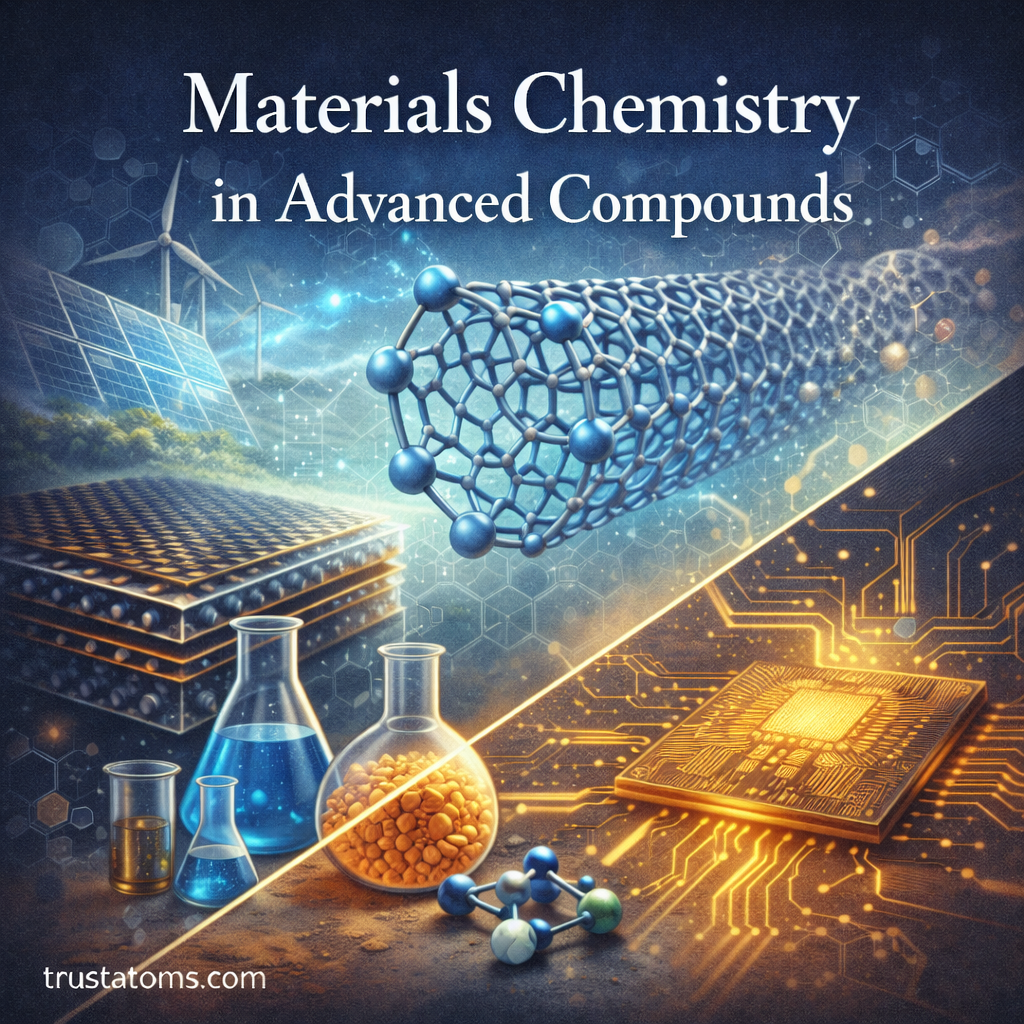
Materials chemistry focuses on the design, structure, and synthesis of substances with specific physical or chemical properties. It plays a central role in developing advanced compounds used in modern technology, medicine, electronics, and energy systems.
Unlike traditional chemistry, which often focuses on individual reactions or substances, materials chemistry studies how atoms and molecules combine to create materials with useful functions. These materials may be designed for strength, conductivity, flexibility, durability, or chemical stability.
Understanding materials chemistry helps scientists develop innovative compounds that improve technologies ranging from smartphones and batteries to aerospace materials and medical implants.
What Is Materials Chemistry?
Materials chemistry is a branch of chemistry that focuses on creating and studying materials with tailored properties.
Scientists working in this field design materials by controlling:
- Atomic structure
- Chemical composition
- Molecular arrangement
- Crystal structure
- Surface properties
These factors determine how materials behave under different conditions such as heat, pressure, electrical current, or chemical exposure.
Materials chemistry combines knowledge from several scientific fields, including chemistry, physics, nanotechnology, and materials engineering.
Advanced Compounds in Modern Science
Advanced compounds are specially engineered chemical substances designed to perform specific functions. These compounds often have properties that go beyond those found in naturally occurring materials.
Examples of advanced compounds include:
- High-performance polymers
- Nanomaterials
- Semiconductor materials
- Composite materials
- Smart materials
These materials are often developed through precise control of chemical synthesis and structural design.
Structure–Property Relationships
One of the most important concepts in materials chemistry is the relationship between structure and properties.
The arrangement of atoms and molecules within a material strongly influences how that material behaves.
Examples of Structure–Property Relationships
Different structural arrangements can affect:
- Electrical conductivity
- Mechanical strength
- Thermal resistance
- Optical behavior
- Chemical reactivity
For example, the arrangement of carbon atoms in graphite produces a soft, layered material, while a different arrangement of carbon atoms creates diamond, which is one of the hardest natural materials known.
Understanding these relationships allows scientists to design materials with specific performance characteristics.
Types of Advanced Materials
Materials chemistry includes several categories of advanced materials that support modern technology.
Polymers
Polymers are large molecules made from repeating molecular units.
Common examples include:
- Plastics
- Synthetic fibers
- Rubber materials
- Biodegradable polymers
Modern polymer chemistry has produced materials with improved strength, flexibility, and chemical resistance.
Nanomaterials
Nanomaterials are materials engineered at extremely small scales, often measured in nanometers.
At this scale, materials can display unique properties such as:
- Enhanced electrical conductivity
- Increased surface area
- Improved catalytic activity
- Unique optical characteristics
Nanomaterials are widely used in electronics, medical devices, coatings, and environmental technologies.
Composite Materials
Composite materials combine two or more different materials to create a substance with improved properties.
Examples include:
- Carbon fiber composites
- Reinforced plastics
- Ceramic–metal composites
These materials are often stronger and lighter than traditional materials, making them valuable in aerospace, automotive engineering, and structural applications.
Semiconductor Materials
Semiconductors are materials that conduct electricity under specific conditions. They are essential in electronic devices.
Common semiconductor materials include:
- Silicon
- Gallium arsenide
- Silicon carbide
These materials are used in:
- Computer processors
- Solar panels
- Electronic sensors
- Communication technologies
Materials chemistry plays a critical role in improving semiconductor performance and efficiency.
Synthesis of Advanced Compounds
Creating advanced materials requires controlled chemical synthesis techniques.
Scientists design reactions that allow atoms and molecules to assemble into desired structures.
Common Synthesis Methods
Some widely used methods include:
- Sol–gel synthesis
- Chemical vapor deposition
- Hydrothermal synthesis
- Polymerization reactions
- Electrochemical synthesis
Each method provides different levels of control over material structure, purity, and composition.
Surface Chemistry and Material Performance
Surface chemistry is especially important for advanced materials. The outer layer of a material often determines how it interacts with its environment.
Surface modifications can improve:
- Chemical resistance
- Adhesion properties
- Catalytic activity
- Biocompatibility
- Corrosion resistance
For example, protective coatings on metals can prevent oxidation and extend the lifespan of industrial components.
Materials Chemistry in Energy Technology
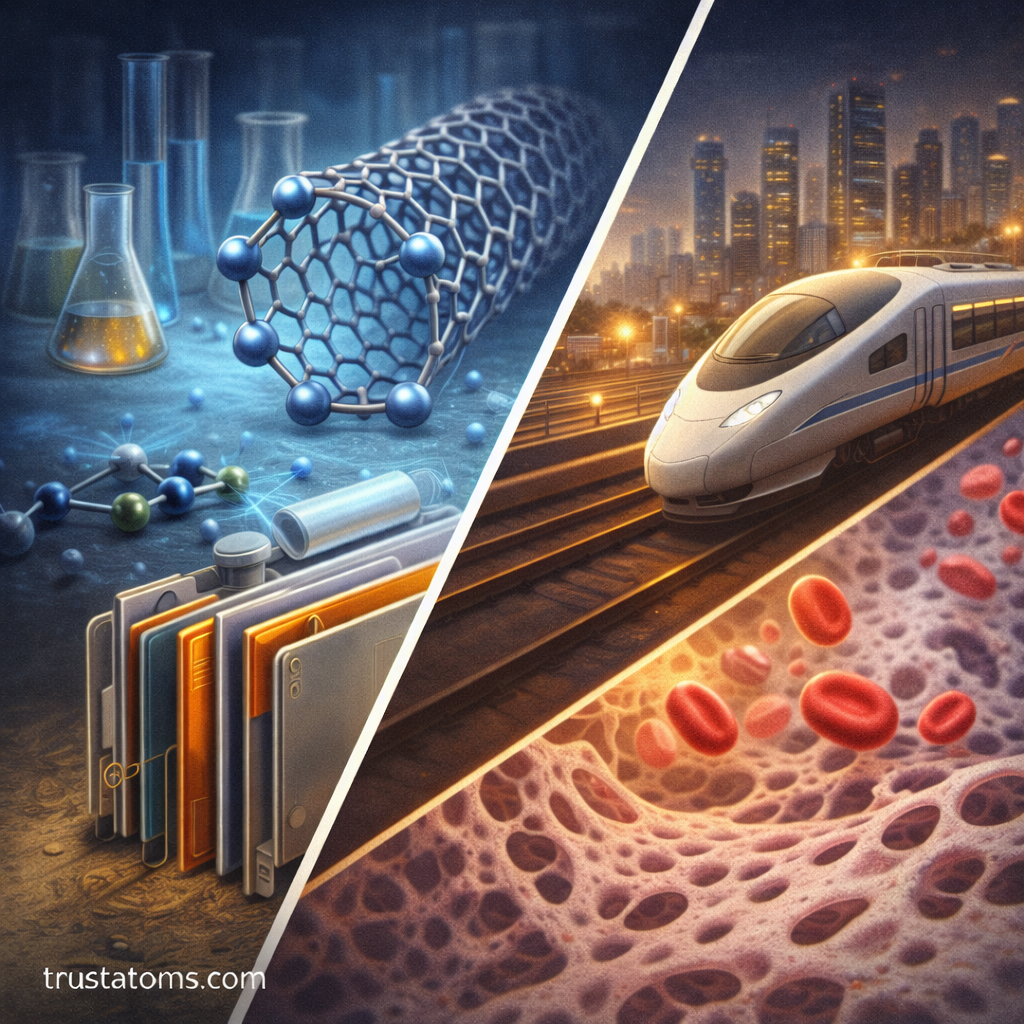
Advanced materials are essential for modern energy systems.
Scientists develop new materials to improve the efficiency and durability of energy technologies.
Applications in Energy Systems
Materials chemistry supports innovations such as:
- Lithium-ion battery materials
- Hydrogen storage compounds
- Solar cell materials
- Fuel cell catalysts
- Energy-efficient insulation materials
Improved materials help increase energy storage capacity and reduce environmental impact.
Materials Chemistry in Medicine
Medical technologies also rely heavily on advanced materials.
Materials chemistry helps create substances that interact safely with the human body.
Medical Material Applications
Examples include:
- Biocompatible implants
- Drug delivery materials
- Surgical polymers
- Tissue engineering scaffolds
- Antibacterial coatings
These materials must meet strict safety and performance standards to function effectively in medical environments.
Challenges in Materials Chemistry
Despite rapid advances, materials chemistry still faces several scientific and engineering challenges.
Current Challenges
Researchers continue working to address issues such as:
- Improving material durability
- Reducing production costs
- Developing sustainable materials
- Enhancing recycling and reuse
- Scaling laboratory discoveries to industrial production
Solving these challenges requires collaboration between chemists, engineers, and materials scientists.
Future Directions in Advanced Materials
Materials chemistry continues to evolve as new technologies demand more advanced compounds.
Emerging research areas include:
- Smart materials that respond to environmental changes
- Self-healing materials
- Advanced nanostructured materials
- Sustainable biodegradable materials
- Next-generation semiconductor technologies
These innovations have the potential to transform industries ranging from electronics and transportation to healthcare and renewable energy.
Final Thoughts
Materials chemistry plays a vital role in the development of advanced compounds that power modern technology. By controlling atomic structure, chemical composition, and molecular organization, scientists can design materials with remarkable properties.
As research continues to expand, materials chemistry will remain at the forefront of scientific innovation, enabling new technologies and sustainable solutions that shape the future of science and engineering.