Cells are constantly performing thousands of chemical reactions that sustain life. These reactions allow organisms to generate energy, build essential molecules, break down nutrients, and respond to environmental changes. Rather than occurring randomly, most cellular reactions are arranged into organized sequences known as metabolic pathways.
Metabolic pathway organization allows cells to manage complex biochemical processes efficiently. By coordinating reactions in a structured way, cells can control energy use, regulate production of important molecules, and maintain internal stability.
Understanding how metabolic pathways are organized reveals how cells maintain life at the molecular level.
What Is a Metabolic Pathway?
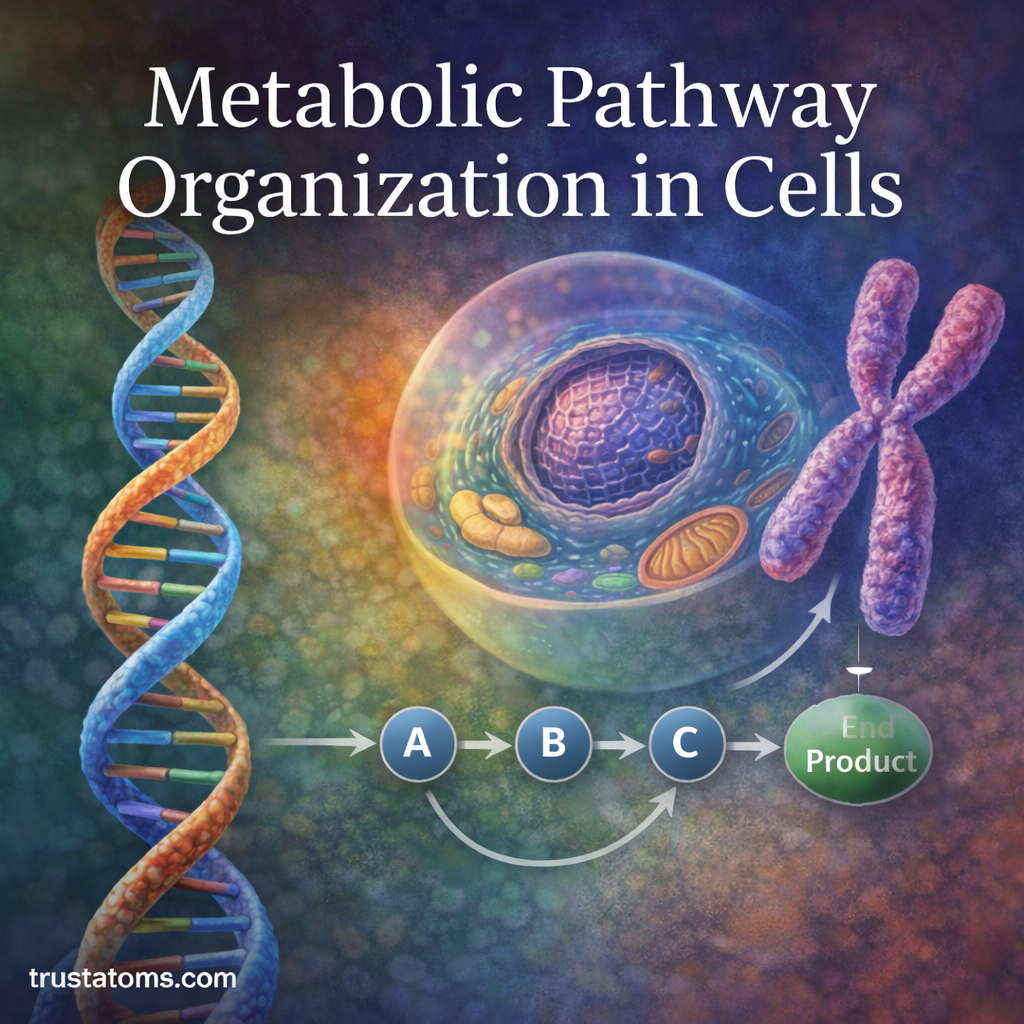
A metabolic pathway is a series of enzyme-catalyzed chemical reactions in which a starting molecule is transformed into a final product through multiple intermediate steps.
Each step in the pathway is controlled by a specific enzyme that facilitates the conversion from one molecule to the next.
For example, a simple pathway might proceed as:
- Molecule A is converted into molecule B
- Molecule B becomes molecule C
- Molecule C becomes molecule D
- Molecule D forms the final product
The product of one reaction becomes the substrate for the next reaction, creating a continuous chain of transformations.
These pathways allow cells to process nutrients and synthesize essential biological compounds.
Why Metabolic Pathways Are Organized
If cellular reactions occurred without structure, cells would struggle to regulate metabolism effectively. Organized metabolic pathways offer several advantages.
Efficiency
Enzymes arranged in pathways ensure that molecules move quickly from one step to the next without unnecessary delays.
Regulation
Cells can control metabolic activity by regulating key enzymes within a pathway.
Energy Management
Organized pathways allow cells to conserve energy by linking energy-releasing reactions to energy-requiring reactions.
Precision
Structured pathways reduce the likelihood of unwanted side reactions and ensure that the correct molecules are produced.
This organization helps cells maintain metabolic balance, also known as homeostasis.
Types of Metabolic Pathways
Metabolic pathways generally fall into three major categories based on their functions.
Catabolic Pathways
Catabolic pathways break down large molecules into smaller ones while releasing energy.
Examples include the breakdown of:
- Glucose during cellular respiration
- Fatty acids during lipid metabolism
- Proteins into amino acids
These reactions often generate ATP, the primary energy currency of cells.
Anabolic Pathways
Anabolic pathways build complex molecules from simpler components.
These pathways require energy to operate and are essential for growth, repair, and cell maintenance.
Examples include:
- Protein synthesis from amino acids
- DNA and RNA synthesis from nucleotides
- Lipid production from fatty acids
Anabolic reactions allow organisms to construct the biomolecules necessary for cellular function.
Amphibolic Pathways
Some pathways function in both breakdown and synthesis processes. These are known as amphibolic pathways.
A well-known example is the citric acid cycle, which participates in both energy production and the creation of metabolic intermediates used in biosynthesis.
Amphibolic pathways help integrate different parts of metabolism.
Key Components of Metabolic Pathways
Several elements work together to ensure metabolic pathways function correctly.
Enzymes
Enzymes are proteins that accelerate chemical reactions without being consumed.
Each enzyme is highly specific and typically catalyzes only one step in a metabolic pathway.
Substrates and Products
The molecules that enzymes act upon are called substrates, while the resulting molecules are known as products.
In metabolic pathways, products from one reaction often become substrates for the next step.
Intermediates
Intermediates are molecules formed between the starting substrate and the final product.
They play crucial roles in linking reactions together within the pathway.
Energy Carriers
Certain molecules help transfer energy within metabolic pathways.
Important energy carriers include:
- ATP
- NADH
- FADH₂
These molecules store and transfer chemical energy that powers cellular reactions.
Spatial Organization of Metabolic Pathways
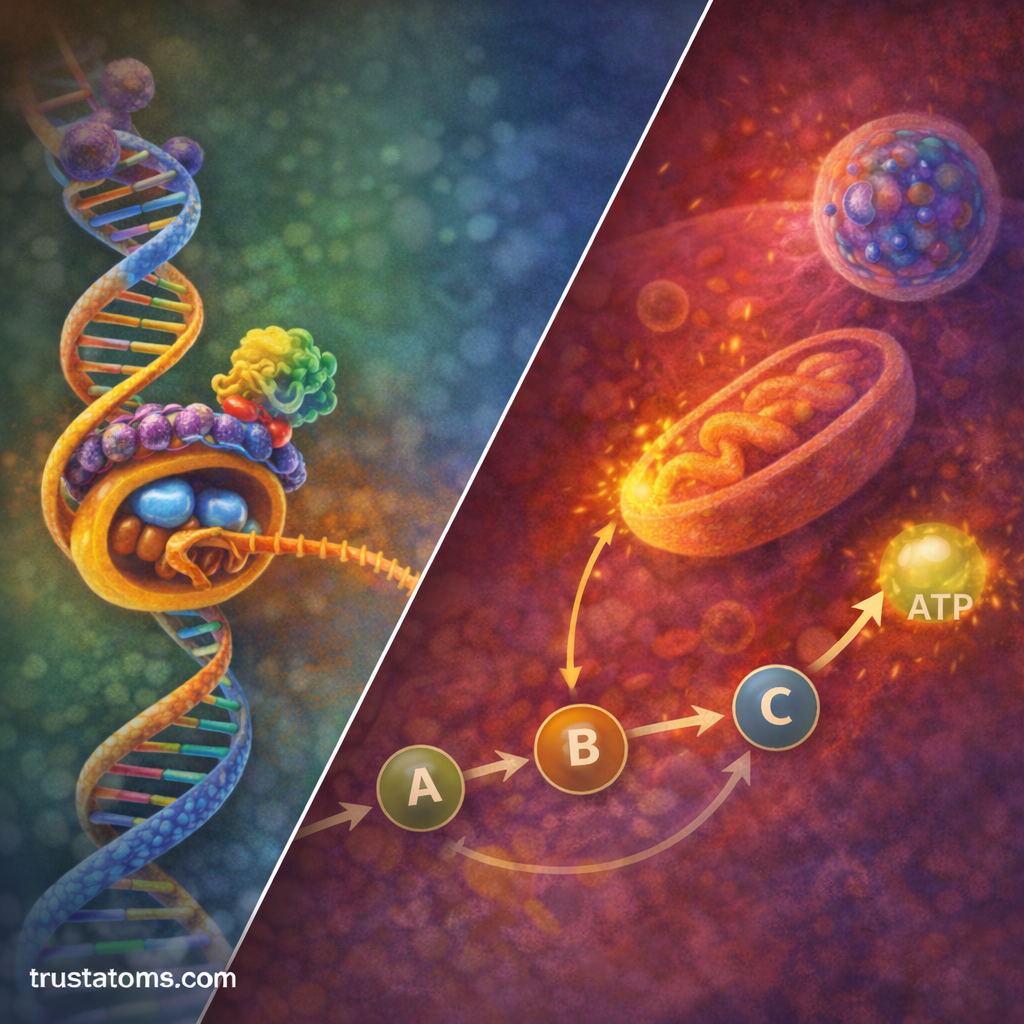
Cells often organize metabolic pathways within specific locations to improve efficiency and regulation.
Cytoplasmic Pathways
Many metabolic reactions occur in the cytoplasm, the fluid-filled interior of the cell.
Examples include:
- Glycolysis
- Some amino acid synthesis pathways
The cytoplasm provides a flexible environment where enzymes and substrates can easily interact.
Organelle-Based Pathways
In eukaryotic cells, some metabolic processes occur inside specialized organelles.
Examples include:
- Mitochondria, where cellular respiration generates ATP
- Chloroplasts, where photosynthesis occurs in plant cells
- Peroxisomes, involved in lipid metabolism and detoxification
Separating pathways into organelles helps prevent interference between different metabolic reactions.
Enzyme Complexes
In some cases, enzymes that perform sequential reactions assemble into multi-enzyme complexes.
These complexes allow intermediates to pass directly from one enzyme to the next, improving efficiency and reducing the risk of molecule loss.
This process is sometimes called substrate channeling.
Regulation of Metabolic Pathways
Metabolic pathways must adjust continuously to meet the changing needs of the cell.
Cells regulate pathways through several mechanisms.
Enzyme Regulation
Cells can adjust the activity of enzymes using:
- Allosteric regulation
- Feedback inhibition
- Covalent modification
These mechanisms allow rapid control of metabolic reactions.
Gene Expression
Cells can also regulate metabolism by controlling how much of an enzyme is produced.
If a pathway is needed frequently, the cell may increase production of the enzymes involved.
Hormonal Control
In multicellular organisms, hormones coordinate metabolism across different tissues.
Examples include:
- Insulin regulating glucose uptake
- Glucagon promoting glucose release
- Adrenaline mobilizing stored energy
Hormones allow the body to coordinate metabolic pathways on a system-wide level.
Pathway Integration in Cellular Metabolism
Metabolic pathways rarely operate independently. Instead, they form large interconnected networks.
A molecule produced in one pathway may become the starting material for another pathway.
For example:
- Glucose can be used in glycolysis, glycogen synthesis, or the pentose phosphate pathway.
- Amino acids can be used for protein synthesis or energy production.
- Fatty acids can be stored as lipids or used in energy metabolism.
This interconnected system allows cells to adjust metabolic flow depending on nutrient availability and energy demand.
Importance of Metabolic Pathway Organization
Proper organization of metabolic pathways is essential for life.
Without organized metabolic systems, cells would be unable to:
- Generate sufficient energy
- Produce vital biomolecules
- Respond to environmental changes
- Maintain chemical balance
Efficient metabolic organization ensures that cells function smoothly and that organisms can survive, grow, and reproduce.
Modern research in biochemistry and systems biology continues to explore how metabolic networks operate and how disruptions in these pathways contribute to diseases.
Understanding metabolic pathway organization provides critical insight into the molecular foundations of life.