Cells require a constant supply of energy to carry out essential biological functions. Activities such as muscle contraction, protein synthesis, active transport, and cellular repair all depend on energy stored in chemical bonds. One of the most important biological processes that supplies this energy is cellular respiration.
Cellular respiration is the process by which cells break down nutrients—primarily glucose—to produce ATP (adenosine triphosphate), the molecule that powers cellular work. This process occurs through a series of carefully organized metabolic pathways, each responsible for extracting energy from glucose step by step.
Understanding these pathways helps explain how organisms convert food into usable cellular energy.
What Is Cellular Respiration?
Cellular respiration is a metabolic process that converts the chemical energy stored in glucose into ATP. It occurs in nearly all living organisms, including plants, animals, fungi, and many microorganisms.
The process involves a sequence of reactions that gradually release energy rather than releasing it all at once. This controlled energy release allows cells to capture energy efficiently.
The overall process involves:
- Breaking down glucose molecules
- Transferring electrons to energy carriers
- Producing ATP through chemical reactions
- Releasing carbon dioxide and water as byproducts
Cellular respiration takes place across several interconnected metabolic pathways inside the cell.
Overview of the Major Metabolic Pathways
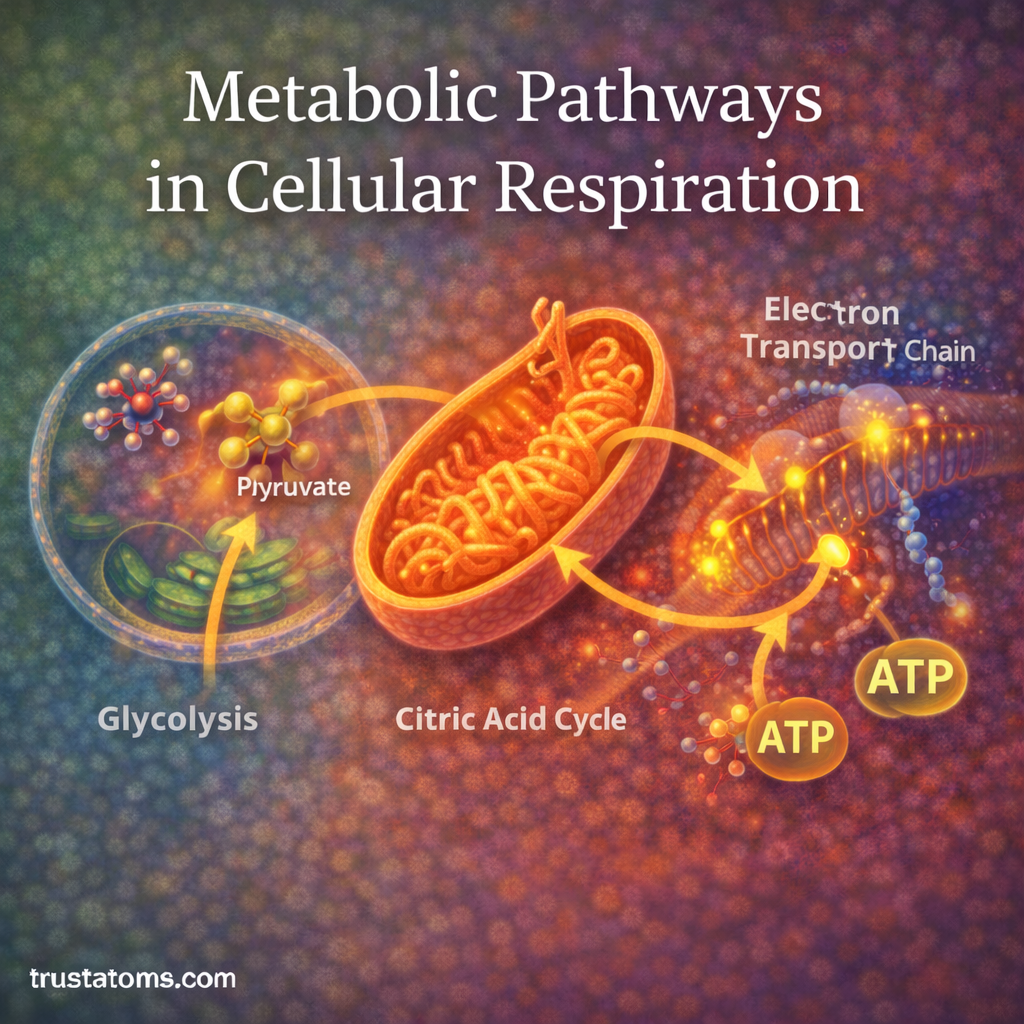
Cellular respiration is typically divided into three main metabolic stages:
- Glycolysis
- The citric acid cycle
- The electron transport chain
Each stage occurs in a specific part of the cell and contributes to the gradual extraction of energy from glucose.
Together, these pathways allow cells to maximize energy production from nutrients.
Glycolysis: The First Step of Energy Extraction
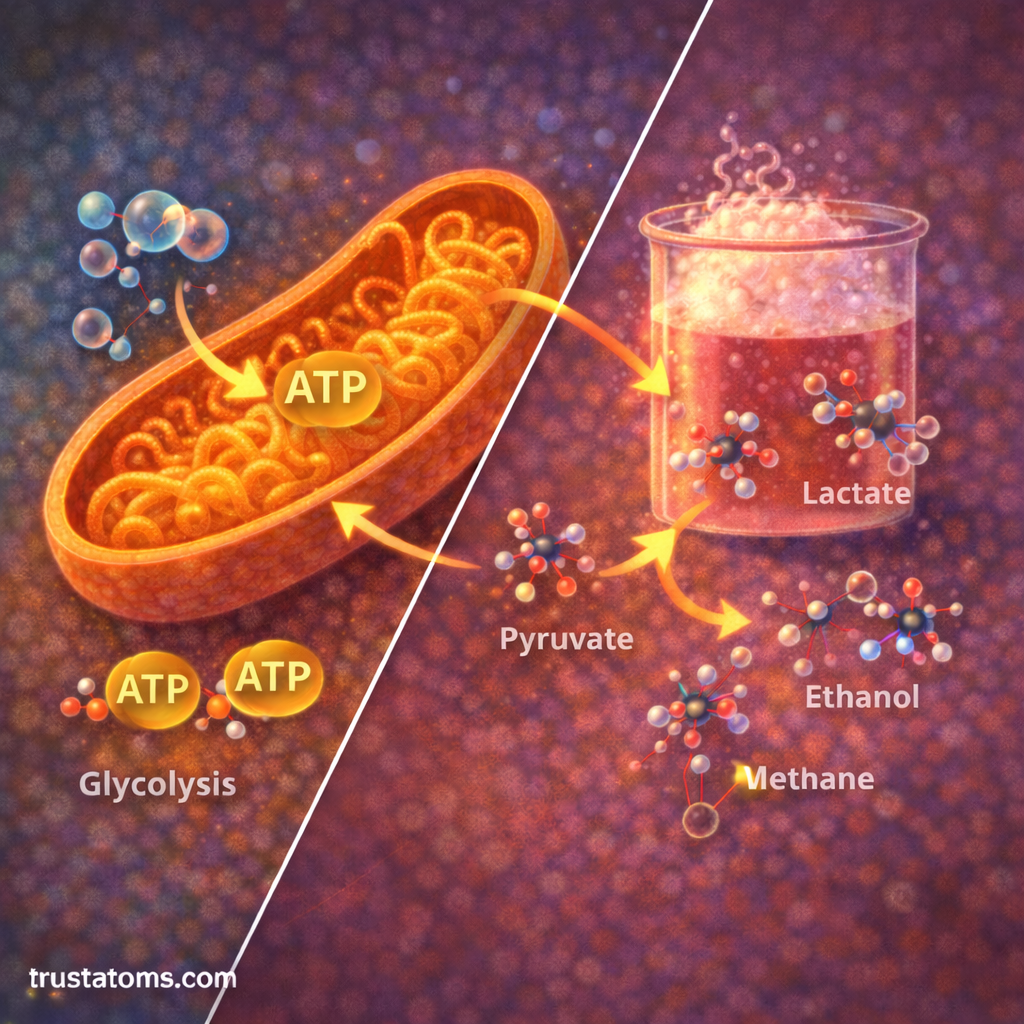
Glycolysis is the first metabolic pathway in cellular respiration and occurs in the cytoplasm of the cell.
During glycolysis, a six-carbon glucose molecule is broken down into two three-carbon molecules called pyruvate.
Key features of glycolysis
- Occurs in the cytoplasm
- Does not require oxygen
- Produces a small amount of ATP
- Generates electron carriers used in later stages
What glycolysis produces
At the end of glycolysis, the cell has generated:
- 2 molecules of pyruvate
- 2 molecules of ATP (net gain)
- 2 molecules of NADH
Although glycolysis produces only a small amount of ATP, it is essential because it prepares molecules for the next stages of cellular respiration.
Pyruvate Processing: Preparing for the Next Stage
Before entering the next major pathway, pyruvate molecules undergo a transition step inside the mitochondria.
During this step:
- Pyruvate is converted into acetyl-CoA
- Carbon dioxide is released
- Additional NADH molecules are produced
This process connects glycolysis to the citric acid cycle.
The Citric Acid Cycle (Krebs Cycle)
The citric acid cycle occurs in the mitochondrial matrix, the innermost compartment of the mitochondria.
This pathway completes the breakdown of glucose by oxidizing acetyl-CoA molecules.
Key roles of the citric acid cycle
The cycle:
- Releases carbon dioxide as a waste product
- Produces electron carriers (NADH and FADH₂)
- Generates a small amount of ATP
Products of the citric acid cycle
For each glucose molecule, the cycle produces:
- 2 ATP
- 6 NADH
- 2 FADH₂
- Carbon dioxide
Most of the energy extracted during this stage is stored in the electron carriers NADH and FADH₂, which will power the final stage of cellular respiration.
The Electron Transport Chain
The electron transport chain (ETC) is the final and most productive stage of cellular respiration.
It takes place in the inner membrane of the mitochondria.
In this stage, electrons carried by NADH and FADH₂ move through a series of protein complexes embedded in the membrane.
How the process works
- Electrons move through the protein complexes.
- Energy released from these transfers pumps protons across the membrane.
- A proton gradient forms across the membrane.
- Protons flow back through an enzyme called ATP synthase.
- ATP is produced as protons move through the enzyme.
This process is known as oxidative phosphorylation.
ATP production
The electron transport chain produces the majority of ATP generated during cellular respiration.
In many cells, this stage generates approximately 28 to 34 ATP molecules per glucose molecule.
The Role of Oxygen in Cellular Respiration
Oxygen plays a critical role in the final stage of cellular respiration.
At the end of the electron transport chain:
- Oxygen accepts electrons
- Oxygen combines with hydrogen ions
- Water is formed as a byproduct
Without oxygen, electrons would accumulate in the chain, and ATP production would stop.
This is why cellular respiration is often described as an aerobic process, meaning it requires oxygen.
Energy Yield of Cellular Respiration
When all stages of cellular respiration are combined, the total ATP production from one glucose molecule can reach approximately:
- 30 to 38 ATP molecules, depending on cell type and conditions.
Approximate contributions from each stage:
- Glycolysis: 2 ATP
- Citric acid cycle: 2 ATP
- Electron transport chain: 26–34 ATP
This efficient energy extraction allows organisms to power numerous biological processes.
Regulation of Cellular Respiration
Cells carefully regulate metabolic pathways to match energy production with energy demand.
Key enzymes in cellular respiration respond to cellular conditions such as:
- ATP levels
- ADP levels
- Availability of oxygen
- Availability of glucose
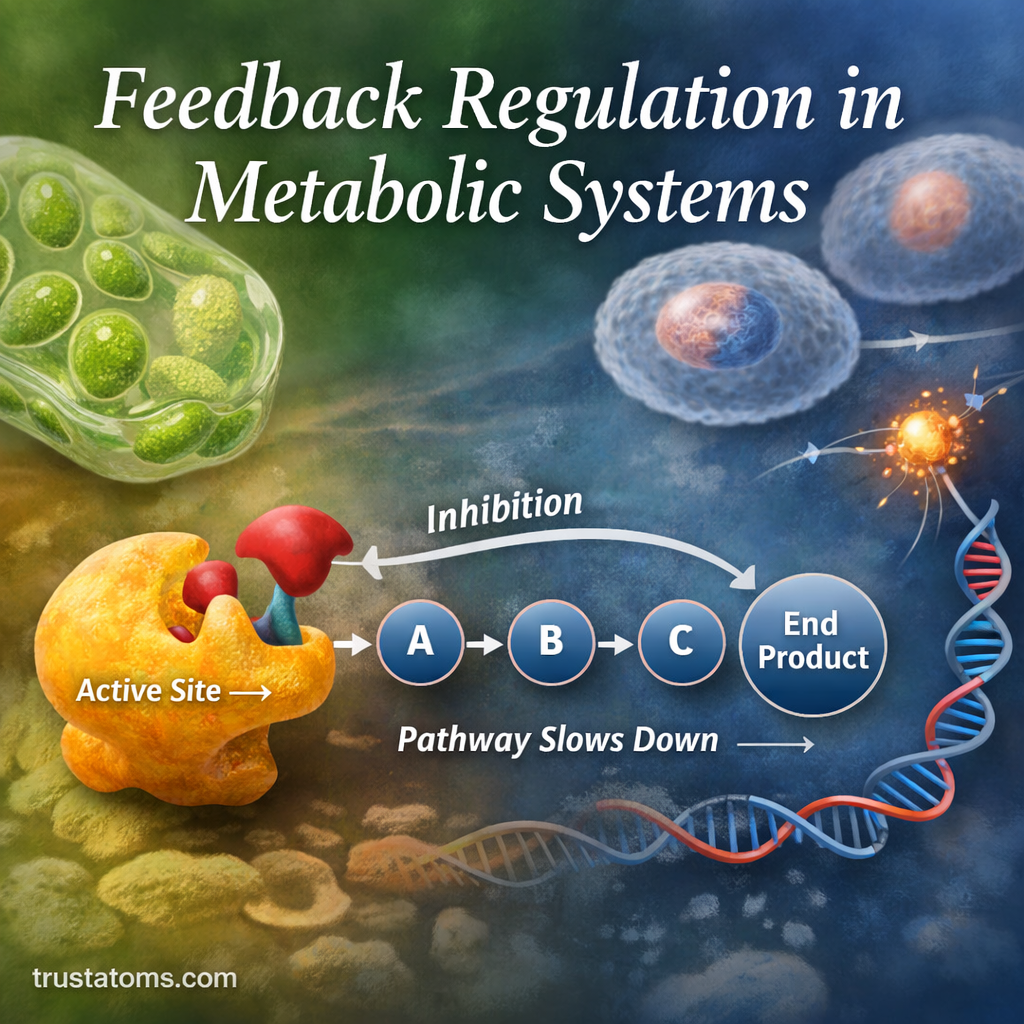
When ATP levels are high, cellular respiration slows down. When ATP levels drop, the pathways accelerate to produce more energy.
This feedback regulation helps maintain cellular energy balance.
Why Metabolic Pathways Are Important
Metabolic pathways allow cells to extract energy in a controlled and efficient manner.
Without these organized biochemical routes, cells would not be able to:
- Generate enough ATP to survive
- Regulate energy release properly
- Maintain stable internal conditions
- Support complex biological activities
The organization of cellular respiration into multiple pathways ensures that energy is captured gradually and used effectively.
Final Thoughts
Metabolic pathways in cellular respiration form one of the most important energy systems in biology. Through glycolysis, the citric acid cycle, and the electron transport chain, cells convert glucose into ATP—the energy source that powers life.
These pathways demonstrate how cells efficiently manage energy production, allowing organisms to grow, move, and maintain their internal balance.
By understanding the metabolic steps of cellular respiration, scientists gain insight into how energy flows through living systems and supports the complex processes that sustain life.