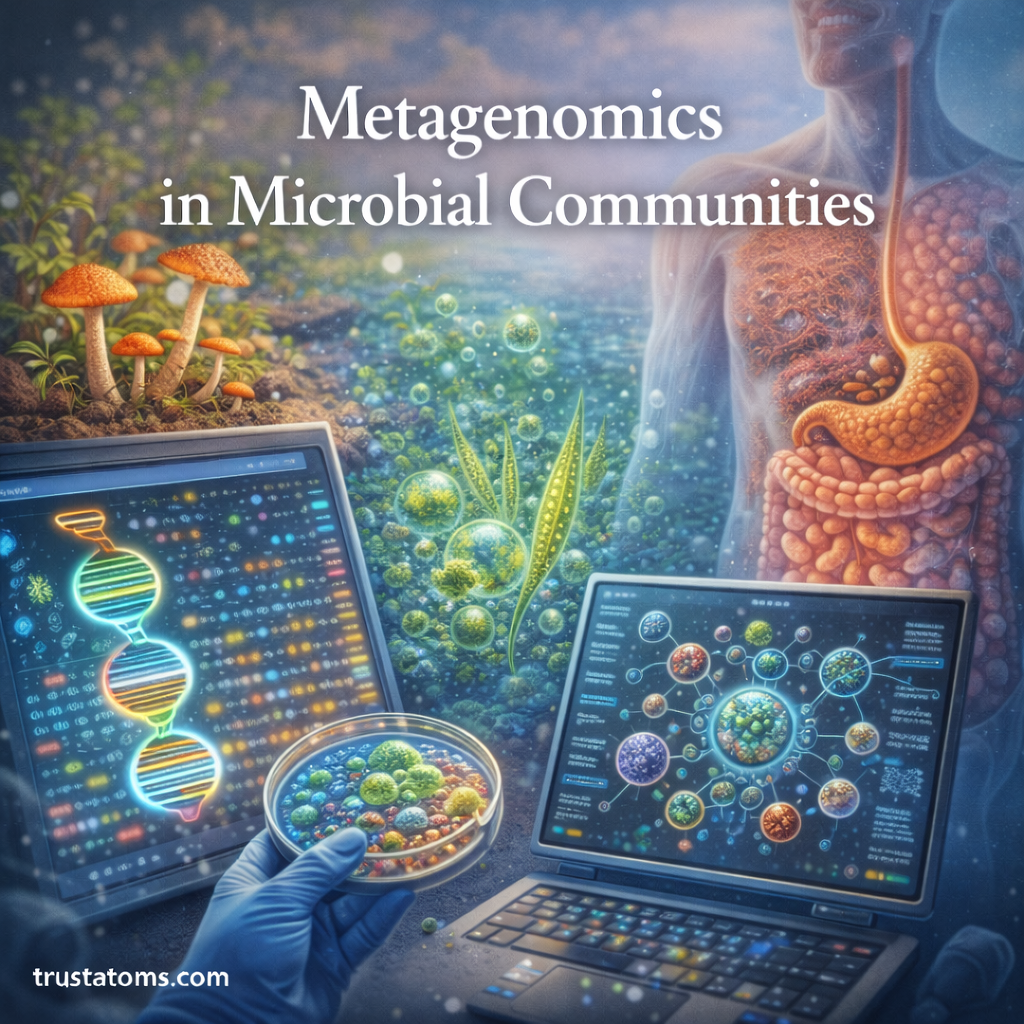
Metagenomics is a powerful scientific approach used to study the genetic material of entire microbial communities directly from environmental samples. Instead of isolating and growing individual microorganisms in a laboratory, metagenomics analyzes all the DNA present in a sample, allowing scientists to understand the diversity and function of microbes living together in complex ecosystems.
This approach has transformed microbiology and environmental science by revealing the vast number of microorganisms that cannot easily be cultured using traditional laboratory techniques.
What Is Metagenomics?
Metagenomics is the study of genetic material recovered directly from environmental samples.
Rather than focusing on a single organism, metagenomics examines the combined genomes of many microorganisms living within a community.
This genetic collection is often called a metagenome.
Samples used in metagenomic studies may come from environments such as:
- Soil
- Ocean water
- Freshwater lakes
- Human gut microbiomes
- Plant root systems
- Extreme environments like hot springs
By sequencing and analyzing DNA from these environments, scientists can identify organisms and understand their biological functions.
Why Metagenomics Is Important
Many microbes cannot be grown in laboratory cultures using traditional microbiological methods. In fact, scientists estimate that over 90% of microbial species are difficult or impossible to culture.
Metagenomics solves this problem by allowing researchers to study microbes without needing to grow them first.
This method helps scientists:
- Discover previously unknown microorganisms
- Understand microbial community structure
- Identify metabolic pathways
- Study microbial interactions in ecosystems
- Track environmental and health-related microbial changes
As a result, metagenomics has become a key tool in modern microbiology.
How Metagenomics Works
Metagenomic research typically follows several steps.
1. Environmental Sample Collection
Scientists collect samples from natural environments such as soil, water, or biological tissues.
These samples contain thousands or even millions of microorganisms.
2. DNA Extraction
Next, researchers extract all the DNA from the sample. This DNA includes genetic material from many different species within the microbial community.
3. DNA Sequencing
The extracted DNA is sequenced using advanced technologies such as next-generation sequencing (NGS).
Sequencing produces large datasets containing fragments of genetic information from many organisms.
4. Bioinformatics Analysis
Specialized computational tools analyze the sequencing data.
These analyses allow scientists to:
- Identify microbial species
- Reconstruct genomes
- Detect genes involved in metabolism
- Study microbial interactions
Bioinformatics plays a critical role in interpreting metagenomic data.
Types of Metagenomic Approaches

Researchers use different strategies depending on their scientific goals.
Shotgun Metagenomics
Shotgun metagenomics sequences all DNA present in a sample.
This approach provides detailed information about:
- Microbial diversity
- Gene functions
- Metabolic pathways
Because it captures large amounts of genetic data, shotgun sequencing offers a comprehensive view of microbial ecosystems.
Marker Gene Sequencing
Another approach focuses on sequencing specific genes used to identify microbial species.
A common example is sequencing the 16S ribosomal RNA gene, which is widely used to identify bacteria.
Marker gene sequencing helps researchers:
- Classify microbial species
- Estimate community composition
- Compare microbial populations across environments
Microbial Communities Studied with Metagenomics
Metagenomics has expanded our understanding of microbial communities in many environments.
Soil Microbial Communities
Soil contains one of the most complex microbial ecosystems on Earth.
Metagenomic studies have revealed:
- Thousands of microbial species in a single gram of soil
- Microbes involved in nutrient cycling
- Bacteria that promote plant growth
Understanding soil microbes is important for agriculture and ecosystem management.
Ocean Microbiomes
Marine microbes play essential roles in global ecosystems.
They contribute to:
- Carbon cycling
- Oxygen production
- Marine food webs
Metagenomics has revealed vast microbial diversity in ocean environments, many species of which were previously unknown.
Human Microbiome
Metagenomics is widely used to study the human microbiome, the collection of microbes living in and on the human body.
These microbes influence:
- Digestion
- Immune system function
- Metabolism
- Disease susceptibility
Research into the human microbiome has opened new areas of medicine and health science.
Applications of Metagenomics
Metagenomics has applications across many scientific and industrial fields.
Environmental Monitoring
Scientists use metagenomics to monitor microbial communities in ecosystems and detect environmental changes.
Examples include:
- Tracking pollution impacts
- Monitoring water quality
- Studying climate-related ecosystem shifts
Medicine and Health
Metagenomics helps researchers understand how microbial communities influence human health.
Applications include:
- Identifying disease-causing microbes
- Studying gut microbiome imbalances
- Discovering new antibiotics
Biotechnology
Metagenomic studies can uncover useful genes from microbes that produce valuable enzymes and biochemical compounds.
These discoveries can support industries such as:
- Pharmaceuticals
- Biofuel production
- Industrial enzyme manufacturing
Challenges in Metagenomics
Despite its advantages, metagenomics also presents several challenges.
Common difficulties include:
- Managing large volumes of sequencing data
- Interpreting complex microbial interactions
- Distinguishing closely related species
- High computational demands
Advances in sequencing technology and bioinformatics continue to improve these challenges.
The Future of Metagenomics
Metagenomics continues to grow rapidly as technology advances.
Future developments may allow scientists to:
- Discover millions of new microbial species
- Better understand global microbial ecosystems
- Improve medical diagnostics
- Develop new biotechnological innovations
As sequencing becomes faster and more affordable, metagenomics will play an even larger role in biological research.
Final Thoughts
Metagenomics has revolutionized the study of microbial communities by allowing scientists to analyze genetic material directly from environmental samples. This approach reveals the immense diversity and complexity of microorganisms that shape ecosystems, influence human health, and drive many biological processes.
By continuing to explore microbial genomes at the community level, researchers are gaining deeper insights into the hidden world of microbes and their vital roles in sustaining life on Earth.