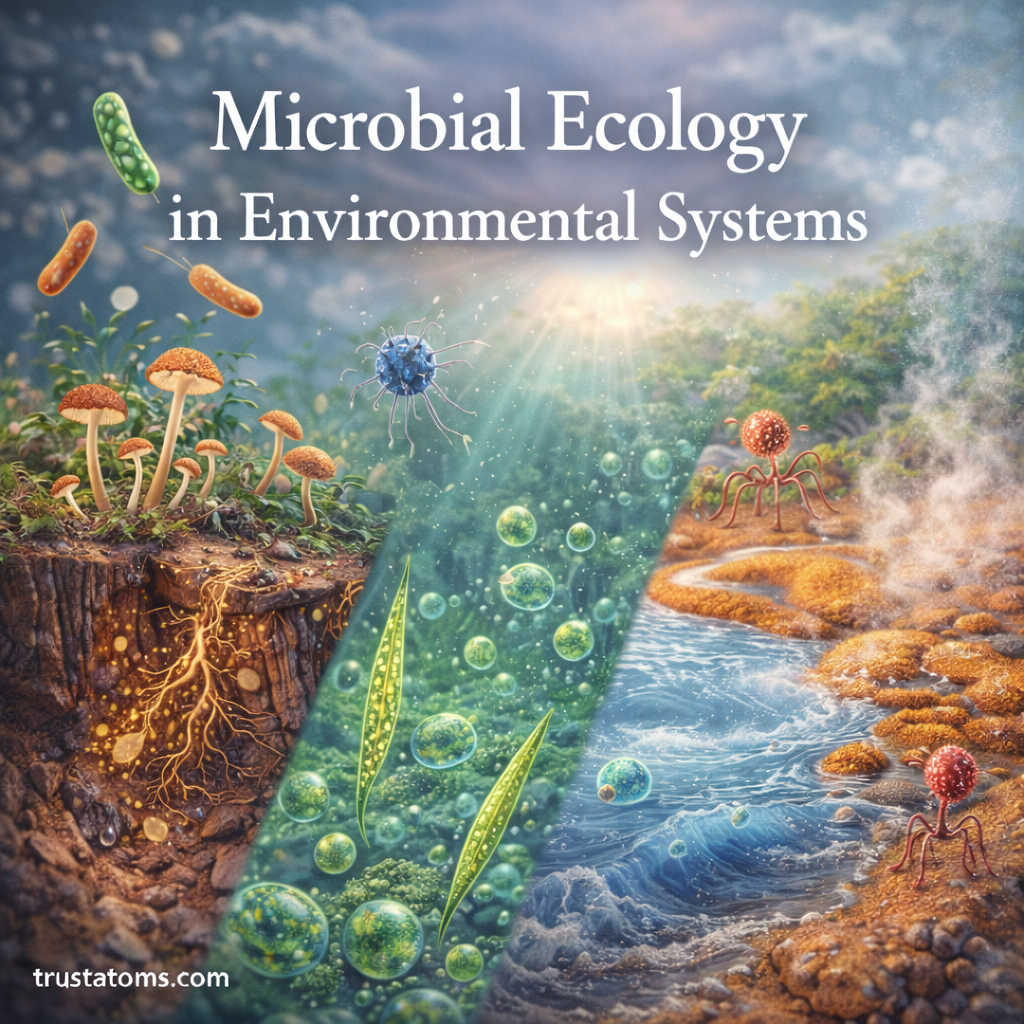
Microbial ecology is the study of how microorganisms interact with each other and with their surrounding environments. In environmental systems, microbes play critical roles in nutrient cycling, ecosystem stability, and energy flow. These microscopic organisms—such as bacteria, fungi, protists, and some viruses—are essential for maintaining the balance of natural ecosystems.
Microbes exist in almost every environment on Earth, including soil, oceans, freshwater systems, extreme environments, and even within living organisms. By studying microbial ecology, scientists gain insight into how ecosystems function and how environmental changes affect microbial communities.
What Is Microbial Ecology?
Microbial ecology is a branch of biology that examines the relationships between microorganisms and their environments.
It focuses on how microbes:
- Interact with other organisms
- Influence environmental processes
- Adapt to different habitats
- Contribute to ecosystem functions
Because microbes are extremely abundant and diverse, they have a major influence on biological and chemical processes across the planet.
Microorganisms in Environmental Systems
Microorganisms are present in nearly all environmental systems.
Major microbial groups involved in ecological processes include:
- Bacteria – highly diverse microbes involved in decomposition and nutrient cycling
- Archaea – microorganisms often found in extreme environments
- Fungi – decomposers that break down organic matter
- Protists – microorganisms that regulate microbial populations
- Viruses – agents that influence microbial populations and gene transfer
These organisms form complex networks that drive ecosystem processes.
Microbial Habitats
Microbes occupy a wide range of environments, each with unique ecological conditions.
Soil Ecosystems
Soil is one of the most microbially diverse environments on Earth.
Microorganisms in soil:
- Decompose organic matter
- Recycle nutrients such as nitrogen and phosphorus
- Support plant growth
- Improve soil structure
Soil microbial communities are essential for agriculture and ecosystem productivity.
Aquatic Ecosystems
Microbial life in aquatic environments plays a major role in global nutrient cycles.
Examples of aquatic microbial activities include:
- Photosynthesis by algae and cyanobacteria
- Decomposition of organic matter
- Recycling nutrients in oceans and freshwater systems
Marine microbes also help regulate the Earth’s climate by influencing carbon cycling.
Extreme Environments
Some microorganisms live in environments that would be hostile to most life forms.
These environments include:
- Hot springs
- Deep-sea hydrothermal vents
- Highly acidic lakes
- Extremely salty environments
Microbes that survive in these conditions are known as extremophiles and help scientists understand the limits of life on Earth.
Microbial Interactions
Microorganisms interact with each other and with other organisms in many ways.
Mutualism
Mutualism occurs when both organisms benefit from the relationship.
Examples include:
- Microbes living in animal digestive systems that aid digestion
- Mycorrhizal fungi that help plants absorb nutrients
These relationships support ecosystem productivity.
Commensalism
In commensal relationships, one organism benefits while the other is neither helped nor harmed.
Many microbes live on surfaces such as plant leaves or animal skin without affecting their hosts.
Parasitism
Some microbes act as parasites and benefit at the expense of another organism.
Examples include microorganisms that cause diseases in plants, animals, or humans.
These interactions influence population dynamics and ecosystem balance.
Nutrient Cycling and Microbial Activity
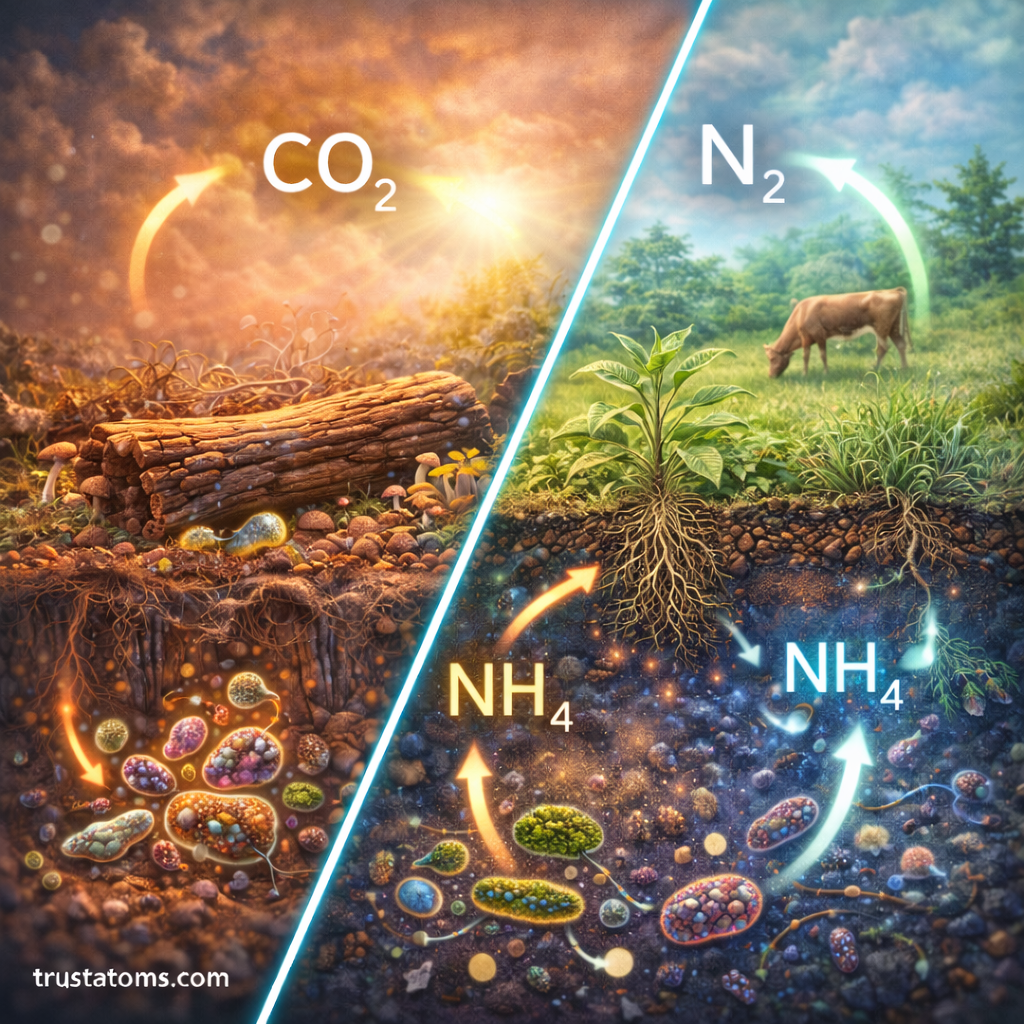
Microbes are key drivers of biogeochemical cycles, which move nutrients through ecosystems.
Important cycles influenced by microbes include:
- Carbon cycle
- Nitrogen cycle
- Sulfur cycle
- Phosphorus cycle
Carbon Cycling
Microorganisms break down organic matter and release carbon dioxide back into the atmosphere.
Photosynthetic microbes also help capture carbon during photosynthesis.
Nitrogen Cycling
Nitrogen is essential for life, but most organisms cannot use atmospheric nitrogen directly.
Microbes play several important roles in the nitrogen cycle:
- Nitrogen fixation – converting atmospheric nitrogen into usable forms
- Nitrification – converting ammonia into nitrates
- Denitrification – returning nitrogen to the atmosphere
These processes maintain the balance of nitrogen in ecosystems.
Microbial Communities
Microorganisms rarely live alone. Instead, they form complex microbial communities.
These communities can exist in environments such as:
- Soil ecosystems
- Ocean water
- Freshwater lakes
- Animal microbiomes
- Plant root systems
Within these communities, microbes exchange nutrients, compete for resources, and influence each other’s growth.
Human Impact on Microbial Ecology
Human activities can significantly influence microbial ecosystems.
Examples include:
- Pollution altering microbial communities
- Agricultural practices affecting soil microbes
- Climate change influencing microbial activity
- Wastewater treatment relying on microbial processes
Changes in microbial communities can affect ecosystem stability and environmental health.
Applications of Microbial Ecology
Understanding microbial ecology has many practical applications.
Environmental Restoration
Microbes can help clean polluted environments through processes such as bioremediation, where microorganisms break down harmful substances.
Agriculture
Healthy microbial communities improve soil fertility and plant growth.
Farmers and scientists often study soil microbes to develop sustainable farming practices.
Climate Science
Microbial processes influence greenhouse gas production and carbon storage.
Studying microbial ecology helps scientists better understand climate systems.
Why Microbial Ecology Matters
Microbial ecology reveals how microscopic organisms shape the natural world. Although microbes are invisible to the naked eye, they control many environmental processes that support life on Earth.
By studying microbial ecosystems, scientists can better understand environmental health, improve agricultural systems, and develop solutions for global environmental challenges.
Final Thoughts
Microbial ecology is essential for understanding how environmental systems function. Microorganisms drive nutrient cycles, support plant and animal life, and maintain ecosystem balance.
As research continues, microbial ecology will remain a key field for addressing environmental issues such as climate change, soil health, and ecosystem restoration.