Genomes are not static blueprints. While many people think of genetic differences as small changes in DNA letters (mutations), large-scale alterations also play a major role in shaping organisms. These larger changes are known as structural variations (SVs)—significant rearrangements of DNA segments within or between chromosomes.
Structural variations can affect thousands to millions of DNA base pairs and often have a greater biological impact than single nucleotide mutations. They influence evolution, genetic diversity, disease susceptibility, and how genes function inside cells.
Understanding structural variation has become increasingly important in modern biology, especially with advances in genome sequencing technologies that allow scientists to detect complex genomic rearrangements across populations.
What Are Structural Variations?
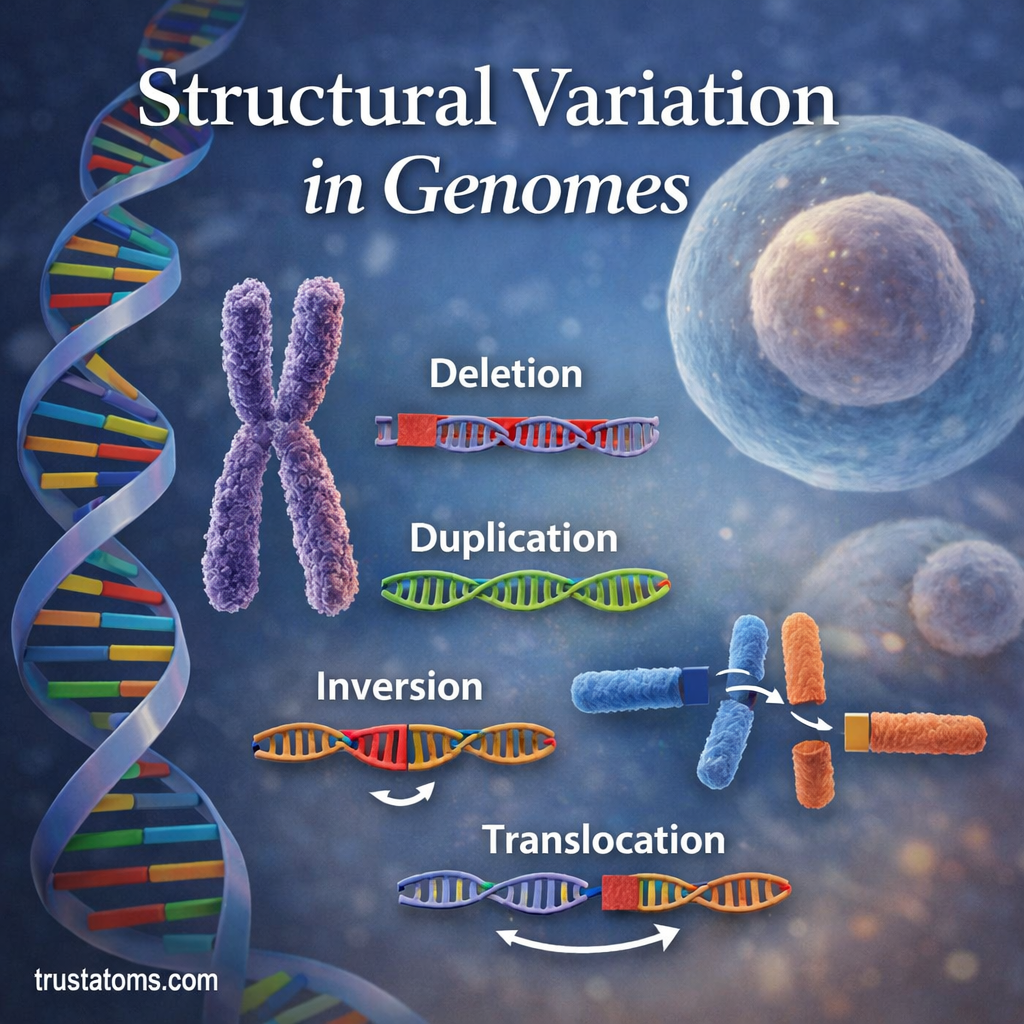
Structural variations are large alterations in the structure of chromosomes or genomic DNA segments. Instead of altering just one nucleotide, these variations involve sections of DNA that may be duplicated, deleted, inverted, or moved to another location.
In general, structural variations involve DNA segments larger than about 50 base pairs, though many are much larger.
Common characteristics of structural variations include:
- Changes in chromosome structure
- Rearrangement of genomic regions
- Gains or losses of genetic material
- Altered gene regulation or expression
Because chromosomes organize DNA into compact structures inside the cell nucleus, structural rearrangements can significantly influence how genes interact and function within the genome.
Major Types of Structural Variation
Structural variation occurs in several forms depending on how DNA segments are rearranged.
1. Deletions
A deletion occurs when a segment of DNA is removed from the genome.
Effects may include:
- Loss of important genes
- Reduced gene dosage
- Disrupted gene regulation
Example impacts:
- Genetic disorders caused by missing genes
- Developmental abnormalities
- Increased disease susceptibility
Some deletions are small and harmless, while others remove entire gene clusters.
2. Duplications
A duplication occurs when a segment of DNA is copied one or more times.
Consequences can include:
- Increased gene expression
- Gene family expansion
- Evolution of new gene functions
Duplications play an important role in evolution because duplicated genes can mutate over time and develop new biological roles.
Examples include:
- Expansion of immune-related genes
- Development of new metabolic pathways
- Adaptation to environmental pressures
3. Inversions
An inversion happens when a DNA segment breaks off, flips around, and reinserts itself in the opposite orientation.
There are two main types:
- Paracentric inversions – do not include the centromere
- Pericentric inversions – include the centromere
Possible effects:
- Disruption of gene sequences
- Altered gene regulation
- Reduced recombination during meiosis
Inversions can persist in populations because they often suppress genetic recombination in the affected region.
4. Translocations
A translocation occurs when DNA segments move from one chromosome to another.
Two common types include:
Reciprocal translocations
- Two chromosomes exchange segments.
Robertsonian translocations
- Two acrocentric chromosomes fuse together.
Translocations can:
- Create novel gene combinations
- Disrupt gene function
- Contribute to certain cancers
A well-known example is the Philadelphia chromosome, a translocation linked to chronic myelogenous leukemia.
5. Copy Number Variations (CNVs)
Copy number variations are one of the most widely studied structural variations.
They involve differences in the number of copies of specific DNA segments among individuals.
CNVs can include:
- Duplications
- Deletions
- Multi-copy gene expansions
These variations influence traits such as:
- Immune system strength
- Metabolic efficiency
- Brain development
Many CNVs are harmless, but some are associated with neurological and developmental conditions.
How Structural Variations Form
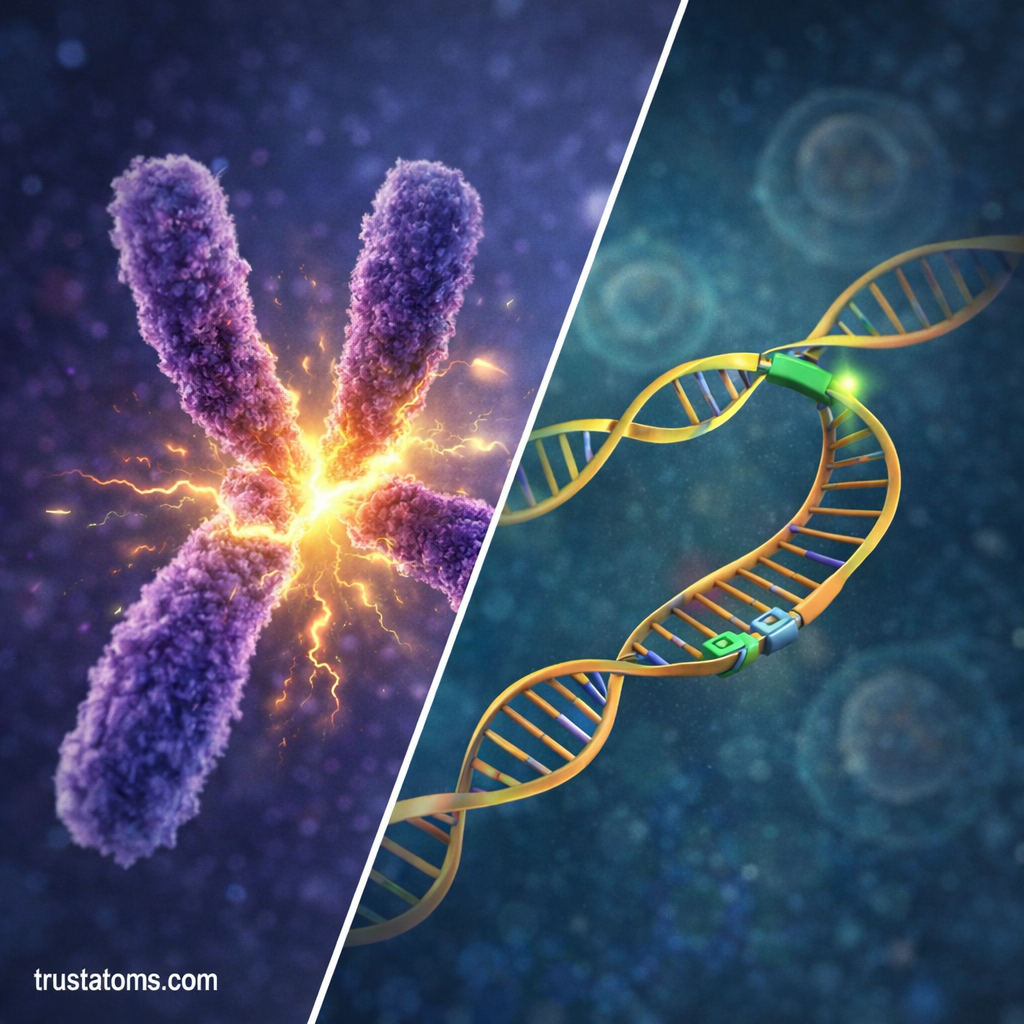
Structural variations arise through several biological mechanisms.
DNA Replication Errors
During cell division, DNA replication may accidentally duplicate or omit segments.
Common mechanisms include:
- Replication slippage
- Template switching
- Fork stalling during replication
DNA Repair Processes
Cells constantly repair DNA damage. However, repair mechanisms sometimes reconnect DNA incorrectly.
Key processes involved:
- Non-homologous end joining (NHEJ)
- Homologous recombination
- Microhomology-mediated repair
These errors can result in deletions, insertions, or rearrangements.
Repetitive DNA Sequences
Many genomes contain repetitive sequences such as:
- Transposable elements
- Satellite DNA
- Segmental duplications
These repeated sequences can misalign during recombination, leading to structural rearrangements.
Structural Variation and Human Genetic Diversity
Structural variations contribute significantly to genetic differences between individuals.
Studies suggest that structural variations account for more genomic variation than single nucleotide mutations when measured by total DNA length affected.
Examples of traits influenced by structural variation include:
- Drug metabolism
- Immune response
- Sensory perception
- Height and body composition
Large genomic datasets have shown that most humans carry thousands of structural variants in their genomes.
Most of these variants are harmless and represent normal genetic diversity.
Structural Variation and Disease
While many structural variations are benign, others can disrupt important genes and cause disease.
Examples include:
Developmental Disorders
Some structural variations affect genes involved in brain development.
Examples:
- Autism spectrum disorders
- Intellectual disability
- Developmental delay
Cancer
Cancer genomes frequently contain large structural rearrangements.
These changes may:
- Activate oncogenes
- Disable tumor suppressor genes
- Create fusion genes
Genome instability is a hallmark of many cancers.
Genetic Syndromes
Certain inherited syndromes are caused by deletions or duplications of specific chromosomal regions.
Examples include:
- DiGeorge syndrome
- Charcot–Marie–Tooth disease
- Williams syndrome
These conditions arise when structural variation alters the dosage of critical genes.
How Scientists Detect Structural Variation
Detecting structural variation was once difficult because traditional DNA sequencing focused on small mutations.
Modern genomic technologies now allow researchers to identify large genomic rearrangements more accurately.
Common detection methods include:
Whole Genome Sequencing
Advanced sequencing technologies analyze entire genomes and detect:
- Large deletions
- Duplications
- Translocations
- Complex rearrangements
Comparative Genomic Hybridization
This technique compares DNA samples to identify differences in copy number across the genome.
Long-Read Sequencing
New sequencing methods (such as nanopore and PacBio sequencing) read long DNA fragments, making it easier to detect complex structural variants.
These technologies are rapidly expanding our understanding of genome architecture.
Structural Variation and Evolution
Structural variation has played a major role in evolutionary history.
Some evolutionary impacts include:
- Creation of new gene families
- Chromosome rearrangements between species
- Adaptation to environmental changes
For example, gene duplications have helped organisms develop:
- Improved immune systems
- Specialized sensory abilities
- Novel metabolic pathways
Structural variations can therefore drive both short-term adaptation and long-term evolutionary change.
Why Structural Variation Matters in Modern Biology
Understanding structural variation is essential in many scientific fields.
Key areas of importance include:
- Medical genetics – diagnosing genetic diseases
- Cancer research – understanding tumor genomes
- Evolutionary biology – studying species divergence
- Population genetics – analyzing genomic diversity
- Personalized medicine – predicting treatment responses
As genome sequencing becomes faster and more affordable, scientists are uncovering thousands of new structural variants that shape biology.
These discoveries continue to transform how researchers understand the complexity of genomes.
Final Thoughts
Structural variation represents one of the most powerful forces shaping genomes. By rearranging large segments of DNA, these variations influence gene function, genetic diversity, disease risk, and evolutionary change.
Although once difficult to detect, modern genomic technologies now allow scientists to explore structural variation in unprecedented detail. As research advances, structural variation will remain central to understanding how genomes evolve and how genetic differences influence the biology of life.