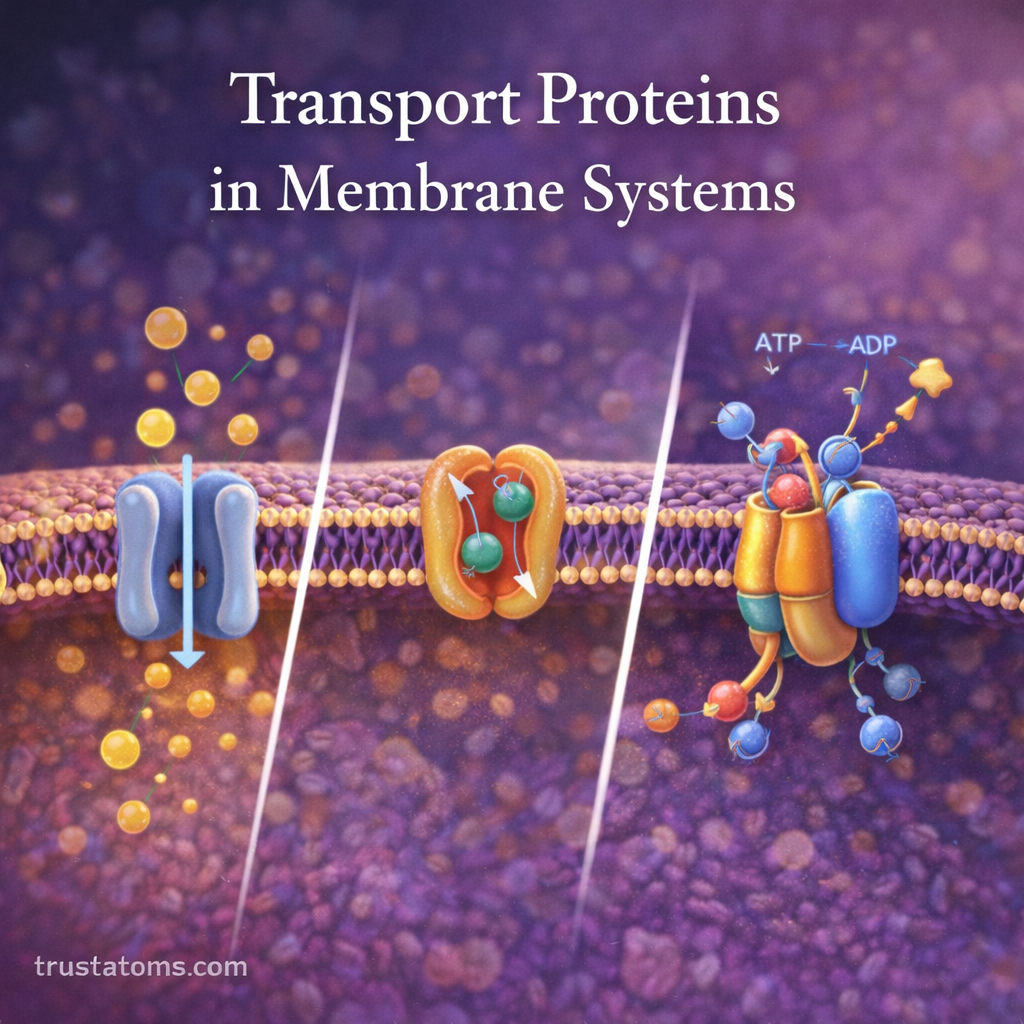
Cells rely on carefully controlled systems to move molecules across their membranes. While some substances can pass directly through the lipid bilayer, many molecules require specialized assistance. This is where transport proteins play a critical role.
Transport proteins are embedded within cellular membranes and allow specific molecules or ions to cross the membrane efficiently and selectively. These proteins help regulate nutrient uptake, waste removal, ion balance, and communication between cells.
Understanding transport proteins is essential in biology because they help explain how cells maintain internal stability and carry out complex physiological processes.
The Role of Membrane Transport Proteins
Cell membranes are composed mainly of phospholipids, which form a barrier between the inside of the cell and the external environment. However, this lipid barrier prevents many important molecules from crossing freely.
Transport proteins solve this problem by providing controlled pathways through the membrane.
Key roles of membrane transport proteins include:
- Moving nutrients into the cell
- Removing metabolic waste
- Maintaining ion concentrations
- Regulating water balance
- Supporting electrical activity in cells
- Facilitating communication between cells
These proteins are highly selective, meaning they typically allow only specific molecules or ions to pass.
Types of Transport Proteins
Transport proteins can be grouped into two major categories based on how they move substances across the membrane.
Channel Proteins
Channel proteins form open pathways that allow certain molecules or ions to pass through the membrane.
Key features of channel proteins include:
- Form hydrophilic pores across the membrane
- Allow rapid movement of ions or small molecules
- Usually operate through passive transport
- Often regulated by cellular signals
Many channel proteins open or close in response to stimuli such as voltage changes, chemical signals, or mechanical forces.
Examples include:
- Sodium channels
- Potassium channels
- Calcium channels
- Aquaporins (water channels)
These channels are especially important in nerve and muscle cells.
Carrier Proteins
Carrier proteins transport molecules by binding to them and changing shape.
Instead of forming an open pore, carrier proteins undergo conformational changes that move molecules from one side of the membrane to the other.
Characteristics include:
- Highly specific binding sites
- Slower transport compared to channels
- Ability to participate in both passive and active transport
Carrier proteins are commonly used to transport larger molecules such as glucose and amino acids.
Passive Transport Through Transport Proteins
Some transport proteins operate without requiring cellular energy. These proteins assist substances moving down their concentration gradient.
This type of movement is known as facilitated diffusion.
In facilitated diffusion:
- A molecule binds to a transport protein.
- The protein changes shape or allows passage through a channel.
- The molecule moves into the cell where its concentration is lower.
Examples include:
- Glucose transport through GLUT proteins
- Ion movement through channel proteins
- Water movement through aquaporins
Facilitated diffusion allows cells to efficiently move molecules that cannot cross the lipid membrane on their own.
Active Transport and Transport Proteins
Some molecules must be transported against their concentration gradient, moving from areas of low concentration to high concentration.
This process requires energy and is known as active transport.
Transport proteins involved in active transport are often called membrane pumps.
These pumps typically use ATP as an energy source.
Sodium-Potassium Pump
One of the most well-known transport proteins is the sodium-potassium pump.
This protein plays a vital role in maintaining ion balance and electrical activity in cells.
The pump works through the following cycle:
- Three sodium ions bind inside the cell.
- ATP provides energy for the pump.
- Sodium ions are transported outside the cell.
- Two potassium ions are transported into the cell.
This constant exchange helps maintain the electrical potential required for nerve impulses and muscle contractions.
Proton Pumps
Proton pumps move hydrogen ions across membranes.
These pumps are important in processes such as:
- Cellular respiration
- ATP production
- pH regulation
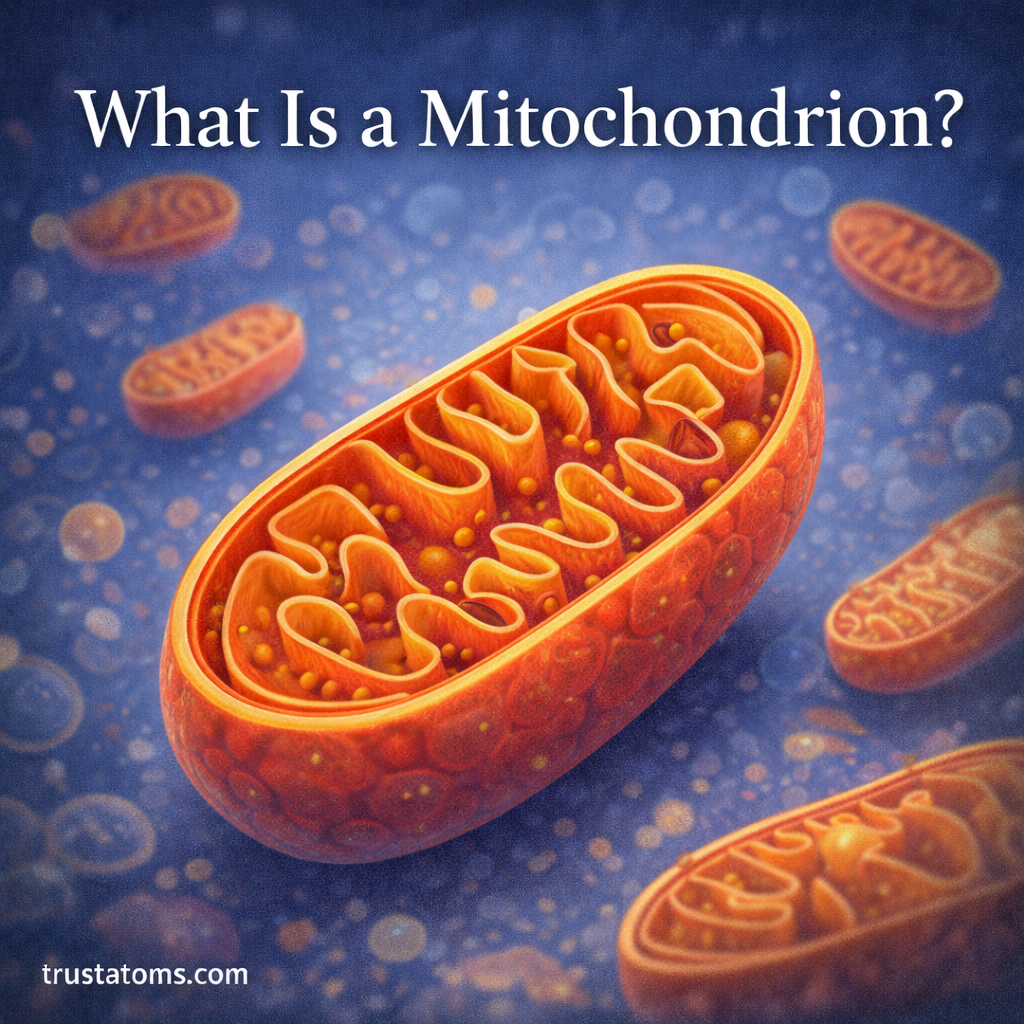
In mitochondria, proton pumps create a gradient that drives the production of ATP during oxidative phosphorylation.
Cotransport Systems
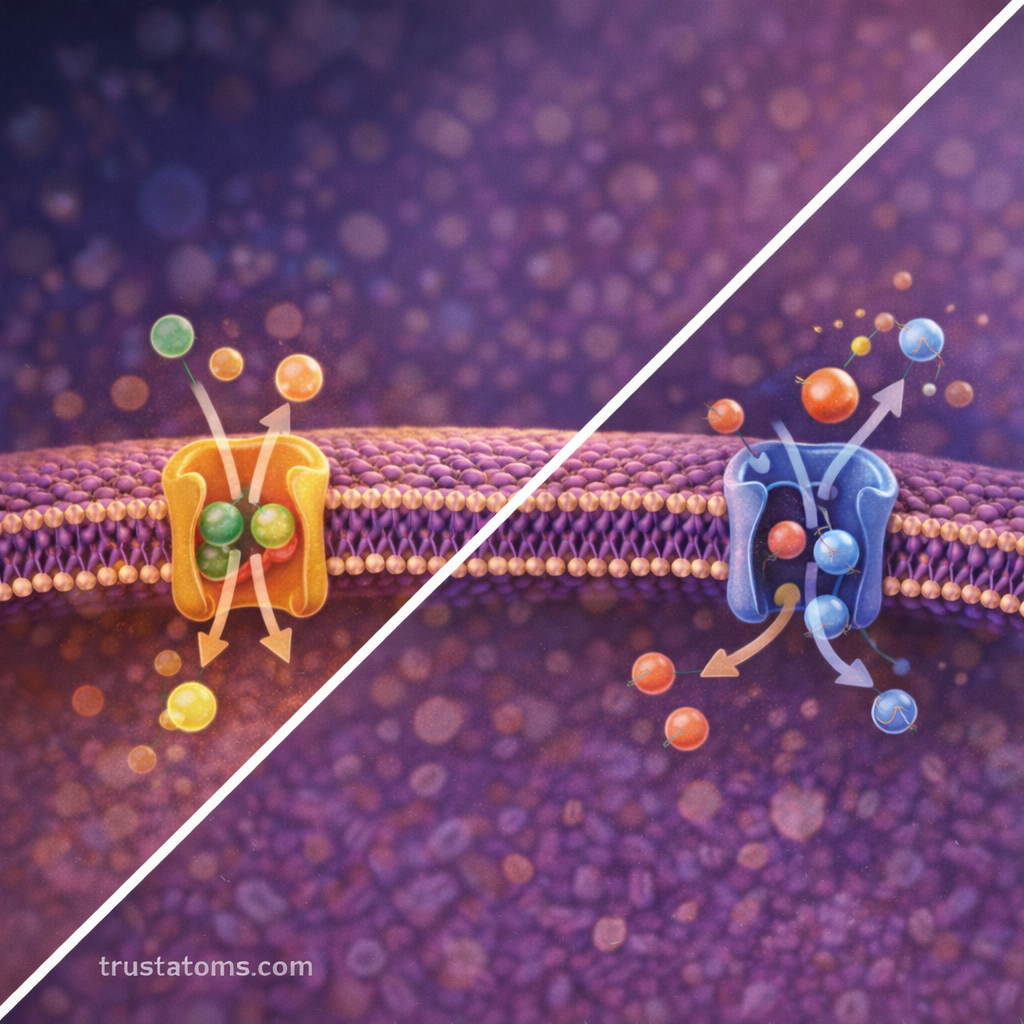
Some transport proteins move multiple molecules at the same time.
These systems are called cotransporters and often rely on ion gradients created by other pumps.
Two main types exist:
Symporters
Symporters move two substances in the same direction across the membrane.
Example:
- Sodium-glucose symporter transporting glucose into intestinal cells.
Antiporters
Antiporters move two substances in opposite directions.
Example:
- Sodium-calcium exchanger in heart cells.
These systems allow cells to efficiently move important molecules using existing energy gradients.
Transport Protein Regulation
Cells carefully regulate transport proteins to maintain internal balance.
Regulation can occur through several mechanisms:
- Opening or closing of channel proteins
- Changes in protein structure
- Chemical signaling pathways
- Phosphorylation of transport proteins
- Changes in gene expression
By controlling transport protein activity, cells can respond to environmental changes and metabolic demands.
Transport Proteins and Human Health
Transport proteins are essential to many physiological processes, and dysfunction in these systems can lead to disease.
Examples include:
- Cystic fibrosis, caused by malfunction of chloride channel proteins
- Diabetes, involving problems with glucose transport and insulin signaling
- Neurological disorders, related to ion channel dysfunction
- Kidney diseases, affecting transport of electrolytes and water
Because transport proteins play such a central role in cellular function, they are major targets in modern medical research and drug development.
Why Transport Proteins Matter in Biology
Transport proteins allow cells to carefully control what enters and leaves their internal environment.
Without these proteins:
- Essential nutrients could not enter cells efficiently
- Waste products would accumulate
- Ion balance would be disrupted
- Electrical signaling in nerves would fail
- Cellular metabolism would collapse
By regulating molecular movement across membranes, transport proteins ensure that cells function properly within complex biological systems.
For scientists studying biology, physiology, and medicine, these proteins provide critical insight into how life operates at the cellular level.