Cells constantly move materials from one location to another. While small molecules often pass through membranes using diffusion or ion channels, larger molecules require specialized transport mechanisms. One of the most important of these mechanisms is vesicle transport.
Vesicle transport allows cells to package, move, and deliver substances within the cell or to the cell membrane for release. This system plays a crucial role in cellular organization, communication, and maintaining normal biological function.
From transporting proteins inside cells to releasing hormones and neurotransmitters, vesicle transport is essential for many biological processes.
What Is Vesicle Transport?
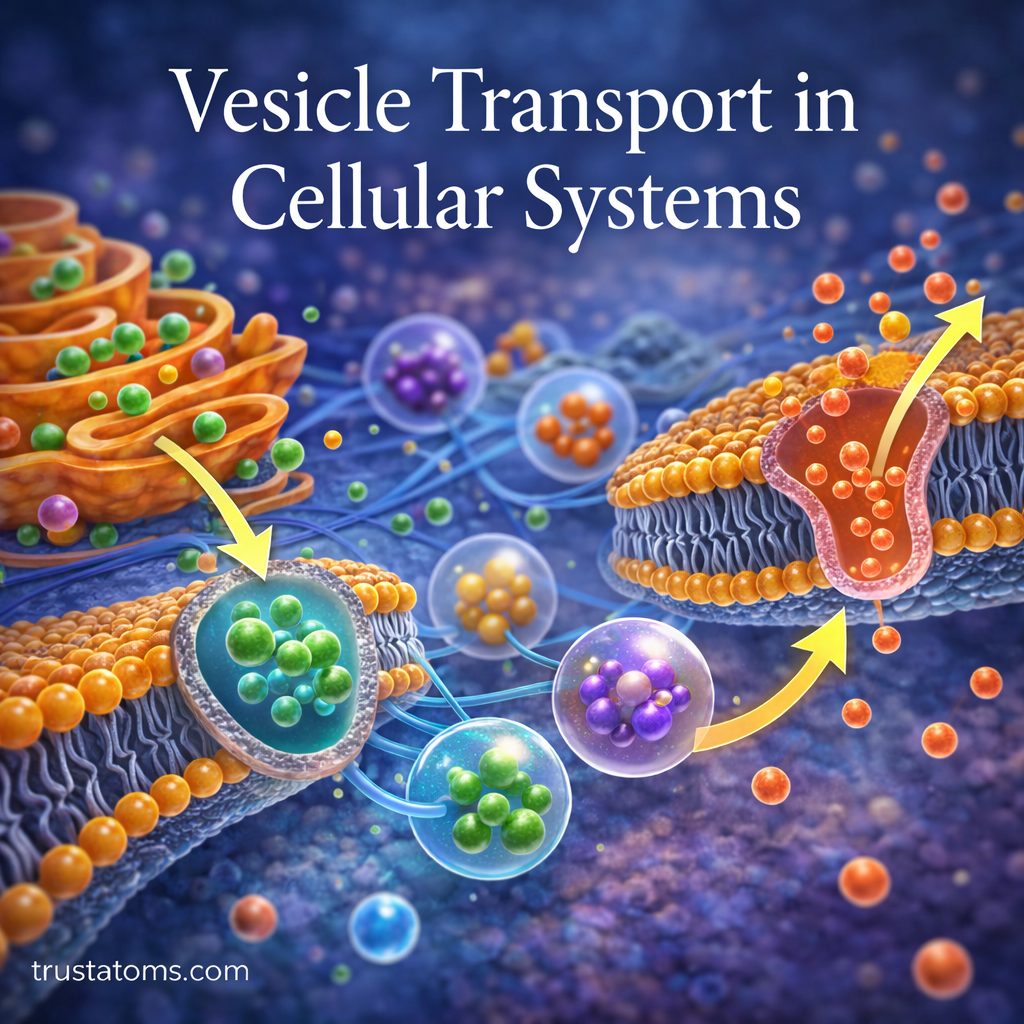
Vesicle transport is the movement of substances within membrane-bound sacs called vesicles. These vesicles form from cellular membranes and carry materials between different compartments of the cell.
Vesicles help transport substances such as:
- Proteins
- Lipids
- Enzymes
- Hormones
- Waste materials
Because vesicles are surrounded by membranes, they protect and organize the materials being transported.
This system allows cells to move larger molecules that cannot pass through the membrane by diffusion or simple transport proteins.
Structure of Vesicles
Vesicles are small spherical structures enclosed by a lipid bilayer membrane. This membrane structure is similar to the cell’s outer membrane.
Each vesicle contains specific cargo that must be delivered to another location in the cell or outside the cell.
Key components of vesicle structure include:
- Membrane bilayer that encloses the vesicle
- Cargo molecules inside the vesicle
- Transport proteins that guide vesicle movement
- Recognition molecules that ensure correct targeting
These features help vesicles deliver materials precisely where they are needed.
Why Cells Use Vesicle Transport
Cells rely on vesicle transport to maintain organization and regulate internal processes.
This transport system allows cells to:
- Move materials between organelles
- Export substances outside the cell
- Remove cellular waste
- Deliver proteins to specific locations
- Regulate cell communication
Without vesicle transport, cells would struggle to coordinate the movement of important biological molecules.
Types of Vesicle Transport
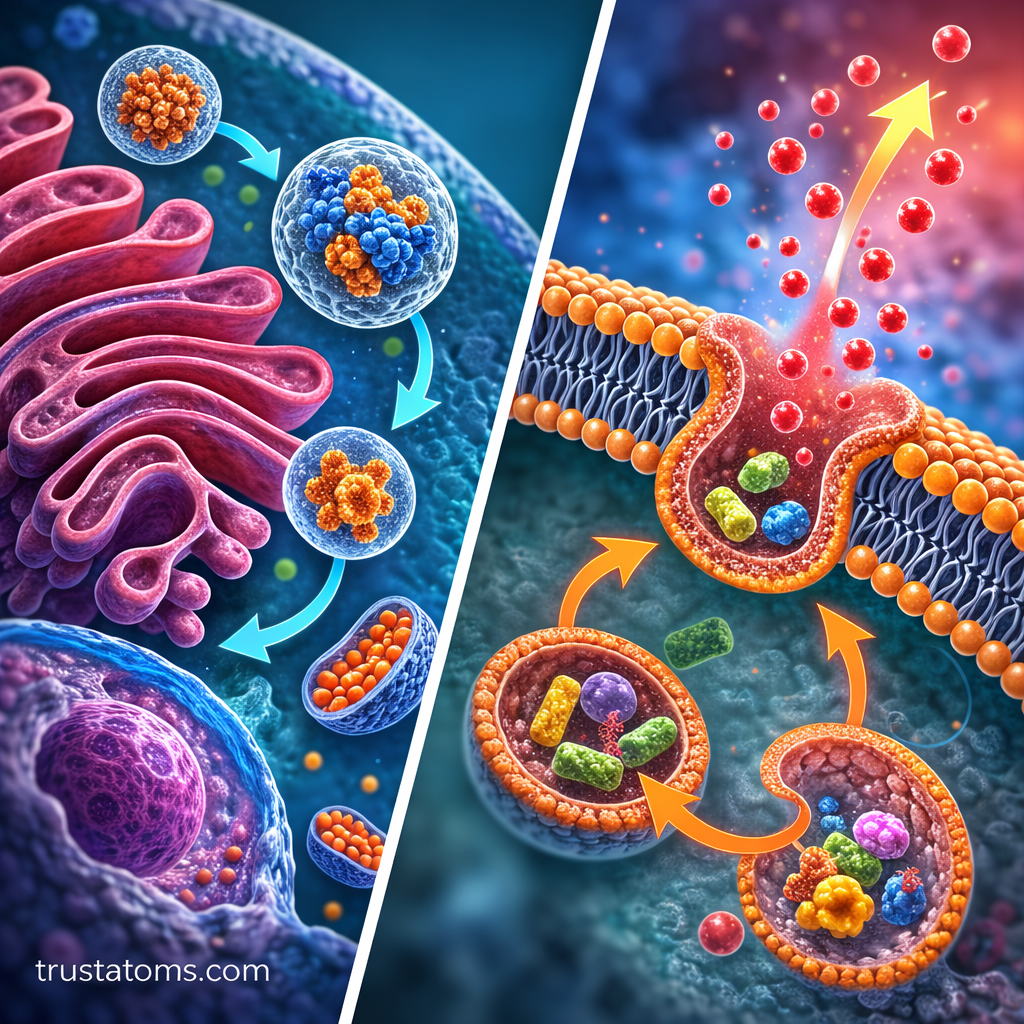
Cells use several forms of vesicle transport depending on the direction and purpose of movement.
The two main categories are:
- Endocytosis
- Exocytosis
Both processes involve vesicles forming from cellular membranes.
Endocytosis: Transport Into the Cell
Endocytosis is the process by which cells bring substances into the cell using vesicles.
During endocytosis:
- The cell membrane folds inward.
- The membrane surrounds the external material.
- A vesicle forms and moves into the cell.
This process allows cells to absorb large molecules and particles that cannot pass directly through the membrane.
Types of Endocytosis
Several specialized forms of endocytosis exist.
Phagocytosis
- Engulfs large particles such as bacteria
- Often used by immune cells
Pinocytosis
- Takes in fluids and dissolved molecules
- Occurs in many cell types
Receptor-mediated endocytosis
- Uses specific receptors to capture targeted molecules
- Allows cells to selectively absorb certain substances
These mechanisms help cells interact with their external environment.
Exocytosis: Transport Out of the Cell
Exocytosis is the process by which vesicles fuse with the cell membrane and release their contents outside the cell.
During exocytosis:
- Vesicles move toward the cell membrane.
- The vesicle membrane merges with the cell membrane.
- The vesicle releases its cargo into the external environment.
Exocytosis is used for many biological functions.
Examples include:
- Releasing hormones into the bloodstream
- Secreting digestive enzymes
- Transmitting signals between nerve cells
This process is essential for cellular communication.
Vesicle Transport Between Organelles
Vesicles also transport materials between different organelles within the cell.
Two major organelles involved in vesicle transport include:
- Endoplasmic reticulum (ER)
- Golgi apparatus
Transport From the Endoplasmic Reticulum
The endoplasmic reticulum produces many proteins and lipids that must be delivered elsewhere in the cell.
Vesicles form at the ER and carry these materials to the Golgi apparatus for further processing.
Transport From the Golgi Apparatus
The Golgi apparatus modifies and sorts proteins before sending them to their final destinations.
Vesicles leaving the Golgi may deliver cargo to:
- Lysosomes
- The cell membrane
- Other organelles
This coordinated system keeps cellular transport organized.
Vesicle Movement Inside the Cell
Once vesicles form, they must travel through the cell to reach their destination.
Cells use structural pathways called the cytoskeleton to guide vesicle movement.
Motor proteins help move vesicles along these pathways.
Key components involved in vesicle movement include:
- Microtubules that act as transport tracks
- Motor proteins that carry vesicles along these tracks
- Targeting proteins that guide vesicles to the correct location
These systems ensure that vesicles reach their intended destinations efficiently.
Vesicle Fusion and Targeting
For vesicle transport to function properly, vesicles must recognize and fuse with the correct membrane.
Cells use specialized proteins that help guide vesicles to their target.
These proteins allow vesicles to:
- Identify the correct membrane
- Attach to the target location
- Fuse with the membrane to deliver cargo
This precision prevents materials from being delivered to the wrong part of the cell.
Vesicle Transport and Cellular Communication
Vesicle transport is essential for communication between cells.
Many signaling molecules are stored in vesicles until the cell receives a signal to release them.
Examples include:
- Neurotransmitters released by neurons
- Hormones secreted by endocrine cells
- Immune signaling molecules
When vesicles release these molecules, they allow cells to coordinate responses across tissues and organs.
Vesicle Transport and Cellular Homeostasis
Vesicle transport contributes to cellular homeostasis by helping regulate the internal balance of materials within the cell.
This system helps maintain:
- Proper protein distribution
- Removal of damaged molecules
- Balanced membrane composition
- Efficient nutrient processing
These processes allow cells to maintain stability and adapt to changing conditions.
Why Vesicle Transport Matters in Biology
Vesicle transport is a fundamental component of cellular organization. By packaging and delivering materials efficiently, vesicles allow cells to manage complex biological tasks.
This transport system supports many vital processes including protein secretion, immune responses, and intracellular communication.
Understanding vesicle transport helps scientists explore how cells maintain order and coordinate biological activity.
Final Thoughts
Vesicle transport allows cells to move large molecules and complex materials in an organized and efficient way. Through processes such as endocytosis, exocytosis, and intracellular vesicle trafficking, cells maintain communication, transport nutrients, and remove waste.
These systems highlight the remarkable coordination within living cells. By using vesicles as transport carriers, cells can maintain structure, regulate biological activity, and support life at the microscopic level.