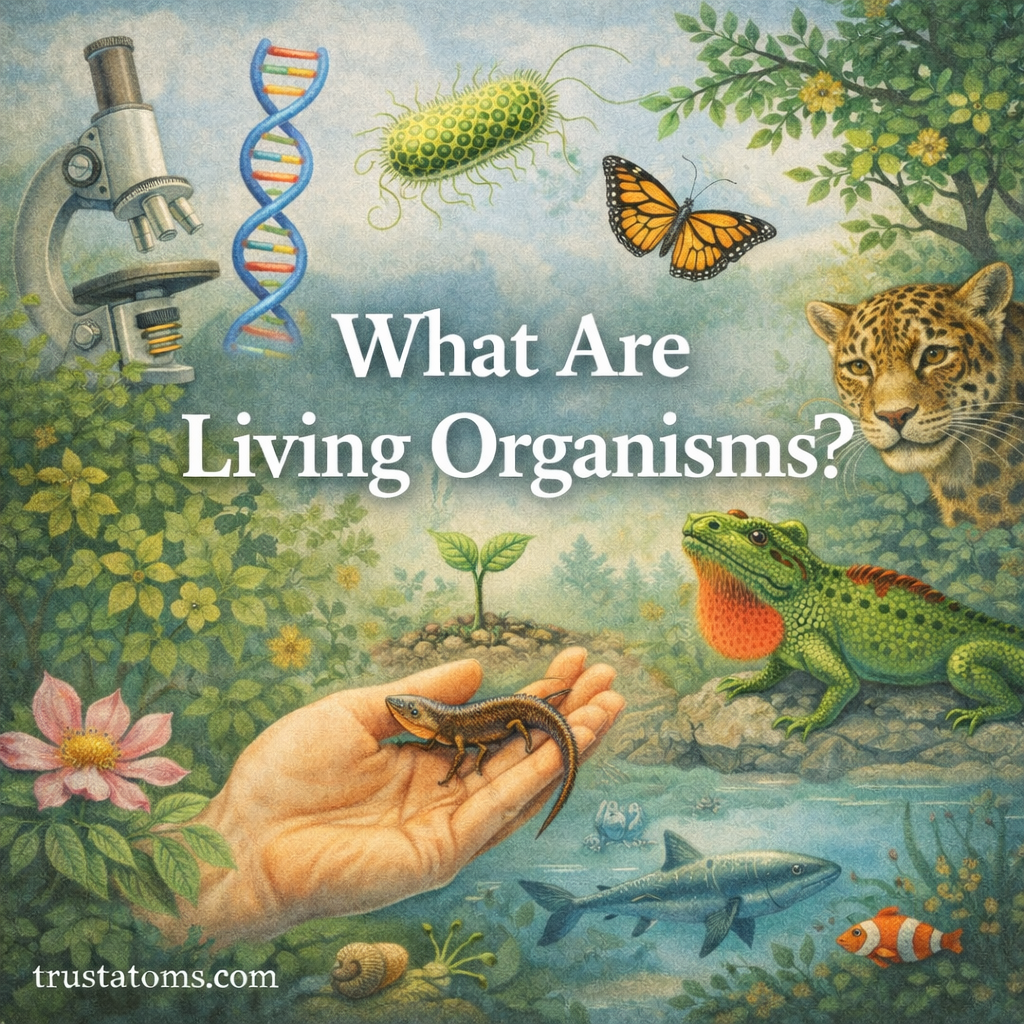
Living organisms are any individual life forms capable of carrying out the essential processes required for life. These processes include growth, metabolism, reproduction, and response to the surrounding environment.
From microscopic bacteria to massive trees and complex animals, living organisms exist in countless forms across Earth. Biology—the scientific study of life—focuses on understanding how these organisms function, interact, and evolve over time.
By studying living organisms, scientists gain insight into how life survives, adapts, and maintains balance within ecosystems.
Definition of Living Organisms
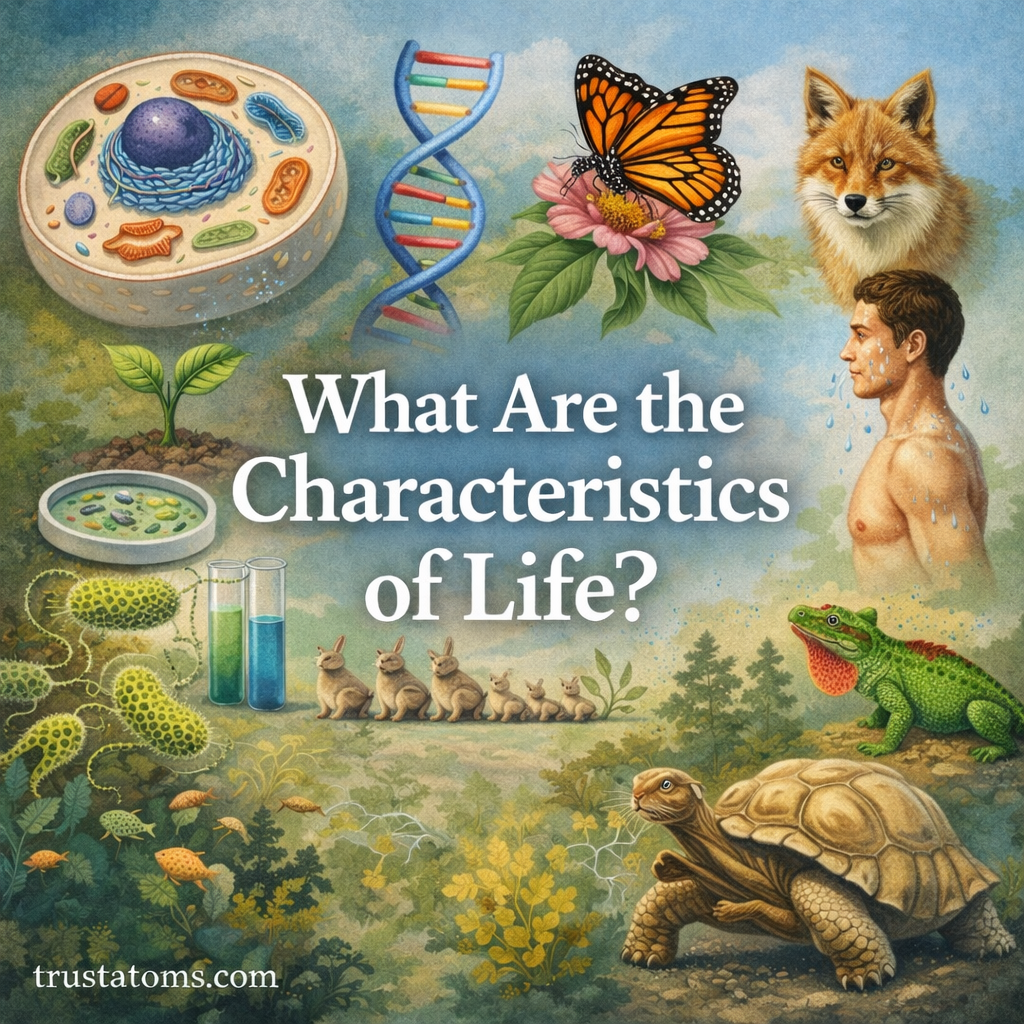
A living organism is any entity that displays the characteristics of life. These characteristics distinguish living things from nonliving matter such as rocks, water, or air.
Living organisms typically demonstrate several key biological features:
- They are made of one or more cells
- They use energy to maintain life processes
- They grow and develop
- They reproduce and pass genetic information
- They respond to environmental changes
- They maintain internal stability
- They adapt and evolve over time
If something possesses these core traits, it is generally classified as a living organism in biology.
Types of Living Organisms
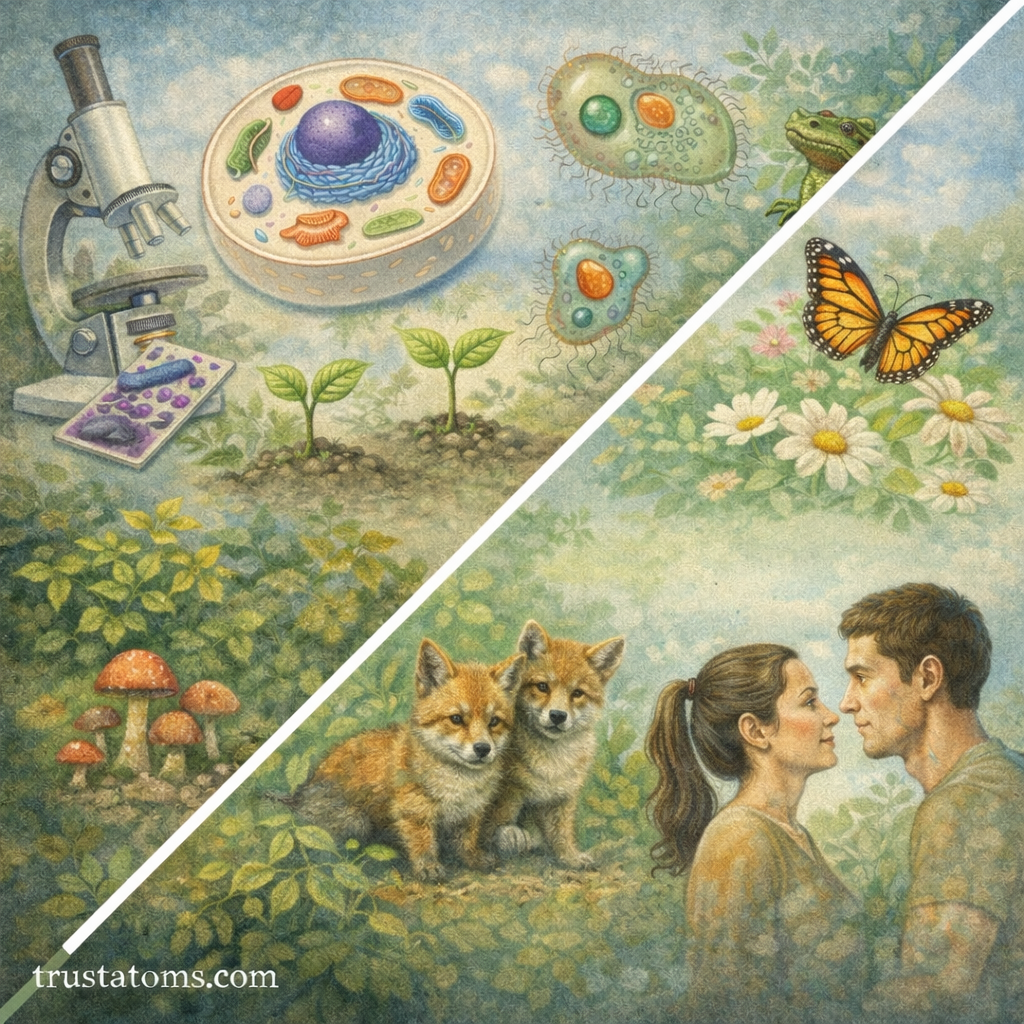
Life on Earth is incredibly diverse. Scientists group organisms into broad categories based on their cellular structure and biological characteristics.
Microorganisms
Microorganisms are tiny organisms that can only be seen with a microscope.
Examples include:
- Bacteria
- Protozoa
- Certain algae
- Some fungi
These organisms play essential roles in ecosystems, including nutrient recycling and decomposition.
Plants
Plants are multicellular organisms that produce their own food through photosynthesis.
Characteristics of plants include:
- Green pigments such as chlorophyll
- Cell walls made of cellulose
- The ability to convert sunlight into energy
Examples include trees, grasses, flowering plants, and mosses.
Animals
Animals are multicellular organisms that obtain energy by consuming other organisms.
Common features of animals include:
- Specialized tissues and organs
- The ability to move at some stage of life
- Complex nervous systems in many species
Examples include mammals, birds, fish, reptiles, amphibians, and insects.
Fungi
Fungi are organisms that absorb nutrients from organic material.
Examples include:
- Mushrooms
- Molds
- Yeasts
Fungi play a critical role in ecosystems by breaking down dead material and recycling nutrients.
The Role of Cells in Living Organisms
Cells are the basic structural and functional units of life. Every living organism is composed of one or more cells.
Cells carry out essential biological processes such as:
- Energy production
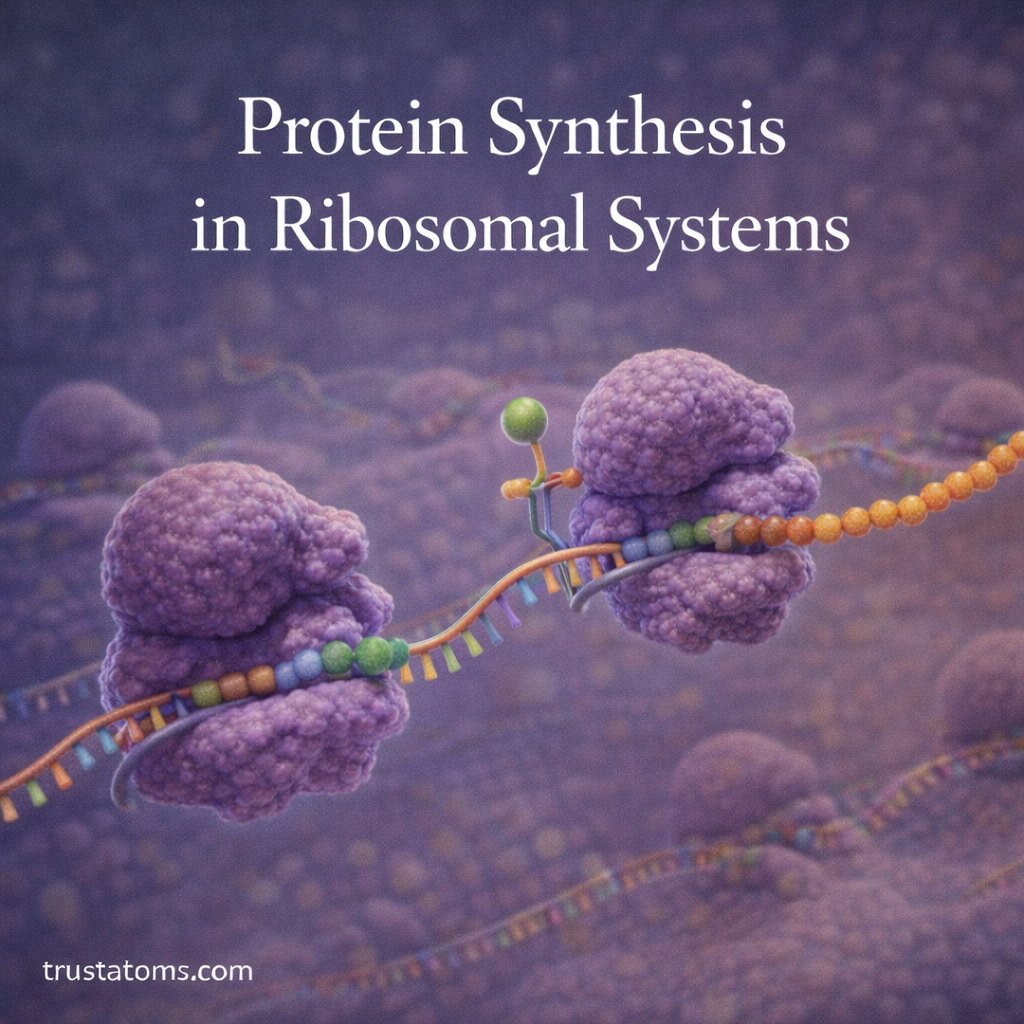
- Protein synthesis
- Waste removal
- Growth and reproduction
There are two major types of cells found in organisms.
Prokaryotic Cells
These cells lack a nucleus and other membrane-bound structures.
Examples include:
- Bacteria
- Archaea
Prokaryotic organisms are usually single-celled.
Eukaryotic Cells
These cells contain a nucleus and specialized internal structures called organelles.
Examples include:
- Plant cells
- Animal cells
- Fungal cells
Most multicellular organisms consist of eukaryotic cells.
Levels of Organization in Living Organisms
Living organisms display different levels of biological organization, especially in multicellular life forms.
The typical levels include:
- Cells
- Tissues
- Organs
- Organ systems
- The complete organism
For example, in humans:
- Muscle cells form muscle tissue
- Muscle tissue forms organs such as the heart
- Organs work together within organ systems like the circulatory system
This organization allows complex organisms to perform specialized biological functions.
How Living Organisms Interact with Their Environment
Living organisms constantly interact with their surroundings to survive.
These interactions may involve:
- Obtaining food or energy
- Avoiding predators
- Reproducing
- Competing for resources
- Forming symbiotic relationships
Organisms also play important roles in maintaining ecological balance within ecosystems.
Examples include:
- Plants producing oxygen through photosynthesis
- Animals helping disperse seeds
- Decomposers breaking down organic matter
These interactions create interconnected systems that support life across the planet.
Why Living Organisms Are Important
Living organisms form the foundation of Earth’s ecosystems and sustain the planet’s biological diversity.
They are important because they:
- Maintain ecological balance
- Support food chains and energy flow
- Contribute to nutrient cycles
- Provide resources for medicine, agriculture, and technology
Human survival also depends on the complex interactions among plants, animals, microorganisms, and the environment.
Final Thoughts
Living organisms are the building blocks of life on Earth. From simple single-celled microbes to complex multicellular species, all living organisms share common biological traits that allow them to survive and reproduce.
By studying living organisms, scientists gain a deeper understanding of life processes, ecological relationships, and the mechanisms that support the diversity of life across the planet.