In chemistry, many reactions depend on the pH of a solution, which measures how acidic or basic it is. Some chemical systems require a stable pH to function properly. This is where buffer solutions play an important role.
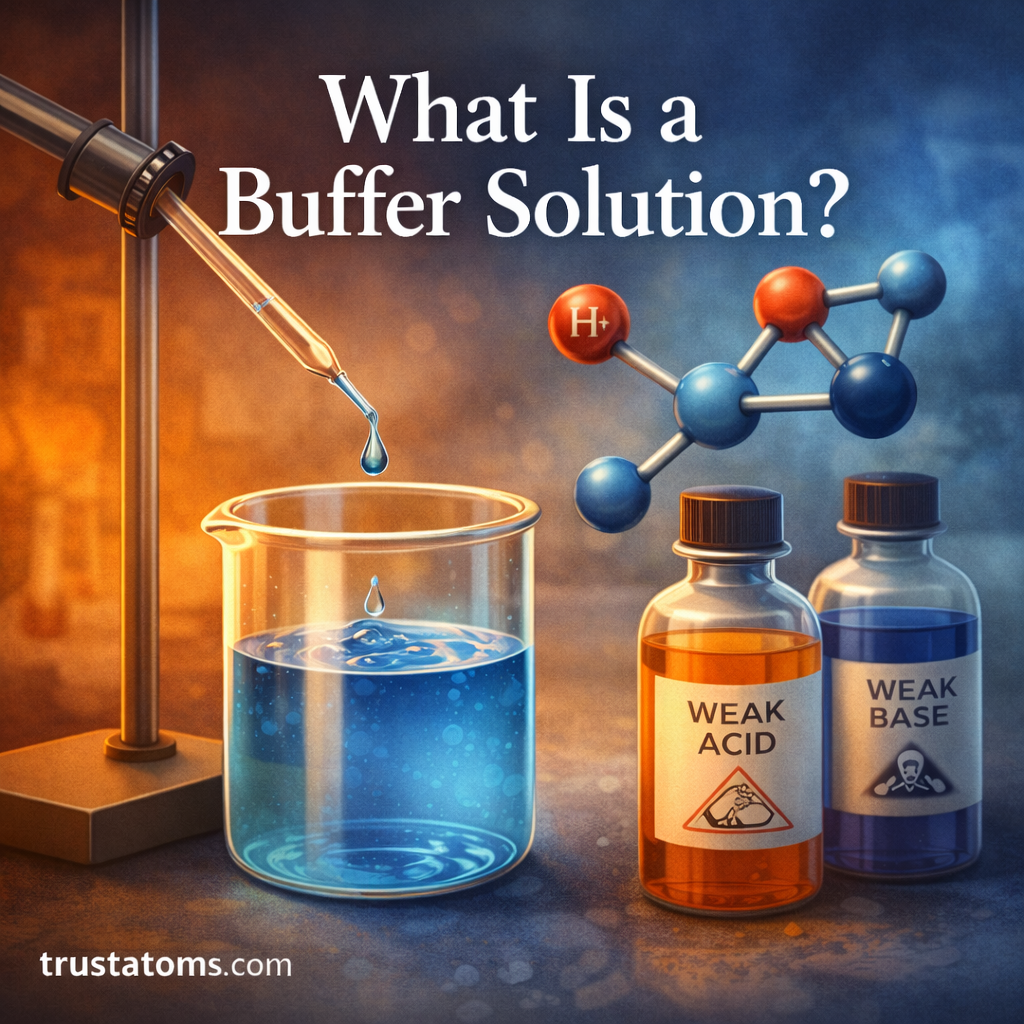
A buffer solution is a special type of solution that resists changes in pH when small amounts of acid or base are added. Instead of allowing the solution to quickly become more acidic or more basic, a buffer stabilizes the pH and keeps it within a relatively narrow range.
Buffer solutions are essential in chemistry, biology, medicine, and many industrial processes.
Understanding Buffer Solutions in Simple Terms
A buffer solution works like a chemical shock absorber for pH. When acids or bases are introduced into the solution, the buffer components react with them and prevent large swings in pH.
Without a buffer:
- Adding acid quickly lowers pH
- Adding a base quickly raises pH
With a buffer present:
- The pH changes only slightly
- The solution remains chemically stable
This stability is critical in systems where even small pH changes could disrupt chemical reactions or biological processes.
What Makes Up a Buffer Solution?
Most buffer solutions are made from two key components:
- A weak acid
- Its conjugate base
OR
- A weak base
- Its conjugate acid
These components work together to neutralize added acids or bases.
For example, a common buffer system contains:
- A weak acid that can neutralize added bases
- A related base that can neutralize added acids
Because both components are present in the solution, the buffer can respond to changes in either direction.
How Buffer Solutions Work
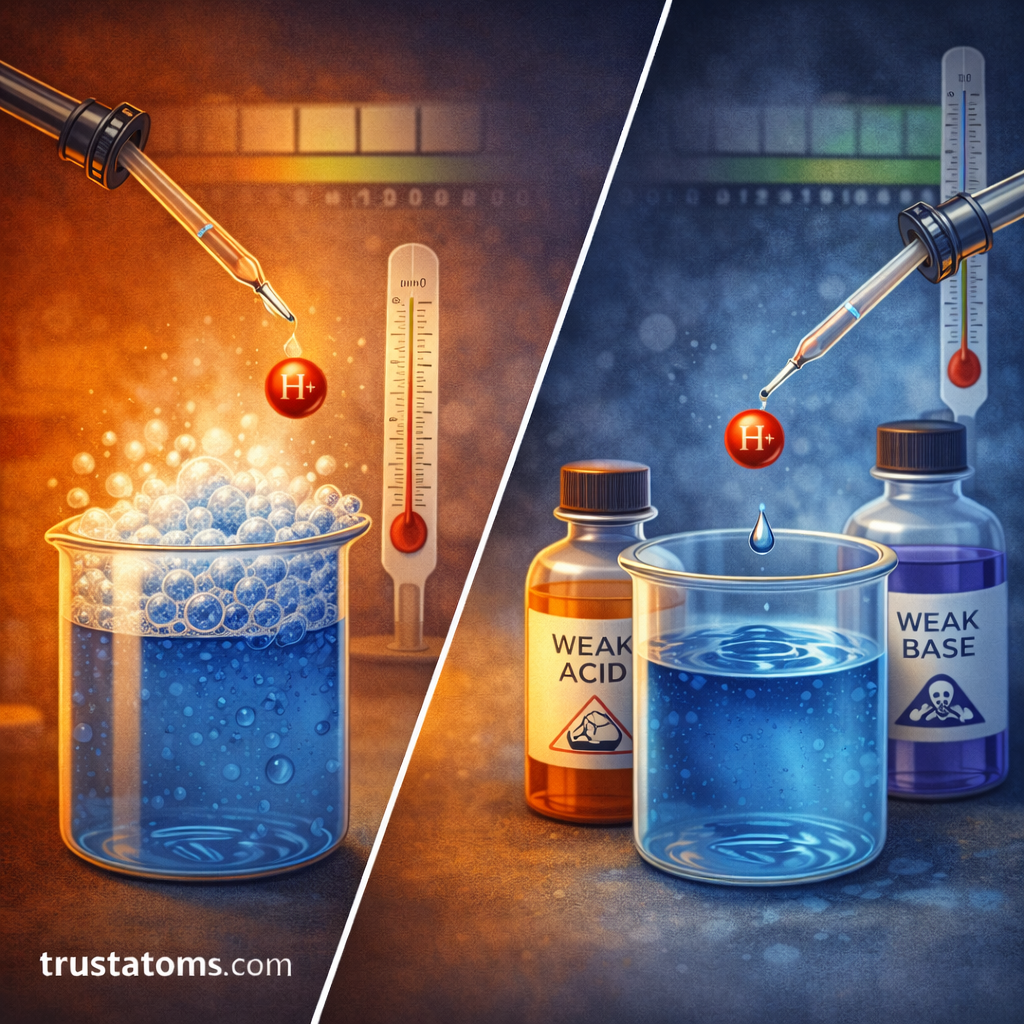
Buffer solutions function through chemical reactions that remove excess hydrogen ions (H⁺) or hydroxide ions (OH⁻) from the solution.
When Acid Is Added
When acid enters the solution, it increases hydrogen ion concentration.
The buffer’s conjugate base reacts with the extra hydrogen ions, reducing their effect and preventing a large drop in pH.
When Base Is Added
When a base is added, hydroxide ions increase.
The buffer’s weak acid reacts with these hydroxide ions, helping maintain the original pH level.
Through these reactions, the buffer solution maintains a relatively constant pH.
Common Examples of Buffer Solutions
Buffer solutions appear in many natural and laboratory systems.
Some well-known examples include:
- Acetic acid and acetate buffer used in laboratory experiments
- Carbonic acid and bicarbonate buffer found in blood
- Phosphate buffer systems used in biological research
- Ammonia and ammonium buffer used in chemical analysis
These systems allow scientists and living organisms to maintain stable chemical environments.
Why Buffer Solutions Are Important
Buffer solutions are essential because many chemical and biological reactions require precise pH conditions.
They are widely used in areas such as:
Biology and Medicine
Living organisms rely heavily on buffer systems.
Examples include:
- Blood pH regulation
- Enzyme activity
- Cellular chemical balance
Even small pH changes can interfere with biological processes.
Laboratory Experiments
Chemists frequently use buffers to maintain stable conditions during experiments.
Buffers help ensure:
- Accurate chemical reactions
- Consistent experimental results
- Stable reaction environments
Industrial Processes
Many industrial systems require controlled pH levels.
Buffers are used in:
- Pharmaceutical manufacturing
- Food production
- Water treatment
- Chemical manufacturing
Maintaining the correct pH helps improve safety and efficiency.
Characteristics of an Effective Buffer
Not all solutions can act as buffers. Effective buffer solutions typically have several important characteristics.
A good buffer should:
- Contain both a weak acid and its conjugate base (or vice versa)
- Resist pH changes when small amounts of acid or base are added
- Work within a specific pH range
- Remain stable under the conditions of the reaction
Buffers are most effective when the concentrations of the acid and base components are balanced.
Real-World Example: Buffering in Human Blood
One of the most important buffer systems in the human body is the carbonic acid–bicarbonate buffer system.
This system helps keep blood pH within a narrow range.
If the blood becomes too acidic:
- Bicarbonate ions help neutralize excess hydrogen ions.
If the blood becomes too basic:
- Carbonic acid helps restore balance.
Maintaining proper blood pH is vital for normal bodily function.
Final Thoughts
A buffer solution is a chemical system that resists changes in pH when acids or bases are added. It works through a balance of weak acids and their conjugate bases, allowing the solution to neutralize small disturbances.
Buffers play a crucial role in chemistry, biology, medicine, and industry by maintaining stable chemical environments.
From laboratory experiments to the chemistry of human blood, buffer solutions help ensure that sensitive reactions occur under the right conditions.