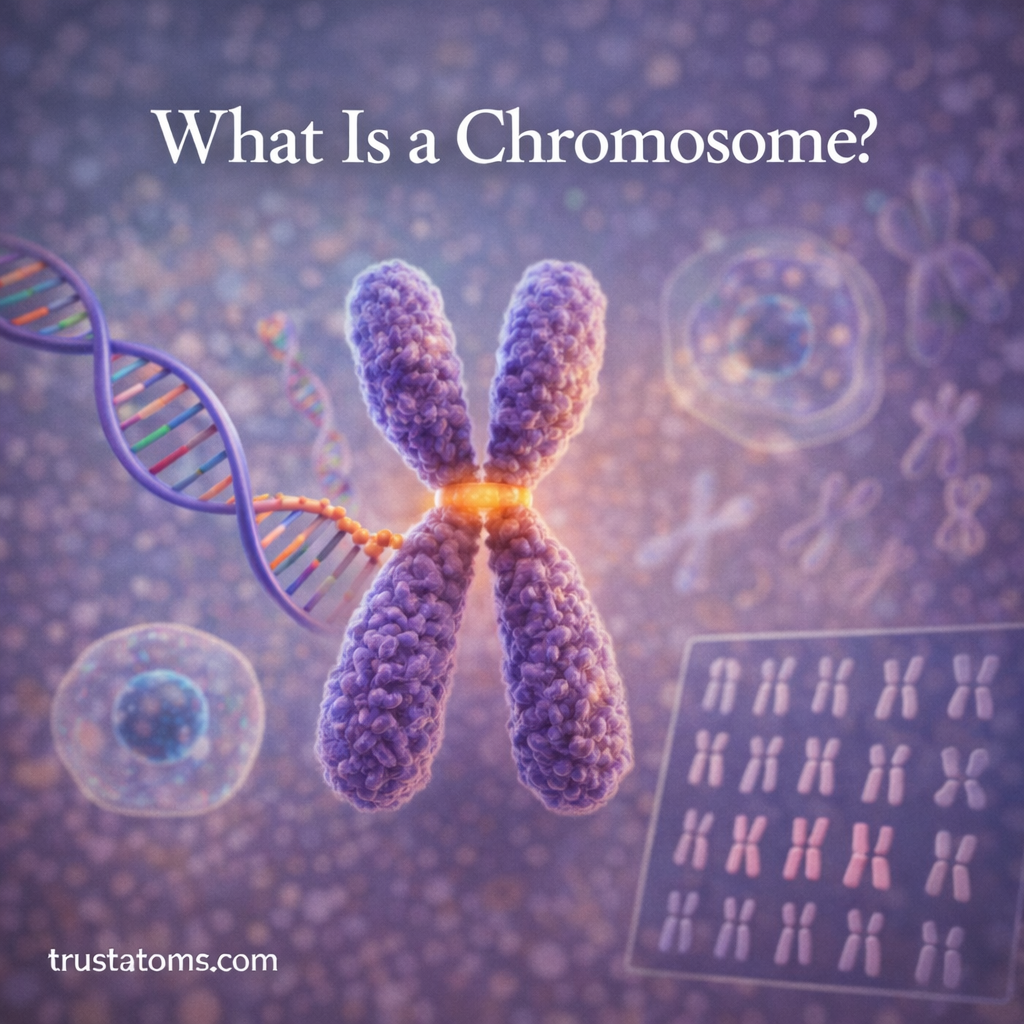
Chromosomes are structures inside cells that carry genetic information. They are made of DNA and proteins and contain the genes that determine how organisms develop, function, and reproduce.
Every living organism—from single-celled bacteria to complex animals—relies on chromosomes to store and organize genetic instructions. These structures ensure that DNA is accurately copied and distributed when cells divide.
Understanding chromosomes is essential for studying genetics, heredity, cell biology, and many aspects of modern medicine.
Definition of a Chromosome
A chromosome is a thread-like structure made of DNA and proteins that contains genetic information in the form of genes.
Chromosomes help package long strands of DNA into a compact and organized form that fits inside the cell nucleus.
Key characteristics of chromosomes include:
- Composed of DNA tightly wrapped around proteins
- Contain many genes along their length
- Located in the nucleus of eukaryotic cells
- Responsible for carrying hereditary information
Chromosomes play a critical role in passing genetic information from one generation to the next.
Where Chromosomes Are Found
In eukaryotic organisms, chromosomes are located inside the cell nucleus.
Human cells typically contain:
- 46 chromosomes total
- 23 pairs of chromosomes
- One chromosome in each pair inherited from each parent
These pairs include:
- 22 pairs of autosomes (non-sex chromosomes)
- 1 pair of sex chromosomes (X and Y)
Sex chromosomes determine biological sex:
- XX usually results in female development
- XY usually results in male development
In contrast, prokaryotic organisms such as bacteria usually have a single circular chromosome located in the cytoplasm.
The Structure of a Chromosome
Chromosomes are complex structures designed to efficiently store and manage DNA.
DNA Molecule
At the core of every chromosome is a long DNA molecule containing genetic instructions.
DNA is composed of repeating nucleotide units that include:
- Adenine (A)
- Thymine (T)
- Cytosine (C)
- Guanine (G)
These nucleotides form the genetic code that determines gene sequences.
Histone Proteins
DNA wraps around proteins called histones.
Histones help:
- Organize DNA into compact units
- Protect DNA from damage
- Regulate gene activity
This DNA–protein complex is called chromatin.
Chromatid Structure
When a cell prepares to divide, chromosomes duplicate.
Each duplicated chromosome consists of:
- Two identical sister chromatids
- Joined together at a region called the centromere
The centromere ensures proper separation during cell division.
Chromosomes During the Cell Cycle
Chromosomes change shape depending on the stage of the cell cycle.
Interphase
During interphase:
- DNA exists as loosely packed chromatin
- Genes can be accessed for transcription
- The cell prepares for division
At this stage, chromosomes are not visible under a standard microscope.
Cell Division
During cell division (mitosis or meiosis):
- Chromatin condenses into visible chromosomes
- Sister chromatids align and separate
- Genetic material is distributed into new cells
This ensures each new cell receives the correct genetic information.
Types of Chromosomes
Chromosomes can be classified based on their function and structure.
Autosomes
Autosomes are chromosomes that do not determine biological sex.
Humans have:
- 44 autosomes
- Organized into 22 pairs
These chromosomes contain genes responsible for many physical and biological traits.
Sex Chromosomes
Sex chromosomes determine the biological sex of an organism.
In humans:
- X chromosome contains many genes related to development and health
- Y chromosome contains genes that trigger male development
Sex chromosome combinations influence inherited characteristics.
Chromosomes and Genes
Chromosomes carry genes, which are segments of DNA that provide instructions for building proteins.
Each chromosome contains hundreds to thousands of genes.
Genes control many biological functions, including:
- Physical traits such as eye color and height
- Metabolic processes
- Immune system responses
- Cellular growth and repair
Because chromosomes organize genes in specific locations, they help regulate how genetic information is used within cells.
Chromosome Replication and Inheritance
Before a cell divides, its chromosomes must be copied.
This process is called DNA replication.
During replication:
- The DNA molecule unwinds
- Each strand serves as a template
- New complementary strands are formed
- Two identical chromosomes result
When cells divide, these copies ensure each daughter cell receives the correct set of chromosomes.
During reproduction, chromosomes from two parents combine to create genetic diversity in offspring.
Chromosomal Abnormalities
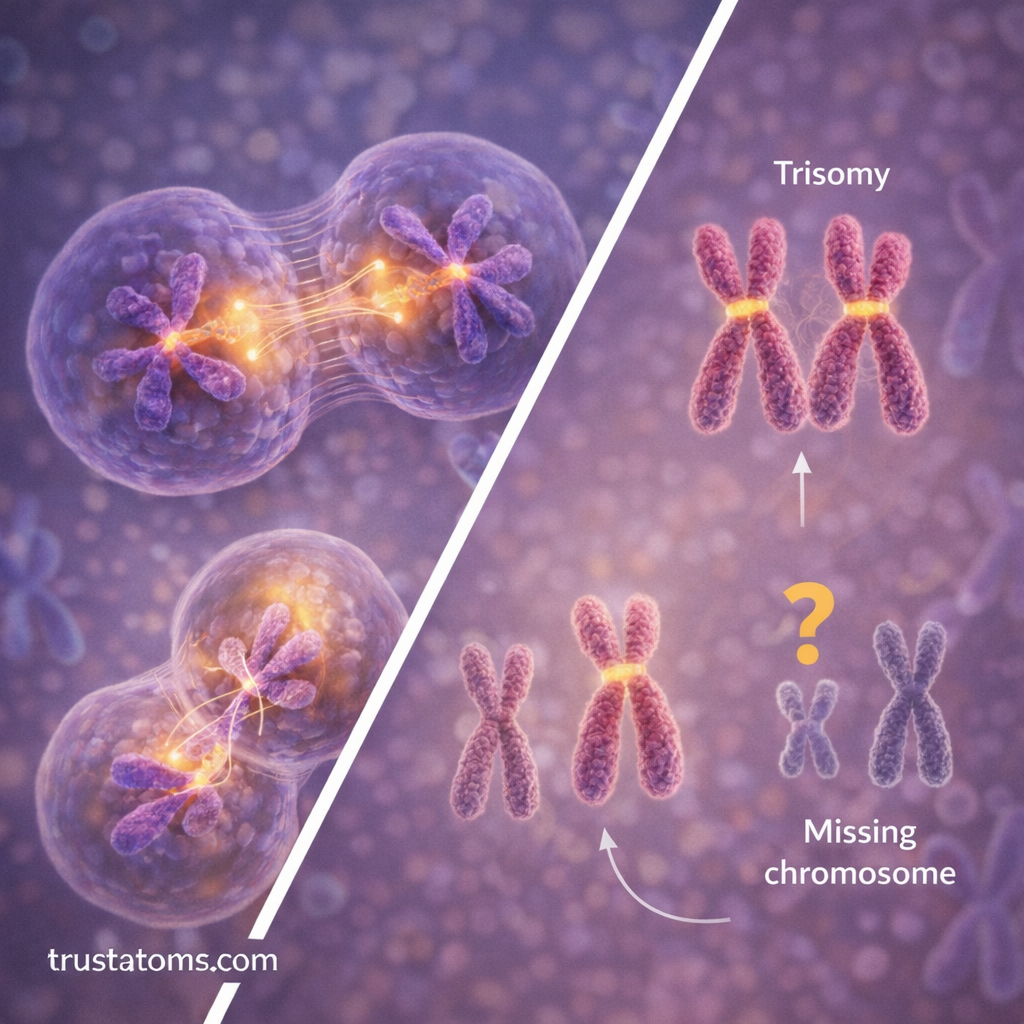
Sometimes chromosomes can develop structural changes or incorrect numbers.
These abnormalities can occur during cell division.
Examples include:
- Trisomy – an extra copy of a chromosome
- Monosomy – a missing chromosome
- Chromosomal deletions or duplications
A well-known example is Down syndrome, which occurs when an individual has an extra copy of chromosome 21.
Studying chromosomal abnormalities helps scientists understand genetic disorders and develop diagnostic tools.
Chromosomes in Modern Genetics
Chromosomes play a central role in genetic research and biotechnology.
Scientists study chromosomes to:
- Map the location of genes
- Identify genetic mutations
- Understand inherited diseases
- Develop genetic therapies
Advances such as genome sequencing and chromosome imaging techniques allow researchers to study chromosomes in remarkable detail.
Why Chromosomes Are Important
Chromosomes are essential for organizing and protecting genetic information within cells.
Their importance includes:
- Storing DNA in an organized structure
- Ensuring accurate DNA replication
- Distributing genetic material during cell division
- Passing hereditary information between generations
Without chromosomes, cells would not be able to maintain stable genetic instructions.
Final Thoughts
Chromosomes are fundamental structures that organize and carry the genetic information required for life. Made of DNA and proteins, they store thousands of genes and ensure that genetic instructions are accurately copied and passed to new cells.
By regulating how DNA is packaged and distributed, chromosomes enable cells to grow, divide, and function correctly. As scientific research continues to explore genetics and genomics, understanding chromosomes remains essential for advancing medicine, biotechnology, and our knowledge of biological inheritance.