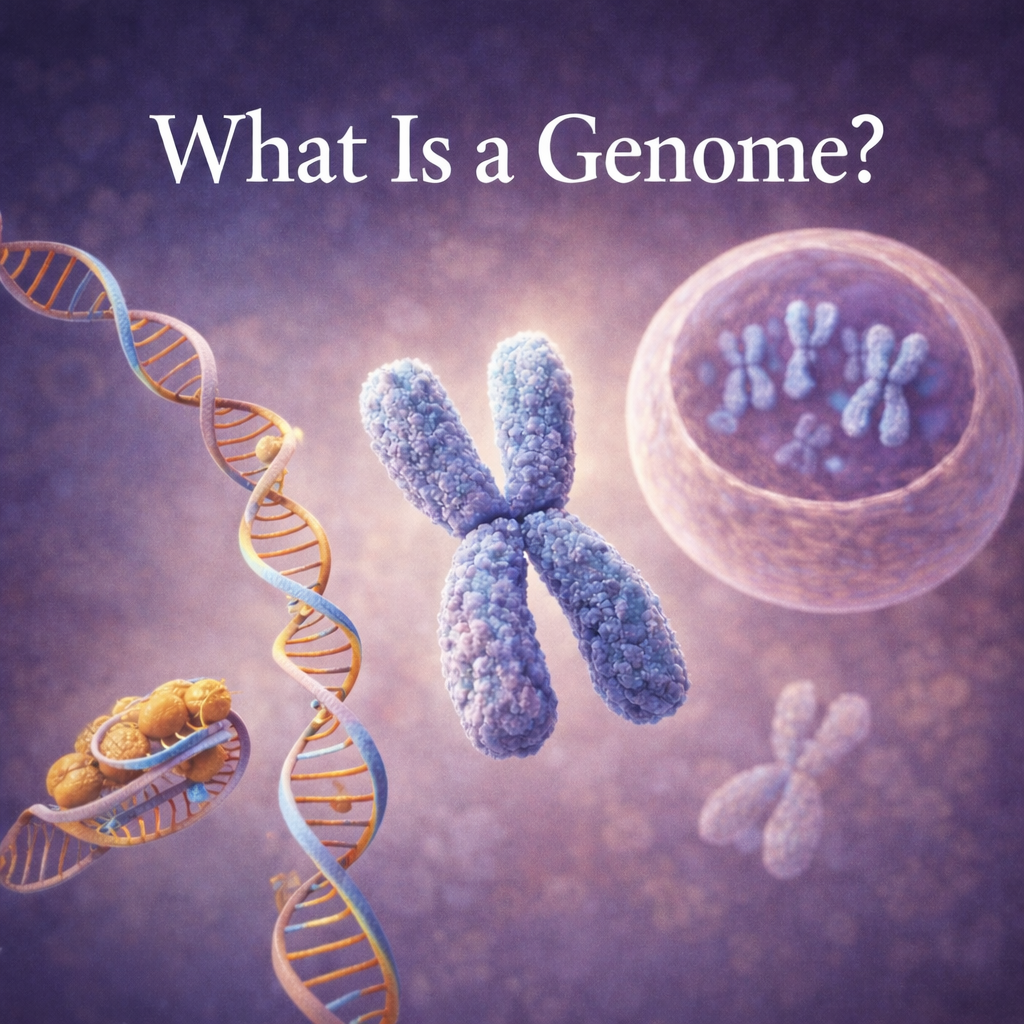
A genome is the complete set of genetic material found within an organism. It includes all of the DNA that carries the instructions needed for growth, development, functioning, and reproduction.
Every living organism—from bacteria to plants to humans—has a genome. This genetic blueprint determines many biological traits, including how cells behave, how proteins are produced, and how organisms adapt to their environment.
In simple terms, the genome represents the full library of genetic information stored within an organism’s cells.
Understanding DNA and Genes
To understand what a genome is, it helps to first understand DNA and genes.
DNA (deoxyribonucleic acid) is the molecule that stores genetic information. It is composed of two strands forming a double helix and contains four chemical bases:
- Adenine (A)
- Thymine (T)
- Cytosine (C)
- Guanine (G)
These bases pair in specific ways (A with T, and C with G) to form the structure of DNA.
Genes are segments of DNA that contain instructions for producing proteins. Proteins carry out many important functions in the body, including building tissues, regulating chemical reactions, and supporting cell communication.
A genome contains all genes and all non-coding DNA within an organism.
What Makes Up a Genome?
A genome includes several important components that work together to store and regulate genetic information.
Genes
Genes are sections of DNA that provide instructions for making proteins or functional RNA molecules.
Humans have approximately 20,000 to 21,000 genes, which make up only a small percentage of the entire genome.
Non-Coding DNA
Not all DNA codes for proteins. A large portion of the genome consists of non-coding DNA.
This DNA plays important roles in:
- Regulating gene activity
- Organizing chromosome structure
- Controlling when and where genes are expressed
Scientists once referred to this as “junk DNA,” but research has shown that many non-coding regions are essential for proper biological function.
Chromosomes
In eukaryotic organisms, DNA is packaged into structures called chromosomes.
For example:
- Humans have 23 pairs of chromosomes
- Each chromosome contains many genes and regulatory regions
Together, all chromosomes form the organism’s complete genome.
Genome Size and Variation Across Species
Genome size varies widely among different organisms.
Some examples include:
- Bacteria: Often contain a few million DNA base pairs
- Plants: Can contain billions of base pairs
- Humans: Approximately 3 billion base pairs
Interestingly, genome size does not always correlate with organism complexity. Some plants and amphibians have genomes larger than the human genome.
These differences arise from variations in gene numbers, repetitive DNA sequences, and evolutionary history.
The Human Genome
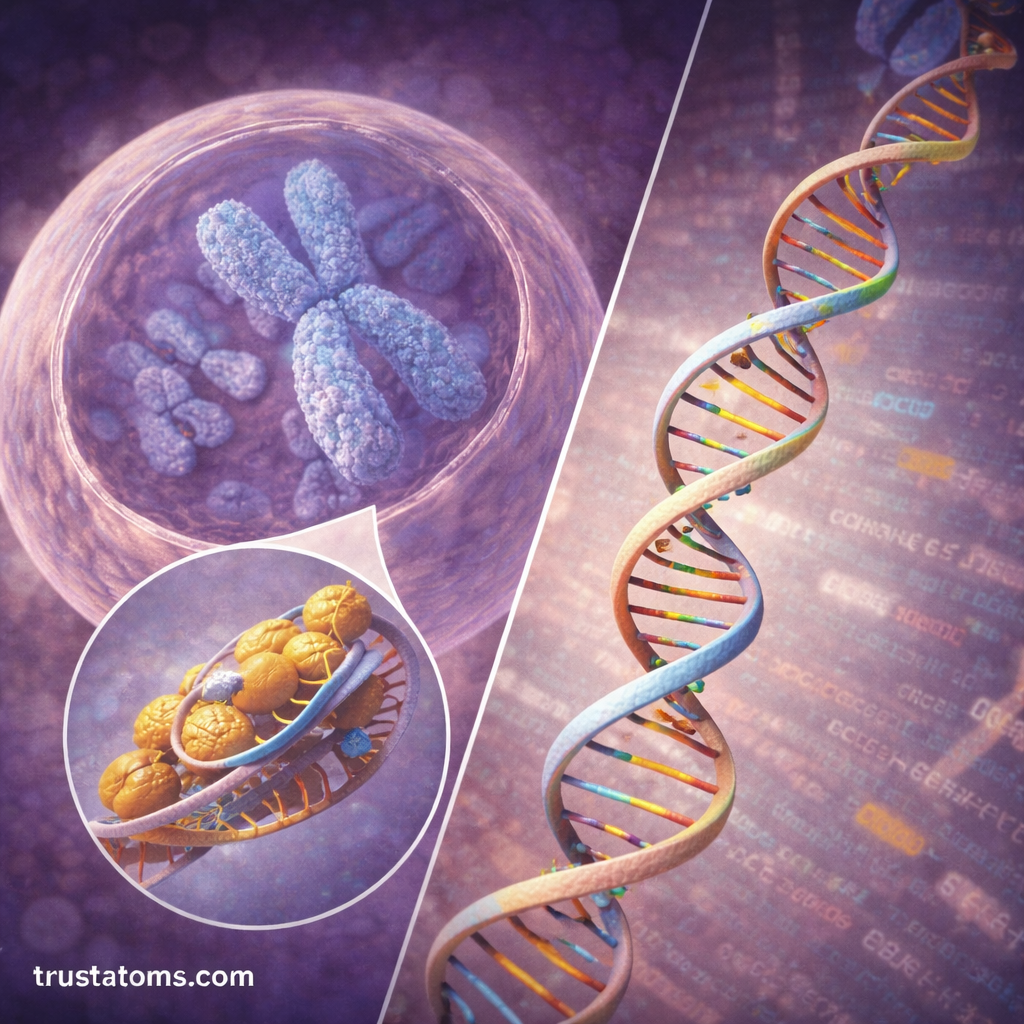
The human genome contains all the genetic instructions necessary to build and maintain a human body.
Key features of the human genome include:
- About 3 billion DNA base pairs
- Roughly 20,000 protein-coding genes
- DNA distributed across 23 chromosome pairs
- Both coding and regulatory DNA regions
Each human cell typically contains the same genome, although gene expression differs between cell types. For example, muscle cells and nerve cells use different parts of the genome depending on their functions.
How Genomes Are Organized
Genomes are not random collections of DNA. They are organized in ways that help regulate gene activity and maintain genetic stability.
Important aspects of genome organization include:
- DNA packaged into chromatin structures
- Genes positioned along chromosomes
- Regulatory elements controlling gene expression
- Specialized chromosome regions such as centromeres and telomeres
This organization allows cells to efficiently access and use genetic information when needed.
Genome Sequencing and Modern Biology
Genome sequencing is the process of determining the exact order of DNA bases in a genome.
One of the most significant scientific milestones was the Human Genome Project, completed in 2003. This international research effort successfully mapped the entire human genome.
Genome sequencing helps scientists:
- Identify genes linked to diseases
- Understand evolutionary relationships
- Study genetic diversity
- Develop new medical treatments
Today, advances in sequencing technology allow researchers to analyze genomes faster and more affordably than ever before.
Why Genomes Matter
Genomes play a central role in nearly every biological process.
Understanding genomes helps scientists learn how organisms:
- Develop and grow
- Respond to environmental changes
- Pass traits to offspring
- Evolve over time
Genome research also supports fields such as medicine, agriculture, biotechnology, and conservation biology.
For example, genomic studies can help identify disease-causing mutations, improve crop resilience, and track the spread of infectious diseases.
Final Thoughts
A genome represents the complete genetic blueprint of an organism. It includes all of the DNA needed to build, maintain, and reproduce life.
From tiny microbes to complex organisms like humans, genomes guide biological functions through carefully organized genetic instructions. As genome research continues to expand, scientists are uncovering deeper insights into how life works at the molecular level.
Understanding genomes not only explains how organisms function today but also reveals how life has evolved over millions of years.