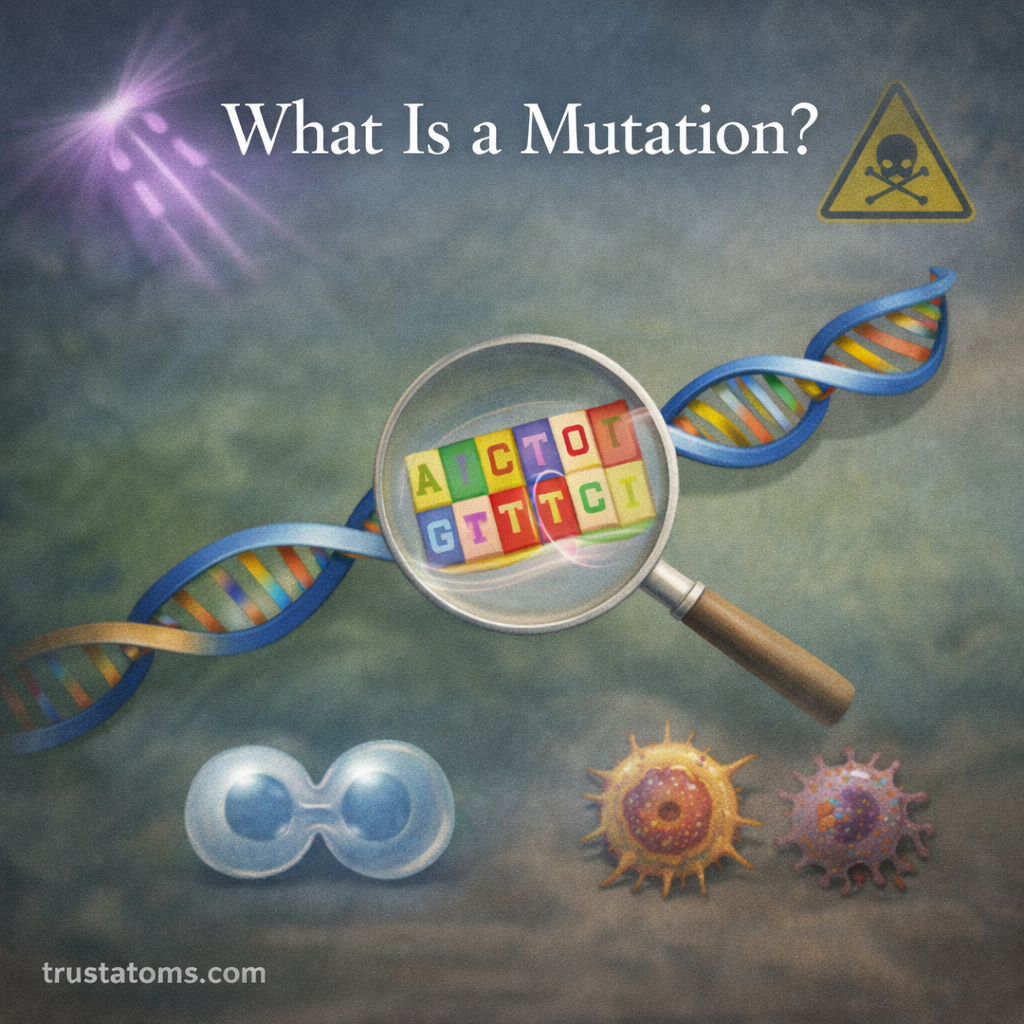
A mutation is a change in the DNA sequence of an organism. DNA contains the genetic instructions that guide how cells grow, function, and reproduce. When a mutation occurs, the sequence of genetic information is altered, which can affect how a gene works.
Mutations can happen naturally during cell division or be triggered by environmental factors such as radiation, chemicals, or viruses. While some mutations can lead to diseases or genetic disorders, many have little or no effect on an organism.
In fact, mutations play an important role in biological diversity and evolution. They introduce new genetic variations that can be passed down through generations.
Understanding DNA and Genes
To understand mutations, it is helpful to first understand how genetic information is organized.
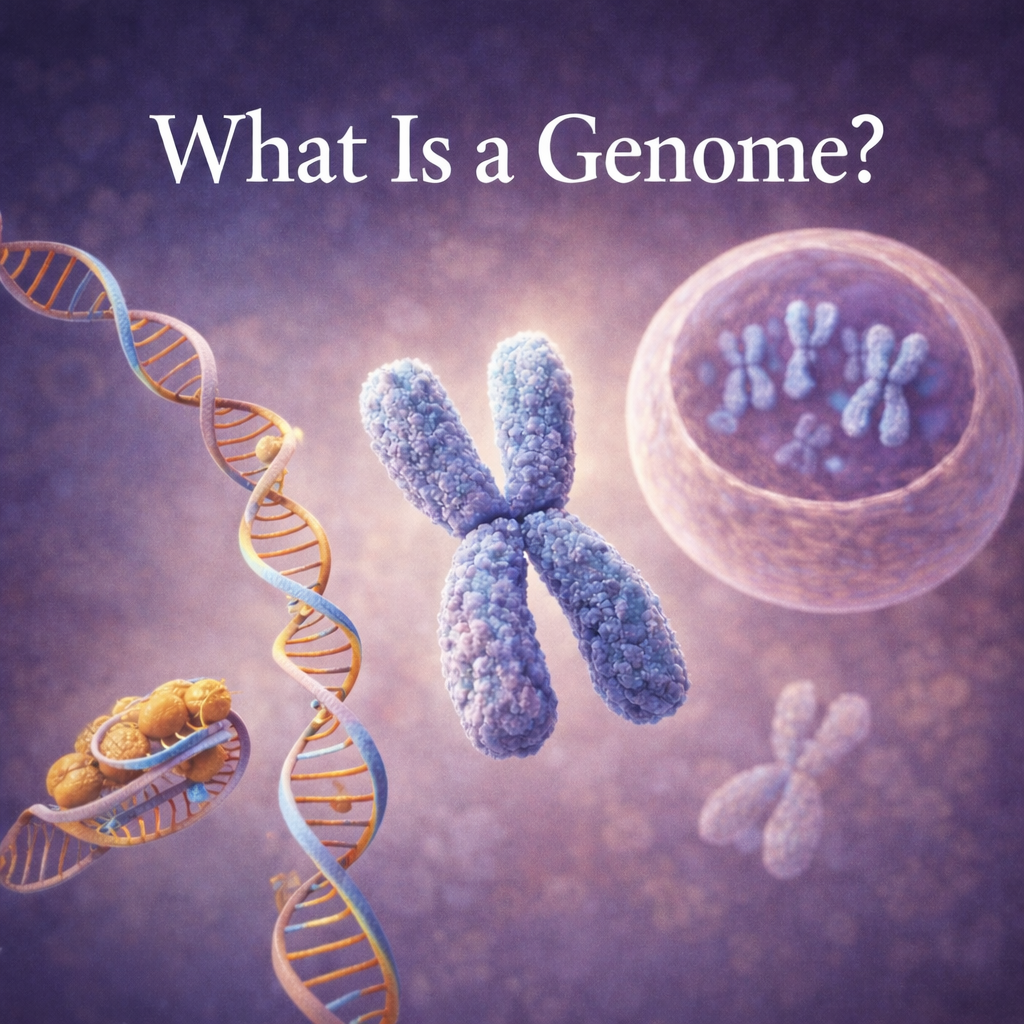
DNA is the molecule that carries genetic instructions in living organisms. It is made up of a sequence of chemical units called nucleotides.
These nucleotides are represented by four letters:
- A (adenine)
- T (thymine)
- C (cytosine)
- G (guanine)
The order of these letters forms the genetic code.
Genes are segments of DNA that contain instructions for producing proteins. Proteins perform many essential functions in the body, including building tissues, regulating chemical reactions, and supporting cell communication.
A mutation occurs when the sequence of DNA letters changes.
How Mutations Occur
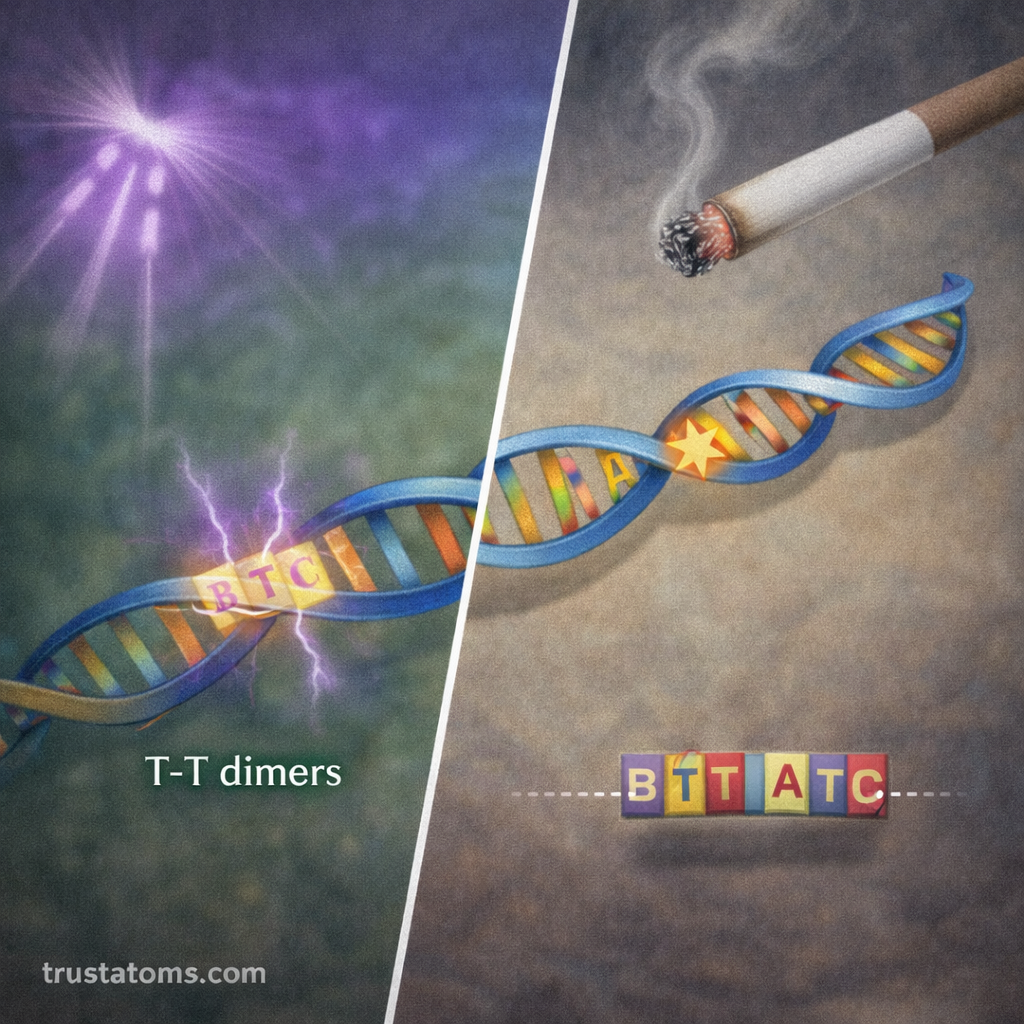
Mutations can arise in several different ways. Some occur naturally as part of normal biological processes, while others result from external influences.
1. Errors During DNA Replication
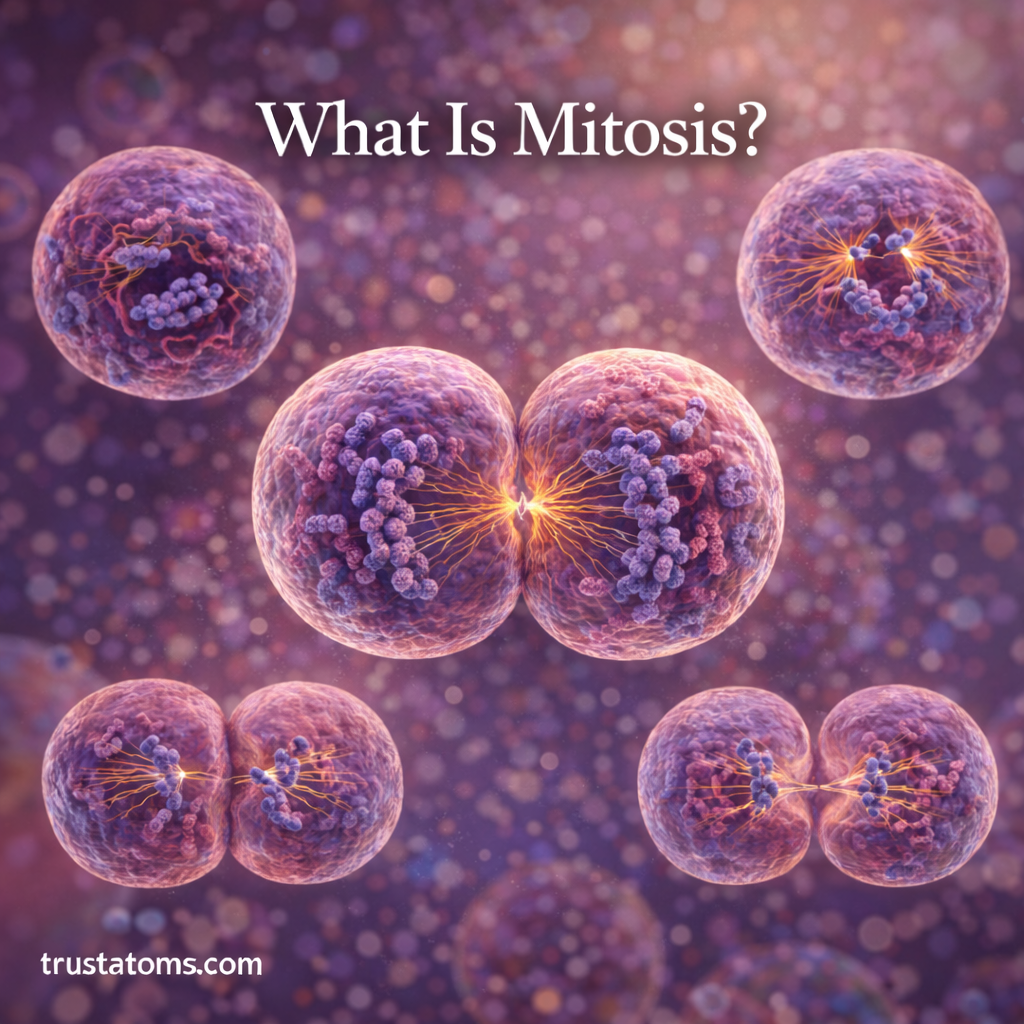
When cells divide, they must copy their DNA so each new cell receives a complete set of genetic instructions.
Sometimes mistakes occur during this copying process. If the error is not corrected by cellular repair systems, a mutation may remain in the DNA sequence.
2. Environmental Factors
Certain environmental exposures can damage DNA and increase the likelihood of mutations.
Examples include:
- Ultraviolet (UV) radiation from sunlight
- Ionizing radiation (such as X-rays)
- Chemical pollutants
- Tobacco smoke
- Some viruses
These factors can alter the DNA structure, leading to changes in the genetic code.
3. Spontaneous Mutations
Some mutations occur without any identifiable external cause. These spontaneous mutations may result from natural chemical reactions within cells or minor errors in DNA repair processes.
Although rare, spontaneous mutations contribute to the natural variation seen within populations.
Types of Mutations
Mutations can affect DNA in several different ways depending on how the genetic sequence changes.
Point Mutations
A point mutation occurs when a single nucleotide in the DNA sequence is changed.
Examples include:
- One base is replaced with another
- One base is inserted into the sequence
- One base is removed
Even a small change like this can sometimes alter the protein produced by a gene.
Insertions and Deletions
Insertions occur when extra DNA bases are added into a sequence.
Deletions occur when one or more bases are removed.
If these changes disrupt the reading pattern of a gene, they can significantly affect protein production.
Chromosomal Mutations
Some mutations affect larger sections of DNA or entire chromosomes.
Examples include:
- Duplication of a chromosome segment
- Loss of a chromosome section
- Rearrangement of genetic material
- Changes in chromosome number
These mutations can have major effects on development and health.
Research on chromosome structure shows that DNA is tightly organized into chromosomes within the nucleus, allowing genetic information to be packaged and regulated efficiently.
Harmful, Neutral, and Beneficial Mutations
Not all mutations have the same impact on an organism.
Harmful Mutations
Some mutations disrupt important genes and can lead to genetic disorders or diseases.
Examples include:
- Sickle cell disease
- Cystic fibrosis
- Huntington’s disease
These mutations may interfere with normal protein function.
Neutral Mutations
Many mutations do not significantly affect how a gene works. These are known as neutral mutations.
They may occur in parts of DNA that do not directly influence protein production, or they may produce changes that have little impact on the organism.
Beneficial Mutations
Occasionally, a mutation can provide an advantage that improves survival or reproduction.
Examples include:
- Resistance to certain diseases
- Adaptations to environmental conditions
- Improved metabolic efficiency
Beneficial mutations are important drivers of evolution.
Mutations and Evolution
Mutations are a key source of genetic variation in populations.
Natural selection acts on these variations by favoring traits that improve survival or reproduction. Over time, beneficial mutations may spread throughout a population.
This process helps species adapt to changing environments.
Examples of evolutionary changes influenced by mutations include:
- Antibiotic resistance in bacteria
- Changes in coloration for camouflage
- Adaptations to extreme climates
Without mutations introducing new genetic variations, evolution would not occur.
Mutations in Human Health
Mutations can influence human health in many ways.
Some genetic conditions are caused by inherited mutations passed down from parents. Others result from mutations that occur during a person’s lifetime.
Examples of mutation-related conditions include:
- Certain cancers
- Genetic disorders
- Metabolic diseases
Modern medicine uses genetic testing to identify some mutations and understand disease risk.
Researchers are also developing treatments such as gene therapy that aim to correct or compensate for harmful mutations.
DNA Repair and Mutation Prevention
Cells have several mechanisms to reduce the effects of mutations.
These systems help detect and repair errors in DNA.
Examples of DNA repair processes include:
- Proofreading during DNA replication
- Enzymes that detect damaged DNA
- Repair pathways that replace incorrect bases
Although these systems are highly effective, they are not perfect. Some mutations still occur and become permanent parts of the genetic code.
Why Mutations Matter in Biology
Mutations are a fundamental part of genetics and biological change.
They help scientists understand:
- How diseases develop
- How organisms evolve
- How genetic diversity arises in populations
- How traits can change across generations
By studying mutations, researchers gain insights into the mechanisms that shape life at the molecular level.
Final Thoughts
A mutation is a change in the DNA sequence that can alter how genes function. These changes may occur naturally during cell division or be triggered by environmental factors.
While some mutations can cause diseases, many are neutral and some provide advantages that help organisms survive and adapt. Mutations introduce the genetic variation that drives evolution and contributes to the diversity of life on Earth.
Understanding mutations allows scientists to better study genetics, improve medical treatments, and explore how living organisms change over time.