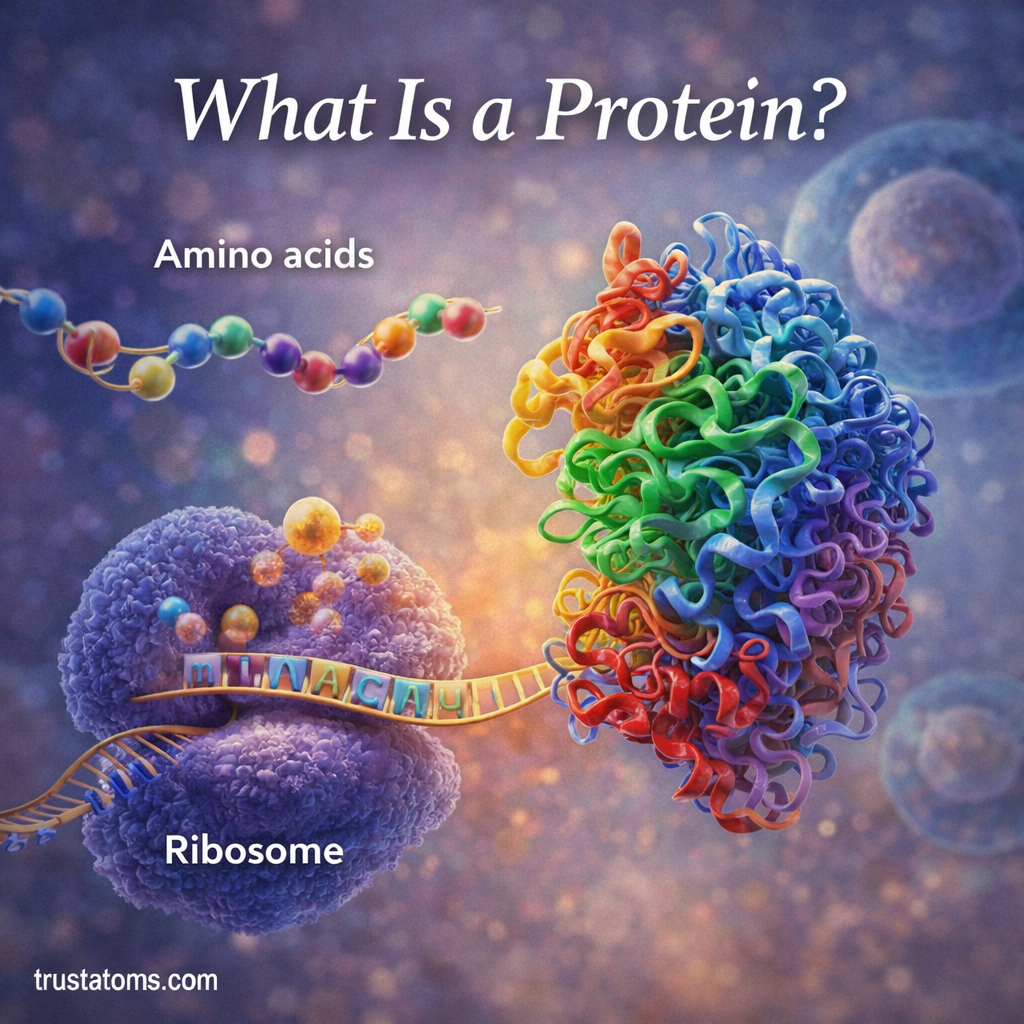
Proteins are one of the most essential molecules in biology. They perform a vast range of functions inside living organisms, from building tissues to carrying out chemical reactions that sustain life.
In simple terms, a protein is a large biological molecule made from chains of amino acids. These molecules act as the workhorses of the cell, carrying out structural, functional, and regulatory roles in nearly every biological process.
Proteins are found in all living organisms, including animals, plants, bacteria, and fungi. Without proteins, cells would not be able to grow, repair themselves, or maintain the chemical reactions necessary for survival.
The Basic Structure of Proteins
Proteins are built from smaller building blocks called amino acids.
There are 20 different amino acids commonly used by living organisms to construct proteins. Each amino acid contains:
- A central carbon atom
- A hydrogen atom
- An amino group (–NH₂)
- A carboxyl group (–COOH)
- A unique side chain (R group)
The unique side chains give each amino acid its specific chemical properties.
Peptide Bonds
Amino acids connect together through peptide bonds, forming long chains known as polypeptides.
The process occurs when:
- The carboxyl group of one amino acid reacts with the amino group of another.
- A molecule of water is released.
- A peptide bond forms between the two amino acids.
This chain then folds into a complex three-dimensional structure, creating a functional protein.
Levels of Protein Structure
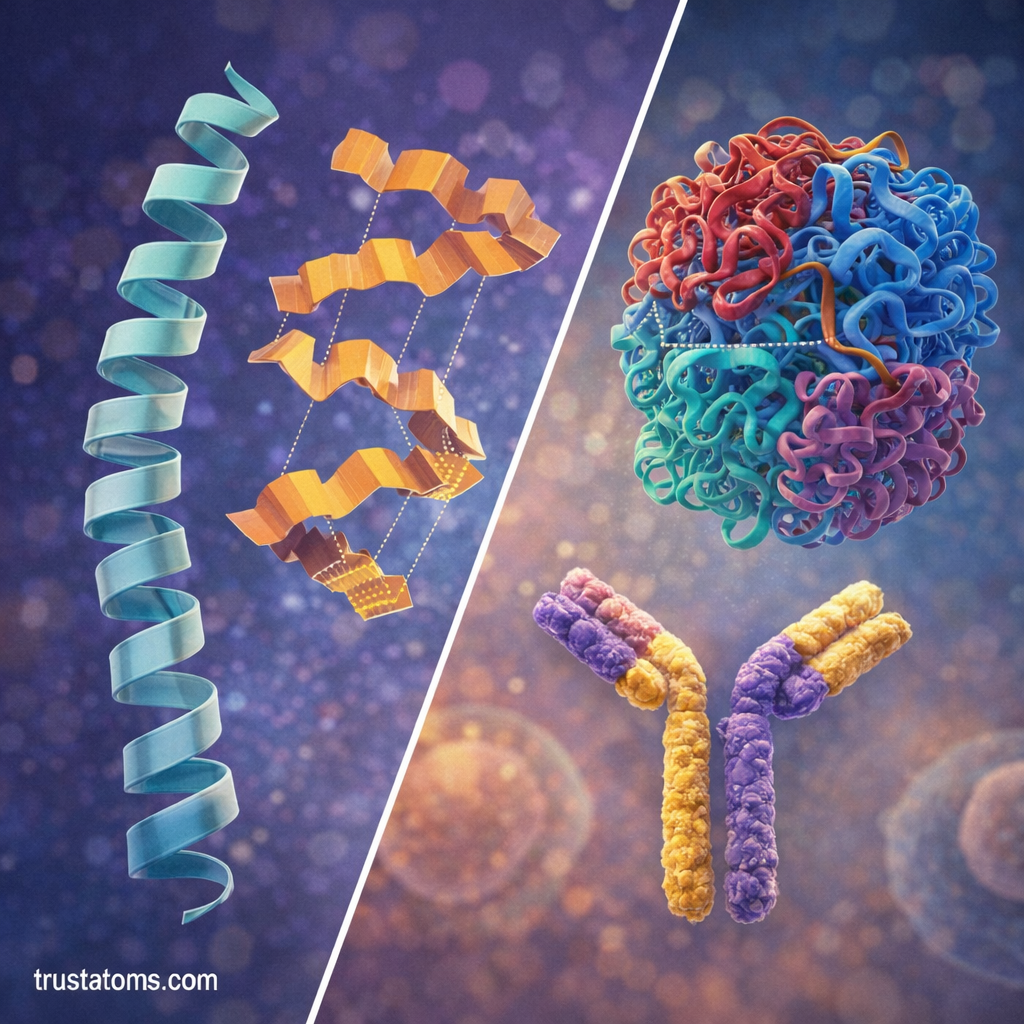
Proteins do not remain as simple chains. Instead, they fold into specific shapes that determine their function.
Scientists describe protein organization in four structural levels.
Primary Structure
The primary structure refers to the sequence of amino acids in a protein chain.
Key characteristics include:
- Determined by genetic information in DNA
- Forms the backbone of the protein
- Changes in sequence can affect protein function
Even a single amino acid change can alter how a protein works.
Secondary Structure
The secondary structure involves local folding patterns within the protein chain.
Two common structures include:
- Alpha helices – spiral-shaped coils
- Beta sheets – folded sheet-like structures
These shapes form through hydrogen bonding between amino acids.
Tertiary Structure
The tertiary structure describes the full three-dimensional shape of a single protein molecule.
This structure forms due to interactions between amino acid side chains, including:
- Hydrogen bonds
- Ionic bonds
- Hydrophobic interactions
- Disulfide bridges
The tertiary structure determines how the protein performs its biological function.
Quaternary Structure
Some proteins contain multiple polypeptide chains working together.
This arrangement is known as quaternary structure.
Examples include:
- Hemoglobin (four protein subunits)
- DNA polymerase complexes
- Antibody molecules
These multi-subunit proteins often perform complex biological tasks.
Functions of Proteins in Living Organisms
Proteins perform a wide variety of roles within cells and organisms.
Some of the most important functions include:
Enzymes
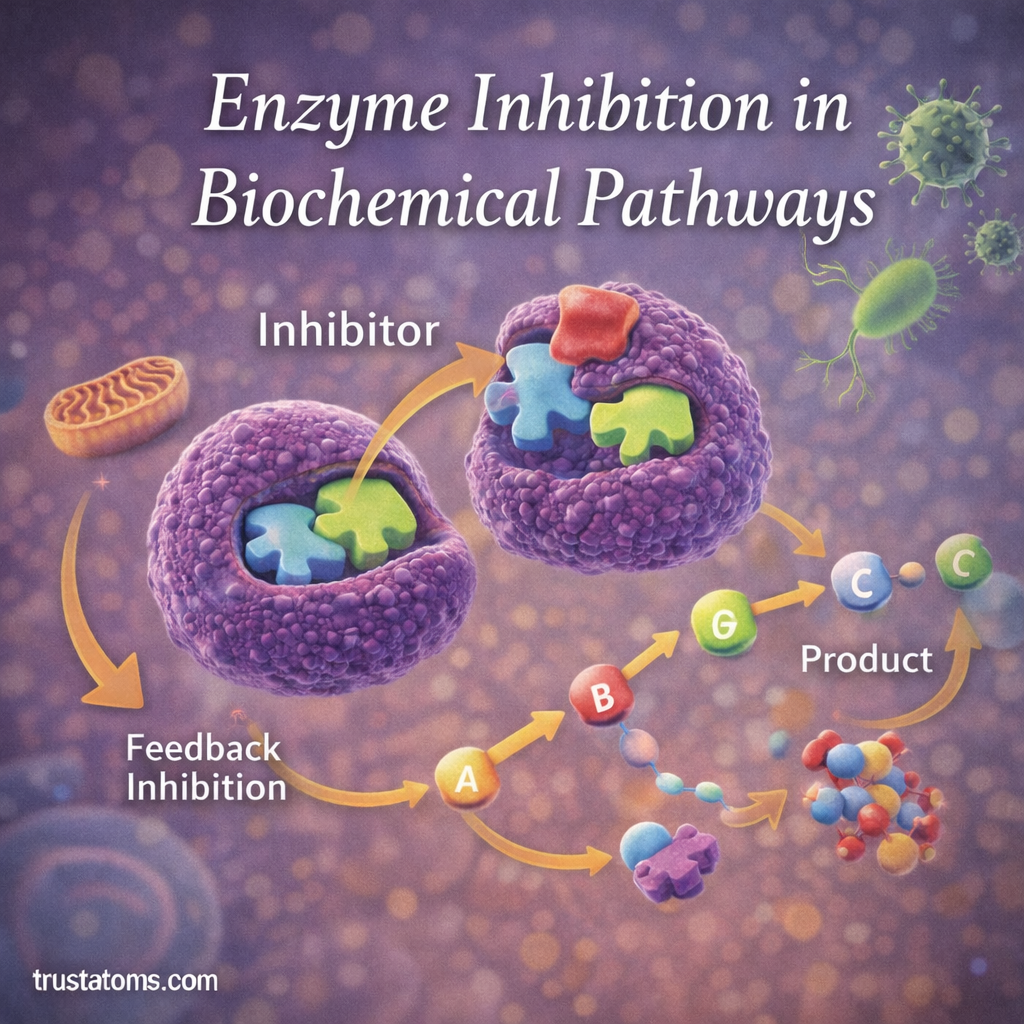
Enzymes are proteins that speed up chemical reactions in cells.
Examples include:
- Digestive enzymes that break down food
- DNA polymerases involved in DNA replication
- Metabolic enzymes that produce energy
Without enzymes, many biological reactions would occur too slowly to sustain life.
Structural Proteins
Some proteins provide physical support and structure.
Examples include:
- Collagen – strengthens skin, bones, and connective tissue
- Keratin – found in hair, nails, and skin
- Actin and myosin – support muscle structure
These proteins help maintain the integrity of tissues.
Transport Proteins
Transport proteins move substances throughout the body or within cells.
Examples include:
- Hemoglobin, which carries oxygen in blood
- Membrane transport proteins that move molecules across cell membranes
- Carrier proteins involved in nutrient uptake
These proteins ensure that important molecules reach the correct locations.
Signaling Proteins
Cells communicate with each other using signaling molecules and receptors, many of which are proteins.
Important examples include:
- Hormones such as insulin
- Cell surface receptors
- Growth factors
These proteins regulate processes like metabolism, development, and immune responses.
Immune System Proteins
The immune system relies heavily on specialized proteins.
Examples include:
- Antibodies, which recognize pathogens
- Complement proteins that destroy bacteria
- Cytokines that regulate immune responses
These proteins help protect the body from infection.
How Proteins Are Made
Proteins are produced through a biological process called protein synthesis.
This process occurs in two main stages.
1. Transcription
During transcription:
- DNA is copied into messenger RNA (mRNA).
- This process takes place in the cell nucleus.
The mRNA carries instructions for building a protein.
2. Translation
Translation occurs at ribosomes in the cell cytoplasm.
Steps include:
- Ribosomes read the mRNA sequence.
- Transfer RNA (tRNA) delivers amino acids.
- Amino acids are linked together into a polypeptide chain.
Once the chain is complete, it folds into a functional protein.
Protein Folding and Function
Protein function depends heavily on correct folding.
The folding process is guided by:
- Chemical properties of amino acids
- Cellular environment
- Helper molecules called chaperone proteins
If proteins fold incorrectly, they may lose their function or become harmful.
Protein misfolding has been linked to diseases such as:
- Alzheimer’s disease
- Parkinson’s disease
- Cystic fibrosis
Maintaining proper protein structure is therefore critical for cellular health.
Proteins in the Human Diet
Humans obtain many amino acids from dietary proteins.
Common protein-rich foods include:
- Meat and poultry
- Fish and seafood
- Eggs
- Dairy products
- Beans and legumes
- Nuts and seeds
- Soy products
When these foods are digested, proteins break down into amino acids that the body uses to build new proteins.
Some amino acids are essential, meaning they must be obtained through diet because the body cannot produce them.
Why Proteins Are Essential for Life
Proteins are fundamental to nearly every biological process.
They are involved in:
- Cellular structure
- Chemical reactions
- Energy metabolism
- Immune defense
- Tissue repair
- Gene regulation
Because proteins carry out so many functions, they are often described as the molecular machines of life.
From the smallest bacteria to complex organisms like humans, proteins enable the biological processes that sustain living systems.
Final Thoughts
Proteins are complex biological molecules that perform countless functions in living organisms. Built from chains of amino acids, they fold into intricate shapes that determine how they work inside cells.
Whether acting as enzymes, structural components, transport molecules, or signaling agents, proteins play an essential role in maintaining life. Understanding proteins helps scientists uncover how cells function, how diseases develop, and how biological systems evolve.
As research continues, the study of proteins remains central to fields such as medicine, biotechnology, genetics, and molecular biology.