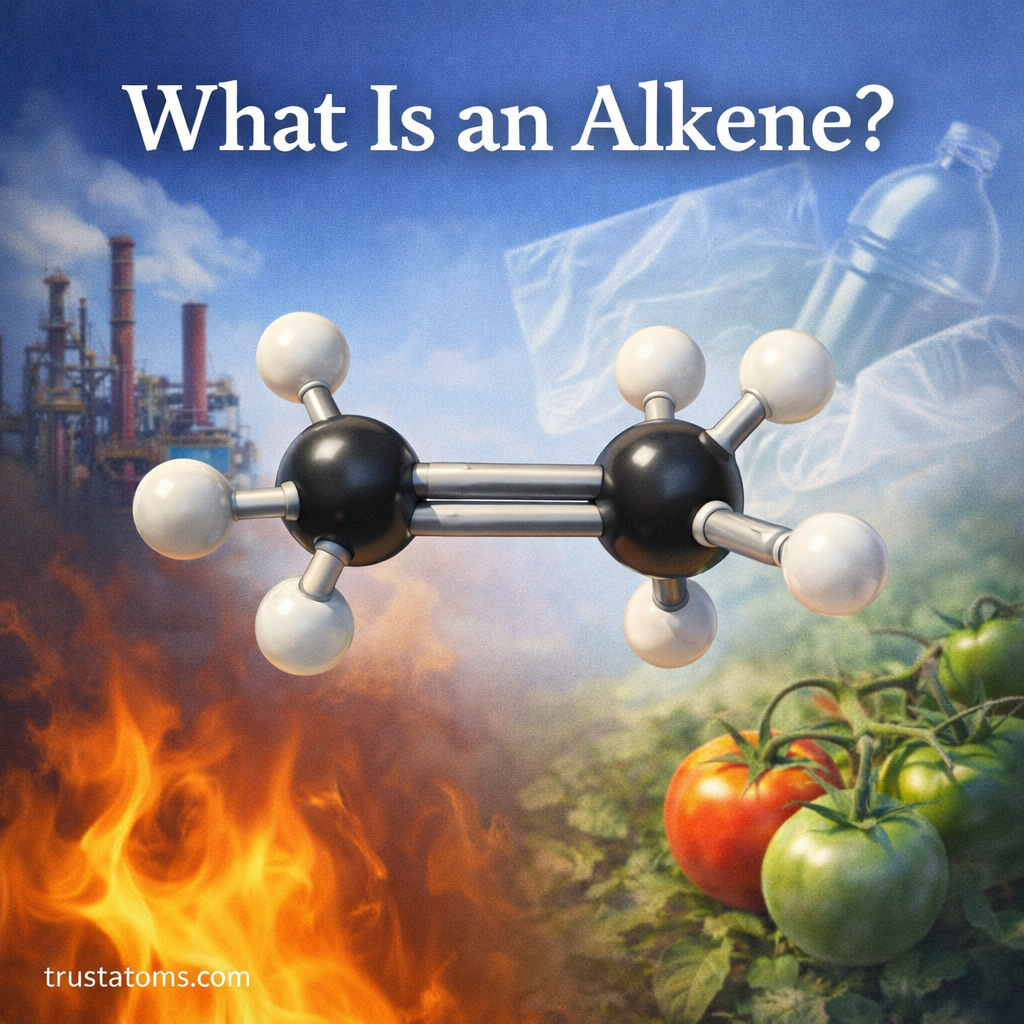
Alkenes are an important class of organic compounds widely studied in chemistry. They are closely related to alkanes but differ in one key structural feature that makes them much more chemically reactive.
An alkene is a hydrocarbon that contains at least one carbon–carbon double bond. This double bond changes the chemical behavior of the molecule, allowing it to participate in many reactions used in chemical manufacturing and biological processes.
Because of this structure, alkenes are often described as unsaturated hydrocarbons, meaning the carbon atoms are not bonded to the maximum possible number of hydrogen atoms.
Definition of an Alkene
An alkene is a hydrocarbon made up of carbon and hydrogen atoms that includes one or more double bonds between carbon atoms.
The simplest alkenes follow the general formula:
CₙH₂ₙ
Where:
- n represents the number of carbon atoms.
This formula applies specifically to alkenes that contain one double bond and form an open chain.
Key Characteristics of Alkenes
Alkenes have several defining features that distinguish them from other hydrocarbons.
1. Presence of a Carbon–Carbon Double Bond
The most important characteristic of an alkene is the double bond between two carbon atoms.
This double bond:
- Shortens the distance between the atoms
- Creates a stronger bond overall
- Makes the molecule more chemically reactive
2. Unsaturated Hydrocarbons
Alkenes are considered unsaturated because their carbon atoms do not hold the maximum number of hydrogen atoms.
This means they can add additional atoms during chemical reactions, which is why they play a major role in industrial chemistry.
3. Higher Chemical Reactivity
Compared with alkanes, alkenes are generally more reactive.
The double bond contains:
- One strong sigma bond
- One weaker pi bond
The pi bond can break more easily, allowing the molecule to participate in many chemical reactions.
4. Nonpolar Nature
Like many hydrocarbons, alkenes are mostly nonpolar molecules.
As a result:
- They dissolve well in nonpolar solvents
- They do not mix easily with water
Examples of Common Alkenes
Alkenes vary depending on how many carbon atoms they contain. The simplest members are small molecules that are important in both natural processes and industrial chemistry.
Common examples include:
- Ethene (C₂H₄) – the simplest alkene, also known as ethylene
- Propene (C₃H₆) – used in the production of plastics
- Butene (C₄H₈) – used in fuel blending and chemical manufacturing
- Pentene (C₅H₁₀) – used in chemical synthesis
Among these, ethene is one of the most widely produced organic chemicals in the world.
Structure of Alkenes
The structure of alkenes influences how they behave in chemical reactions.
Double Bond Geometry
The carbon atoms involved in a double bond form a flat arrangement known as trigonal planar geometry.
This structure creates an angle of about 120 degrees between bonds.
Because of this geometry:
- The atoms around the double bond lie in the same plane
- Rotation around the double bond is restricted
Structural Isomers
Alkenes can form different arrangements called isomers, where molecules share the same formula but have different structures.
Two important types include:
- Chain isomers – different carbon chain arrangements
- Geometric isomers – different positions of atoms around the double bond
Geometric isomers often appear as:
- Cis configurations (groups on the same side)
- Trans configurations (groups on opposite sides)
These structural differences can significantly affect the compound’s properties.
Physical Properties of Alkenes
Many physical properties of alkenes are similar to those of alkanes, but there are still some differences.
State of Matter
The physical state of alkenes depends on the length of the carbon chain.
Typically:
- Small alkenes are gases
- Medium-length alkenes are liquids
- Long-chain alkenes can become waxy solids
Boiling and Melting Points
As the number of carbon atoms increases:
- Molecular size increases
- Intermolecular forces strengthen
- Boiling points rise
However, alkenes often have slightly lower boiling points than comparable alkanes.
Solubility
Alkenes share similar solubility characteristics with other hydrocarbons.
They are generally:
- Insoluble in water
- Soluble in organic solvents
Chemical Reactions of Alkenes
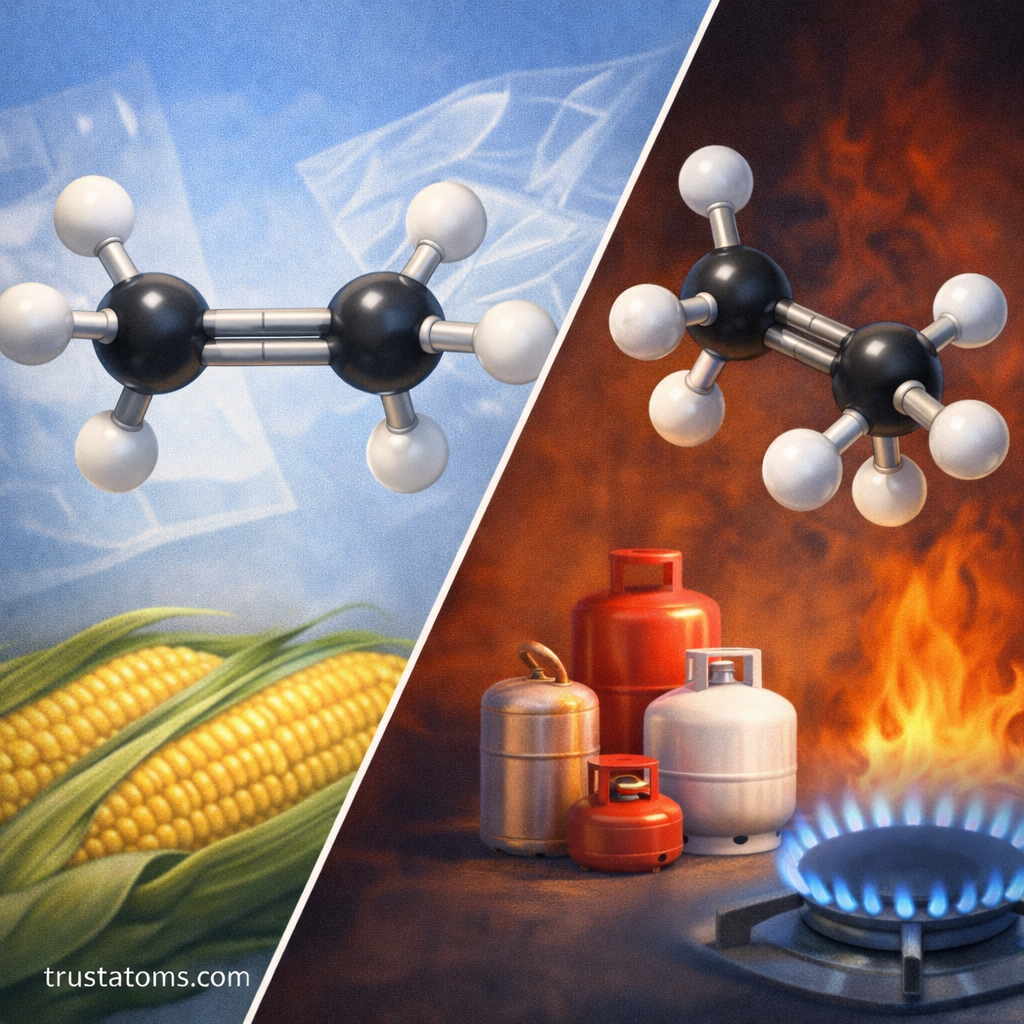
The double bond in alkenes allows them to participate in several important chemical reactions.
Common reactions include:
Addition Reactions
During addition reactions, atoms attach across the double bond.
Examples include:
- Hydrogenation (adding hydrogen)
- Halogenation (adding halogens like chlorine or bromine)
- Hydration (adding water)
Polymerization
Alkenes can join together to form long chains of repeating units called polymers.
This process produces many everyday materials such as:
- Polyethylene
- Polypropylene
- Synthetic plastics
Oxidation Reactions
Certain reactions break the double bond and form new oxygen-containing compounds.
These reactions are used in industrial chemical synthesis.
Natural and Industrial Sources of Alkenes
Alkenes occur naturally but are also produced on a large scale through industrial processes.
Common sources include:
- Petroleum refining
- Natural gas processing
- Cracking of larger hydrocarbons
These processes convert larger molecules into smaller, more reactive compounds like ethene and propene.
Uses of Alkenes
Alkenes are essential building blocks in modern industry.
Some of their major applications include:
Plastic Production
Many plastics begin as alkene molecules.
Examples include:
- Polyethylene
- Polypropylene
- Polyvinyl chloride (PVC)
Chemical Manufacturing
Alkenes are used to produce:
- Alcohols
- Synthetic rubber
- Detergents
- Industrial solvents
Agricultural and Biological Uses
Ethene also plays a role in plant biology.
It acts as a plant hormone that helps regulate:
- Fruit ripening
- Plant growth
- Aging processes in plants
Why Alkenes Matter in Chemistry
Alkenes are fundamental to organic chemistry because their double bonds allow chemists to create many other types of molecules.
Studying alkenes helps scientists understand:
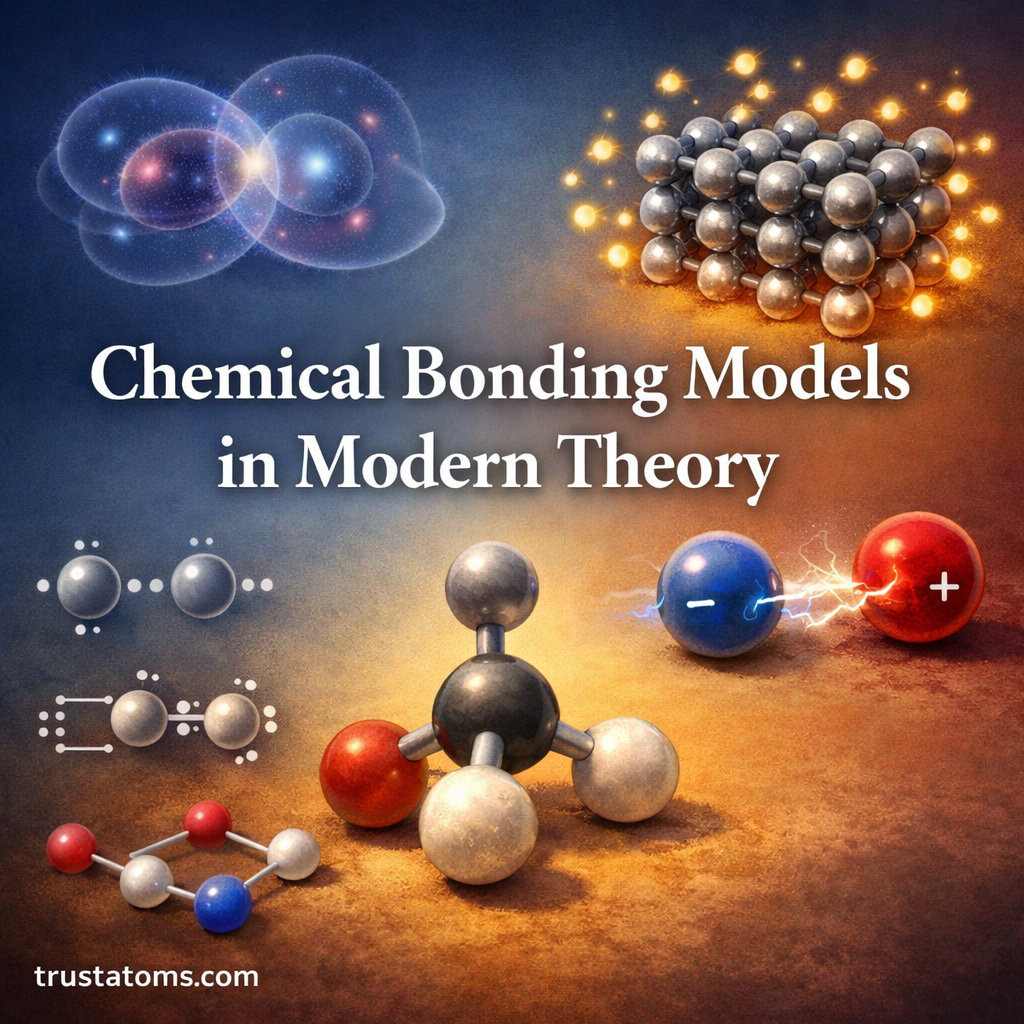
- Carbon bonding behavior
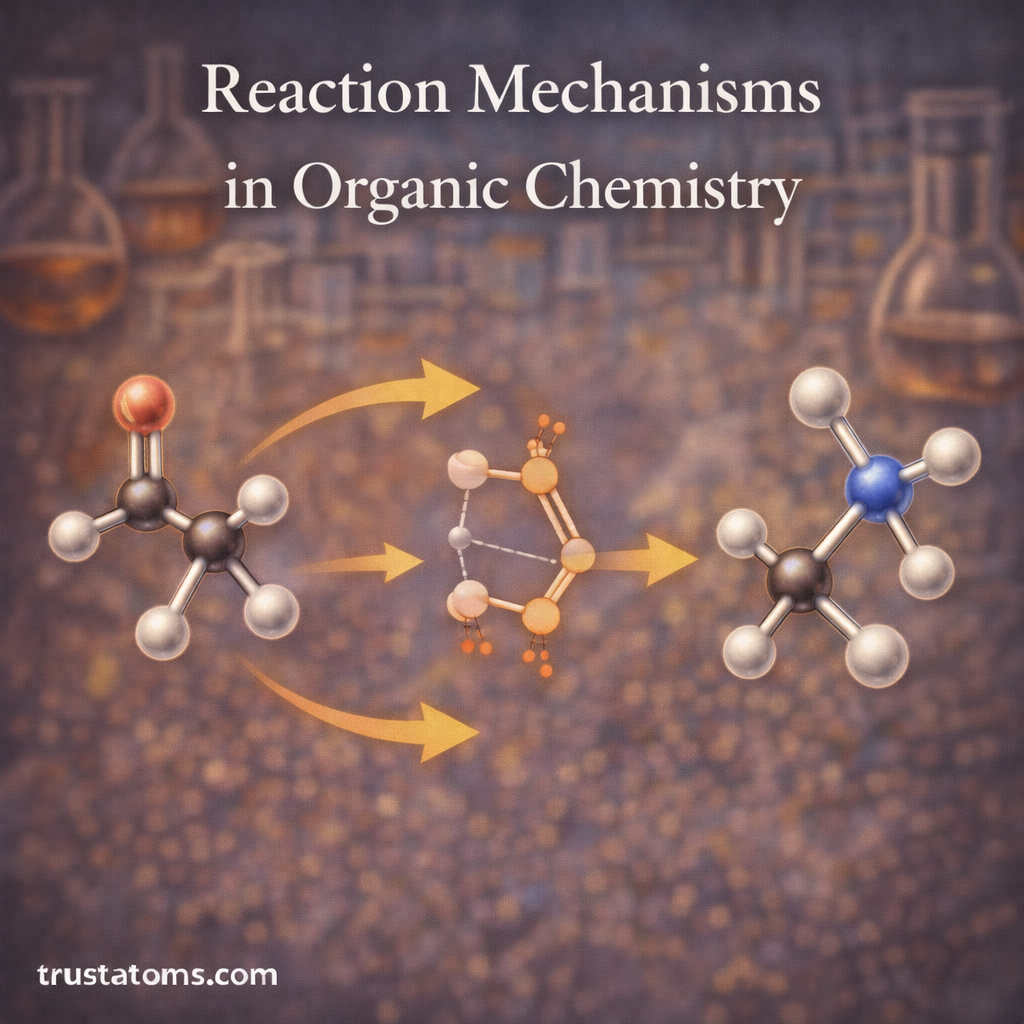
- Reaction mechanisms
- Industrial chemical production
- Polymer science
Because of their versatility and reactivity, alkenes are among the most important molecules used in modern chemical manufacturing.
Final Thoughts
Alkenes are hydrocarbons defined by the presence of at least one carbon–carbon double bond. This feature makes them unsaturated and significantly more reactive than alkanes.
From producing plastics to supporting biological processes, alkenes play a crucial role in both nature and industry. Understanding their structure and behavior provides a key foundation for exploring the wider field of organic chemistry.