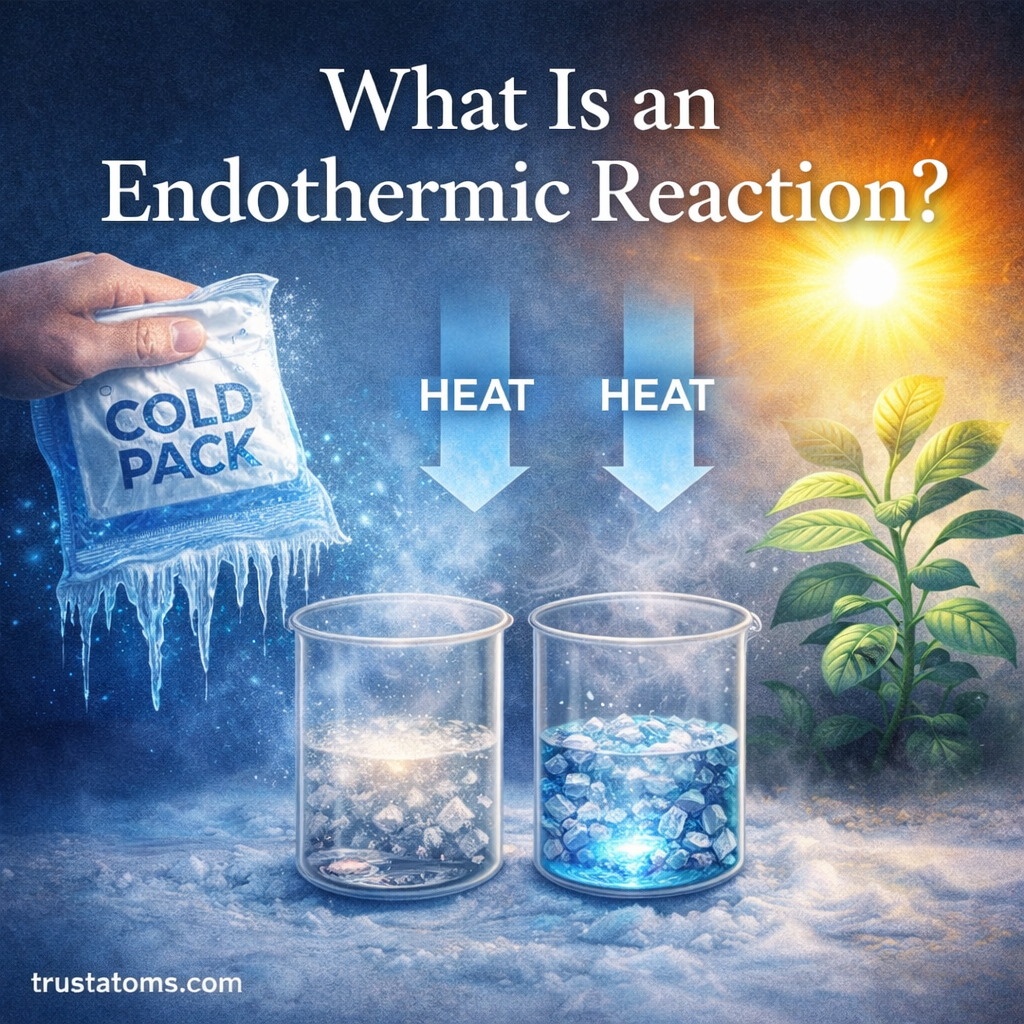
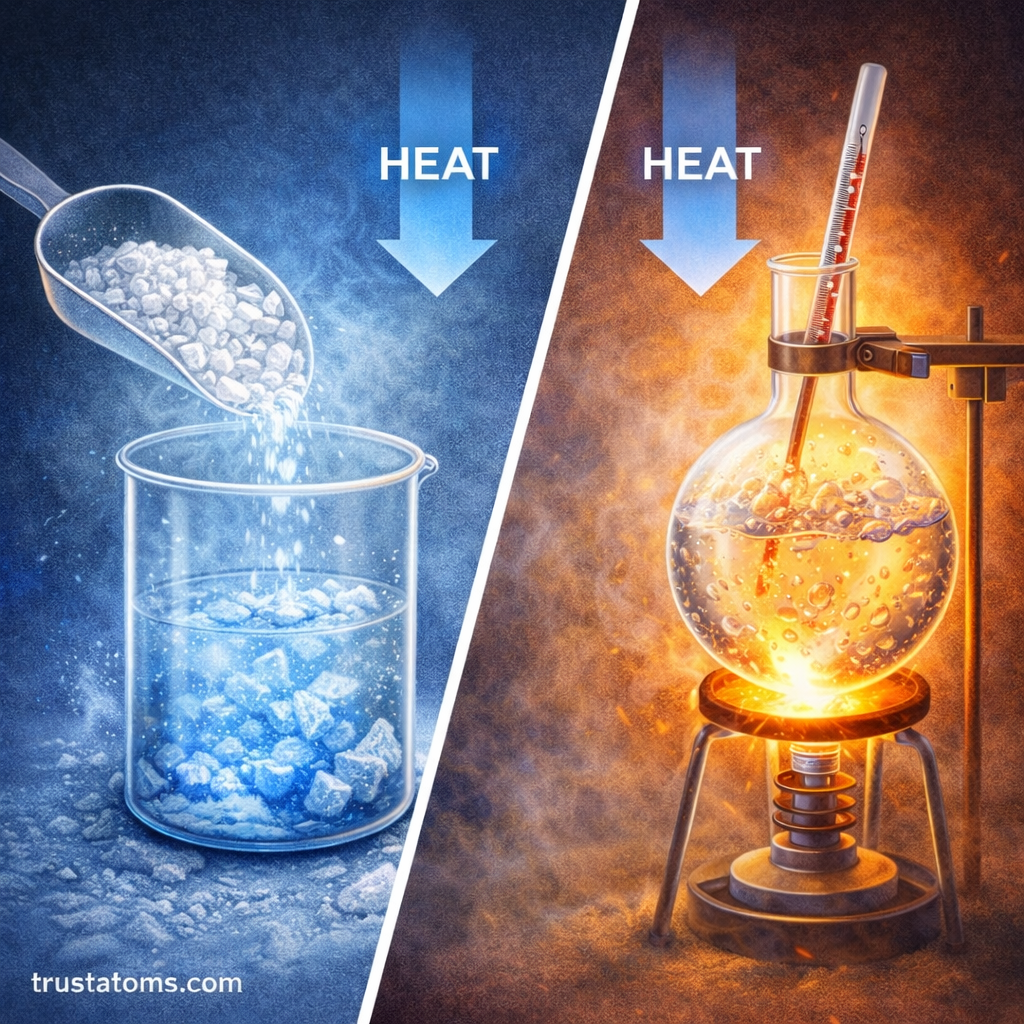
An endothermic reaction is a chemical reaction that absorbs energy from its surroundings, usually in the form of heat. Instead of releasing heat like exothermic reactions, endothermic reactions require a continuous input of energy for the reaction to occur.
This energy absorption often causes the surrounding environment to feel cooler. Because of this, endothermic reactions are commonly used to demonstrate energy transfer in chemistry labs and natural processes.
Endothermic reactions play an important role in both nature and technology, helping power biological processes, environmental cycles, and industrial chemical production.
Understanding the Basics of Endothermic Reactions
All chemical reactions involve two key energy steps:
- Breaking bonds in the reactants
- Forming new bonds to create products
In an endothermic reaction:
- More energy is required to break the bonds in the reactants than is released when new bonds form in the products.
- The reaction absorbs additional energy from the surroundings to complete the process.
Because energy is absorbed, the overall energy of the products becomes higher than the energy of the reactants.
Chemists describe this energy change using enthalpy (ΔH). In endothermic reactions, the enthalpy change is positive, indicating that energy has entered the system.
Common Signs of an Endothermic Reaction
Endothermic reactions can sometimes be identified through observable changes.
Typical signs include:
- The surrounding temperature decreases
- The reaction container feels cold
- Energy must be continuously supplied
- The reaction stops if energy input is removed
Because energy must be absorbed, endothermic reactions usually require an initial source of heat, light, or electricity.
Everyday Examples of Endothermic Reactions
Endothermic reactions occur in many natural and everyday situations. Although they may be less visually dramatic than exothermic reactions, they are essential for many systems.
Photosynthesis
One of the most important endothermic reactions occurs in plants.
During photosynthesis:
- Plants absorb sunlight energy
- Carbon dioxide and water combine
- Glucose and oxygen are produced
The sunlight provides the energy needed to drive the reaction.
Instant Cold Packs
Many instant cold packs used in sports injuries rely on endothermic reactions.
When activated:
- Chemicals inside the pack mix
- The reaction absorbs heat from the surroundings
- The pack becomes cold
This cooling effect helps reduce swelling and pain.
Dissolving Certain Salts
Some chemical compounds absorb heat when dissolved in water.
Examples include:
- Ammonium nitrate
- Potassium nitrate
As these substances dissolve, they pull heat energy from the surrounding solution, lowering its temperature.
Energy Diagrams of Endothermic Reactions
Chemists often use energy diagrams to represent how energy changes during reactions.
In an endothermic reaction:
- Reactants begin at a lower energy level
- Energy is absorbed during the reaction
- Products end at a higher energy level
Even though the reaction absorbs energy overall, it still requires an activation energy to start breaking chemical bonds.
Once this activation energy is supplied, the reaction can proceed as long as energy continues to be absorbed.
Why Endothermic Reactions Matter
Endothermic reactions are important in science, technology, and the natural world.
Biological Processes
Many life-sustaining processes require energy input.
Examples include:
- Photosynthesis in plants
- Protein synthesis in cells
- Energy storage in chemical bonds
These reactions allow organisms to store energy for later use.
Industrial Applications
Industries rely on endothermic reactions to manufacture important materials.
Examples include:
- Producing certain chemicals and fuels
- Metal processing and refining
- Manufacturing fertilizers
Controlled energy absorption allows industries to regulate reaction conditions carefully.
Environmental Systems
Endothermic reactions help drive natural cycles in ecosystems.
For example:
- Plants absorb sunlight to produce food
- Energy flows through food chains
- Chemical transformations occur in soil and atmosphere
These processes support life and environmental balance.
Endothermic vs Exothermic Reactions
Understanding endothermic reactions becomes easier when comparing them with exothermic reactions.
Endothermic Reactions
- Absorb heat from surroundings
- Surroundings become cooler
- Products have higher energy than reactants
- Enthalpy change (ΔH) is positive
Exothermic Reactions
- Release heat into surroundings
- Surroundings become warmer
- Products have lower energy than reactants
- Enthalpy change (ΔH) is negative
Both reaction types are essential for chemical systems and energy transfer.
Simple Ways to Remember Endothermic Reactions
A helpful way to remember the concept is by focusing on the word itself.
The term endothermic can be broken down into:
- Endo – meaning inside or into
- Thermic – meaning heat
So an endothermic reaction literally means heat going into the reaction.
This simple idea can make it easier to understand how energy moves during chemical changes.
Final Thoughts
Endothermic reactions are a key concept in chemistry because they demonstrate how chemical systems absorb energy from their surroundings. From photosynthesis to cold packs, these reactions show how energy can be stored and used in chemical processes.
Understanding endothermic reactions helps scientists explain natural cycles, develop new technologies, and better understand how energy moves through both biological and industrial systems.