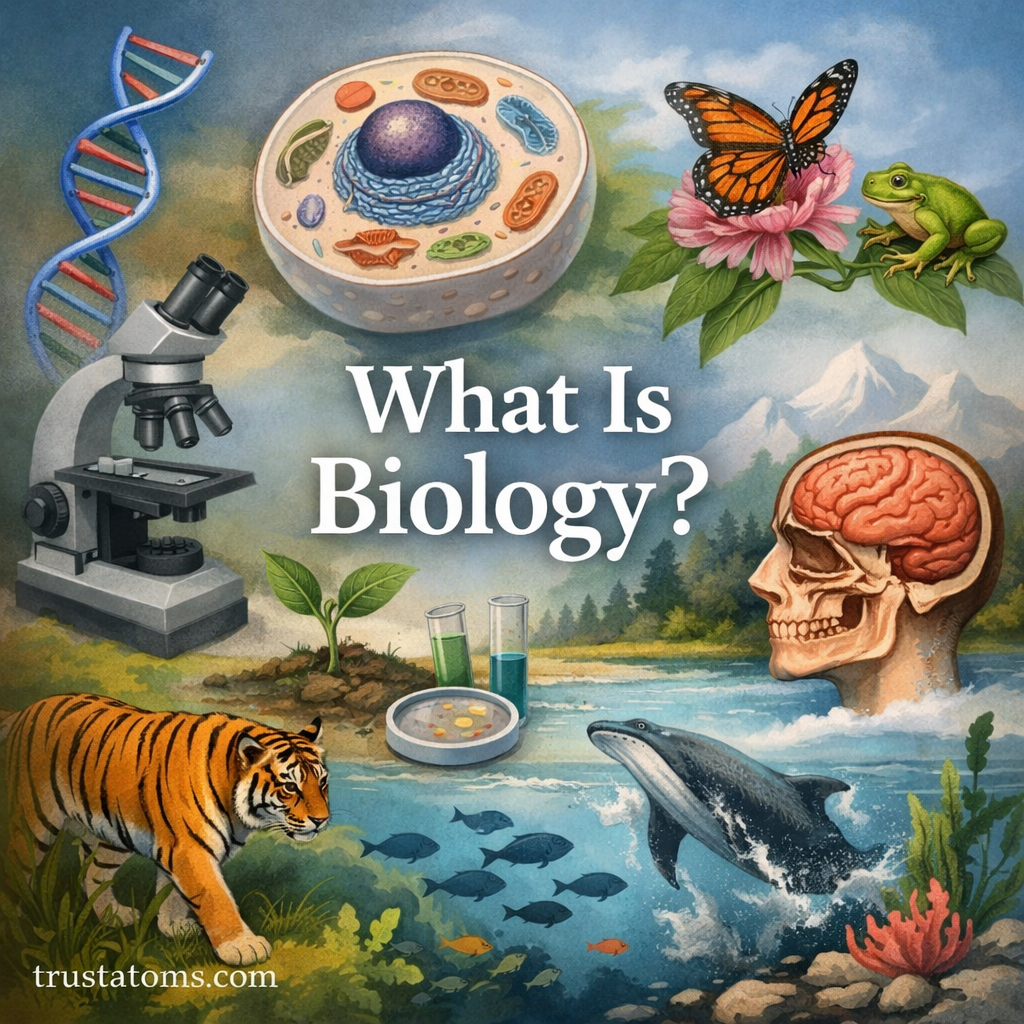
Biology is the scientific study of life and living organisms. It explores how living things function, grow, reproduce, evolve, and interact with their environments. From microscopic bacteria to giant blue whales, biology seeks to understand the processes that make life possible on Earth.
Because life exists in many forms and environments, biology is one of the broadest scientific disciplines. It connects with chemistry, physics, environmental science, and even technology to explain how living systems work.
Understanding biology helps scientists solve problems related to health, agriculture, ecosystems, and the future of life on our planet.
The Basic Definition of Biology
Biology comes from the Greek words “bios” (life) and “logos” (study or knowledge). In simple terms, biology means the study of life.
Biologists study:
- The structure of living organisms
- How organisms grow and develop
- How organisms reproduce
- How life adapts and evolves over time
- How organisms interact with each other and their environments
Biology focuses on both the smallest units of life and the largest biological systems on Earth.
The Characteristics of Life
One of biology’s main goals is to determine what separates living things from nonliving matter. While life exists in many forms, most living organisms share several key characteristics.
Cellular Organization
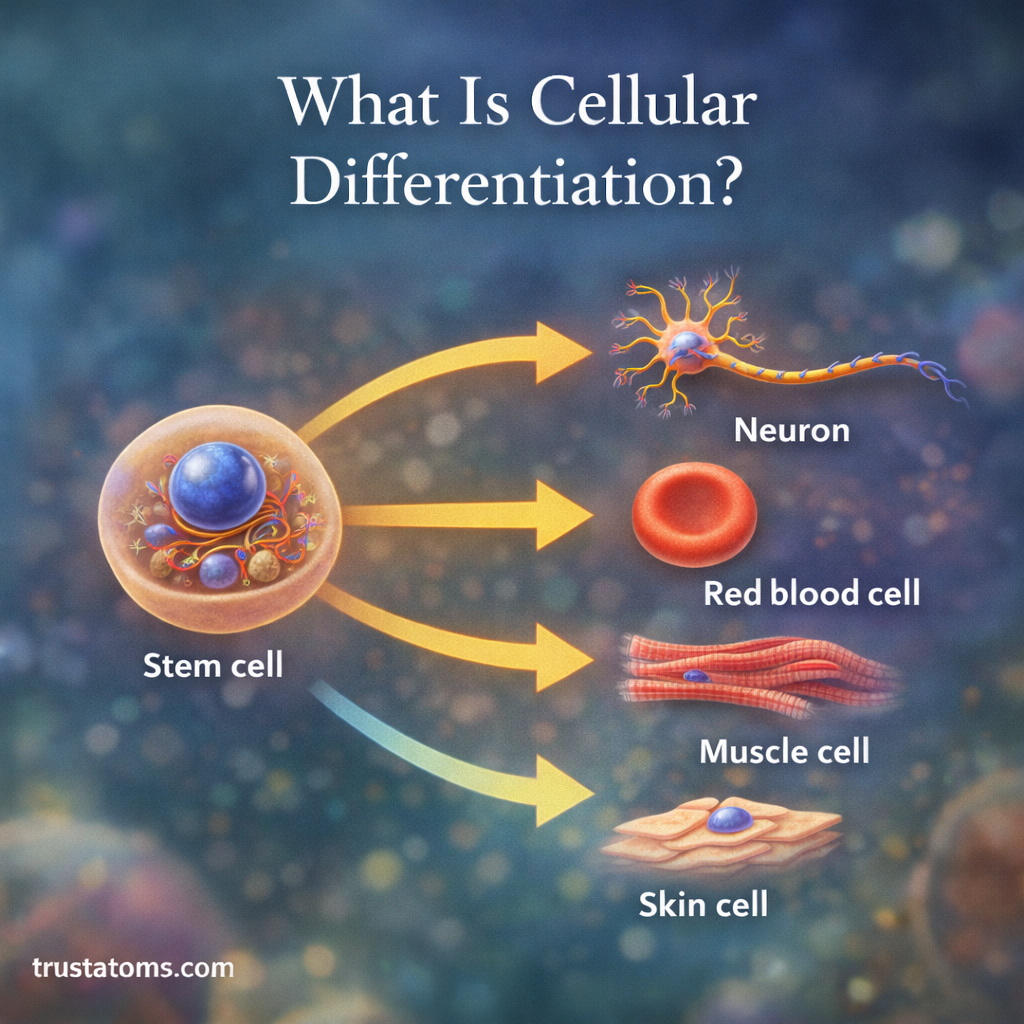
All living things are made of cells, which are the basic units of life. Some organisms consist of a single cell (like bacteria), while others have trillions of specialized cells (like humans).
Metabolism
Living organisms carry out chemical reactions to maintain life. These reactions allow organisms to obtain energy, build molecules, and maintain internal balance.
Growth and Development
Living things grow and develop according to instructions coded in their DNA.
Reproduction
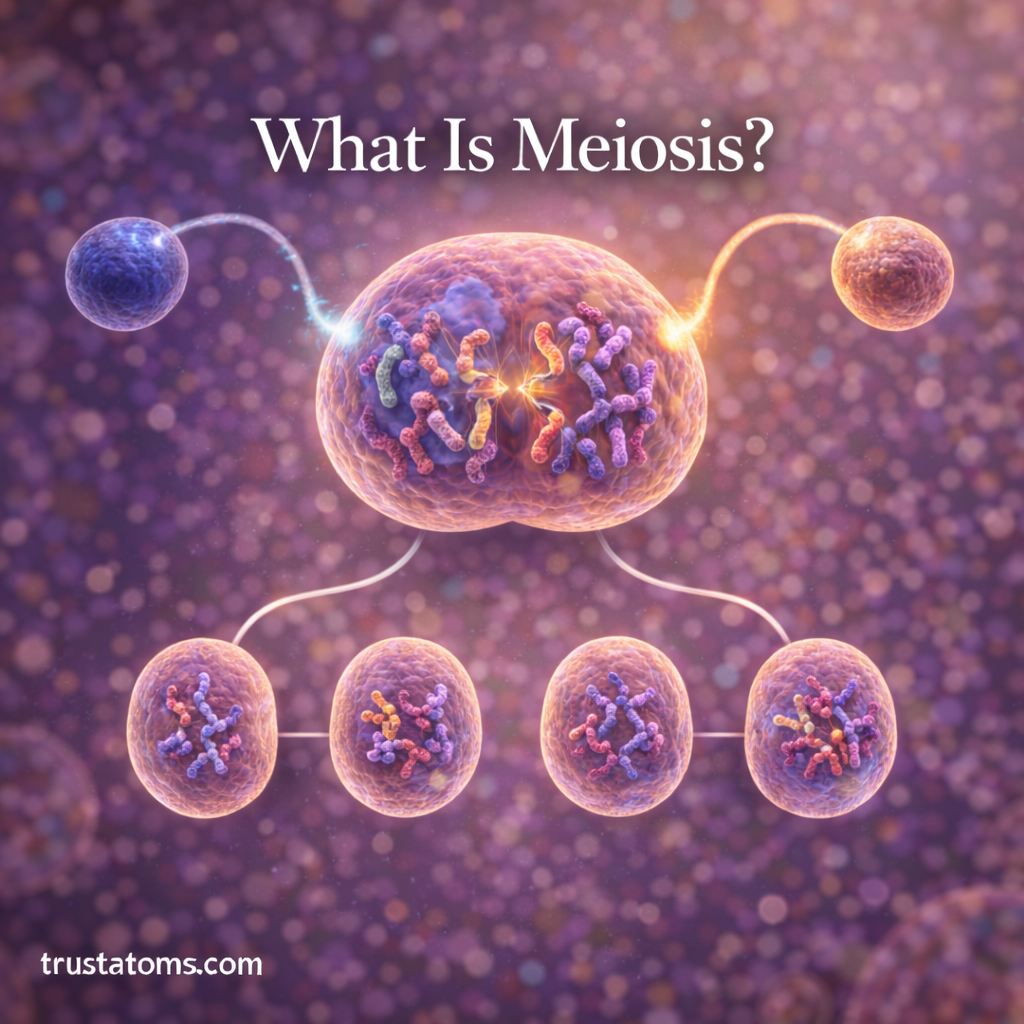
Organisms can reproduce, either sexually or asexually, passing genetic information to the next generation.
Response to Stimuli
Living organisms respond to environmental changes, such as light, temperature, or food availability.
Evolution and Adaptation
Over long periods of time, populations of organisms evolve and adapt to their environments through natural selection.
Major Branches of Biology
Biology covers many specialized areas of research. Each branch focuses on different aspects of life.
Molecular Biology
Molecular biology studies biological molecules such as DNA, RNA, and proteins. It examines how these molecules control the functions of cells.
Cell Biology
Cell biology focuses on the structure and function of cells, including how they divide, communicate, and perform specialized tasks.
Genetics
Genetics explores how traits are inherited from parents to offspring through genes and DNA.
Ecology
Ecology studies how organisms interact with each other and with their physical environments.
Evolutionary Biology
Evolutionary biology examines how species change over time through natural selection, mutation, and adaptation.
Anatomy and Physiology
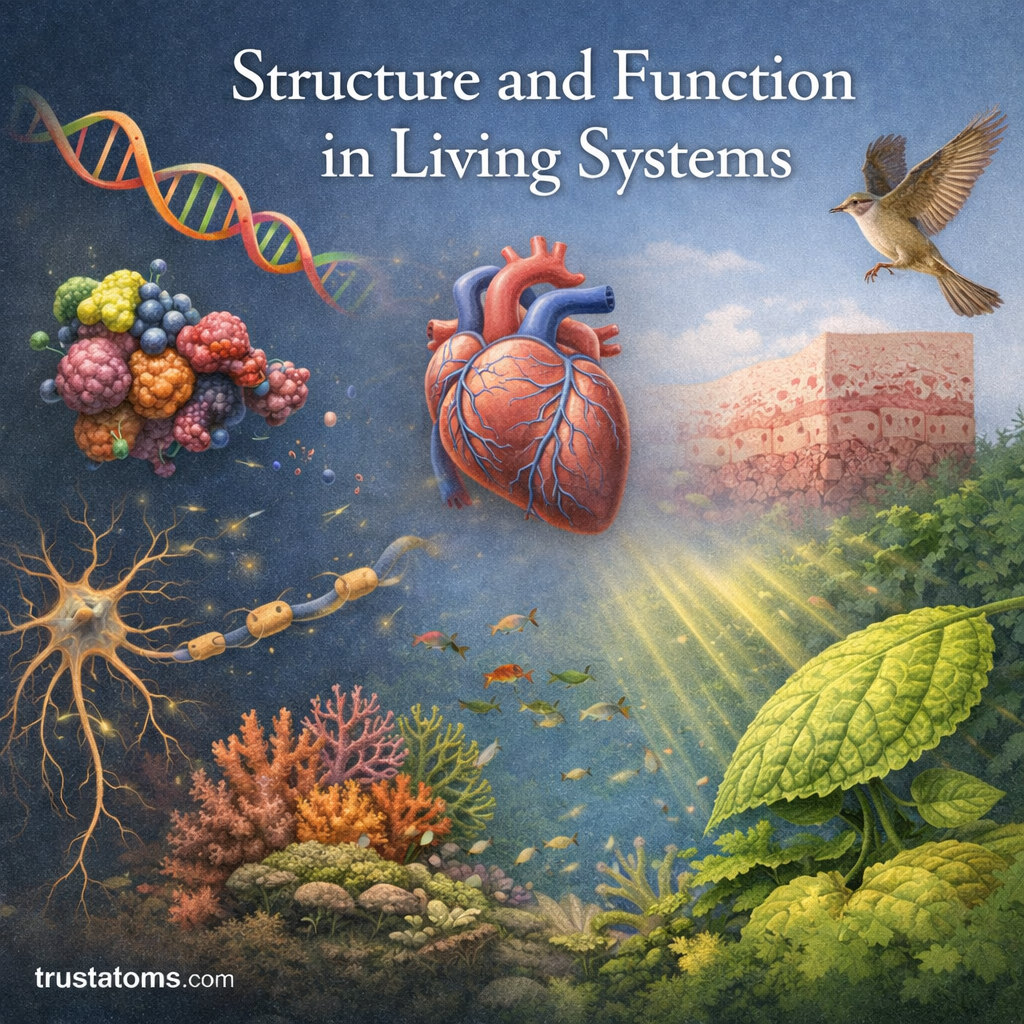
These fields study the physical structure of organisms and how their internal systems function.
Levels of Biological Organization
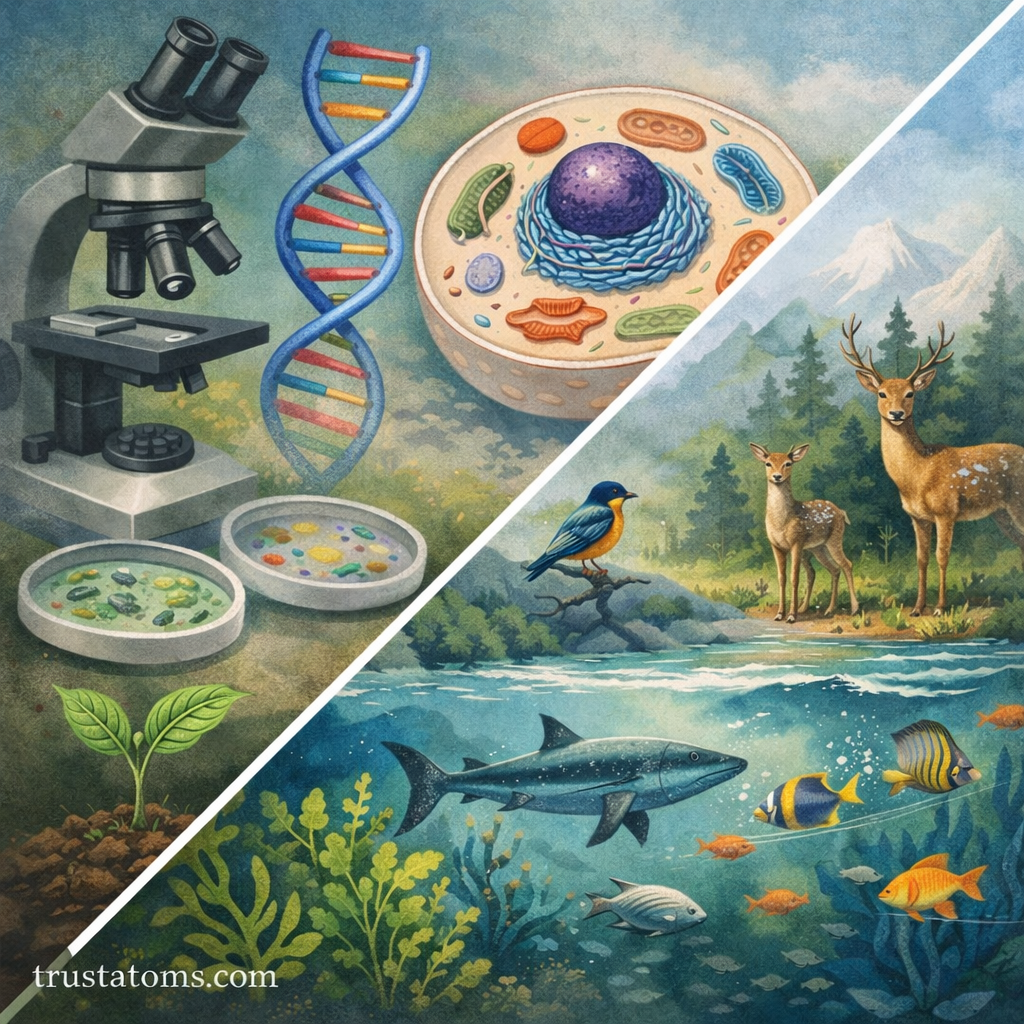
Biology studies life at many different levels of complexity. Each level builds upon the one before it.
- Molecules – Biological chemicals such as proteins and DNA
- Cells – The smallest units of life
- Tissues – Groups of similar cells working together
- Organs – Structures made of tissues that perform specific functions
- Organisms – Individual living things
- Populations – Groups of the same species in an area
- Communities – Multiple species interacting in an environment
- Ecosystems – Living organisms interacting with their physical surroundings
- Biosphere – All life on Earth combined
Understanding these levels helps scientists see how small biological processes influence entire ecosystems.
Why Biology Is Important
Biology plays a critical role in many areas of modern life. The discoveries made by biologists affect medicine, agriculture, environmental conservation, and biotechnology.
Some important contributions of biology include:
- Developing vaccines and medical treatments
- Improving crop production and food security
- Protecting endangered species and ecosystems
- Understanding diseases and how they spread
- Advancing biotechnology and genetic engineering
Biology also helps scientists address global challenges such as climate change, biodiversity loss, and emerging diseases.
Biology in Everyday Life
Even outside of laboratories, biology affects daily life in countless ways.
Examples include:
- Nutrition and how the body processes food
- Exercise and human physiology
- Microorganisms used in food production (such as yogurt or bread)
- Environmental health and clean water
- Genetics and inherited traits
Learning biology helps people make informed decisions about health, food, and the environment.
The Future of Biology
Biology continues to evolve as new technologies allow scientists to study life in greater detail. Advances such as genome sequencing, biotechnology, and artificial intelligence are transforming how researchers understand living systems.
Future biological discoveries may lead to:
- Personalized medicine based on genetic profiles
- New treatments for diseases
- Synthetic biology and engineered organisms
- Improved sustainability in agriculture
- Better protection of ecosystems
As technology advances, biology will remain essential to understanding life and solving global challenges.
Final Thoughts
Biology is the science that explores life in all its complexity. From microscopic cells to entire ecosystems, biology explains how living things function, interact, and evolve.
By studying biology, scientists gain deeper insight into the natural world and develop solutions that improve health, protect the environment, and expand our understanding of life on Earth.