Gene expression is the biological process through which information stored in DNA is used to create functional products such as proteins or RNA molecules. These products allow cells to perform specific tasks, maintain structure, and respond to environmental signals.
Although every cell in a multicellular organism contains the same DNA, not all genes are active in every cell. Gene expression determines which genes are turned on or off, allowing different cell types—such as muscle cells, neurons, or skin cells—to perform unique functions.
Understanding gene expression helps explain how organisms develop, adapt, and maintain normal biological processes.
How Genes Store Biological Instructions
Genes are segments of DNA that contain instructions for building proteins or functional RNA molecules. These instructions are written in the sequence of four DNA bases:
- Adenine (A)
- Thymine (T)
- Cytosine (C)
- Guanine (G)
The order of these bases forms a genetic code that cells can interpret.
However, the instructions in DNA cannot directly produce proteins. Instead, the information must first be converted through the gene expression process.
The Two Main Stages of Gene Expression
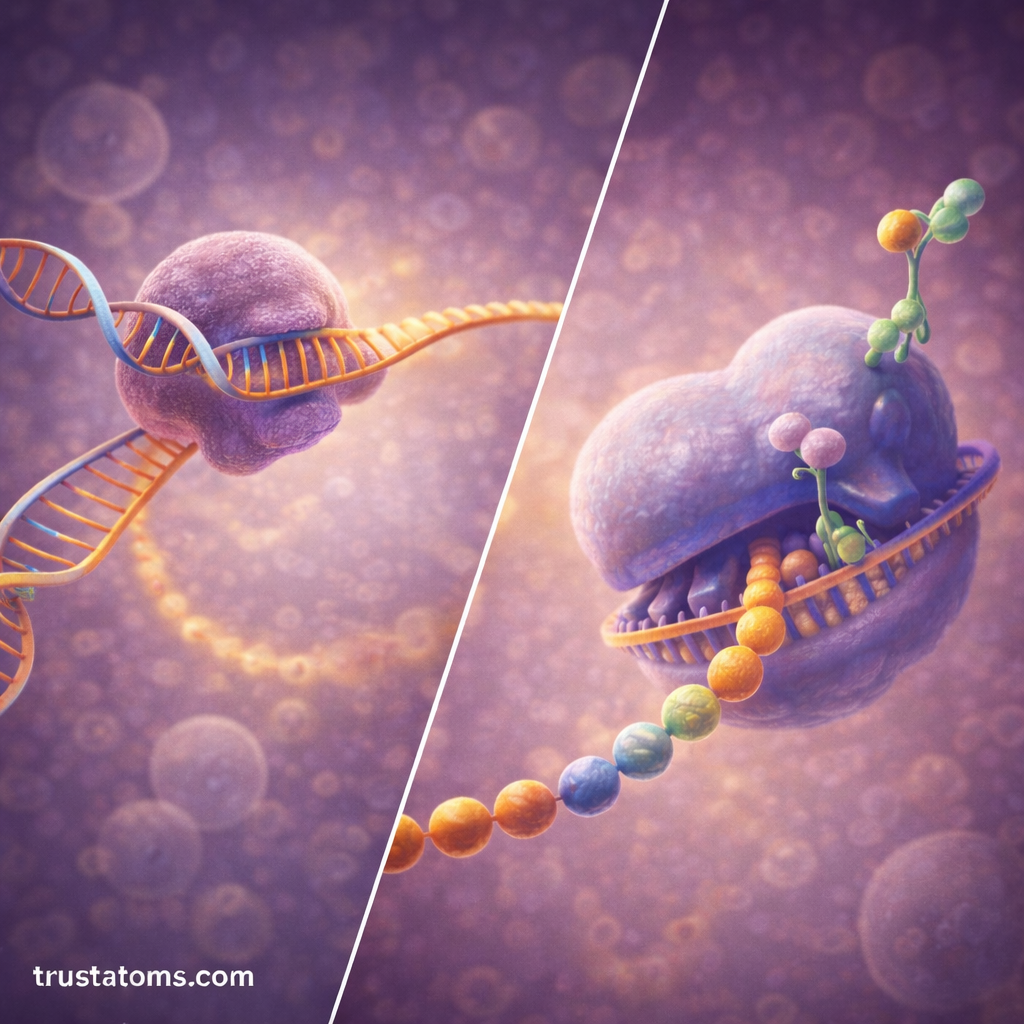
Gene expression typically occurs in two major stages:
- Transcription
- Translation
These stages convert genetic information from DNA into proteins that perform cellular functions.
Transcription: Copying DNA into RNA
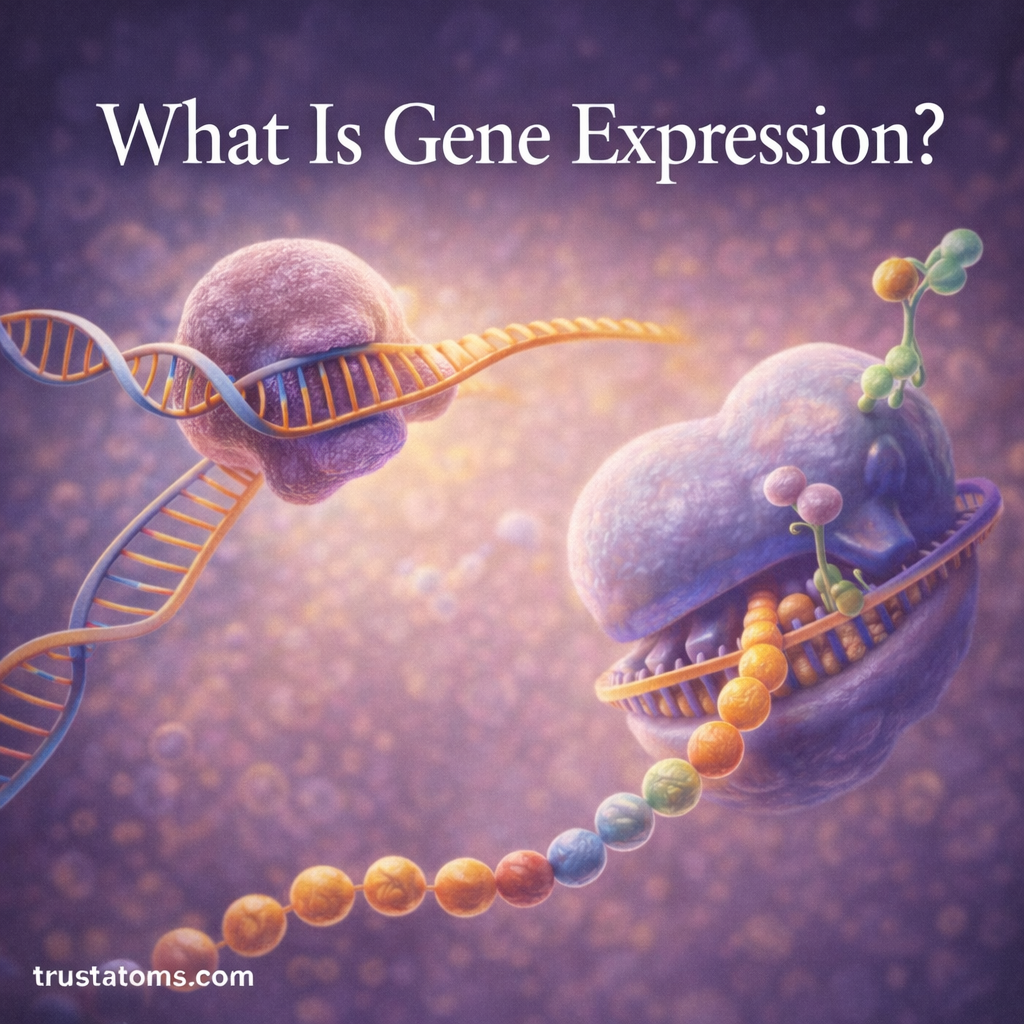
Transcription is the first step of gene expression. During transcription, a segment of DNA is copied into a molecule called messenger RNA (mRNA).
Key steps in transcription include:
- An enzyme called RNA polymerase binds to a region of DNA
- The DNA strands separate temporarily
- RNA polymerase builds an RNA copy of the gene using complementary base pairing
This RNA molecule carries the genetic instructions from the nucleus to the cytoplasm, where protein production occurs.
Translation: Building Proteins
The second stage of gene expression is translation.
During translation, the mRNA molecule is used as a template to build a protein.
This process occurs at cellular structures called ribosomes.
The steps include:
- Ribosomes read the sequence of codons on the mRNA
- Transfer RNA (tRNA) molecules bring specific amino acids
- Amino acids are linked together to form a protein chain
Once completed, the chain folds into a functional protein that performs specific tasks in the cell.
Why Gene Expression Is Important
Gene expression controls many essential biological processes.
It allows cells to:
- Produce proteins needed for metabolism
- Grow and divide
- Respond to environmental signals
- Develop specialized cell types
Without proper gene expression, cells would not be able to regulate biological activities effectively.
Gene Expression and Cell Specialization
Although all cells in a multicellular organism contain the same genome, different cell types express different genes.
For example:
- Muscle cells express genes involved in contraction
- Neurons express genes related to signal transmission
- Skin cells express genes related to protective barriers
This selective activation of genes allows cells to develop specialized structures and functions.
Regulation of Gene Expression
Cells carefully control gene expression through a process known as gene regulation.
Regulation determines:
- When a gene is activated
- How much protein is produced
- How long gene activity continues
Several mechanisms regulate gene expression, including:
- Regulatory proteins that bind to DNA
- Chemical modifications to DNA or histone proteins
- Signals from the cell’s environment
These regulatory systems ensure that genes are expressed at the right time and in the correct amounts.
Environmental Influence on Gene Expression
Gene expression is not controlled only by genetic factors. Environmental conditions can also influence which genes are activated.
Examples of environmental influences include:
- Temperature changes
- Nutrient availability
- Stress signals
- Hormones
These signals can trigger cellular pathways that increase or decrease the expression of specific genes.
Gene Expression and Human Health
Changes in gene expression can influence health and disease.
Abnormal gene expression patterns may contribute to conditions such as:
- Cancer
- Genetic disorders
- Metabolic diseases
Medical researchers study gene expression to better understand disease mechanisms and develop treatments.
For example, some therapies aim to regulate gene activity or replace missing proteins caused by faulty gene expression.
Modern Techniques for Studying Gene Expression
Scientists use several technologies to analyze gene expression in cells and tissues.
Common techniques include:
- RNA sequencing (RNA-seq) to measure RNA levels
- Microarrays to compare gene activity across samples
- PCR methods to detect specific gene transcripts
These tools allow researchers to understand how genes behave under different conditions and how expression patterns change in disease.
Final Thoughts
Gene expression is the fundamental process that allows genetic information to be transformed into functional molecules that sustain life. Through transcription and translation, cells interpret the instructions stored in DNA and produce proteins necessary for survival.
By regulating which genes are expressed and when they are activated, organisms can grow, adapt, and maintain complex biological systems. Ongoing research into gene expression continues to reveal how genes shape development, health, and the diversity of life on Earth.