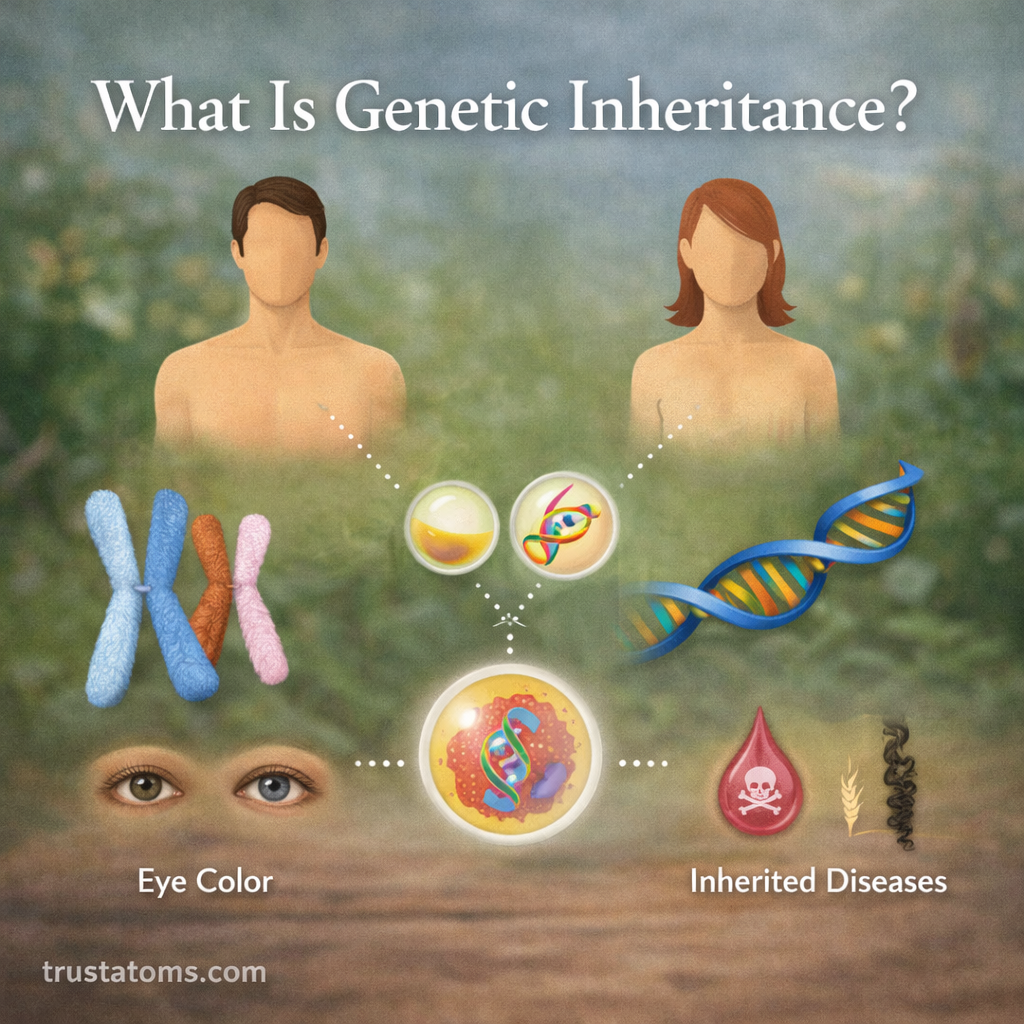
Genetic inheritance is the biological process through which traits are passed from parents to their offspring through genes. These traits can include physical characteristics such as eye color, hair type, and height, as well as biological factors like blood type or susceptibility to certain diseases.
Every living organism inherits genetic information from its parents. This information is stored in DNA (deoxyribonucleic acid), which carries instructions for how an organism grows, develops, and functions.
Understanding genetic inheritance helps scientists explain how traits appear in families, how species evolve over time, and how genetic diseases are transmitted across generations.
The Basics of Genes and DNA
To understand genetic inheritance, it is important to understand how genetic information is stored and transmitted.
DNA is the molecule that contains genetic instructions for building and maintaining living organisms. DNA is organized into structures called chromosomes, which are located in the nucleus of cells.
Each chromosome contains thousands of genes.
Genes are segments of DNA that provide instructions for specific traits or biological functions.
For example, genes influence characteristics such as:
- Eye color
- Skin pigmentation
- Blood type
- Height
- Hair texture
- Metabolism
Humans typically have 23 pairs of chromosomes, for a total of 46 chromosomes in each body cell.
Each parent contributes one chromosome from each pair, meaning half of a person’s genetic information comes from the mother and half from the father.
How Traits Are Passed From Parents to Offspring
Genetic inheritance occurs during reproduction when parents pass genes to their offspring through reproductive cells called gametes.
These cells include:
- Sperm cells in males
- Egg cells in females
Gametes contain half the normal number of chromosomes (23 in humans). When a sperm fertilizes an egg, the chromosomes combine to create a full set.
This process results in a new individual with a unique combination of genes from both parents.
Because of this mixing of genetic material, no two siblings (except identical twins) have exactly the same genetic makeup.
Alleles and Genetic Variation
Each gene can exist in different forms called alleles.
Alleles are variations of the same gene that can produce different versions of a trait.
For example:
- A gene for eye color may have brown, blue, or green alleles.
- A gene for hair texture may have straight or curly alleles.
Every individual inherits two alleles for each gene:
- One allele from the mother
- One allele from the father
The combination of these alleles determines the trait that appears.
This genetic variation is what creates diversity among individuals within a species.
Dominant and Recessive Traits
Some alleles influence traits more strongly than others.
Dominant Alleles
A dominant allele expresses its trait even if only one copy is present.
Example:
If a person inherits one dominant allele and one recessive allele for a trait, the dominant trait will appear.
Recessive Alleles
A recessive allele only affects the trait when two copies are inherited.
This means both parents must pass the recessive allele for the trait to be visible.
Example:
Certain inherited conditions only appear when a person receives two recessive copies of the gene.
Genotype vs Phenotype
Two important terms help explain how genetic inheritance works.
Genotype
The genotype refers to the genetic makeup of an organism—the combination of alleles it carries.
Examples include:
- AA
- Aa
- aa
These letter combinations represent different genetic possibilities.
Phenotype
The phenotype refers to the observable physical characteristics that result from the genotype.
Examples include:
- Brown eyes
- Blue eyes
- Tall height
- Short height
Different genotypes can sometimes produce the same phenotype if dominant alleles are involved.
Types of Genetic Inheritance
Genetic inheritance can occur in several different patterns depending on how genes interact.
1. Mendelian Inheritance
This is the simplest form of inheritance, first described by Gregor Mendel.
Traits are controlled by a single gene with dominant and recessive alleles.
Examples include:
- Certain inherited diseases
- Flower color in plants
- Seed shape in pea plants
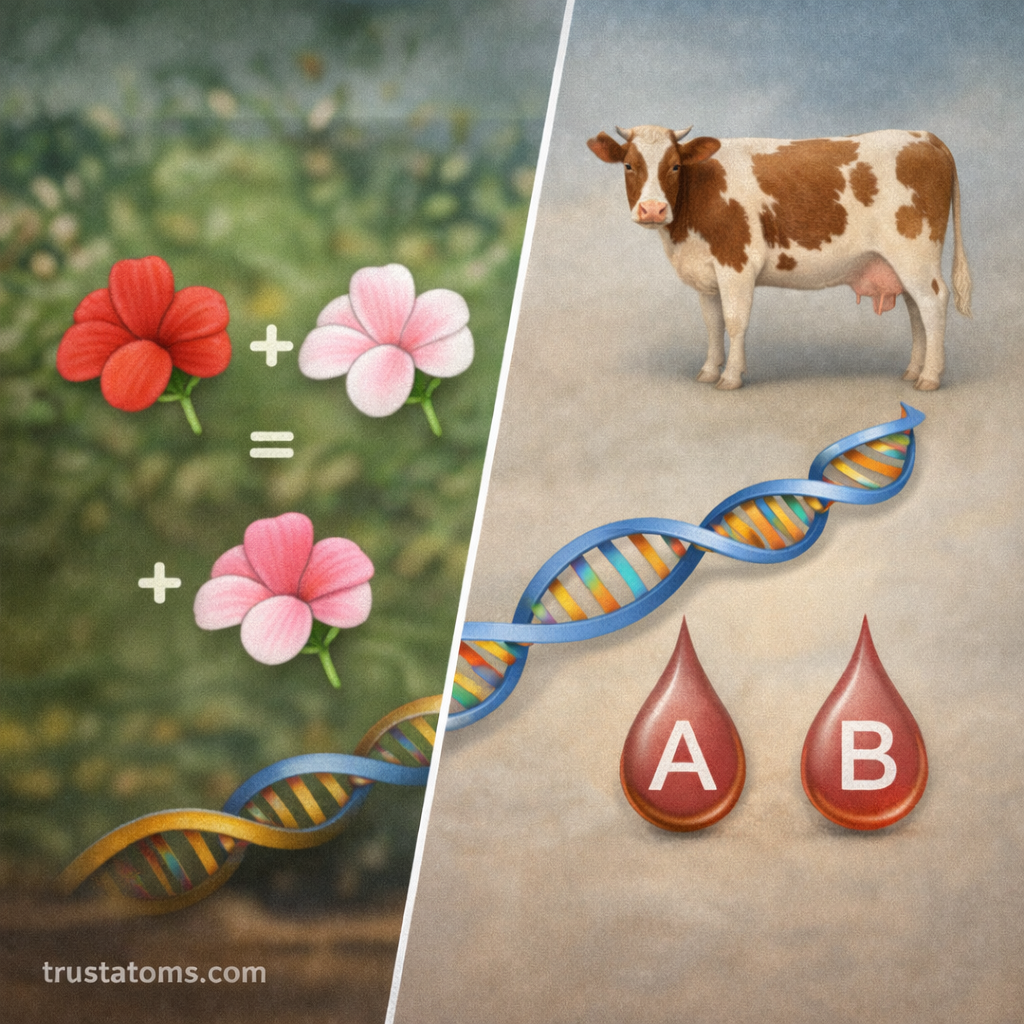
2. Incomplete Dominance
In incomplete dominance, neither allele fully dominates the other.
Instead, the resulting trait is a blend of both.
Example:
- Red flower × White flower → Pink flower
3. Codominance
In codominance, both alleles are fully expressed at the same time.
Example:
Human blood type AB expresses both A and B alleles simultaneously.
4. Polygenic Inheritance
Some traits are controlled by multiple genes rather than a single gene.
Examples include:
- Height
- Skin color
- Eye color
- Intelligence
These traits often show a wide range of variation.
5. Sex-Linked Inheritance
Some genes are located on the sex chromosomes, which determine biological sex.
These traits are inherited differently between males and females.
Examples include:
- Color blindness
- Hemophilia
Because males have only one X chromosome, they are more likely to express certain sex-linked conditions.
Why Genetic Inheritance Is Important
Genetic inheritance plays a central role in biology, medicine, and evolution.
Understanding inheritance allows scientists and doctors to:
- Predict how traits may appear in offspring
- Study how genetic diseases are passed through families
- Improve crop breeding and agriculture
- Develop medical treatments based on genetic information
- Understand evolutionary changes over time
Genetics also helps researchers understand how environmental factors interact with genes to influence traits and health.
Genetic Inheritance and Evolution
Genetic inheritance drives evolution by passing traits from one generation to the next.
When genetic variations improve survival or reproduction, those traits become more common in a population over time.
This process is known as natural selection.
Examples of inherited traits that influence survival include:
- Camouflage in animals
- Resistance to disease
- Adaptations to climate
Over many generations, genetic inheritance combined with natural selection can lead to the development of new species.
Genetic Inheritance in Modern Science
Modern genetic research continues to expand our understanding of inheritance.
Advanced technologies allow scientists to study genes in greater detail than ever before.
Some important developments include:
- Genome sequencing
- Genetic testing
- Gene therapy
- CRISPR gene editing
- Personalized medicine
These advances help scientists better understand how genes influence health, disease, and biological development.
Final Thoughts
Genetic inheritance is the process by which biological traits are passed from parents to offspring through genes. By transmitting DNA from one generation to the next, living organisms preserve and diversify the traits that define their species.
From simple dominant and recessive traits to complex polygenic characteristics, genetic inheritance shapes the diversity of life on Earth. Understanding this process helps scientists explain how traits appear in families, how diseases are inherited, and how species evolve over time.
As genetic research continues to advance, our understanding of inheritance will continue to grow, offering new insights into biology, medicine, and the nature of life itself.