Ionization energy is one of the key concepts used to understand how atoms behave in chemistry. It explains how strongly an atom holds onto its electrons and helps scientists predict how elements will react with one another.
From chemical reactions to the formation of ions, ionization energy plays a major role in the structure and behavior of matter.
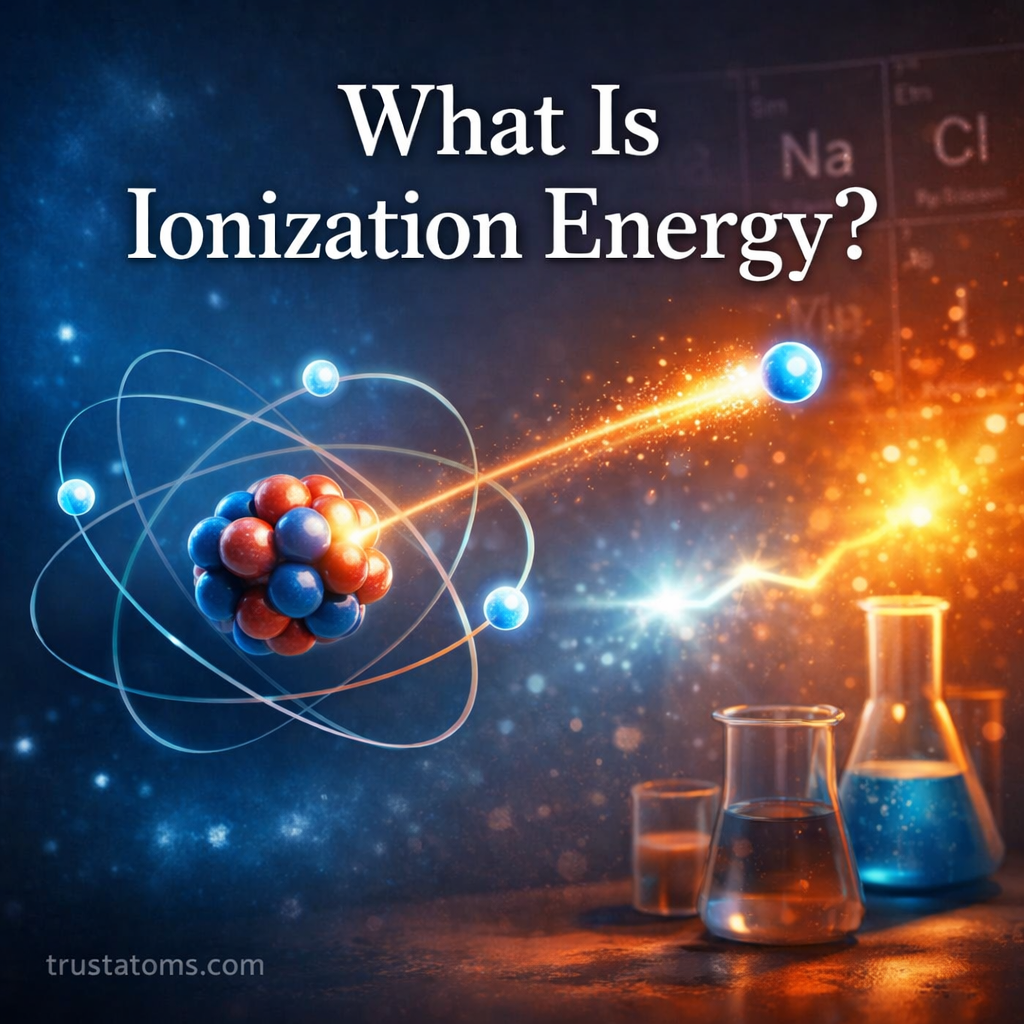
In simple terms, ionization energy tells us how much energy is required to remove an electron from an atom.
Understanding Ionization Energy
Ionization energy is defined as the amount of energy required to remove the outermost electron from a neutral atom in its gaseous state.
When this electron is removed, the atom becomes a positively charged ion.
For example:
- A neutral atom has equal numbers of protons and electrons.
- Removing one electron leaves more protons than electrons.
- This imbalance creates a positive ion.
The basic idea is simple:
- Atoms that hold their electrons tightly have high ionization energy.
- Atoms that lose electrons easily have low ionization energy.
Why Ionization Energy Matters
Ionization energy helps scientists understand how elements behave during chemical reactions.
It influences several important chemical properties, including:
- How easily an element forms positive ions
- How reactive an element is
- The type of chemical bonds it forms
- Periodic trends across the periodic table
Elements with low ionization energy tend to lose electrons easily, making them highly reactive metals. Elements with high ionization energy tend to keep their electrons and are often less reactive.
First, Second, and Third Ionization Energies
Atoms can lose more than one electron, but each additional electron requires more energy to remove.
This leads to different levels of ionization energy.
First Ionization Energy
The energy required to remove the first outermost electron from a neutral atom.
This is the most commonly discussed form of ionization energy.
Second Ionization Energy
The energy required to remove a second electron after the first one has already been removed.
Because the atom is now positively charged, the remaining electrons are held more tightly.
Third Ionization Energy
The energy required to remove a third electron from the atom.
Each step requires progressively more energy because the positive charge of the ion increases.
Factors That Affect Ionization Energy
Several physical properties determine how strongly an atom holds onto its electrons.
1. Nuclear Charge
Atoms with more protons in the nucleus exert a stronger attraction on their electrons.
This stronger pull makes electrons harder to remove, increasing ionization energy.
2. Distance From the Nucleus
Electrons that are farther from the nucleus experience weaker attraction.
When electrons are farther away:
- They are easier to remove
- Ionization energy decreases
3. Electron Shielding
Inner electrons can block or “shield” outer electrons from the full pull of the nucleus.
More shielding means:
- Outer electrons feel less attraction
- Ionization energy decreases
4. Atomic Size
Larger atoms generally have lower ionization energy because their outer electrons are farther from the nucleus.
Smaller atoms tend to hold electrons more tightly.
Ionization Energy Trends in the Periodic Table
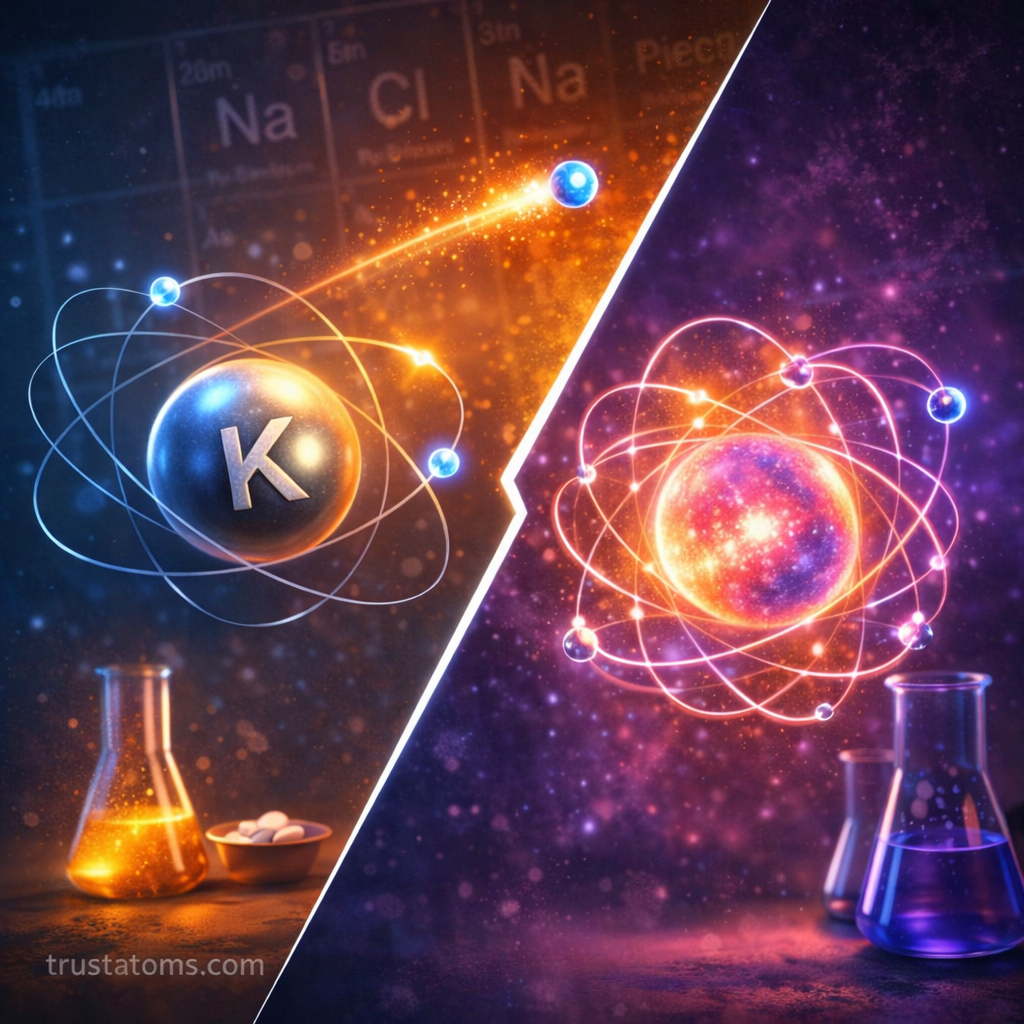
Ionization energy follows predictable patterns across the periodic table.
Across a Period (Left to Right)
Ionization energy generally increases as you move from left to right across a row.
This happens because:
- The number of protons increases
- The nuclear pull on electrons becomes stronger
- Electrons are held more tightly
Down a Group (Top to Bottom)
Ionization energy generally decreases as you move down a column.
This occurs because:
- Atoms become larger
- Electrons are farther from the nucleus
- Shielding increases
As a result, electrons are easier to remove.
Examples of Ionization Energy in Action
Different elements have very different ionization energies, which helps explain their chemical behavior.
For example:
- Alkali metals have very low ionization energy and easily lose one electron.
- Noble gases have very high ionization energy and rarely lose electrons.
- Halogens tend to gain electrons rather than lose them.
These differences explain why some elements are highly reactive while others are extremely stable.
How Ionization Energy Connects to Chemical Reactivity
Ionization energy is closely linked to how elements participate in chemical reactions.
Elements with low ionization energy:
- Lose electrons easily
- Form positive ions
- React quickly with nonmetals
Elements with high ionization energy:
- Hold electrons tightly
- Resist forming positive ions
- Are often less reactive
This concept helps chemists predict the types of compounds elements will form.
Ionization Energy in Everyday Chemistry
While ionization energy sounds like a complex concept, it helps explain many real-world chemical processes.
Examples include:
- The formation of salts and ionic compounds
- Metal reactivity with water
- Energy changes in chemical reactions
- Behavior of elements in batteries and electronics
Understanding ionization energy gives scientists insight into how atoms interact and why certain reactions occur.
Final Thoughts
Ionization energy measures how strongly an atom holds onto its electrons. It represents the energy required to remove an electron and form a positive ion.
This concept helps explain chemical reactivity, periodic trends, and the behavior of elements during reactions.
By studying ionization energy, chemists gain a deeper understanding of atomic structure and the forces that govern how matter interacts.