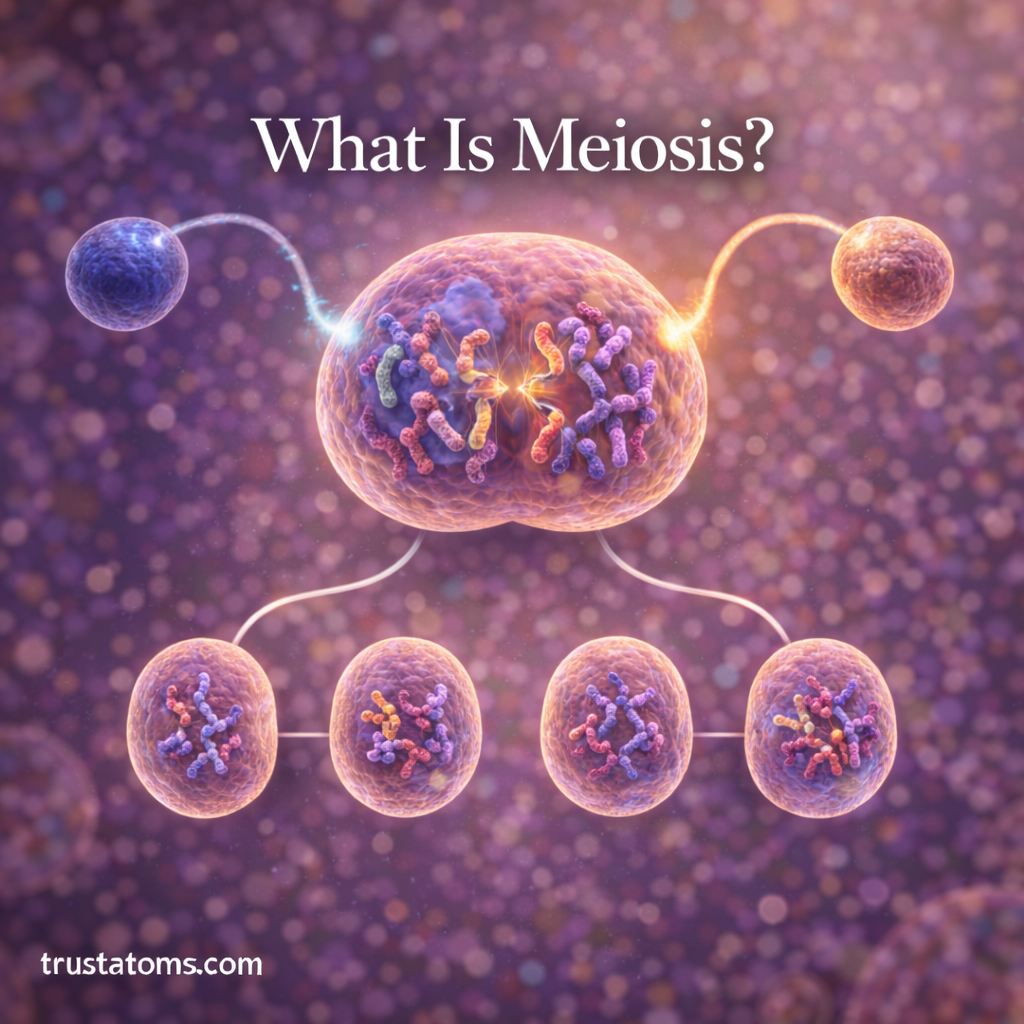
Meiosis is a specialized type of cell division that produces reproductive cells such as sperm and egg cells. Unlike regular cell division, meiosis reduces the number of chromosomes by half, ensuring that when fertilization occurs, the resulting offspring has the correct number of chromosomes.
This process is essential for sexual reproduction and plays a major role in generating genetic diversity within populations.
Understanding meiosis helps explain how traits are passed from parents to offspring and why individuals within a species can have unique genetic combinations.
The Basic Definition of Meiosis
Meiosis is a two-stage cell division process that produces four genetically unique daughter cells, each containing half the number of chromosomes of the original cell.
These daughter cells are called gametes, which include:
- Sperm cells in males
- Egg cells in females
The reduction in chromosome number is critical because it prevents chromosome numbers from doubling with each generation.
For example:
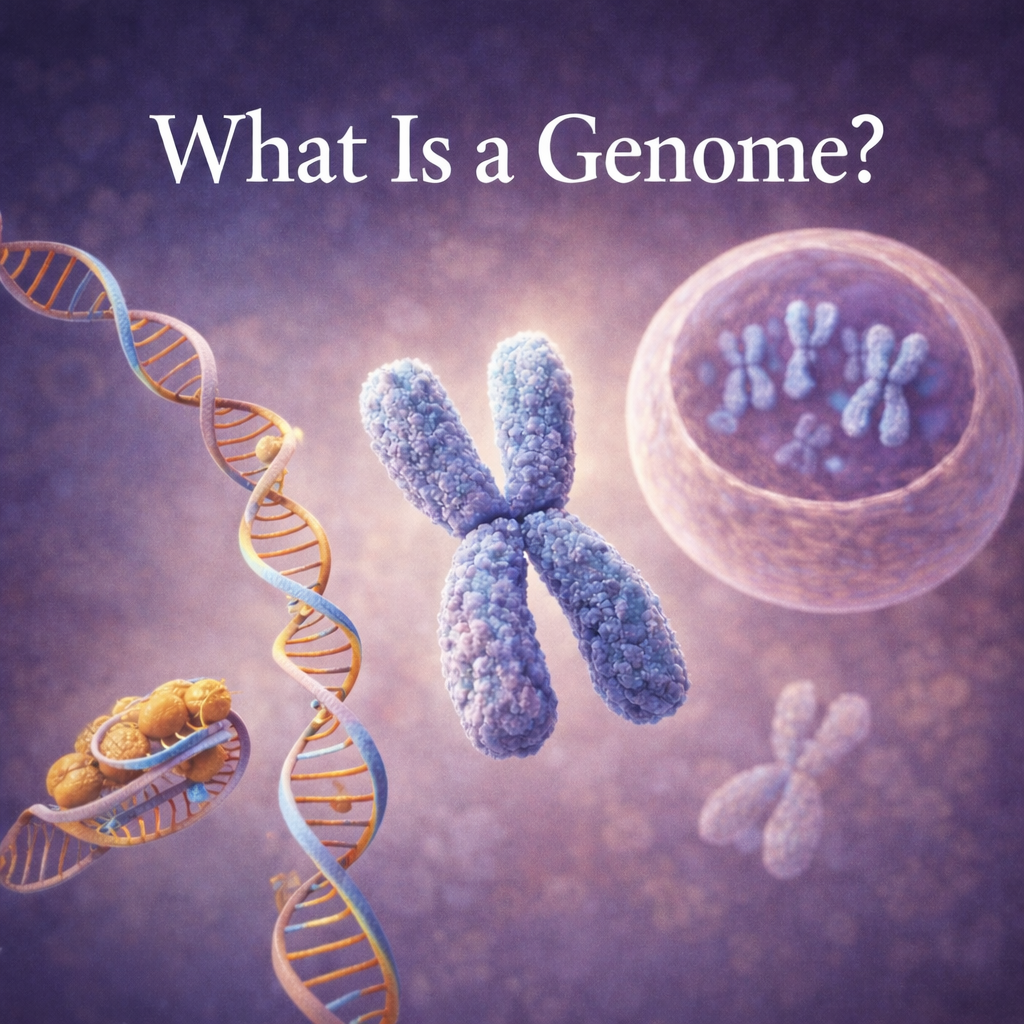
- Human body cells contain 46 chromosomes
- Human gametes contain 23 chromosomes
When sperm and egg cells combine during fertilization, the normal chromosome number is restored.
Why Meiosis Is Important
Meiosis serves several important biological functions.
Sexual Reproduction
Meiosis creates the reproductive cells required for sexual reproduction. Without this process, organisms would not be able to produce offspring through fertilization.
Genetic Variation
Meiosis introduces genetic diversity through processes such as:
- Crossing over
- Independent assortment of chromosomes
These mechanisms help create unique genetic combinations in offspring.
Maintaining Chromosome Numbers
By reducing chromosome numbers in gametes, meiosis ensures that species maintain a stable chromosome count from generation to generation.
The Two Stages of Meiosis
Meiosis occurs in two major rounds of cell division, known as Meiosis I and Meiosis II.
Each stage contains phases that resemble those in mitosis, but they occur with important differences.
Meiosis I: Reduction Division
The first division in meiosis is called reduction division because the chromosome number is cut in half.
Prophase I
Prophase I is the longest and most complex stage of meiosis.
Important events include:
- Chromosomes condense and become visible
- Homologous chromosomes pair together
- Crossing over occurs, where segments of DNA are exchanged between chromosome pairs
Crossing over increases genetic variation.
Metaphase I
During metaphase I:
- Paired homologous chromosomes line up at the center of the cell
- Spindle fibers attach to chromosomes
The orientation of chromosomes at this stage contributes to genetic diversity through independent assortment.
Anaphase I
During anaphase I:
- Homologous chromosome pairs separate
- Each chromosome moves to opposite sides of the cell
Unlike mitosis, the sister chromatids remain attached at this stage.
Telophase I and Cytokinesis
At the end of meiosis I:
- Chromosomes reach opposite ends of the cell
- The cell divides through cytokinesis
This results in two cells, each containing half the number of chromosomes.
Meiosis II: Similar to Mitosis
The second stage of meiosis resembles mitosis and separates the sister chromatids.
Prophase II
During prophase II:
- Chromosomes condense again
- Spindle fibers form
- The nuclear membrane breaks down
Metaphase II
During metaphase II:
- Chromosomes align along the center of the cell
- Spindle fibers attach to each chromatid
Anaphase II
During anaphase II:
- Sister chromatids separate
- Each chromatid moves toward opposite poles of the cell
Telophase II and Cytokinesis
In the final stage:
- Nuclear membranes form around each chromosome set
- Cells divide again
At the end of meiosis II, four genetically unique haploid cells are produced.
Key Features of Meiosis
Several characteristics distinguish meiosis from other forms of cell division.
Key features include:
- Two rounds of cell division
- Reduction of chromosome number by half
- Production of four daughter cells
- Genetic variation among resulting cells
These features are essential for sexual reproduction and biological diversity.
Meiosis vs Mitosis
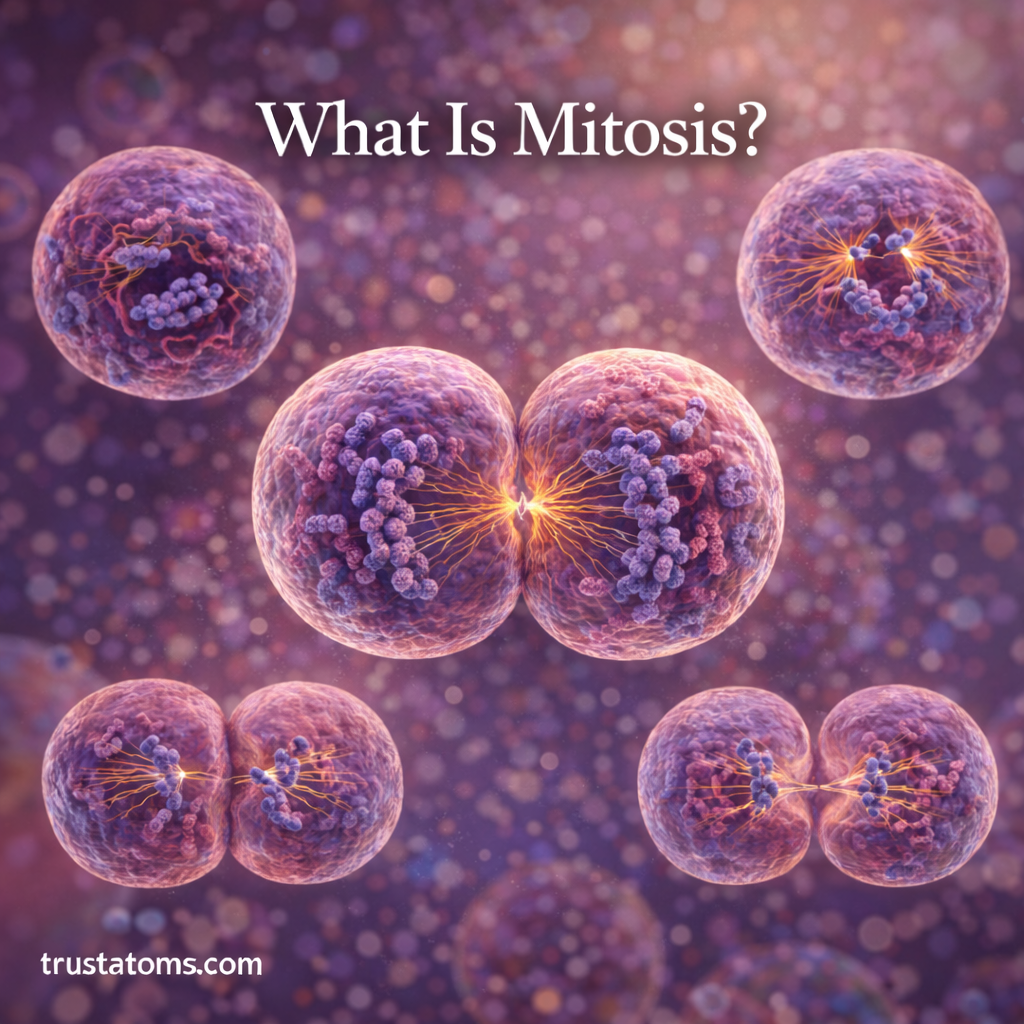
Meiosis and mitosis are both forms of cell division, but they serve different purposes.
Mitosis:
- Produces two identical cells
- Maintains chromosome number
- Occurs in body (somatic) cells
- Used for growth and repair
Meiosis:
- Produces four genetically unique cells
- Reduces chromosome number by half
- Occurs in reproductive cells
- Used for sexual reproduction
Understanding the differences between these processes helps explain how organisms grow while also producing reproductive cells.
Why Genetic Variation Matters
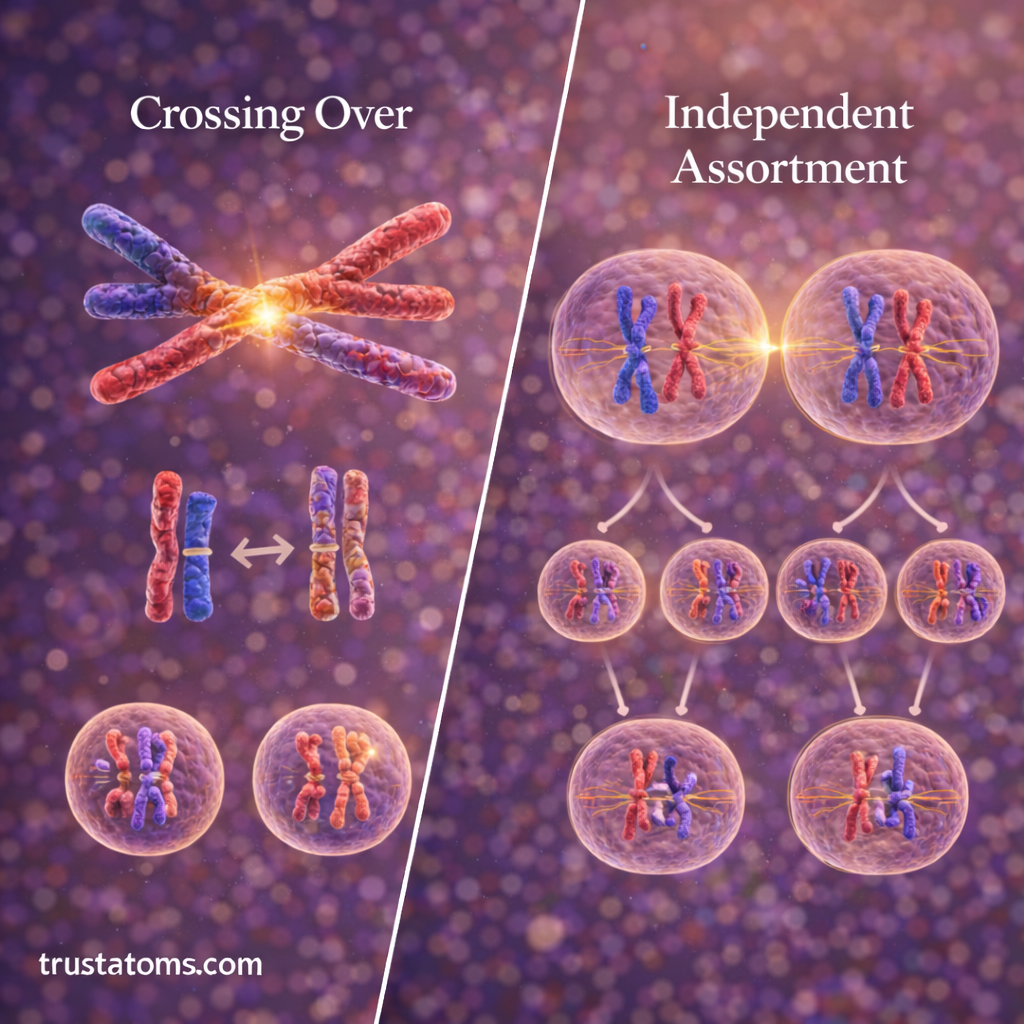
Genetic variation is one of the most important outcomes of meiosis.
Variation occurs through:
- Crossing over
- Independent assortment of chromosomes
- Random fertilization
This diversity helps populations adapt to environmental changes and supports the process of evolution through natural selection.
Final Thoughts
Meiosis is a crucial biological process that allows organisms to reproduce sexually while maintaining stable chromosome numbers. By producing genetically unique reproductive cells, meiosis ensures that each generation inherits a diverse combination of genetic traits.
Through its two stages of division and mechanisms for genetic variation, meiosis plays a central role in heredity, evolution, and the continuity of life.
Understanding meiosis provides insight into how genetic diversity arises and how organisms pass traits to future generations.