If you’ve ever tested pool water, heard about acidic rain, or used a skincare product labeled “pH balanced,” you’ve encountered the concept of pH. But what exactly does it mean?
In simple terms, pH is a scale used to measure how acidic or basic (alkaline) a substance is. It helps scientists, doctors, farmers, and even chefs understand the chemical properties of liquids and solutions.
Let’s break it down in a clear, practical way.
The Basic Definition of pH
The term pH stands for “potential of hydrogen” or “power of hydrogen.” It measures the concentration of hydrogen ions (H⁺) in a solution.
Here’s the key idea:
- More hydrogen ions (H⁺) = more acidic
- Fewer hydrogen ions (H⁺) = more basic (alkaline)
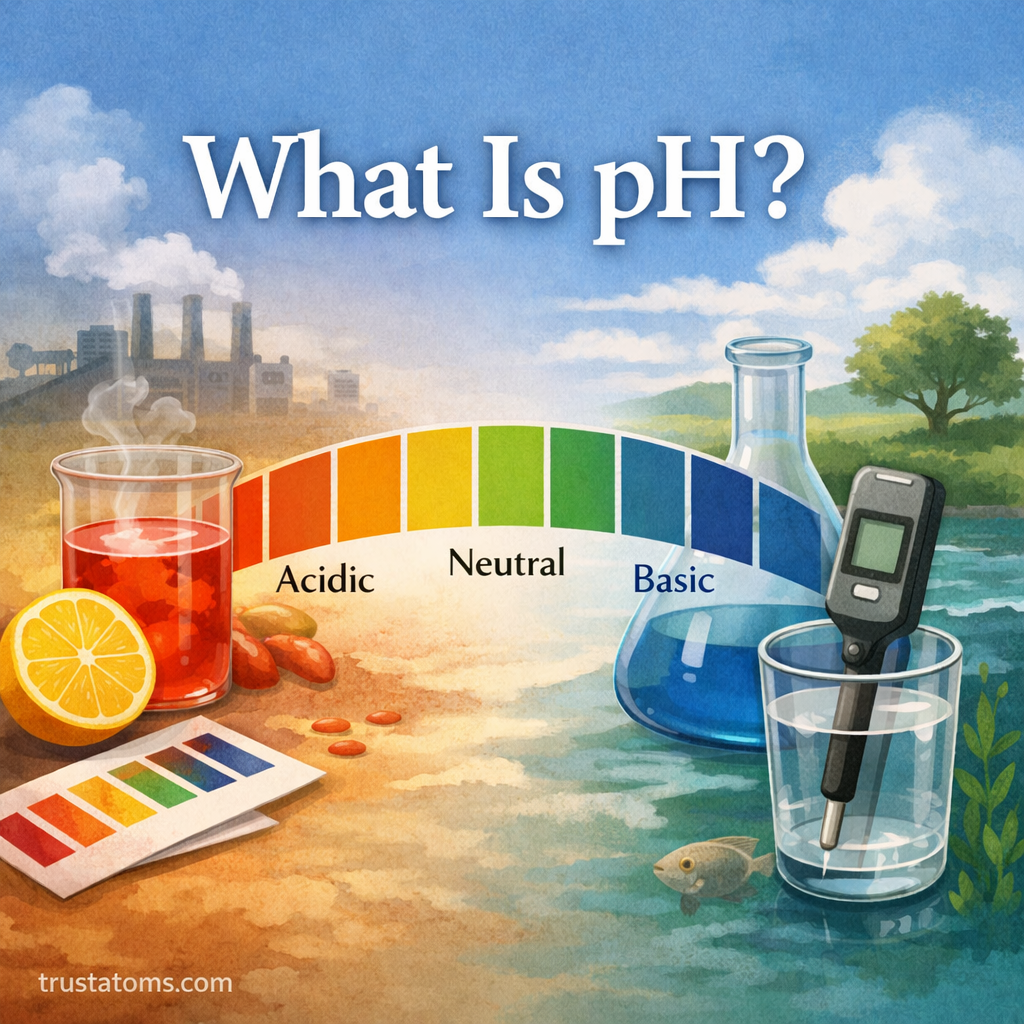
The pH scale typically ranges from 0 to 14.
- pH 7 = Neutral
- pH below 7 = Acidic
- pH above 7 = Basic (Alkaline)
Pure water has a pH of 7, which makes it neutral.
Understanding the pH Scale
The pH scale is logarithmic, not linear. That means each whole number change represents a tenfold change in acidity or basicity.
For example:
- A solution with pH 3 is 10 times more acidic than pH 4
- A solution with pH 2 is 100 times more acidic than pH 4
This is important because small changes in pH can represent large chemical differences.
Common Examples on the pH Scale
Here are familiar substances and where they fall:
- 0–2: Battery acid (very strong acid)
- 2–3: Lemon juice
- 3–4: Vinegar
- 5–6: Black coffee
- 7: Pure water (neutral)
- 8–9: Seawater
- 10–11: Baking soda solution
- 12–14: Bleach or drain cleaner (very strong base)
These examples show how pH helps us compare everyday substances.
What Makes Something Acidic or Basic?
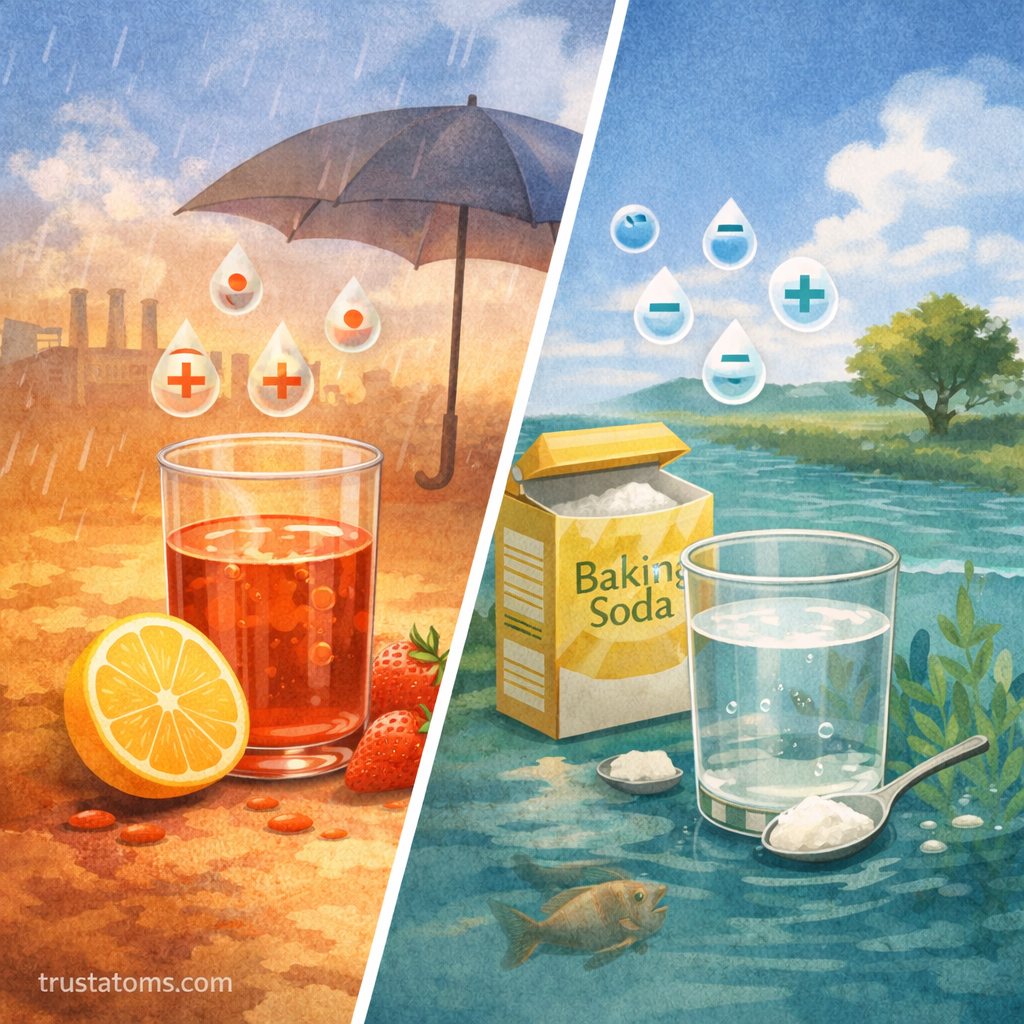
To understand pH more deeply, you need to know about ions.
When certain substances dissolve in water, they release ions:
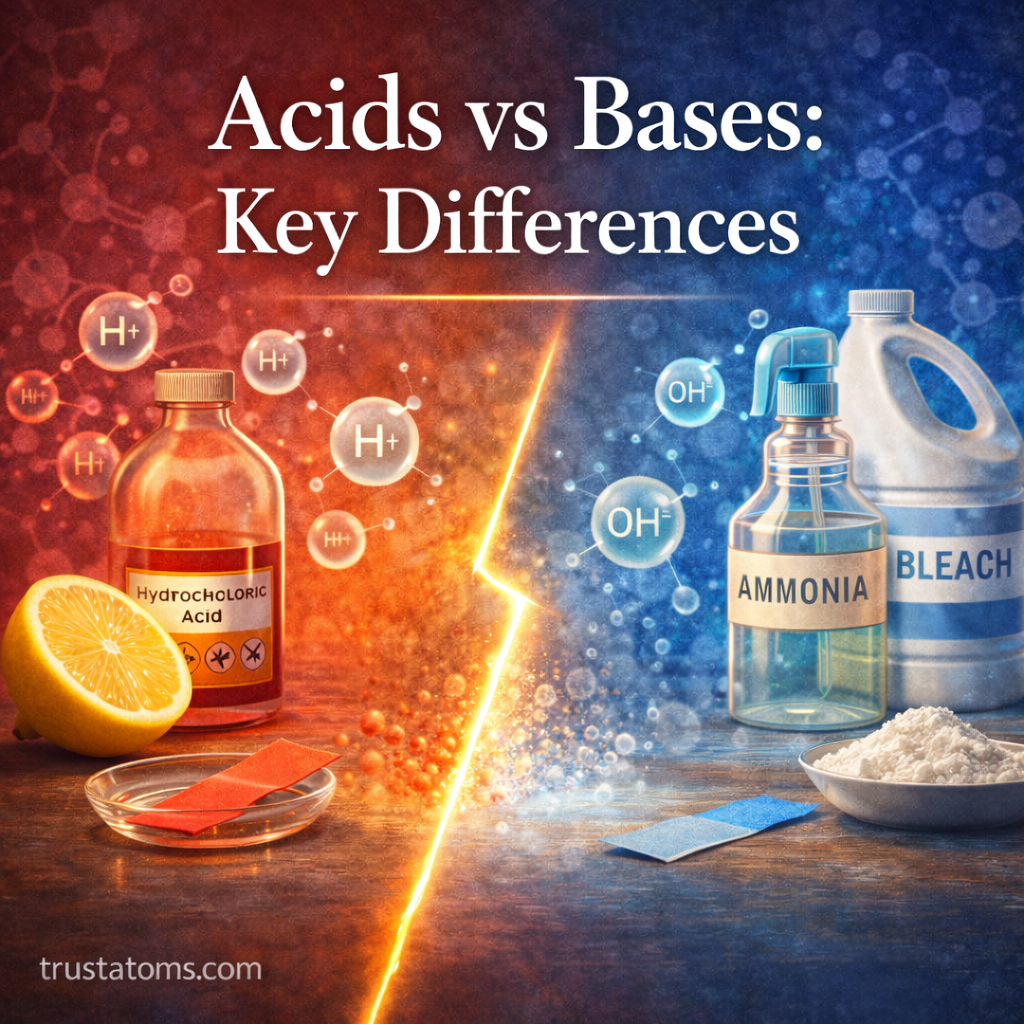
- Acids release hydrogen ions (H⁺)
- Bases release hydroxide ions (OH⁻)
The balance between hydrogen ions and hydroxide ions determines the pH.
If hydrogen ions outnumber hydroxide ions → the solution is acidic.
If hydroxide ions outnumber hydrogen ions → the solution is basic.
At neutral pH (7), hydrogen and hydroxide ions are balanced.
Why pH Matters in Real Life
pH is not just a chemistry classroom concept — it plays a critical role in many areas of life.
1. Human Body
- Blood has a tightly controlled pH around 7.4
- Stomach acid has a very low pH (highly acidic) to help digest food
- Even small changes in blood pH can be dangerous
2. Agriculture
- Soil pH affects plant growth
- Some crops prefer slightly acidic soil
- Others grow better in neutral or slightly alkaline soil
Farmers test soil pH to improve crop yields.
3. Water Quality
- Drinking water must stay within a safe pH range
- Aquatic life depends on stable pH levels
- Acid rain can lower the pH of lakes and harm ecosystems
4. Industry and Manufacturing
- Food preservation depends on acidity
- Cosmetics and skincare products are pH balanced
- Cleaning products are often strongly basic
How Is pH Measured?
There are several common methods:
1. pH Paper (Litmus Paper)
- Changes color depending on acidity or basicity
- Simple and inexpensive
- Good for rough estimates
2. pH Indicator Solutions
- Liquid chemicals that change color
- Often used in labs and classrooms
3. pH Meters
- Electronic devices
- Provide highly accurate readings
- Used in research and industry
Each method has different levels of precision.
What Is a Neutral Solution?
A neutral solution has a pH of 7. At this point:
- Hydrogen ions (H⁺) = Hydroxide ions (OH⁻)
- The solution is neither acidic nor basic
Pure distilled water is neutral under normal conditions.
However, natural water (like rainwater) is usually slightly acidic because it dissolves small amounts of carbon dioxide from the air.
Strong vs Weak Acids and Bases
Not all acids and bases behave the same way.
Strong acids:
- Completely release hydrogen ions in water
- Have very low pH values
Weak acids:
- Only partially release hydrogen ions
- Have higher pH than strong acids
The same concept applies to strong and weak bases.
This difference affects how substances react in chemical reactions.
Key Takeaways About pH
Here’s a quick summary:
- pH measures acidity or basicity
- The scale runs from 0 to 14
- 7 is neutral
- Below 7 is acidic
- Above 7 is basic (alkaline)
- The scale is logarithmic (each step = 10× change)
- pH affects biology, agriculture, water systems, and industry
Understanding pH helps explain how chemical reactions behave and why balance is important in both natural and human-made systems.
Final Thoughts
pH may seem like a small number on a test strip, but it represents a powerful chemical concept. From the water you drink to the blood in your body, pH plays a central role in maintaining stability and supporting life.
By understanding the pH scale and how it works, you gain insight into chemistry’s impact on everyday life.