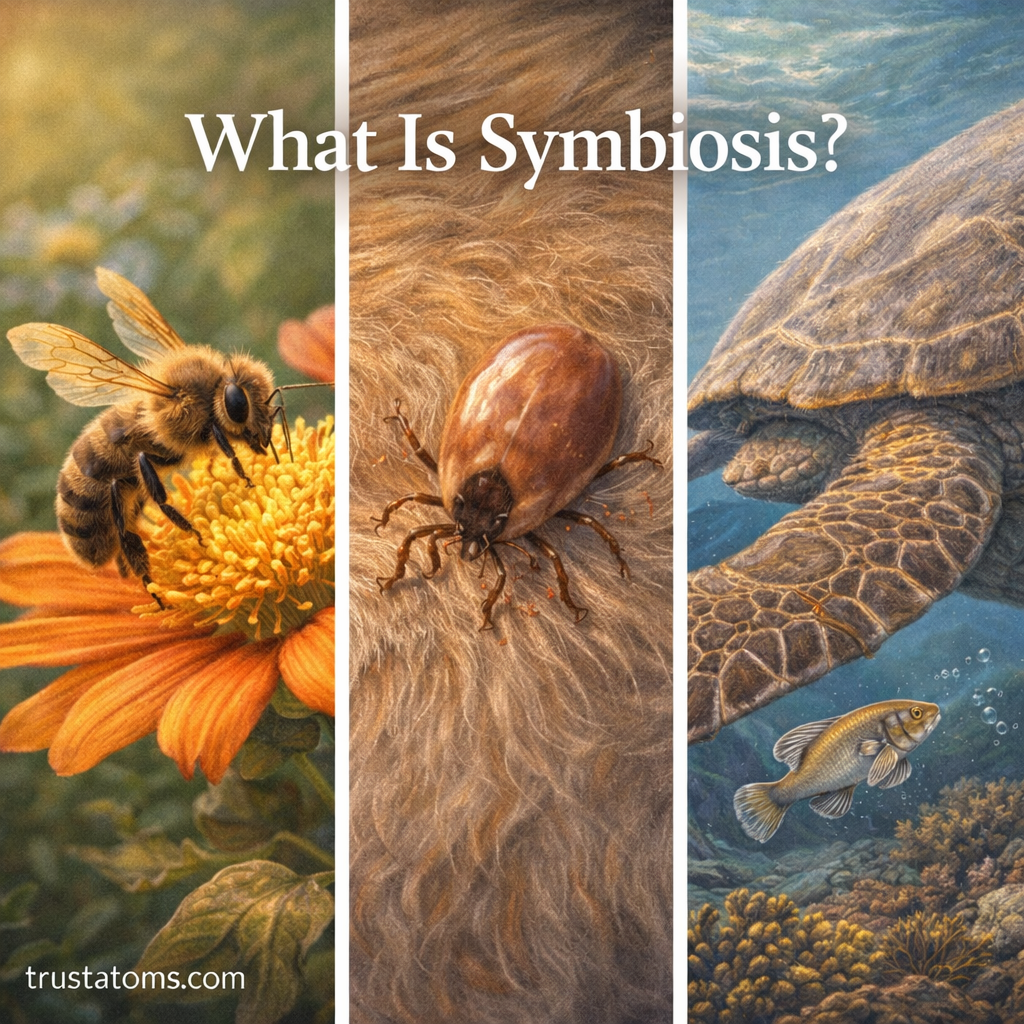
Symbiosis is a biological relationship in which two different species live closely together and interact regularly. These relationships can affect survival, reproduction, and the overall balance of ecosystems.
Symbiosis plays an important role in nature because many organisms depend on other species for food, protection, or environmental support. Some symbiotic relationships benefit both organisms, while others benefit only one species.
Understanding symbiosis helps scientists study ecological interactions, biodiversity, and the complex relationships that shape natural ecosystems.
Definition of Symbiosis
Symbiosis refers to a long-term biological interaction between two different species that live in close association.
The organisms involved in this relationship are called symbionts.
Symbiotic relationships can vary widely, but they generally fall into three main categories:
- Mutualism
- Commensalism
- Parasitism
Each type of symbiosis describes how the organisms involved benefit or are affected by the interaction.
Why Symbiosis Is Important in Biology
Symbiotic relationships help maintain ecosystem balance and increase species survival.
These interactions can influence:
- Nutrient cycling
- Energy flow in ecosystems
- Population dynamics
- Species evolution
In many cases, organisms evolve alongside their symbiotic partners, forming relationships that are essential for survival.
For example, certain plants rely on fungi in their roots to absorb nutrients from the soil more efficiently.
Types of Symbiotic Relationships
Biologists classify symbiosis based on how each organism in the relationship is affected.
Mutualism
Mutualism occurs when both organisms benefit from the relationship.
This type of symbiosis is common in nature and often strengthens survival for both species.
Examples of mutualism include:
- Bees pollinating flowers while collecting nectar
- Certain fish cleaning parasites from larger marine animals
- Bacteria in the human digestive system helping break down food
In these interactions, both organisms gain something valuable.
Commensalism
Commensalism occurs when one organism benefits while the other is neither harmed nor helped significantly.
These relationships often involve one species using another for shelter, transportation, or access to food.
Examples include:
- Birds nesting in trees
- Small marine organisms attaching to whales or sea turtles
- Plants growing on the branches of larger trees
The host organism typically experiences little to no impact.
Parasitism
Parasitism occurs when one organism benefits at the expense of the other.
The organism that benefits is called the parasite, while the organism being affected is the host.
Common examples of parasitism include:
- Ticks feeding on mammal blood
- Tapeworms living in animal intestines
- Parasitic plants drawing nutrients from host plants
Although parasitism harms the host, it usually does not kill it immediately, since parasites rely on the host for survival.
Symbiosis in Marine Ecosystems
Marine environments contain many well-known examples of symbiotic relationships.
Coral reefs are particularly rich in symbiosis.
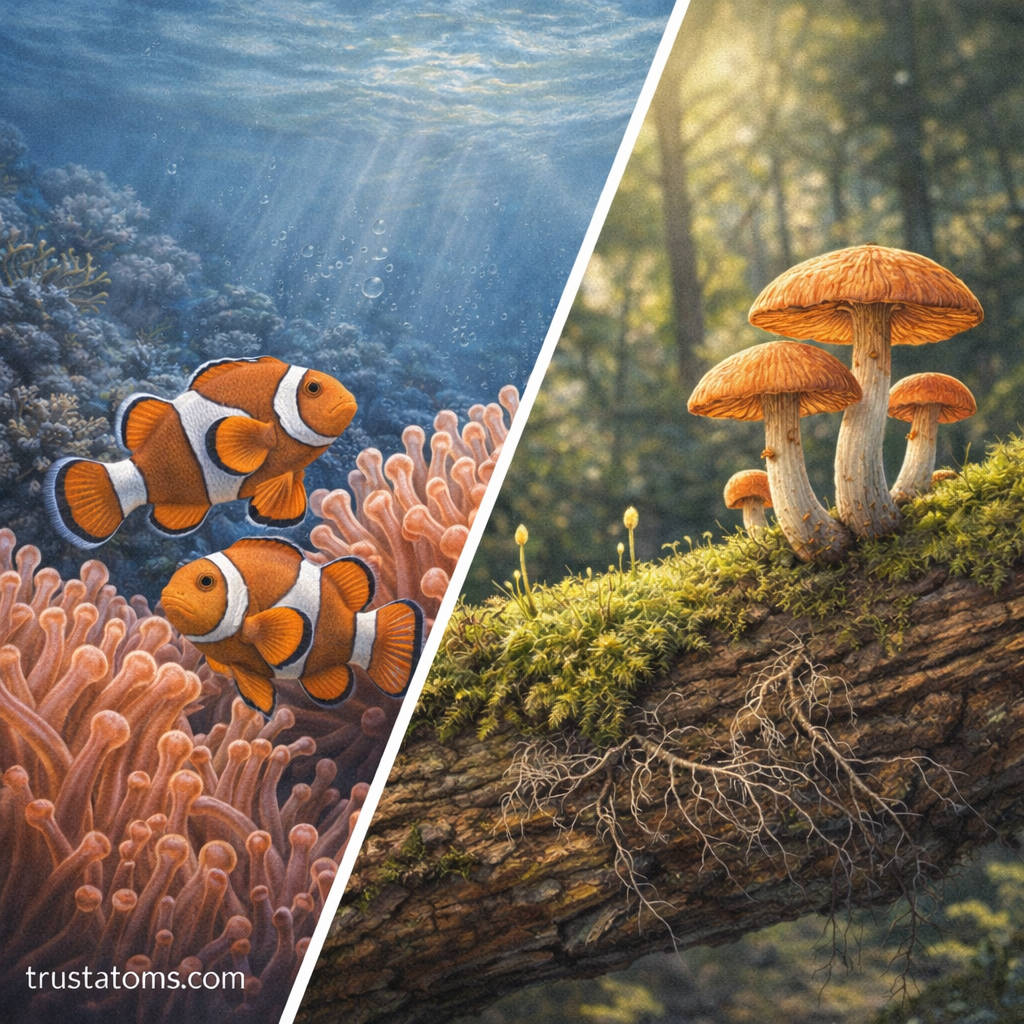
One famous example involves coral polyps and microscopic algae.
The algae live inside coral tissues and provide energy through photosynthesis, while coral provides protection and access to sunlight.
This partnership allows coral reefs to thrive in nutrient-poor ocean waters.
Another example involves cleaner fish removing parasites from larger fish species.
Symbiosis in Terrestrial Ecosystems
Symbiosis is also widespread in land ecosystems.
Plants and fungi often form important symbiotic partnerships.
Mycorrhizal Relationships
Mycorrhizae are symbiotic relationships between plant roots and fungi.
In this interaction:
- Fungi help plants absorb nutrients such as phosphorus and nitrogen
- Plants provide carbohydrates produced during photosynthesis
These relationships improve plant growth and soil health.
Nitrogen-Fixing Bacteria
Some bacteria live inside the roots of legume plants, such as beans and peas.
These bacteria convert nitrogen from the atmosphere into forms plants can use.
In return, the plant supplies sugars and a protected environment for the bacteria.
This partnership helps enrich soil nutrients.
Symbiosis and Evolution
Symbiotic relationships can influence evolutionary processes.
Over time, species involved in close interactions may evolve traits that improve cooperation or increase survival.
This process is known as co-evolution.
Examples of co-evolution include:
- Flowers evolving shapes that match specific pollinators
- Insects developing behaviors that assist plant reproduction
- Hosts evolving defenses against parasites
Symbiosis can therefore shape the evolutionary paths of multiple species.
Symbiosis in the Human Body
Humans also rely on symbiotic relationships.
The human body hosts trillions of microorganisms, many of which form beneficial partnerships.
These microorganisms are known as the human microbiome.
Microbial symbionts help with:
- Digesting complex foods
- Producing vitamins
- Supporting immune system function
- Protecting against harmful pathogens
Without these microorganisms, many essential biological processes would not function properly.
How Symbiosis Supports Ecosystem Stability
Symbiotic relationships often strengthen ecosystems by improving resource use and cooperation among species.
Benefits of symbiosis include:
- Improved nutrient availability
- Enhanced protection from predators
- Increased reproductive success
- Greater ecosystem resilience
When symbiotic relationships are disrupted, ecosystems may experience significant changes.
For example, environmental stress affecting coral-algae symbiosis can lead to coral bleaching and reef decline.
Key Takeaways
Symbiosis describes close biological relationships between different species that interact regularly.
Important points include:
- Symbiosis involves long-term interactions between organisms of different species.
- The main types of symbiosis are mutualism, commensalism, and parasitism.
- These relationships are common in both marine and terrestrial ecosystems.
- Symbiosis can influence evolution and species survival.
- Many organisms, including humans, rely on symbiotic partnerships for essential biological functions.
Symbiosis highlights the interconnected nature of life and demonstrates how species often depend on one another for survival.