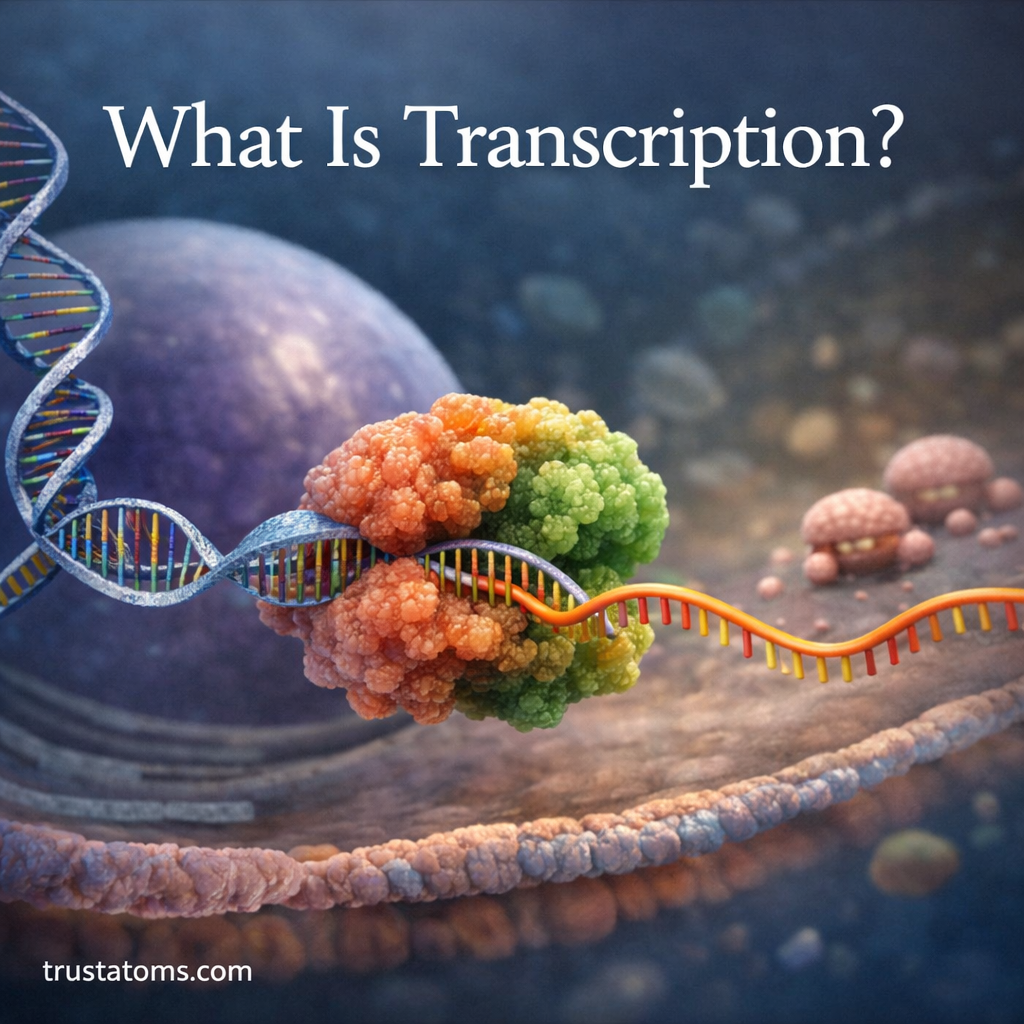
Transcription is a fundamental biological process in which a cell copies a segment of DNA into RNA. This step is essential for gene expression, allowing the genetic instructions stored in DNA to be used to produce proteins that support life.
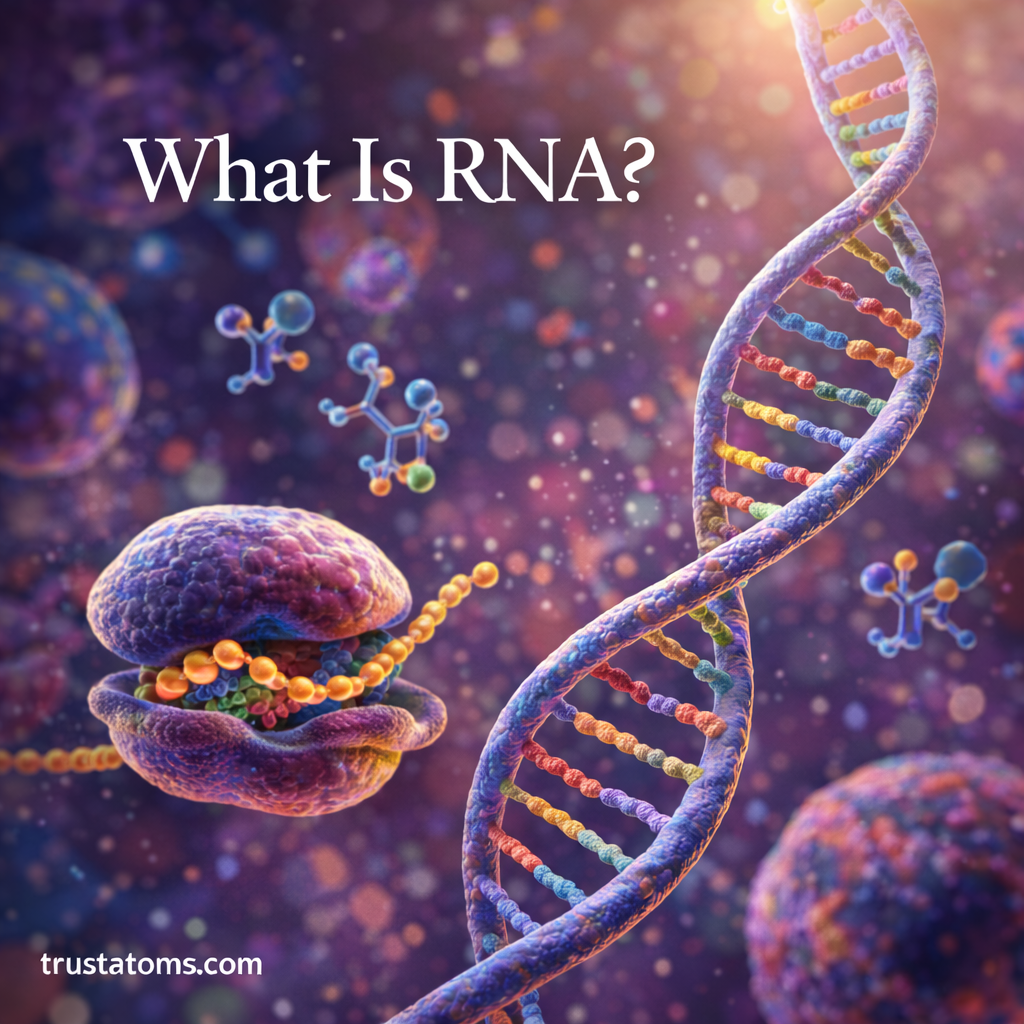
Inside every cell, DNA acts as a long-term storage system for genetic information. However, DNA itself does not directly build proteins. Instead, the cell first converts DNA instructions into messenger molecules called RNA through transcription. These RNA molecules then guide the production of proteins in the next stage of gene expression.
Understanding transcription helps explain how genes control everything from cell growth and metabolism to development and adaptation.
The Role of Transcription in Gene Expression
Gene expression is the process by which information stored in DNA becomes a functional product, usually a protein. Transcription is the first major step in this process.
The central flow of genetic information is often summarized as:
DNA → RNA → Protein
During transcription:
- A specific segment of DNA is selected.
- That DNA sequence is copied into RNA.
- The RNA molecule carries the instructions needed to make a protein.
This process allows cells to activate certain genes when needed while leaving others inactive.
Where Transcription Occurs
The location of transcription depends on the type of organism.
In Eukaryotic Cells
Eukaryotes include animals, plants, fungi, and protists.
In these cells, transcription occurs in the nucleus, where DNA is stored. After transcription, the RNA molecule leaves the nucleus and moves into the cytoplasm, where protein production occurs.
In Prokaryotic Cells
Prokaryotes include bacteria and archaea.
These cells do not have a nucleus, so transcription occurs directly in the cytoplasm, often simultaneously with protein synthesis.
The Main Molecules Involved in Transcription
Several key components work together during transcription.
DNA Template
The DNA strand contains the gene that needs to be copied. Only one strand of DNA, called the template strand, is used during transcription.
RNA Polymerase
RNA polymerase is the enzyme responsible for building the RNA molecule. It reads the DNA template and adds RNA nucleotides in the correct order.
RNA Nucleotides
RNA is made from four nucleotides:
- Adenine (A)
- Uracil (U)
- Cytosine (C)
- Guanine (G)
Unlike DNA, RNA uses uracil instead of thymine.
The Three Stages of Transcription
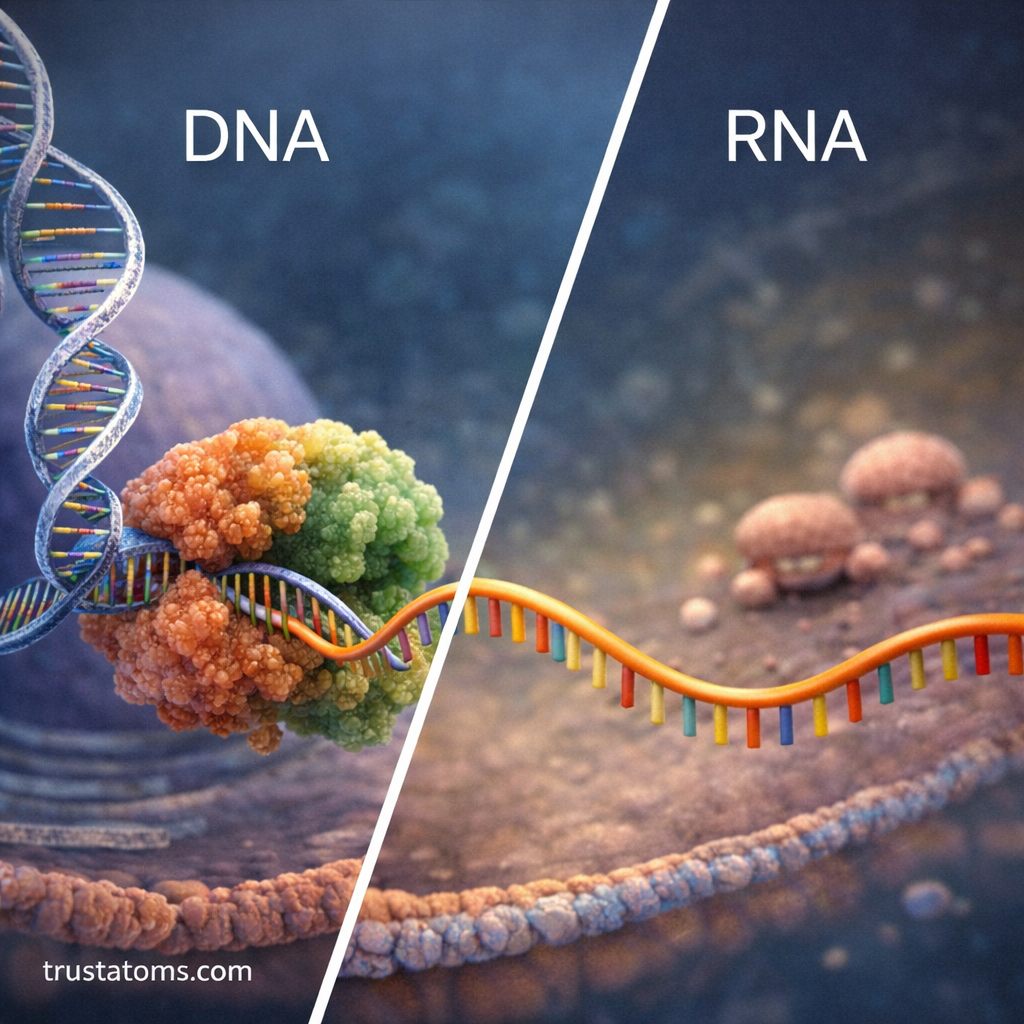
Transcription occurs in three main phases.
1. Initiation
During initiation:
- RNA polymerase binds to a specific DNA region called the promoter.
- The DNA double helix unwinds.
- The enzyme positions itself at the start of the gene.
Promoters act like signals that tell the cell where transcription should begin.
2. Elongation
In the elongation stage:
- RNA polymerase moves along the DNA template strand.
- It builds an RNA strand by adding complementary RNA nucleotides.
- The RNA molecule grows longer as the enzyme progresses.
For example:
- DNA adenine pairs with RNA uracil
- DNA cytosine pairs with RNA guanine
The DNA helix reforms behind the enzyme as transcription continues.
3. Termination
Termination occurs when RNA polymerase reaches a termination signal in the DNA.
At this point:
- The RNA transcript is released.
- RNA polymerase detaches from the DNA.
- The completed RNA molecule is ready for the next stage.
Types of RNA Produced by Transcription
Transcription can produce several types of RNA, each with a different function.
Messenger RNA (mRNA)
mRNA carries genetic instructions from DNA to ribosomes, where proteins are assembled.
Transfer RNA (tRNA)
tRNA helps bring the correct amino acids to the ribosome during protein synthesis.
Ribosomal RNA (rRNA)
rRNA forms the structural and functional core of ribosomes.
Among these, mRNA is the most directly connected to gene-to-protein translation.
RNA Processing in Eukaryotic Cells
In eukaryotes, the RNA molecule produced during transcription is called pre-mRNA and must be processed before it becomes functional.
Important processing steps include:
- 5′ Cap Addition – protects the RNA and helps ribosomes recognize it
- Poly-A Tail Addition – stabilizes the RNA molecule
- RNA Splicing – removes non-coding sections called introns
After these modifications, the mature mRNA exits the nucleus and moves to the cytoplasm.
Why Transcription Is Important
Transcription is critical because it controls how genetic information is used within a cell.
Key roles include:
- Regulating gene activity
- Enabling cells to produce necessary proteins
- Allowing organisms to respond to environmental changes
- Supporting growth, development, and repair
Without transcription, the instructions stored in DNA would remain inaccessible, and cells could not perform essential biological functions.
Transcription and Cellular Control
Cells tightly regulate transcription to ensure genes are expressed at the right time and in the right amount.
This regulation involves:
- Transcription factors that activate or suppress genes
- Regulatory DNA sequences that control RNA polymerase activity
- Environmental signals that influence gene expression
Through these mechanisms, cells can adjust their behavior based on internal needs and external conditions.
Final Thoughts
Transcription is a central step in molecular biology that converts genetic information from DNA into RNA. By copying DNA instructions into RNA molecules, cells create the messages needed to build proteins and carry out essential biological processes.
From controlling metabolism to guiding development, transcription plays a crucial role in how life functions at the cellular level. Understanding this process provides insight into genetics, biotechnology, and many areas of modern biological research.