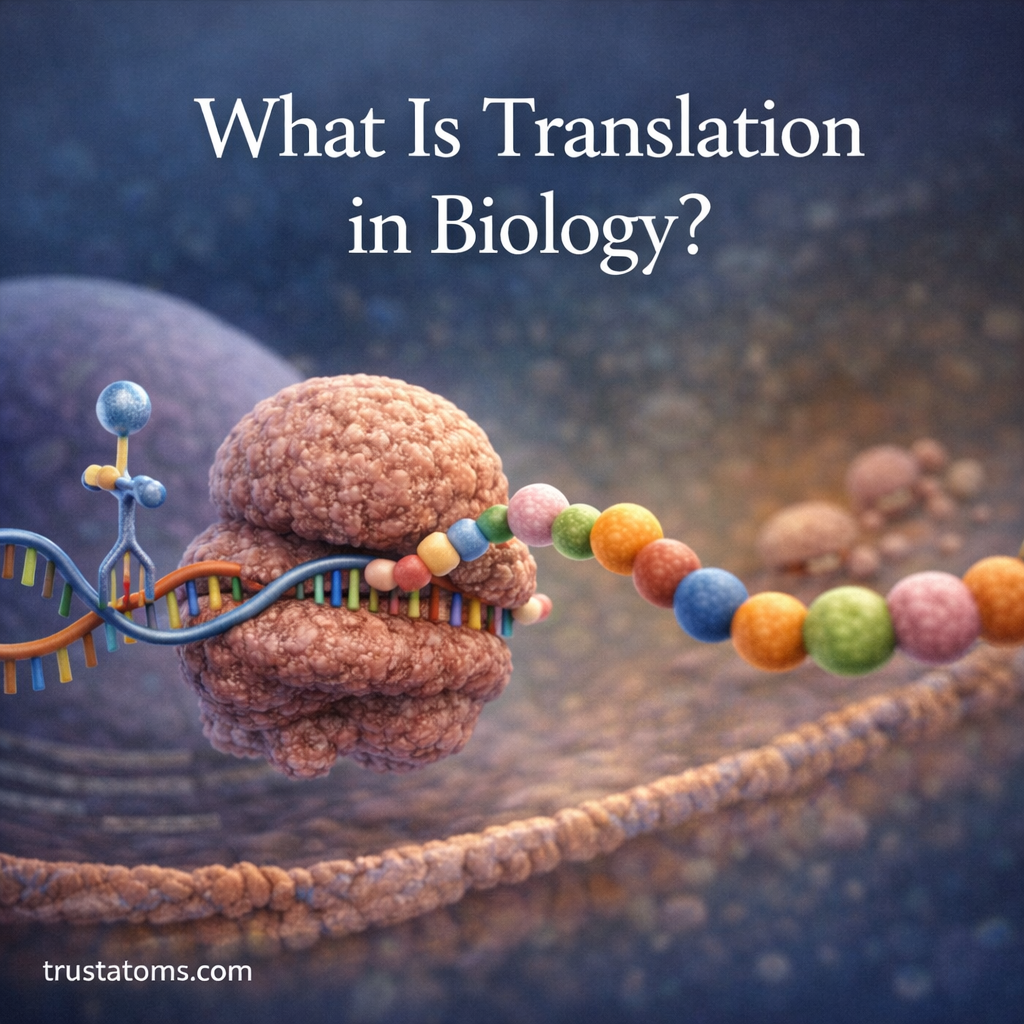
Translation in biology is the process by which cells use genetic instructions carried by messenger RNA (mRNA) to build proteins. It is the second major step of gene expression and follows transcription, where DNA is first copied into RNA.
During translation, the cell reads the sequence of nucleotides in mRNA and converts it into a sequence of amino acids. These amino acids then fold into proteins that perform essential functions throughout the body, from building cellular structures to regulating chemical reactions.
Without translation, the genetic information stored in DNA would never become functional molecules that support life.
The Role of Translation in Gene Expression
Gene expression allows cells to convert genetic information into useful biological products. The process occurs in two main stages:
- Transcription – DNA is copied into RNA.
- Translation – RNA instructions are used to build proteins.
Translation is the stage where the actual protein is assembled. This process ensures that the genetic code stored in DNA ultimately produces the molecules that carry out cellular tasks.
Proteins created through translation are responsible for functions such as:
- Enzyme activity
- Cell structure
- Immune responses
- Transport of molecules
- Cell signaling
Where Translation Occurs in the Cell
The location of translation depends on the type of organism.
In Eukaryotic Cells
Eukaryotes include animals, plants, fungi, and protists.
In these cells, translation occurs in the cytoplasm after mRNA leaves the nucleus. Protein synthesis takes place at structures called ribosomes.
Ribosomes may be:
- Floating freely in the cytoplasm
- Attached to the rough endoplasmic reticulum
Both types perform translation, but they may produce proteins used in different parts of the cell.
In Prokaryotic Cells
Prokaryotes include bacteria and archaea.
These cells lack a nucleus, so transcription and translation often occur simultaneously in the cytoplasm.
Key Components Involved in Translation
Several molecules work together to make translation possible.
Messenger RNA (mRNA)
mRNA carries genetic instructions from DNA to the ribosome. It contains a sequence of three-letter nucleotide codes called codons.
Each codon represents a specific amino acid.
Ribosomes
Ribosomes are molecular machines that read the mRNA sequence and assemble amino acids into a protein chain.
They consist of two subunits:
- A large subunit
- A small subunit
Together they hold the mRNA in place and facilitate protein assembly.
Transfer RNA (tRNA)
tRNA molecules bring amino acids to the ribosome.
Each tRNA has:
- An anticodon that matches an mRNA codon
- An attached amino acid
This pairing ensures the correct amino acid is added to the growing protein.
Amino Acids
Amino acids are the building blocks of proteins.
There are 20 common amino acids used to construct proteins in most living organisms.
Understanding Codons
The genetic code is read in groups of three nucleotides, called codons.
Examples include:
- AUG – start codon (codes for methionine)
- UUU – codes for phenylalanine
- GGC – codes for glycine
Important features of codons include:
- Each codon specifies one amino acid.
- Multiple codons may code for the same amino acid.
- Specific codons signal when translation should stop.
Stop codons include:
- UAA
- UAG
- UGA
These codons signal the ribosome to end protein synthesis.
The Three Stages of Translation
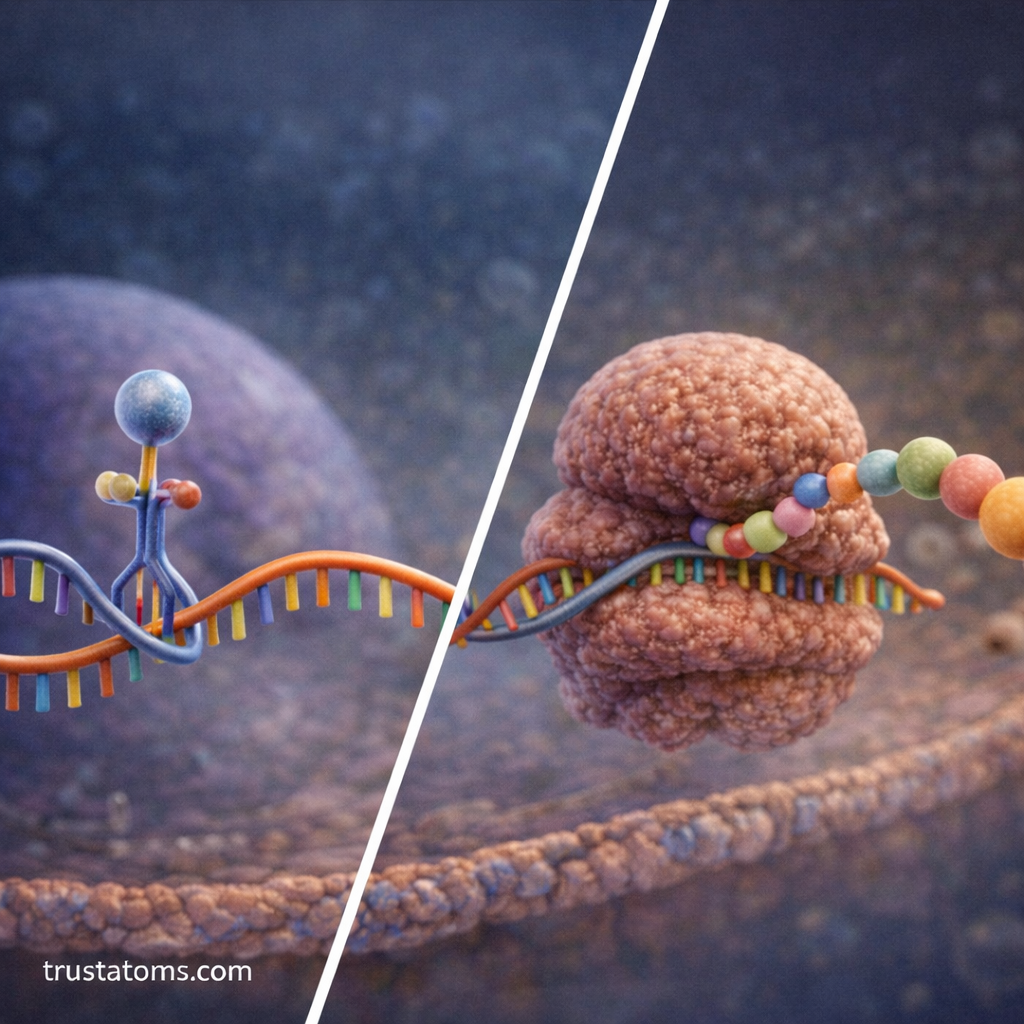
Translation occurs through three main phases.
1. Initiation
During initiation:
- The small ribosomal subunit binds to the mRNA.
- The ribosome identifies the start codon (AUG).
- A tRNA carrying the amino acid methionine attaches to the start codon.
- The large ribosomal subunit joins the complex.
This forms the complete ribosome ready for protein synthesis.
2. Elongation
Elongation is the stage where the protein chain grows.
During this phase:
- A tRNA carrying an amino acid enters the ribosome.
- Its anticodon pairs with the corresponding mRNA codon.
- The ribosome forms a peptide bond between amino acids.
- The ribosome moves along the mRNA to the next codon.
This cycle repeats many times, gradually building a longer chain of amino acids called a polypeptide.
3. Termination
Termination occurs when the ribosome reaches a stop codon.
At this stage:
- No matching tRNA binds to the stop codon.
- Special release factors trigger the end of translation.
- The newly formed protein is released.
- Ribosomal subunits separate and can be reused.
What Happens After Translation
After translation, the protein is not always ready to function immediately.
Additional processes may occur, including:
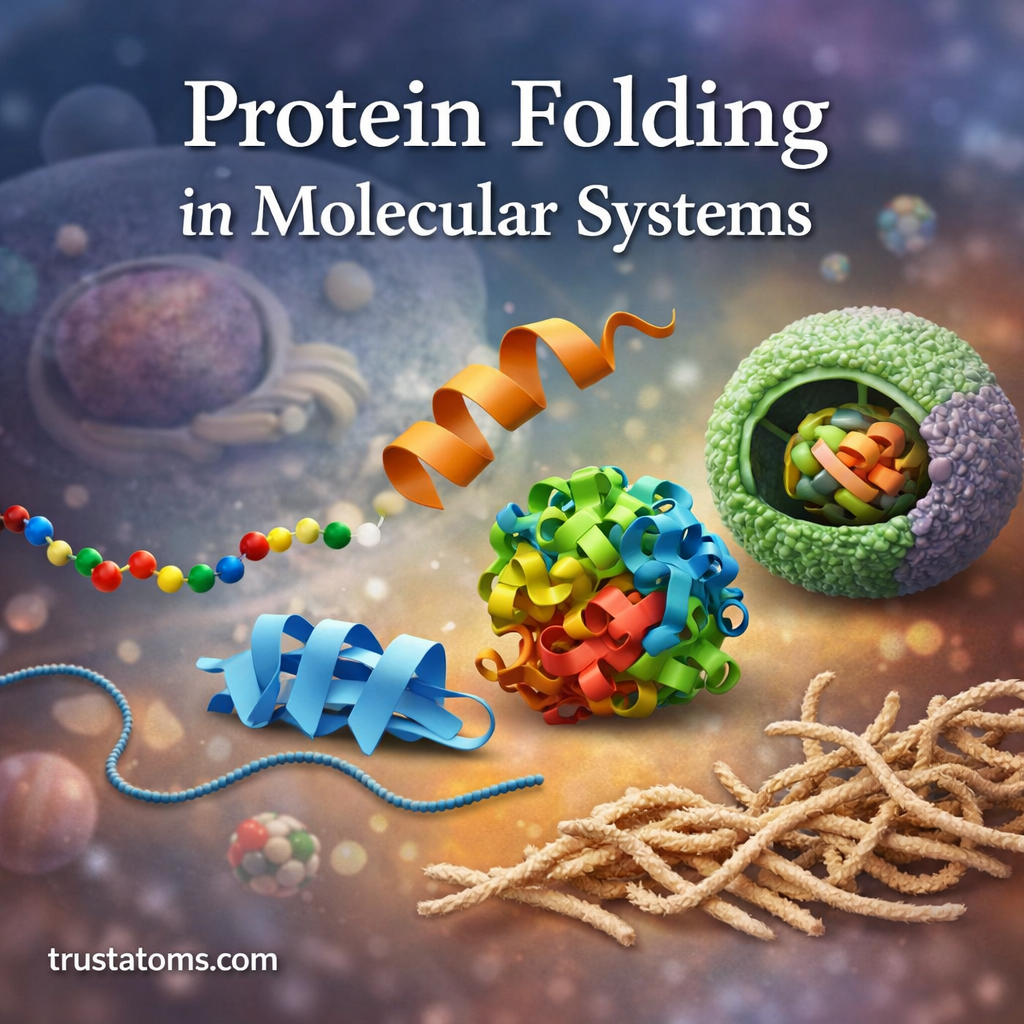
- Protein folding into a specific 3D shape
- Chemical modifications such as phosphorylation
- Transport to the correct part of the cell
Proper folding and processing are essential for the protein to function correctly.
Why Translation Is Essential for Life
Translation is critical because proteins perform most cellular functions.
Through translation, cells can:
- Build structural components
- Catalyze chemical reactions
- Repair damaged tissues
- Transport molecules
- Communicate with other cells
Every living organism relies on translation to produce the proteins necessary for survival.
Translation and Genetic Accuracy
Cells use several mechanisms to maintain accuracy during translation.
These include:
- Precise codon-anticodon matching
- Ribosomal proofreading
- Enzymes that correctly attach amino acids to tRNA
Even with these safeguards, occasional translation errors can occur, but most are corrected or have minimal impact on the cell.
Final Thoughts
Translation is a vital biological process that converts genetic instructions into functional proteins. By reading the codons in mRNA and assembling amino acids in the correct order, cells produce the molecules needed to sustain life.
Together with transcription, translation forms the foundation of gene expression, ensuring that the information encoded in DNA can guide the structure, behavior, and survival of every living cell.